Category: Shirdi Landmarks

Chavadi, Dwarkamayi, Khandoba, Laxmi Temple, Lendi, Maruti Temple etc

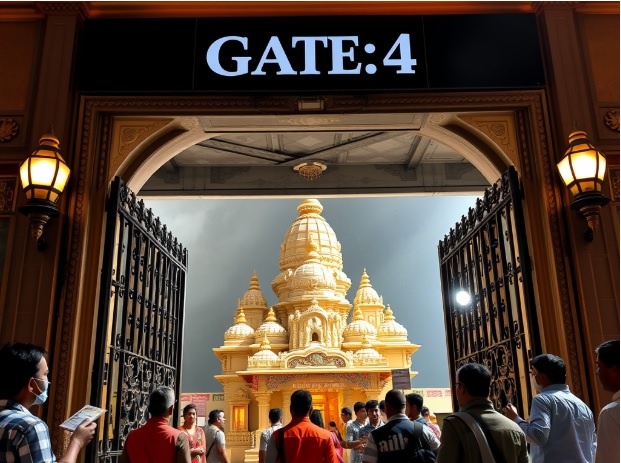
  • Entry Pass at Gate 4 of Shirdi Mandir

    Entry Pass at Gate 4 of Shirdi Mandir

    New special initiative for devotees and local citizens.

    An entry pass system has been implemented at Gate No. 4 of Sai Baba Mandir in Shirdi. This initiative has facilitated access to the temple premises; yet, it does not grant entry into the Main Mandir.

    • Devotees engaging in visits
      • to the Shree Shanaishwar, Shree Ganesh, and Shree Mahadev temples
      • for meditation purposes (at the Reading and Meditation Hall)
      • as visitors in the Administration Office
        • all occurring within the Samadhi Mandir premises

    (You) can use Gate No.4, avail this Entry pass and go for the above purposes

  • Baba inspires New Seekers. See How

    Baba inspires New Seekers. See How

    New seekers can find immense inspiration in the accounts of Sai Baba for several reasons, primarily stemming from His divine characteristics, accessible teachings, and the profound impact He had on His devotees:

    • Omniscience and All-pervasiveness:

      • New seekers are inspired by Sai Baba’s ability to know all events, past, present, and future, regardless of distance.
      • This quality reassures devotees that Baba is aware of their struggles and intentions, no matter where they are.
    • Curing Maladies and Fulfilling Desires:

      • Baba’s power to cure ailments and fulfill desires inspires many.
      • Stories of His miraculous healings, including serious diseases, highlight His divine capability.
      • He has helped childless devotees and resolved various life challenges, fostering hope for others.
    • Ease and Simplicity of Devotion:

      • The simplicity of devotion to Baba is appealing to newcomers.
      • He did not require complex rituals but encouraged remembering His name, listening to His stories, and meditating on Him.
      • These practices promote spiritual growth accessible to everyone.
    • Nature as a Sadguru and Divine Incarnation:

      • Baba is viewed as a true guru and a manifestation of God, aiming to uplift humanity.
      • His compassion and unconditional love exemplify his divine nature.
    • Acceptance and Unity:

      • Baba’s disregard for caste or religious distinctions inspires many.
      • He honored festivals from both Hindu and Muslim traditions, promoting unity and acceptance in devotion.
    • Grace and Spiritual Progress:

      • Seekers find inspiration in the idea that Baba’s grace leads to rapid spiritual growth.
      • He emphasized surrendering ego and having faith for self-realization and bliss.
    • Ever-living Presence:

      • The belief that Baba remains “ever alive” after His passing provides comfort to devotees.
      • His tomb is thought to still communicate with those who devote themselves to Him.
    • Being “Drawn” to Shirdi:

      • The notion that devotees are “drawn to Shirdi” suggests a divine guidance in their journey.
      • This belief brings comfort and assurance that their arrival is orchestrated by Baba.
  • Sai Baba was there, truly!

    Sai Baba was there, truly!

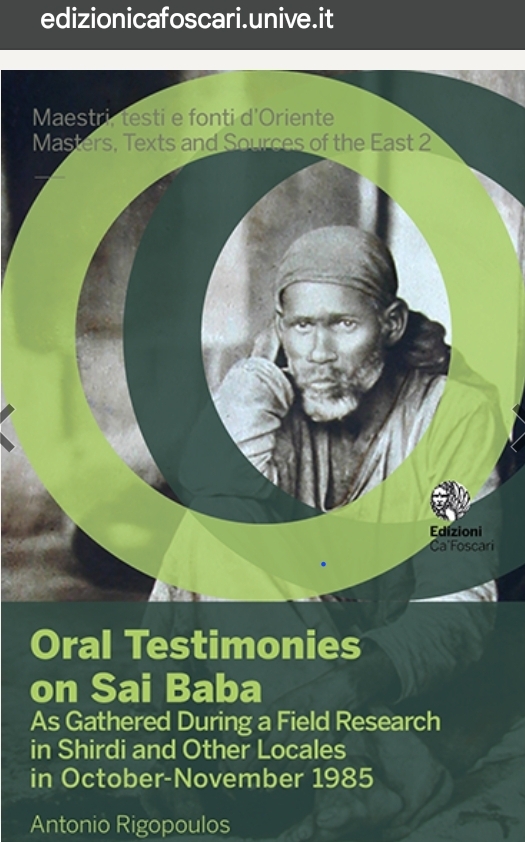
    Dr Antonio Rigopoulos, Italy in his ‘Oral Testimonies on Sai Baba As Gathered During a Field Research in Shirdi and Other Locales in October-November 1985′ (Venice Ca’ F Editions Oscar – Digital Publishing 2021) explained his own Experience that:-

    I went to the cāvaḍī and while I was casually sitting at the cāvaḍī’s entrance, looking at the raṅgolīs, the auspicious signs that some young women were skilfully drawing on the ground, a stray dog caught my attention. He was full of pustules and eczemas, of fleas, and was in a really bad shape. Then it suddenly flashed on me that that dog was Sai Baba. It was something stronger than a simple thought, like an insight or a sudden flash of awareness that I find hard to put into words. I really felt that he was that dog and that he was standing in front of me in that very form: it had the force of an incontrovertible truth. It was a strange and startling experience indeed. Sai Baba was that dog: the lowest, the despised, the most neglected creature. The dog had sweet and penetrating eyes, which called for sympathy and attention.

    I felt I finally understood something: not intellectually, i.e. with the head, but emotionally, i.e. with the heart. There was Sai Baba, truly and fully. It came like a revelation and I shed a few tears; couldn’t help it. It was just so overwhelming

    -On 21 Oct 1985 at 7.30 am

    Thanks / Reference:

    Rigopoulos, Antonio. ‘7 Shirdi-Kopargaon-Shirdi. Monday, October 21, 1985’. Masters, Texts and Sources of the East (2020): n. pag. Crossref. Web.

  • Baba’s Compassion and Love

    Baba’s Compassion and Love

    Shirdi, Shri Sai Baba’s life is a testament to His boundless compassion, profound gentleness, and unwavering selflessness. He consistently demonstrated these qualities through His actions, teachings, and interactions with His devotees. Here are instances:

    Baba’s Compassion:

    • Protection from Epidemics: Baba displayed compassionate foresight by grinding wheat and having the flour thrown on the Shirdi village borders to curb a cholera epidemic.
      • Villagers understood that He was not only grinding wheat.
      • He was also grinding the cholera itself to pieces. This act pushed cholera, out of the village. This led to the epidemic’s subsidence.
    • Encouragement of Hemadpant: When Hemadpant expressed self-doubt about writing Baba’s biography,
      • Baba gently encouraged him. He blessed him with Udi (sacred ashes) and placed His boon-bestowing hand on his head.
      • Baba assured,
        • “I will help him.
        • He is only an outward instrument.
        • I should write Myself My autobiography and
        • satisfy the wishes of My devotees”.
        • This shows His desire for devotees’ spiritual growth and His loving support.
    • Motherly Love for Disciples: Baba exhibited a unparalleled motherly love towards His disciples. He was always attending to their needs. Sadgurus like Baba have this peculiar and extraordinary love for their disciples.
      • All-Embracing Love and Tolerance:
        • Baba’s all-embracing love was evident in His defense of the Rohilla, who disturbed villagers with loud prayers.
        • Baba took the villagers to task, explaining that the Rohilla’s prayers kept away “Durbuddhi” (bad thoughts),
        • thus protecting even those perceived as troublesome.
    • Omnipresence and Constant Protection: Baba’s statement: “I am the Inner Ruler of all and seated in their hearts. I envelope all the creatures, the movable and immovable world.
    • Curing Ailments through Grace: Baba cured numerous diseases without using conventional medicine. He did so through His Grace, Words, or Udi. This demonstrated His compassion for the suffering. Examples include:
        • Bhimaji Patil’s severe tuberculosis, cured by Baba’s words of hope and mercy, through two dreams.
        • Bala Ganapat Shimpi’s malaria, cured by instructing him to feed a black dog, with rice mixed with curds.
        • Bapusaheb Booty’s dysentery and vomiting, instantly cured by Baba’s command, “Now take care, you should not purge any more” and “The vomiting must also stop”. He also cured in another time, Booty’s cholera with a seemingly fatal remedy, effective due to Baba’s word.
        • A Swami from Alandi’s ear pain, relieved by Baba saying, “Alla Accha Karega (God will do good)”.
        • Madhavrao Deshpande’s piles and Gangadharpant’s stomach-pain, cured by simple words and touch, and Nanasaheb Chandorkar’s stomach-pain with a sweetmeat.
        • A doctor’s nephew of tubercular bone-abscess, cured with Udi and Baba’s “loving glances”.
        • Dr. Pillay’s excruciating guinea-worm pain, relieved by Baba’s command to be ‘fearless’ and allowing an accidental step on the wound, to expel the worms.
        • Shama’s sister-in-law’s bubonic plague, cured overnight by sending Udi and giving instructions.
        • A Harda gentleman’s bladder stone, dissolved with Udi mixed with water.
        • A Bombay lady’s painless delivery, despite a stillborn issue, by her praying to Baba and consuming Udi-mixture.
      • Acceptance of Sincere Offerings: Baba lovingly accepted offerings made with devotion, such as
        • Mr. Cholkar’s small offering of sugar-candy, knowing his secret vow to save money for his trip by abstaining from sugar.
        • He knew devotees’ sincere intentions,
          • even reminding them if they
          • forgot to offer something,
          • demonstrating His acceptance of their inner devotion over the material value.
      • Teaching Non-duality through Action: Baba profoundly taught the principle of “See God in all beings”
        • when He told Mrs. Tarkhad, “Mother, you have fed Me sumptuously… The dog which you saw before meals and to which you gave the piece of bread is, one with Me, so also other creatures… I am roaming in their forms. He, who sees Me in all these creatures is My beloved.“. This practical demonstration encouraged compassion for all life.
      • Drawing Devotees and Fulfilling Desires: Baba had an incredible ability to draw devotees to Shirdi, “like a sparrow, with a thread tied to its feet.” He was omniscient and knew their innermost thoughts and desires. Often, His compassion led Him to fulfill them. Examples include:
          • Knowing Lakhamichand’s taking a loan for his darshan and forgetting to buy guavas, but arranging for an old woman to sell him the fruits.
          • Knowing Damu Anna’s secret thoughts about speculative business and gently dissuading him, saving him from financial ruin. He blessed Damu Anna’s wife with four sons and four daughters, by gave her four mangoes as Prasad. This act overrode astrological predictions.
          • Fulfilling Mrs. Tendulkar’s dream of her son passing his medical examination despite unfavorable astrological predictions, emphasizing faith. He also blessed Mr. Tendulkar with a higher pension after a dream.
          • Ensuring painless death and salvation (Sadgati) for devotees like Sannyasi Vijayanand, Balaram Mankar, and Tatya Noolkar; Even showering flowers on Megha’s body and arranging his funeral rites after his passing shows, deep affection.
        • Compassion for Animals: Baba displayed immense compassion for animals.
          • Notably, he bought two goats for an exorbitant sum. He explained their past lives and their enmity in their previous human forms. Out of pity, he fed them.
          • He also taught not to kill creatures, stating “God lives in all beings and creatures”.
        • Personal Sacrifice for Devotees:
          • A supreme act of compassion was when Baba
          • sacrificed His own life to save Tatya Kote Patil’s life, fulfilling an earlier prophecy that Tatya would pass away, but Baba took his place.

        Shirdi’s Shri Sai Baba exemplified unparalleled compassion and selflessness through numerous acts. He protected villagers from epidemics, encouraged disciples, healed ailments without medicine, and accepted sincere offerings. Baba’s teachings emphasized seeing God in all beings, fulfilling devotees’ desires, and displaying profound love for both people and animals, often embodying true sacrificial spirit.

      • Can we follow other Gods?

        Can we follow other Gods?

        In BG VII(7) 21-2, Sri Krishna said “In whatever from people surrender to Me, in that very form, I serve them. Every one following his own form of worship is really following My worship’.

        God can be approached under any name and in any manner, and

        Mahlsapathy (Baba’s closest devotee),

        • though sticking to the idea that Khandoba was his God,
        • derived the advantage of getting all his
        • other needs safeguarded and provided as far as possible
        • by Baba acting as his Providence.

        Other bhaktas also

        • who have their own particular forms, who however note the need or importance of food, shelter and other things for themselves and their familes, being provided by Baba
        • would be thus encouraged by Mahlsapathy’s example to seek Baba and place themselves under his protection.
        • Baba never interfered with
          • anybody’s orthodoxy or religious worship, and
          • the orthodox now in various places need not have any fears about the loss of their existing spiritual position by contacting Baba.
          • All the while, they would get unconscious expansion and refinement of their idea of God and Gods, and become ready for reaching the “Ekam Sat-That which exists is One”

        LoSB-P245

      • How Baba prepared food and distributed

        How Baba prepared food and distributed

        Let us see how Baba prepared food and distributed it.

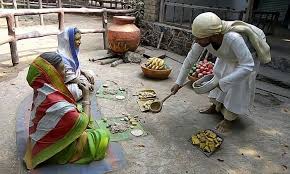
        Baba required very little food for Himself and what little He wanted, was obtained by begging from a few houses.

        But when He took it into His mind  to distribute food to all, He made all preparations from beginning to end, Himself.

        He depended on nobody and troubled none in this matter. First He went to the bazar and  bought all the things, corn, flour, spices etc., for cash. He did also the grinding.

        In the  open courtyard of the Masjid, He arranged a big hearth and after lighting a fire underneath kept a Handi over it with a proper measure of water…

        Sometimes He cooked ‘Mitthe Chaval’ (sweet rice), and at other times ‘pulava’ with  meat. At times in the boiling varan (soup), He let in small balls of thick or flat breads of  wheat flour. He pounded the spices on a stone-slab, and put the thin pulverized spices  into the cooking-pot. He took all the pains to make the dishes very palatable.

        He prepared  ‘Ambil’ by boiling jawari-flour in water and mixing it with butter-milk. With the food He  distributed this Ambil to all alike.

        To see whether the food was properly cooked or not,  Baba rolled up the sleeve of His Kafni. He put His bare arm in the boiling cauldron without the least fear. He churned (moved) the whole mass from side to side and up and  down. There was no mark of burn on His arm, nor fear on His face.

        When the cooking  was over, Baba got the pots in the Majid, and had them duly consecrated by the moulvi.

          First He sent part of the food as prasad to Mhalasapati and Tatya Patil. Then, He served the remaining contents with His own hand to all the poor and helpless people. They ate to their hearts’ content.

        Really blessed and fortunate must be those people who got food prepared  by Baba and served by Him.

      • During 72 generations that you were with me.

        During 72 generations that you were with me.

        A woman from Sholapur tried for 27 years to have a child, making prayers to various gods in vain. In her final effort, she and her stepson went to Shirdi and stayed for two months, serving Baba.

        Whenever she visited the Masjid, it was crowded, and Baba was always surrounded by people. She wanted to express her feelings, but couldn’t find the right moment to pray to Him for a child. In the end, she asked Shama to speak to Baba for her when He was alone.

        Shama told her Baba’s Darbar was open, still he would try for her, hoping the Lord would bless her. ‘She should be ready with a coconut and joss sticks when Baba had His meals. She should also come to Him, when he called’.

        One day, after dinner, Shama was wiping Baba’s wet hands with cloth, when Baba playfully pinched his cheek. Pretending to be upset, Shama said, “Deva, is it right to pinch me? We don’t want a mischievous God. Are we Your dependents; is this fruit of intimacy?”

        Baba replied, “Oh Shama, during 72 generations that you were with me, I never pinched you until now. Now you resent my touch.”

        Shama: “We want a God who always love us and give food; we don’t want reward or heaven. Let our faith unto your feet be awake.” Baba: “Yes, I have come for that. I care for you and love you.”

        Then Baba sat down, and Shama signaled to a lady who offered a coconut and joss sticks. Baba shook the dry coconut, and the kernel made noise. He said, “Shama, look how it’s rolling, what does it mean?” Shama replied, “The woman hopes to have a child that rolls and grows in her womb. Please bless her.”

        Baba questioned, “Will the coconut give her a child? People are foolish to believe such things!” Shama insisted, “Your blessing will bring her children. You are just wrangling and not giving a real blessing.” They continued to discuss.

        Baba wanted to break the coconut, but Shama suggested gifting it to the lady instead. Then Baba agreed, saying, “She will have a child in 12 months.” The coconut was split in two. One half was eaten by Baba and Shama. The other half was given to the lady.

        Shama alias Madhav looked at the woman and said, “You will be my witness. If you don’t have a child in a year, I will break a coconut on Deva’s head. If I fail, I won’t call myself Madhav anymore.”

        A year later, she had a son, taken to Baba at five months. The grateful father, Mr. Aurangabadkar, donated Rs.500, which was spent to build a shed for Baba’s home, “Shyamakarna.”

      • Now, How to visualize Baba

        Now, How to visualize Baba

        • Let us remember and visualize Shri Sai, now.
        • Let us go to Shirdi, and see carefully the programmes, after the noon-Arati. After the Arati ceremony was over, Sai used to
          • come out of the Masjid, and
          • standing on its edge,
          • distribute udi to the devotees with
          • very kind and loving looks.
        • The Bhaktas also got up with equal fervour,
          • clasped His Feet, and
          • standing and staring at Him,
          • enjoyed the shower of Udi.
        • Baba
          • passed handfuls of Udi into the palms of the devotees and
          • marked their foreheads with Udi with His fingers.
        • The love He bore for them in His heart was boundless. Then He addressed the Bhaktas as follows:-
          • “Oh Bhau, go to take your lunch;
          • you Anna, go to your lodgings;
          • you Bapu, enjoy your dishes”.
        • In this way He accosted each and every devotee and sent them home.
        • Even now, you can enjoy these sights if you bring into play your imagination. You can visualize and enjoy them.
        • Now bringing Sai before our mental vision, let us meditate on Him, from His Feet upwards to His face, and prostrating before Him humbly, lovingly and respectfully

        Baba in SSSC-Ch20

      • Blessed knows the greatness of his Guru

        Blessed knows the greatness of his Guru

        Make me the sole object of your thoughts and actions. You will, no doubt, attain Paramartha (the spiritual goal of life).

        Look at me whole-heartly; and I, in turn, look at you.

        Sitting in this Masjid, I speak the truth, nothing but truth.

        No sadhana or proficiency in the six Shastras, is necessary. Have faith and confidence in your Guru. Believe that, Guru is the sole Actor or Doer.

        Blessed is he, who knows the greatness of his Guru and thinks him to be Hari, Hara and Brahma (Trimurti -Gods) Incarnate.”

        Sai Baba in SSSC-Chapter 18 & 19.

      • Proof Reading of Sai Literatures, Opportunity at Shirdi

        Proof Reading of Sai Literatures, Opportunity at Shirdi

        Public Appeal from Shirdi, Shri Sai Baba Sansthan

        Shri Saibaba Sansthan, Shirdi is planning to reprint its Literatures in Marathi, Hindi, Telugu, Tamil, Malayalam, Bengali, Odia, Kannada, Gujarati, Assamese, Punjabi, Sindhi, Urdu, Nepali etc.

        For this purpose, Sansthan is inviting Sai Devotees, who have PHD to Form a Committee of 30/40 members.

        The work involves i)corrections ii) proof reading of the text and iii) Helping Sansathan to resolve issues/doubt, raised by Sai Devotees, on a regular basis.

        Since Sai Seva, there is no compensation for this project.

        Thanks SSS Trust, Shirdi

        PS: please check their official website for latest updates.