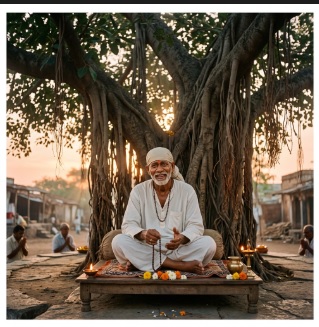
Basic About Shirdi Sai Baba
1. Who is Sai Baba according to spiritual understanding?
Sai Baba is regarded as a divine and universal being who transcends religious boundaries. He embraced both Hindu and Muslim traditions, showing the unity of all paths to God. He is honored as a Sadguru and divine incarnation guiding humanity.
2. Why did Sai Baba perform miracles?
Baba’s miracles—healing, protection from danger, guiding events, fulfilling worthy desires—strengthened faith, removed suffering, taught lessons, and drew devotees closer to God. They were never for display.
3. How did Sai Baba show omniscience and omnipresence?
Baba revealed people’s inner thoughts, distant events, past karmas, and future happenings. He knew vows, secrets, and life circumstances of devotees. He declared, “My abode is in your heart,” indicating His ever-present awareness.
4. Why did Sai Baba live such a simple and humble life?
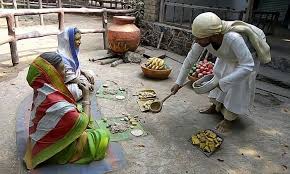
Baba lived in a simple mosque, begged for food, and owned nothing. This demonstrated His perfect humility, detachment, and closeness to all beings—including animals that freely ate from His bowl.
5. What is the role of a Sadguru?
The Sadguru removes the disciple’s ignorance, destroys ego, purifies past karmas, and leads them across the worldly ocean. Baba, as a Sadguru, transforms devotees from within and reveals their true divine Self.
6. How did Sai Baba transform the inner lives of devotees?
His darshan purified thoughts, weakened past karmas, awakened devotion, and increased dispassion. Baba transformed the character and consciousness of devotees, making them peaceful, compassionate, and spiritually aware.
7. What were Sai Baba’s central teachings?
Faith (Shraddha), Patience (Saburi), complete surrender, charity, non-attachment to wealth, truthfulness, service to others, and constant remembrance of God or Guru. He taught devotion through simple living and a pure heart.
8. What was Baba’s teaching about slander or criticism?
Baba taught tolerance and silence in the face of criticism. “Let anyone speak hundreds of things; do not retaliate.” He taught that slander harms the one who spreads it—reducing them spiritually.
9. Why did Baba accept service from devotees?
Baba accepted service only to bless and purify devotees, not because He needed anything. Service transformed the devotee’s heart, deepening humility and devotion.
10. Why did Sai Baba keep his religion and origins unclear?
To emphasize that God is beyond caste, creed, or identity. His life showed that love, devotion, and righteousness matter more than religious labels. His universality is a teaching in itself.
11. How did Baba guide devotees during hardships?
Sometimes with love, sometimes with sternness. His scolding was often a “blessing in disguise” meant to remove karmic impurities or redirect devotees to the right path.
12. What is Sai Baba’s ultimate spiritual message?
That God lives in all beings, love is the highest path, and surrender to the Guru brings inner peace, spiritual protection, and liberation. Baba unites all religions and teaches devotion beyond boundaries.
Shirdi — The Sacred Pilgrimage
13. What is Shirdi and why is it significant?
Shirdi is a small town in Maharashtra, India, where Sai Baba lived for around sixty years. It is one of the most visited pilgrimage destinations in India, drawing millions of devotees from every religion, nation, and walk of life. Baba’s physical presence there left a permanent spiritual imprint that devotees still feel today.
14. What are the key landmarks to visit in Shirdi?
Three places hold the deepest significance:
- Samadhi Mandir – Baba’s final resting place and the heart of the pilgrimage.
- Dwarkamai – The mosque where Baba lived for sixty years, kept His sacred fire (dhuni), and received devotees.
- Chavadi – Where Baba alternately rested and met His devotees; a place of deep intimacy.
15. Can I worship Sai Baba at home without visiting Shirdi?
Yes. Baba’s presence is not confined to any location — He declared, “My abode is in your heart.” You can create a sacred space at home: dedicate a small altar, offer incense and light, read Sai Baba literature such as the Satcharitra, chant His name, and pray with a sincere heart. Home worship can be just as transformative as a physical pilgrimage.
16. Are there Sai Baba temples outside India?
Yes. Sai Baba temples and devotional centres exist across every continent — in the USA, UK, UAE, Australia, Singapore, South Africa, and many more countries. Each temple serves as a local Shirdi for the community around it. Devotees worldwide gather, pray, and perform seva in His name regardless of their nationality or religion.
Devotional Practice & Daily Life
17. What is “Sabka Malik Ek” and why does Baba repeat it?
“Sabka Malik Ek” means “One God governs all.” Baba said this constantly to dissolve division between religions, castes, and communities. It is His most condensed teaching — that beneath every name and form, there is one divine reality. Living by this truth naturally leads to love, tolerance, and unity.
18. What daily spiritual practices does Baba recommend?
Baba encouraged reading the Satcharitra, chanting His name (especially on Thursdays), performing or supporting acts of seva (selfless service), offering food freely, giving to those in need, and maintaining a regular prayer routine. He also valued listening to spiritual stories, singing bhajans, and sitting in silence before God.
19. What is the importance of Thursday in Sai devotion?
Thursday is considered Baba’s special day, observed as “Guru Vaar” (the Guru’s day). Devotees perform special puja, read the Satcharitra, fast, light lamps, and offer flowers and food. Many experience heightened peace and answered prayers when they observe Thursdays with faith and sincerity.
20. How can I deepen my understanding of Sai Baba’s teachings?
Start with the Shri Sai Satcharitra — the primary sacred text narrating Baba’s life and miracles. Supplement it with His Charters and Sayings, devotee testimonials, and reflective articles. This website offers a Beginner’s Guide, Glossary, Moral Teachings, and Daily Affirmations to guide seekers at every stage of the journey. A sincere, open heart is the only prerequisite Baba ever asked for.