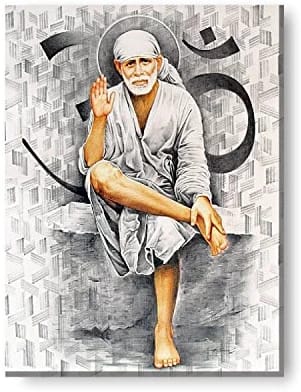
Pip: ShirdiSaiBaba.InterNational — where a nineteenth-century saint's accounting practices turn out to be more spiritually rigorous than most modern financial advisors.
Mara: Today's episode comes from Shirdi Sai Baba's International Devotees, and we're looking at one story that raises a genuinely striking question: what does it mean for discrimination — the act of discerning what is truly owed — to be divine?
Pip: Let's start with exactly that.
How Discrimination is divine?
Pip: The post opens a question that sounds almost counterintuitive — how can discrimination, the act of making distinctions, be a spiritual virtue? The story from Paragraph 255 of Sri Sai Baba's Charters and Sayings answers that by showing Baba accepting money from one man and returning it from another, on the same day, in the same room.
Mara: The post sets up the first case carefully: a Brahmin had made a vow in poverty to offer his entire first month's salary to Lord Dattatreya if he found work. He got the job, earned Rs. 15 that month, and then forgot the vow entirely as his salary climbed to Rs. 700. Baba asked him for exactly Rs. 15. His explanation, quoted directly: "Datta called for his own. He has called for Rs. 15, his due… So the money has been received."
Pip: So Baba isn't collecting a donation — he's settling a debt the devotee didn't even remember he owed. The spiritual ledger, apparently, does not forget even when the devotee does.
Mara: The second case is the sharper one. Another Brahmin, watching this exchange, voluntarily offered Rs. 35. He had his own history — a cook had stolen Rs. 30,000 in savings, a passing fakir told him to vow abstinence from rice and pray to Sai Baba, he kept that vow, the money came back within fifteen days, and he made the journey to Shirdi. Baba counted the Rs. 35 and handed it straight back.
Pip: Because the vow was fulfilled the moment he arrived. There was no outstanding promise attached to those notes.
Mara: Exactly. Baba's own words on the return: "But this Rs. 35 is not ours and so it has been returned." The post draws this out into three principles — complete detachment, the fulfillment of promises across however many years they've been neglected, and what it calls pure acceptance, taking only what clears a genuine karmic obligation.
Pip: The word the post uses is Rinanubanda — the bond of debt. Which reframes the whole episode: Baba isn't a treasurer, he's a trustee making sure no spiritual IOU goes permanently unpaid.
Mara: And that distinction between what is owed and what is merely offered turns out to carry real weight.
Pip: A saint who returns unsolicited money and chases down forgotten vows across decades — that's a specific kind of precision.
Mara: The idea that spiritual promises don't expire is worth sitting with. More from this community next time.