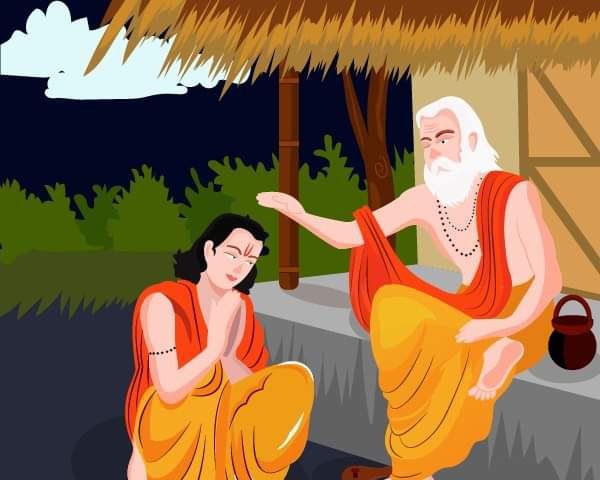
Tag: Instrument

  • Self-Affirmation from Chapter II of SSSC for Sai Babaย devotees

    Self-Affirmation from Chapter II of SSSC for Sai Babaย devotees

    ๐ŸŒธ Daily Affirmation Flow

    • Morning Invocation ๐ŸŒžโ€œMy heart feels faith in Sai Babaโ€™s stories and teachings, leading me to Bliss.โ€ โ†’ Begin the day by reading or listening to Sai Babaโ€™s leelas.
    • Work & Service ๐Ÿ”งโ€œI am only an outward instrument; my work is accomplished by HIS grace.โ€ โ†’ Remind yourself that every task is service.
    • Ego Surrender ๐ŸงŽโ€œI will surrender my ego completely at Sai Babaโ€™s feet.โ€ โ†’ Pause before decisions, offering them inwardly to Baba.
    • Transformation ๐Ÿคžโ€œMy thoughts are changed, past karmic force abated, and non-attachment grows upon seeing Sai Baba.โ€ โ†’ Reflect on detachment during challenges.
    • Grace Received ๐Ÿงšโ€œI have received Sai Babaโ€™s divine presence and glance, by the merit of past births.โ€ โ†’ Acknowledge gratitude for spiritual progress.
    • Renewal ๐Ÿšตโ€œI begin a new lease of life, the moment I touch Sai Babaโ€™s feet.โ€ โ†’ Use this as a mantra when starting new ventures.
    • Recognition of Divinity ๐Ÿ‘‘โ€œI recognize Sai Baba as omniscient and the Inner Ruler of all.โ€ โ†’ Close the day with surrender to Babaโ€™s universal presence.
  • Navigate the Best “Shirdi Sai Baba Online Resources”

    Navigate the Best “Shirdi Sai Baba Online Resources”


    Categorized map of the top Shirdi Sai Baba related websites. You can easily navigate them depending on your purpose.

    ๐Ÿ› Official Temple & Trust


    ๐ŸŒ Global Outreach & Philosophy

    • shirdisaibaba.international
      Dedicated to opening the heart of Sai Babaโ€™s teachings to Western and global communities, fostering spiritual connections that resonate across cultures and ages.
    • saibaba.org
      One of the oldest online resources and newsletters for worldwide devotees.
    • mohanji.org Hear the guided meditation on Shirdi Sai Baba

    ๐Ÿ™ Devotee Experiences & Miracles

    • mahaparayan.com
      This site reinforces faith through shared experiences, provides global community connection and also offers inspiration during festivals and personal challenges.
    • saiyugnetwork.com
      Community-driven site sharing miracles, prayers, and devoteesโ€™ experiences to strengthen faith.

    ๐Ÿ•‰ Guidance & Resources

    • shirdi-sai-baba.com
      Interactive Q&A, teachings, and spiritual guidance for seekers looking for answers through Babaโ€™s wisdom.
    • shirdi-sai-baba.com
      Simple Efective Shirdi One day darshan Tips and Guide

    I declare that the following information is shared based on my personal experience; and genuine, helpful to Shirdi Sai Baba Devotees, globally.

    โ† Back

    Thank you for your response. โœจ

    How related *(required)

    Thank you for contributing to the community of Sai Baba devotees. Subscribe to get a FREE PDF on Sai Baba spirituality.

  • Western Scholars Contributions on Sai Baba

    Western Scholars Contributions on Sai Baba


    Several scholars have made significant contributions to the academic understanding of Shirdi Sai Baba. Noteworthy contributions include:

    • Antonio Rigopoulos:
      • A distinguished scholar who authored the first book-length academic study of Shirdi Sai Baba, titled “The Life and Teachings of Sai Baba of Shirdi” (1993). His work emphasizes Sai Baba’s syncretic and tolerant nature while offering an analysis of his teachings and yogic powers.
    • Karline McLain:
      • Recognized for her work, “The Afterlife of Sai Baba: Competing Visions of a Global Saint,” she critically examines the diverse interpretations of Sai Baba and the Hinduization of his figure through textual, visual, and material culture.
      • Additionally, her study, “Be United, Be Virtuous,” investigates the role of Sai Baba’s teachings in fostering religious harmony and their broader cultural impact within Indian society.
    • Smriti Srinivas:
      • Investigates the devotional spaces and transnational reach of the Sai Baba movement, exploring how Sai Baba’s presence is constructed and experienced across various geographies, including Asia and Africa, as presented in her publication, “Devotional Spaces of a Global Saint: Shirdi Sai Baba’s Presence” (2022).
    • Jonathan Loar:
      • Makes noteworthy contributions to the comprehension of hagiographical interpretations, particularly in his work, “From Neither/Nor to Both/And: Reconfiguring the Life of Shirdi Sai Baba in Hagiography,” which explores the dynamics of defining Sai Baba’s religious identity.
    • David Hardiman:
      • Through his publication, “Miracle Cures for a Suffering Nation: Sai Baba of Shirdi,” provides valuable insights into the social and curative dimensions of Sai Baba’s miracles, with a particular emphasis on the significance of sacred ash (Udi) and its influence on the expansion of his following.
    • Charles White (1972)
      • His article โ€œThe Sai Baba Movement: Approaches to the Study of Indian Saintsโ€ was among the first to academically frame Babaโ€™s growing popularity as a pan-Indian phenomenon. White also coined the term โ€œSai Baba movement,โ€ which later scholars like Rigopoulos and McLain expanded upon. His work emphasized Babaโ€™s role in transcending caste and religious boundaries.
    • Arthur Osborne (1958)
      • The Incredible Sai Baba is one of the earliest popular biographies written in English. Osborne, a devotee of Ramana Maharshi, approached Baba with reverence and spiritual admiration. While not academic in the modern sense, his book helped introduce Baba to Western audiences and shaped early devotional perceptions. Itโ€™s more hagiographic than critical, but still influential in its time.

    References:

    1. https://it.m.wikipedia.org/wiki/Antonio_Rigopoulos (it)
    2. https://www.bucknell.edu/fac-staff/karline-mclain
    3. https://anthropology.ucdavis.edu/people/smriti-srinivas
    4. https://wrldrels.org/?s=Jonathan+Loar
    5. https://www.researchgate.net/publication/
    6. https://core.ac.uk
  • Promoting Love

    Promoting Love

    Sai Baba actively promoted love and unity, both among his devotees and towards animals, through his teachings, actions, and the examples he set. Here’s how the sources illustrate these aspects:

    • Unification and Harmony:
      • Sai Baba worked towards the unification of communities, particularly Hindus and Muslims.
      • He celebrated Hindu festivals like Rama-Navami with all due formalities.
      • He also permitted the ‘Sandal’ procession of Mahomedans and allowed Muslims to offer prayers (Namaj) in his Masjid. This demonstrated his disregard for religious distinctions and his wish for communal harmony.
      • His constant advice was that “Rama (the God of the Hindus) and Rahim (the God of the Mahomedans) were one and the same.” He emphasized that their devotees should not quarrel. Instead, they should “join hands and bring both the communities together” for national unity.
    • Fostering Unity and Eradicating Duality: Baba emphasized the importance of dissolving the sense of difference between individuals and with God.
      • He explicitly stated, “Demolish the wall of difference that separates you from Me; and then the road for our meeting will be clear and open. The sense of differentiation, as I and thou, is the barrier that keeps away the disciple from his Master, and unless that is destroyed the state of union or atonement is not possible“.
      • This teaching directly supports universal love by promoting the realization of oneness.
    • He also encouraged his devotees to love their Guru with whole-hearted affection. He advised them to surrender completely. He suggested prostrating reverentially before Him to attain this unity.
    • Direct Instruction on Conduct:
      • Baba provided invaluable general advice for interacting with others:
      • If any men or creatures come to you,
        • do not discourteously drive them away,
        • but receive them well and treat them, with due respect.
      • Shri Hari (God) will be certainly pleased, if you give water to the thirsty, bread to the hungry, clothes to the naked, and your verandah to strangers for sitting and resting“.
      • This emphasizes hospitality, compassion, and respectful treatment of all.
    • Discouraging Slander and Gossip: Baba strongly disliked slander.
      • He stated, “He who carps and cavils at others, pierces Me in the heart and injures Me, but he that suffers and endures, pleases Me most“.
      • In one instance, he corrected a slanderer by pointing to a pig eating filth and comparing the slanderer’s actions to the pig’s,
      • thereby teaching a powerful lesson against reviling others.
    • Personal Relationships and Care: Baba demonstrated deep personal love and care for his close devotees.
      • He shared his dormitory with Tatya Kote Patil and Bhagat Mhalsapati for 14 years, showing immense affection and intimacy.
      • He loved Khushalchand of Rahata and “watched his welfare, day and night,” even visiting him.
      • He exhibited “motherly love” towards his disciples, knowing their wants and feeling boundless joy when they were adorned.
      • He ensured the proper execution of religious functions in devotees’ homes, even attending a dinner in Mr. B.V. Deo’s house through an appearance.
      • His “anger” was often a disguise for blessings or tests, as seen
        • when he appeared enraged with the women grinding wheat but later smiled at their devotion, or
        • when he seemingly scolded Haji Sidik Falke only to then show him great favor.
    • He sometimes appeared in dreams or visions to guide and comfort his devotees, like the instance of Hemadpant’s Shimga dinner.
    • Importance of Guru-Disciple Relationship: Baba emphasized
      • complete surrender and unwavering faith in the Guru, assuring that such
      • devotion leads to spiritual progress and self-realization. This deep bond fosters profound love and trust.
    • Saints, like Baba and Shri Tembye Swami, are shown to love each other with “fraternal affection,” indicating a wider spiritual family bound by love.

    Promoting Love with Animals:

    • Oneness with All Creatures: Sai Baba explicitly taught the principle of seeing God in all beings, including animals. When Mrs. Tarkhad fed a hungry dog, Baba told her, “The dog which you saw before meals and to which you gave the piece of bread is, one with Me, so also other creatures (cats, pigs, flies, cows etc.) are one with Me. I am roaming in their forms. He, who sees Me in all these creatures is My beloved. So abandon the sense of duality and distinction, and serve Me, as you did today“. This is a profound teaching that directly connects compassion for animals with devotion to God.
    • Compassion and Non-violence: Baba’s conduct consistently demonstrated compassion for animals. He never drove away dogs, cats, or crows that ate from his food pot, indicating his acceptance and care for them. He also gave a clear opinion on the killing of serpents, stating, “God lives in all beings and creatures, whether they be serpents or scorpions… So we should take pity and love all creatures, leave off adventurous fights and killings and be patient. The Lord (God) is the Protector of all“.
    • Reminiscences of Past Lives: In a remarkable instance, Baba purchased two goats for a significantly high price, explaining to his surprised devotees that these goats were formerly two human brothers who had fought bitterly and killed each other. He bought them out of pity, fed them, and then returned them. This story highlights Baba’s boundless love and compassion for all creatures, acknowledging their karmic journeys.
    • Protection of Animals:
      • Baba saved his devotees from potential harm from animals like snakes,
      • sometimes by foretelling the danger and
      • other times by direct intervention,
      • but he always advised against killing them,
        • emphasizing universal love and the divine presence in all creatures.
      • Even a fierce tiger was drawn to his feet and found a blessed end in his presence, demonstrating Baba’s all-encompassing mercy towards even wild animals.
  • Complete surrender to the Guru involves

    Complete surrender to the Guru involves

    Complete surrender to the Guru encompasses several dimensions, as elucidated in the Shri Sai Sat Charitra:
    Devotion and Remembrance: This entails a total surrender of oneself while consistently recalling the Guru’s presence, with the necessity of continually chanting the Guru’s name.
    Seeing the Guru in all beings: Engaging in meditation on the Guru allows one to perceive Him within every being, thereby bestowing eternal bliss. A true devotee regards every Guru as Krishna.
    Lack of Egoism: This principle mandates the relinquishment of pride and ego, thereby surrendering to the Guru who resides within one’s heart. The removal of egoism and the complete trust in the Lord liberates one from worldly constraints.
    Service: True surrender requires Sarvaswa Sharangati (total surrender) to the Sad-guru, where one must recognize that they are not the sovereign of their own body; rather, the body belongs to the Guru and exists solely to serve Him.
    Faith and compliance: A disciple’s duty and dharma necessitate implicit and prompt adherence to the Guru’s directives.
    Channeling Senses to the divine: Prior to indulging the senses, mind, and intellect in their respective pursuits, it is incumbent to remember the Guru; such remembrance serves as an offering to Him.
    Experiencing Oneness: The individual who approaches the Guru achieves oneness with Him, akin to a river merging with the sea.
    Desirelessness: The Guru liberates His devotees from desires, rendering them free.
    Love: The Guru desires nothing but love for all sentient beings. Genuine love requires earnest affection; thus, where there is true yearning and feeling, God reveals Himself.
    Mindfulness: Regularly chanting the Guru’s name and engaging in meditation fosters the ability to perceive Him in all beings, which in turn grants eternal bliss. A definitive indication of this practice is the attainment of a calm and peaceful mind.

  • Don’t entertain the sense of doership

    Don’t entertain the sense of doership

    Once Shri Vasudevanand Saraswati, known as Shri Tembye Swami, camped at Rajamahendri (Andhra State) by the river Godavari. He was a devoted Jnani and Yogi Bhakta of God Dattatreya.

    Mr. Pundalikrao, a pleader from Nanded, visited him with friends, during which they mentioned Shirdi and Sai Baba.

    The Swami bowed when Baba’s name was spoken. He gave Pundalikrao a coconut. The Swami asked him, to offer it to Baba, with his regards. He also wanted Pundalikrao, to remind Baba to remember him.

    The Swami noted that he usually does not bow to others, but made an exception here. Pundalikrao agreed to take the fruit and message to Baba.

    A month later, Pundalikrao and his friends traveled to Shirdi with the coconut. They stopped at a rivulet for water. Feeling hungry, they broke the coconut. They mixed it with their Chivda, making it tastier. Unfortunately, this was the coconut, meant for Baba.

    When Pundalikrao reached Shirdi, he remembered the coconut and felt guilty. He saw Baba, Who already knew about the coconut and asked Pundalikrao, to give the items from his brother -swami.

    Pundalikrao confessed his negligence. He sought forgiveness and offered to replace the coconut.

    Baba declined his offer, saying its value was far greater than an ordinary one.

    Baba also added- “

    • Now you need not worry yourself any more about the matter.
    • It was on account of my wish that the coconut was entrusted to you.
    • Ultimately it was broken on the way.
    • Why should you take the responsibility of the actions on you?
    • Do not entertain the sense of doership in doing good, as well as for bad deeds; be entirely prideless and egoless in all things and
    • thus your spiritual progress will be rapid
  • โ€œSri Sai Baba’s Charters and Sayingsโ€œ -BCS

    โ€œSri Sai Baba’s Charters and Sayingsโ€œ -BCS

    As Lord Sree Krishna manifests Himself in the Bhagavad Gita, so does Baba in the โ€œSri Sai Baba’s Charters and Sayingsโ€- which was compiled by Sri B.V. Narasimha Swami Ji, India. This Book was published by All India Sai Samaj, Mylapore, Chennai-600004, INDIA

    “Self-realisation is the aim of Mysticism; but the โ€˜means to the endโ€™ must be suited to the needs of the individual.

    Baba in the flesh was the embodiment of the Supreme Spirit, lighting the Sadhakas’ path by His every word and action, to his devotees.

    The โ€˜Charters and Sayings’ were compiled by Narasimha Swami. They originate from Shirdi Sai Baba’s Word and Action. This compilation will serve as a manifestation of that Supreme Spirit in words.

    As Lord Sree Krishna manifests Himself in the Bhagavad Gita, so does Baba in the ‘Charters and Sayings’.

    It would transport persons, like my humble self who had the privilege of being at Baba’s feet when HE was in the body, back into the old times. It revive fond memories of the blissful moments spent with the Master.

    At one stage says Baba “I am your servant’s servant”; next “I am a servant of Allah”; and yet again “I am HE.” Intellect fails here; but the spirit beyond the intellect and mind is manifest.

    In the body, Baba was the insignificant human being. He was between it and the supreme Shiva as “Jeeva,” a wheel in the great machine. Transcending these, He stood as Shiva Himself.

    The miracles referred to in the book may cause a sceptic to stare. Devotees in tune with the Infinite Baba see them as events in evolution. These events are mysterious to the mere man. However, they are explicable in the light of Faith and Love.

    The onward march of Science may someday co-ordinate these phases in the frame of the Intellect.

    The ‘Charters and Sayings’ are useful as precepts both in the world spiritual and the world material”

    We cannot be too grateful to Nara Simha Swamiji for the labour of love. It has crystallized this phase of Baba’s divine personality in the ‘Charters and Sayings’. May the book serve to create and foster Faith and Devotion in all corners of the country (World)”.

    By Mr. Justice M. B. Rege, B.A., L.B., High Court ex-Judge, Indore, India, in his Foreword Note


    Posts relating to BCS

    Quotation- BCS 309

    Alms giving without discrimination “Athiti is what ever creature is hungry and comes on to you, at that (kakabali-crow offering) time, whether it is human or a bird, beast or insect. All these seek food. The real Athiti that you get, (but) you do not regard as such. These have come to you in lakhs.โ€ฆ

    Keep reading

    SAVING LIFE

    Babaโ€™s saving life Para Number in the Book & About His Saving Life SAVING LIFE (a) S.B. Nachne’s 579. Baba, in the presence of S.B.N. and many others in 1913 said: “We should not trust mad men.” In 1914 Nachne was doing puja at home and a mad man rushed inside, seized his throat, and said, “I will drink your blood, and opened his mouth wide to bite throat. S.B.N. thrust a spoon into the man’s openโ€ฆ

    Keep reading

    HELP IN MARRIAGE

    Babaโ€™s Says on Marriage Para Number in the Book & About Marriage (a) Adam Dalali 575. Adam Dalali (to Baba): My son has to be married. Unless you bless and give permission, how am I to get the money for it? B.: “Wait.” After a time, Baba said to A.D. : ‘Now, celebrate your son’sโ€ฆ

    Keep reading

    Baba’s help in travel

    Baba helped his devotees in travel Para Number in the Book ‘BCS” , About His Help in Travelling 564. Baba to Nana (with Haridas): “Take food and go to the train.” [Haridas having no faith in Baba started without meal and …Nana Chandorkar started only after taking his meal and again taking leave of Baba,โ€ฆ

    Keep reading

    KINDNESS EVEN TO CRIMINALS

    Babaโ€™s kindness even to criminals Para Number in the Book &About His kindness to Criminals A clerk then came and prostrated before Baba. There was a warrant out for him for having embezzled his master’s money. So his immediate senior officer, who was present at the mosque, thought that he must go and inform theโ€ฆ

    Keep reading

    Something went wrong. Please refresh the page and/or try again.

  • Why should we never give up service to society?

    Why should we never give up service to society?

    Even liberation (moksha) can be won through serving and promoting the progress of society.

    Through the sense of unity, the willingness to sacrifice and the softness of compassion, all objects can be gained.

    So, the Sathya Sai Organisation must move forward with hearty enthusiasm in the field of service to society.

    The first lesson in seva must be learnt in the family circle. Father, Mother, brothers, sisters –

    in this limited well-knit group, one must engage in loving service and prepare for wider seva that awaits outside home.

    The character of each individual member determines the peace and prosperity of the family;

    the Character of each family is the basic factor that decides the happiness and joy of a village or community.

    And, the nation’s progress is based on the strength and happiness of its communities.

    So, for the welfare of the country and of the entire World, the spirit of service, vital enthusiasm, constructive imagination, pure motivation, and unselfish alertness are urgently needed.

    – Puttaparti Satya Sai Baba in the Divine Discourse on Nov 19, 1981

  • Mere darshan itself was so conducive to happiness

    Mere darshan itself was so conducive to happiness

    An interesting story about seeing Sai Baba

    • Shama ( Baba’ s close Devotee) and Kakaji (Priest of Goddess Sapta Shringi), both started for Shirdi from Vani Temple. On reaching the place, Kakaji went to the Masjid, and fell at Baba’s Feet.
    • His eyes were soon bedewed with tears, and his mind attained calmness.
    • According to the earlier vision of the his Goddess, no sooner did he see Baba, that his mind lost all its restlessness and it became calm and composed.
    • Kakaji began to think, in his mind,
      • “What a wonderful power is this!
      • Baba spoke nothing, there was no question and answer,
      • no benediction pronounced; the mere darshana itself was so conducive to happiness;
      • the restlessness of my mind disappeared by His mere darshan,
        • consciousness of joy came upon me – this is what is called ‘the greatness of darshan’.”
        • His vision was fixed on Sai’s feet and he could utter no word.
        • Hearing Baba’s Leelas, his joy knew no bounds.
        • He surrendered himself completely to Baba, forgot his anxiety and cares and got undiluted happiness.
        • He lived happily there for twelve days and after taking Baba’s leave, Udi and blessings returned home.

    SSSC-Ch30

  • Movies On Life History Of Shirdi Sai Baba

    Movies On Life History Of Shirdi Sai Baba

    There are many movies on the Life of Shirdi Sai Baba.

    YearFilmLanguage
    1955Shirdi Che Sai BabaMarathi
    1977Shirdi Ke Sai BabaHindi
    1986Sri Shirdi Saibaba MahathyamTelugu
    1989Bhagavan Shri Sai BabaKannada
    1993Sai BabaMarathi
    1999Maya /   Guru Poornima /  JayasuryaTamil
    Telugu
    Kannada
    2000Sri Sai MahimaTelugu
    2001Shirdi Sai BabaHindi
    2005Ishwarya Avatar Sai BabaHindi
    2010Malik EkHindi
    2011Bhagwan Sri Shirdi Sai BabaKannada
    2012Shirdi SaiTelugu
    2017Mere SaiHindi
    “Bhagwan Sri Sai Baba”, released in 1993 is also available with English Title in YouTube

    โœ… Direct Links to Authorized Sai Baba Full Movies

    You can safely use a direct link to any of these videos available in YouTube:

    Note : WE acknowledge the movie is hosted by the above distributors on YouTube, and that our site is only providing a link; We are not hosting or distributing the film.

    Enjoy watching these heartfelt films and other beautiful depictions of Shirdi Sai Baba at cinema theaters, on YouTube, and on TV, surrounded by your loved ones; may you all receive Baba’s blessings together.


    Do you know other Cinema etc ? Please help other Devotees to see. Both get blessings of Shirdi Sai Baba; Give the following details:-

    โ† Back

    Thank you for your response. โœจ

    Choose one option
    YYYY-MM-DD