Tag: Holy Ash

Ob Udi from Dhuni cures powerfully

  • Podcast Episode: Udi- Holy Ash

    Podcast Episode: Udi- Holy Ash

    Happy World PODCAST DAY -2026

    Pip: ShirdiSaiBaba.InterNational — where the sacred and the practical sit together, is pleased to release this Podcast on this World Podcast Day.

    Mara: Today we’re looking at one post from Shirdi Sai Baba’s International Devotees — a deep dive into Udi, the holy ash from Baba’s dhuni, covering what it is, how it was prepared, and the remarkable accounts of what it has done.

    Pip: Let’s start with the ash itself — what it is and why it matters.

    Nature, Uses, and Preparation of Udi- Holy Ash

    Mara: The central question here is what Udi actually is — not just materially, but in terms of what it represents and what it’s understood to do for the people who receive it.

    Pip: The post draws directly from Chapter 33 of the Sree Sai Samartha Satcharita, and it frames Udi as something that operates on two levels at once — physical and spiritual. The setup is this: Baba kept a fire burning day and night in the Masjid, feeding it with wood purchased from devotees’ dakshina offerings, and the resulting ash became “a healing touch in the afflictions of life.”

    Mara: So the upshot is that the ash isn’t incidental — it’s the direct product of a deliberate, sustained ritual act, which is part of why devotees treat it as carrying Baba’s grace rather than just being a byproduct of fire.

    Pip: And the post is careful to separate the material uses from the spiritual ones. On the material side, there are what the text calls “innumerable stories” of Udi curing physical and mental ailments. On the spiritual side, it functions as a reminder that the body will ultimately be reduced to ash — a prompt toward the eternal rather than the temporary.

    Mara: That dual framing matters because it explains why the same substance shows up in such different contexts. Applying it is described as a way to destroy sins and help seekers cross the “ocean of existence” — that’s the spiritual register — while also being handed to a laboring woman in a medical emergency.

    Pip: Which brings us to the two specific miracles the post recounts. The Jamner miracle involves Nana Chandorkar’s daughter in severe labor. Baba, sensing her distress from Shirdi, sent Udi with a messenger named Gosavi Ramgir. Nana administered it with water, and the delivery was immediate and safe.

    Mara: The second account is even more striking because there’s no Udi in it at all. A girl is suffering from plague, her father asks Nana for help, and Nana is at Thane railway station with nothing on him. He picks up road dust, invokes Baba’s name, and applies it to his own wife’s forehead as a proxy. At that exact moment, the girl’s fever breaks.

    Pip: The post is essentially making the case that the ash is a vehicle, not the source — that what’s operating is Baba’s omnipresence, and the Udi is the form it takes when it’s available.

    Mara: That reframe holds the whole piece together. The preparation, the dual uses, the miracles — they all point back to the same claim about where the power actually resides.


    Pip: Fire, ash, and the question of what carries grace when the physical object isn’t there — that’s a lot to sit with.

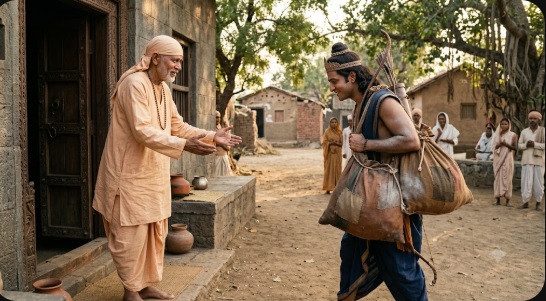
    Mara: It is. When Baba was in a cheerful mood, He used to sing merrily. One such song was about Udi,”Oh, playful Rama, come, come, and bring with you sacks of Udi.”


  • Nature, Uses, and Preparation of Udi- Holy Ash

    Nature, Uses, and Preparation of Udi- Holy Ash

    Based on Chapter 33 of the Sree Sai Samartha Satcharita, here is the discussion on the nature, uses, and preparation of Udi:

    What is Udi?

    Udi is the sacred ash taken from the dhuni, the eternally burning fire kindled by Shirdi Sai Baba in the Masjid. It is regarded by devotees as a miraculous and holy substance that embodies Baba’s power and grace.

    Preparation by Baba

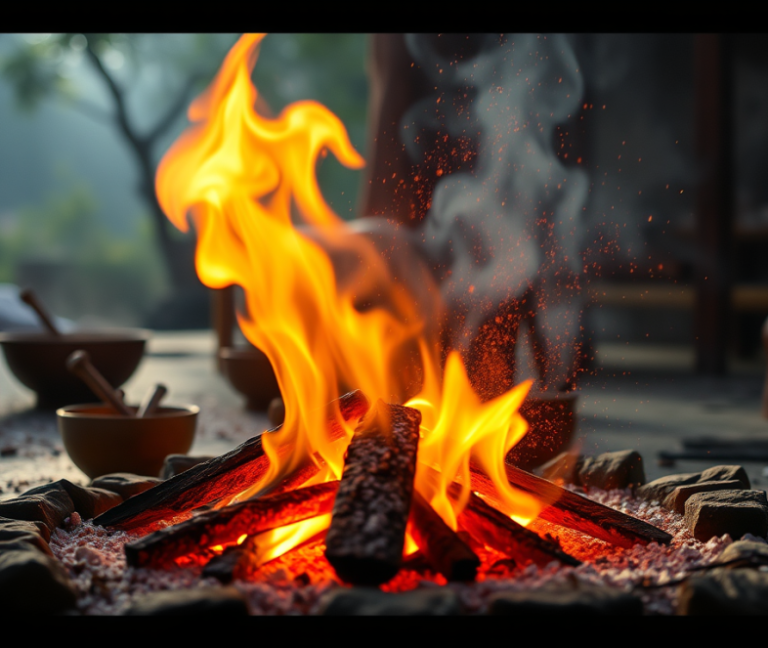
    Baba prepared Udi by offering an oblation of firewood (logs and sticks) into the dhuni. He purchased this wood using the dakshina (monetary offerings) collected from devotees, piling it in large heaps to keep the fire burning day and night. The resulting ashes were then distributed to his followers as a blessing.

    Uses of Udi

    The sources categorize the significance of Udi into both material and spiritual realms:

    • Material World (Health and Prosperity): Udi is frequently used to cure physical and mental ailments. The text states there are “innumerable stories” where Udi was used to benefit the health and prosperity of devotees, acting as a “healing touch in the afflictions of life”.
    • Devotional and Spiritual (Destruction of Sins): Spiritually, Udi serves as a reminder of the transience of the human body and the illusory nature (Maya) of the universe. It teaches that the body will ultimately be reduced to ashes, prompting a focus on the eternal Brahman. Applying Udi with devotion is said to destroy sins and help seekers cross the “ocean of existence”.

    Notable Instances of its Power

    The sources describe two specific instances where Udi—or even road dust used in its stead—demonstrated Baba’s omnipresence:

    • The Jamner Miracle: When Nana Chandorkar’s daughter was suffering from intense labor pains in Jamner, Baba felt compassion from Shirdi. He sent a packet of Udi with Gosavi Ramgir (Bapugir) to Nana. Nana gave the Udi to his wife to administer to their daughter with water, resulting in an immediate safe delivery.
    • The “Road Dust” Incident: In another case, a devotee’s daughter was suffering from the plague. Her father sent a message to Nana Chandorkar asking for Udi. Nana, who was at Thane railway station and had no Udi with him, picked up a little dust from the ground, invoked Sai Baba’s name, and applied it to his own wife’s forehead on behalf of the girl. At that exact moment, the girl’s fever broke and she began her recovery.
  • Tips for daily living. (@35)

    Tips for daily living. (@35)

    Chapter 35 of the “Shri Sai Sat Charitra” provides several important tips and teachings for daily living, conveyed through Sai Baba’s words and actions. These include:

    • Overcoming the sense of differentiation: Sai Baba advised a friend of Kakasaheb Mahajani to “destroy the Teli’s (Adjacent oil store) wall (sense of difference) between us, so that we can see and meet each other face to face”. This highlights the importance of removing perceived distinctions between individuals and fostering a sense of unity in one’s interactions and outlook.
    • Cultivating steady faith and avoiding a fickle mind: To a “fickle-minded gentleman” (referring to Kaka Mahajani’s master, Mr. Thakkar), Baba advised: “Now please keep your faith on any one place (point) you like, why roam like this? Stick quietly to one place”. This emphasizes the need for steadfastness and focus in one’s spiritual or daily pursuits, rather than being swayed by various anxieties or external circumstances.
    • Understanding the spiritual significance of giving (Dakshina): Baba explained that His practice of asking for Dakshina was not for personal gain but to teach devotees about renunciation and purification. He stated that wealth should be used to “work out Dharma” (righteous conduct) and that if it is used only for personal enjoyment, it is wasted. He further taught that “The best way to receive is to give” and that “The giving of Dakshina advances Vairagya (Non-attachment) and thereby Bhakti and Jnana. Give one and receive tenfold“. This provides a profound insight into the spiritual benefits of charity and detachment.
    • Embodying non-attachment and transcending dualities: Baba’s own conduct served as an example; He was “totally non-attached” to worldly praise or disregard, remaining unaffected by “pleasure and pain”. This illustrates the principle of living with detachment, not being excessively elated by positive experiences nor depressed by negative ones.
    • The power and efficacy of Udi with faith: The story of Mrs. Newaskar, who faced a food shortage, demonstrates that when Udi (sacred ashes) is used with intense faith (“As one feels intently, so he realizes accordingly”), difficulties can be overcome, and needs can be met. This suggests that faith in Baba’s grace and His Udi can bring about practical solutions in daily life.
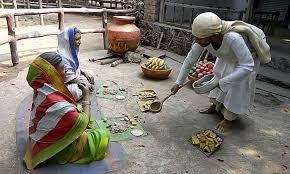
    • Perceiving God in all beings: Balaji Patil’s response to a serpent, which he believed to be Sai Baba, exemplifies the spiritual practice of seeing God or divinity in all creatures. His fearless and devotional approach to the serpent, offering it milk, highlights that recognizing the divine in everything leads to fearlessness and compassion.

    Additionally, while not directly “tips given” by Baba in this chapter, the narrative also shows:

    • The effectiveness of worshipping Baba’s picture with faith and devotion for overcoming personal troubles like insomnia, as seen in the Bandra Insomnia Case.
    • The value of disinterested service and complete surrender to the Guru, as exemplified by Balaji Patil Newaskar, who dedicated his efforts and possessions to Baba.
  • Baba’s Compassion and Love

    Baba’s Compassion and Love

    Shirdi, Shri Sai Baba’s life is a testament to His boundless compassion, profound gentleness, and unwavering selflessness. He consistently demonstrated these qualities through His actions, teachings, and interactions with His devotees. Here are instances:

    Baba’s Compassion:

    • Protection from Epidemics: Baba displayed compassionate foresight by grinding wheat and having the flour thrown on the Shirdi village borders to curb a cholera epidemic.
      • Villagers understood that He was not only grinding wheat.
      • He was also grinding the cholera itself to pieces. This act pushed cholera, out of the village. This led to the epidemic’s subsidence.
    • Encouragement of Hemadpant: When Hemadpant expressed self-doubt about writing Baba’s biography,
      • Baba gently encouraged him. He blessed him with Udi (sacred ashes) and placed His boon-bestowing hand on his head.
      • Baba assured,
        • “I will help him.
        • He is only an outward instrument.
        • I should write Myself My autobiography and
        • satisfy the wishes of My devotees”.
        • This shows His desire for devotees’ spiritual growth and His loving support.
    • Motherly Love for Disciples: Baba exhibited a unparalleled motherly love towards His disciples. He was always attending to their needs. Sadgurus like Baba have this peculiar and extraordinary love for their disciples.
      • All-Embracing Love and Tolerance:
        • Baba’s all-embracing love was evident in His defense of the Rohilla, who disturbed villagers with loud prayers.
        • Baba took the villagers to task, explaining that the Rohilla’s prayers kept away “Durbuddhi” (bad thoughts),
        • thus protecting even those perceived as troublesome.
    • Omnipresence and Constant Protection: Baba’s statement: “I am the Inner Ruler of all and seated in their hearts. I envelope all the creatures, the movable and immovable world.“
    • Curing Ailments through Grace: Baba cured numerous diseases without using conventional medicine. He did so through His Grace, Words, or Udi. This demonstrated His compassion for the suffering. Examples include:
        • Bhimaji Patil’s severe tuberculosis, cured by Baba’s words of hope and mercy, through two dreams.
        • Bala Ganapat Shimpi’s malaria, cured by instructing him to feed a black dog, with rice mixed with curds.
        • Bapusaheb Booty’s dysentery and vomiting, instantly cured by Baba’s command, “Now take care, you should not purge any more” and “The vomiting must also stop”. He also cured in another time, Booty’s cholera with a seemingly fatal remedy, effective due to Baba’s word.
        • A Swami from Alandi’s ear pain, relieved by Baba saying, “Alla Accha Karega (God will do good)”.
        • Madhavrao Deshpande’s piles and Gangadharpant’s stomach-pain, cured by simple words and touch, and Nanasaheb Chandorkar’s stomach-pain with a sweetmeat.
        • A doctor’s nephew of tubercular bone-abscess, cured with Udi and Baba’s “loving glances”.
        • Dr. Pillay’s excruciating guinea-worm pain, relieved by Baba’s command to be ‘fearless’ and allowing an accidental step on the wound, to expel the worms.
        • Shama’s sister-in-law’s bubonic plague, cured overnight by sending Udi and giving instructions.
        • A Harda gentleman’s bladder stone, dissolved with Udi mixed with water.
        • A Bombay lady’s painless delivery, despite a stillborn issue, by her praying to Baba and consuming Udi-mixture.
      • Acceptance of Sincere Offerings: Baba lovingly accepted offerings made with devotion, such as
        • Mr. Cholkar’s small offering of sugar-candy, knowing his secret vow to save money for his trip by abstaining from sugar.
        • He knew devotees’ sincere intentions,
          • even reminding them if they
          • forgot to offer something,
          • demonstrating His acceptance of their inner devotion over the material value.
      • Teaching Non-duality through Action: Baba profoundly taught the principle of “See God in all beings”
        • when He told Mrs. Tarkhad, “Mother, you have fed Me sumptuously… The dog which you saw before meals and to which you gave the piece of bread is, one with Me, so also other creatures… I am roaming in their forms. He, who sees Me in all these creatures is My beloved.“. This practical demonstration encouraged compassion for all life.
      • Drawing Devotees and Fulfilling Desires: Baba had an incredible ability to draw devotees to Shirdi, “like a sparrow, with a thread tied to its feet.” He was omniscient and knew their innermost thoughts and desires. Often, His compassion led Him to fulfill them. Examples include:
          • Knowing Lakhamichand’s taking a loan for his darshan and forgetting to buy guavas, but arranging for an old woman to sell him the fruits.
          • Knowing Damu Anna’s secret thoughts about speculative business and gently dissuading him, saving him from financial ruin. He blessed Damu Anna’s wife with four sons and four daughters, by gave her four mangoes as Prasad. This act overrode astrological predictions.
          • Fulfilling Mrs. Tendulkar’s dream of her son passing his medical examination despite unfavorable astrological predictions, emphasizing faith. He also blessed Mr. Tendulkar with a higher pension after a dream.
          • Ensuring painless death and salvation (Sadgati) for devotees like Sannyasi Vijayanand, Balaram Mankar, and Tatya Noolkar; Even showering flowers on Megha’s body and arranging his funeral rites after his passing shows, deep affection.
        • Compassion for Animals: Baba displayed immense compassion for animals.
          • Notably, he bought two goats for an exorbitant sum. He explained their past lives and their enmity in their previous human forms. Out of pity, he fed them.
          • He also taught not to kill creatures, stating “God lives in all beings and creatures”.
        • Personal Sacrifice for Devotees:
          • A supreme act of compassion was when Baba
          • sacrificed His own life to save Tatya Kote Patil’s life, fulfilling an earlier prophecy that Tatya would pass away, but Baba took his place.

        Shirdi’s Shri Sai Baba exemplified unparalleled compassion and selflessness through numerous acts. He protected villagers from epidemics, encouraged disciples, healed ailments without medicine, and accepted sincere offerings. Baba’s teachings emphasized seeing God in all beings, fulfilling devotees’ desires, and displaying profound love for both people and animals, often embodying true sacrificial spirit.

      • Irani’s Daughter

        Irani’s Daughter

        Acology means the science of therapeutic remedies. It encompasses a wide range of practices and therapies. These include medications, physical therapy, mental health, and even alternative methods.

        Baba is very good in therapeutic remedies including alternative methods ie Acology

        Now read the experience of an Irani gentleman. His young daughter got fits every hour.

        She experienced a convulsion. She lost her power of speech. Her limbs shrunk and contracted. She fell down senseless. No remedy gave her any relief.

        A friend suggested that her father use Baba’s Udi. The friend asked him to get it from Kakasaheb Dixit at Vile Parle (suburb of Bombay). Then the Irani gentleman got the Udi and gave it mixed with water to his daughter daily for drinking.

        In the beginning, the convulsions occurred every hour. Then, they came every seven hours. After a few days, the daughter recovered completely.

      • Baba is Omniscient, already in the ready to go Pandharpur

        Mr. Nanasaheb Chandorkar, who was a great devotee of Baba, was Mamlatdar at Nandurbar in Khandesh. He got an order of transfer to Pandharpur. His devotion to Sai Baba bore fruit, as he got an order to go and stay at Pandharpur which is regarded as the ‘BHUVAIKUNTHA’ – Heaven on earth.

        Nanasaheb had to take immediate charge, so he left, immediately, for the place, without even writing or informing anybody at Shirdi. He wanted to give a surprise visit to Shirdi – his Pandharpur, see and salute his Vithoba (Baba), and then proceed.

        Nobody dreamt of Nanasaheb’s departure for Shirdi, but Sai Baba knew all about this, as His eyes were everywhere (omniscient). As soon as Nanasaheb approached Neemgaon, a few miles from Shirdi, there was stir in the Masjid at Shirdi.

        Baba was sitting and talking with Mhalsapati, Appa Shinde and Kashiram, when He at once said, “Let us all four do some Bhajan, the doors of Pandhari are open, let us merrily sing.” Then they began to sing in chorus, the burden of the song being “I have to go to Pandharpur and I have to stay on there, for it is the house of my Lord.”

        Baba sang and the devotees followed Him. In a short time Nanasaheb came there with his family, prostrated before Baba and requested Him to accompany them to Pandharpur and stay with them there. This solicitation was not necessary, as the devotees told Nanasaheb that Baba was already in the mood of going to Pandharpur and staying there.

        Hearing this Nanasaheb was moved and fell at Baba’s Feet. Then getting Baba’s permission, Udi (sacred ashes) and Blessings, Nanasaheb left for Pandharpur.

        SSSC Ch-7

      • Baba’s permission to write Shri Sai Sat Charitra

        Baba’s permission to write Shri Sai Sat Charitra

        Hemadpani- “I requested Mr. Madhavrao Deshpande alias Shama, Baba’s most intimate devotee, to speak to Him for me to write the Book.

        He pleaded for my cause and said to Sai Baba, “This Annasaheb wishes to write Your biography, don’t say that You are a poor begging Fakir, and there is no necessity to write it, but if You agree and help him, he will write or rather, Your feet (grace) will accomplish the work. Without Your consent and blessing, nothing can be done successfully.”

        When Sai Baba heard this request, He was moved and blessed me by giving me His Udi (sacred ashes) and placing His boon-bestowing hand on my head said :-

        “Let him make a collection of stories and experiences, keep notes and memos; I will help him. He is only an outward instrument. I should write Myself My autobiography and satisfy the wishes of My devotees. He should get rid of his ego, place (or surrender) it at My feet. He who acts like this in life, him I help the most. What of My life-stories?

        I serve him in his house in all possible ways. When his ego is completely annihilated and there is left no trace of it, I Myself shall enter into him and shall Myself write My own life.

        Hearing my stories and teachings will create faith in devotees’ hearts and they will easily get self – realization and Bliss.

        SSSC-Ch 2

      • What can the Snake do?”

        What can the Snake do?”

        Balasaheb Mirikar, son of Sirdar Kakasaheb Mirikar was Mamlatdar of Kopergaon. He was going on tour to Chitali. On the way he came to Shirdi to see Sai Baba.

        When he went to the Masjid and prostrated himself before Baba, usual conversation regarding health and other matters commenced, when Baba sounded a note of warning as follows:- “Do you know our Dwarakamayi?”

        As Balasaheb did not understand he kept quiet, Baba continued – “This is our Dwarakamayi, where you are sitting. She wards off all dangers and anxieties of the children, who sit on her lap. This Masjidmayi (its presiding Deity) is very merciful. She is the mother of the simple devotees. She will save them in calamities. Once a person sits on her lap, all his troubles are over. He, who rests in her shade, gets Bliss”.

        Then Baba gave him Udi, and placed His protecting hand on his head.

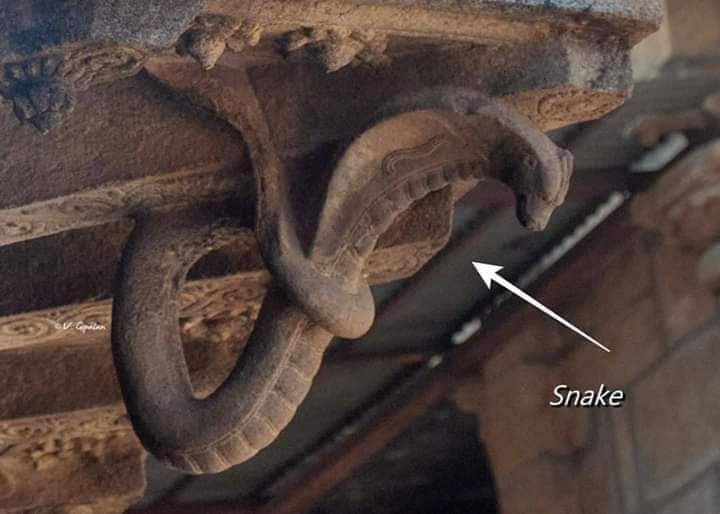
        When Balasaheb was about to depart, He again said- “Do you know the “Lamba Bava” (long gentleman), Viz. serpent?” And then he closed his left arm like a fist. He brought it near the right elbow. Moving his left arm like the hood of a serpent, Baba said, “He is so terrible. But what can he do to the children of Dwarakamayi? When the Dwarakamayi (its presiding deity) protects, what can the serpent do?”

        Everyone present there was curious. They wanted to know the meaning of all this and its reference to Mirikar. However, none had the courage to ask Baba about this. Then Balasaheb saluted Baba and left the Masjid with Shama. Baba called Shama back and asked him to accompany Balasaheb, and enjoy the Chitali trip.

        They reached Chitali at 9 P.M. and encamped in the Maruti temple. The office-people had not come; so they sat quiet in the temple, talking and chitchating.

        Balasaheb was sitting on a mat reading a newspaper. His Uparani (upper dhotar) was spread across his waist and on a part of it a snake was sitting unobserved. It began to move with a rustling sound which was heard by the peon. He brought a lantern, saw the snake and raised an alarm- ‘serpent, serpent’. Balasaheb was frightened and began to quiver.

        Shama was also amazed. Then he and others moved noiselessly and took sticks and clubs in their hands. The snake got down slowly from the waist and it moved away from Balasaheb; it was immediately done to death. Thus this calamity, which was prophesied by Baba, was averted and Balasaheb’s love for Baba was deeply confirmed.

      • Why Udhi /Ash is important, even now?

        Why Udhi /Ash is important, even now?

        SSSC Ch 33 says

        It is well-known that Baba took Dakshina from all. Out of the amount thus collected, He spent a lot on charity. He purchased fuel with the balance left with Him.

        This fuel He threw in the Dhuni – the sacred fire, which he kept ever burning. The ash from this fire was called Udi. It was freely distributed to the devotees at the time of their departure from Shirdi.

        What did Baba teach or hint by this Udi? Baba taught by His Udi that all the visible phenomena in the universe are as transient as the ash.

        Our bodies composed of wood or matter of the five elements will fall down. After all their enjoyments are over, they will be reduced to ashes.

        Baba distributed Udi to the devotees. This was to remind them that their bodies will be reduced to ashes.

        Baba also taught by the Udi that the Brahman is the only Reality. He taught that the universe is ephemeral. No one in this world, be he a son, father or wife, is really ours. We come here (in this world) alone and we have to go out alone.

        It was found and is even now found out, that the Udi cured many physical and mental maladies. However, Baba wanted to din into the devotee’s ears the principles of discrimination between the Unreal and the Real. He emphasized non-attachment for the Unreal, by His Udi and Dakshina.

        The former (Udi) taught us discrimination and the latter (Dakshina) taught us non-attachment. Unless we have these two things, it is not possible for us to cross over the sea of the mundane existence. So Baba asked for and took Dakshina.

        While the devotees took leave, He gave Udi as Prasad. He besmeared some of it on the Bhaktas’ foreheads. He placed His boon-conferring hand on their heads.

        So much about the spiritual implication of Udi. It had also its material significance.

        It conferred health, prosperity, freedom from anxiety, and many other worldly gains. So the Udi has helped us to gain both our ends – material as well as spiritual.