Category: Food freely

  • 108th Sai Baba Punyatithi Mahotsav 2026

    108th Sai Baba Punyatithi Mahotsav 2026

    ๐Ÿ™ Sadguru Sai Baba Punyatithi ๐Ÿ™

    Requested by ๐ŸŒ ShirdiSaiBaba.International
    Our New Venture: ๐Ÿชง Shirdi Sai Baba’s Community Bulletin Board

    Dear Devotee, Sai Ram! ๐Ÿ™


    ๐Ÿ“… Events at Shirdi: 19th  โ€“ 21st October 2026
    โญ Main Punyatithi: 20th October 2026 (Coming Tuesday)
    ๐Ÿ• Vijaya_Thaasmi Tithi โ€”Baba attained Mahasamadhi in 1918 around 2:30 PM

    108 years completed.


    ๐Ÿ™ You Are Warmly Invited To:

    ๐Ÿ  At Home โ€” Before Baba’s Statue or Photo:

    At 2:30 PM on 20th October (Tuesday), gather before Baba’s statue or photo at your home. At least light a lamp ๐Ÿช”, offer two bananas ๐ŸŒ๐ŸŒ as Baba’s prasad โ€” and offer one with love โ€” to a cow, to a poor or hungry person, to a child, or to anyone in need. This is Baba’s true spirit โ€” “Feed the hungry first. Then feed yourself “-BCS 286.

    With pure devotion, visually invoke Baba to be present with you โ€” our community has shared a beautiful practice of this visual invocation method: ๐Ÿ“– Read: How to Visualize Baba. Close your eyes, see Baba clearly in your mind, call Him by name, and feel His arrival. He will come. He always does.

    โœˆ๏ธ Even While Travelling on 20th October around 2.30PM:
    Hold Baba’s photo in your hands or keep it close to your heart. At 2:30 PM, pause, just close your eyes, call Baba, and offer your silent prayer, as per this postโ€” He is never far from His devotees.


    ๐Ÿ”” During the Three Days (19โ€“21 Oct), Join one or more:

    • ๐Ÿ›• Your Local Sai Baba Temple Program โ€” attend and participate in whatever your nearest temple is organising for the Punyatithi
    • ๐Ÿช” Special Puja & Abhishek
    • ๐Ÿ“ฟ Bhajan & Kirtan Sessions
    • ๐Ÿ™ Udi /Prasad Distribution
    • ๐Ÿ“– Sai Katha & Discourses

    ๐Ÿ“ธ Share Baba’s Darshan With this Community!

    Did Baba bless you with a beautiful moment during the Punyatithi celebrations?

    ๐Ÿ“ท Take your best photo (Proper Lighting and crop unwanted items)โ€” of Baba’s statue, your puja setup, the lamp, the bananas offered, your local temple, or any blessed moment during 19โ€“21 October

    ๐Ÿ–ผ๏ธ Set it as your Community Profile Cover Photo so the entire community can share in Baba’s darshan through your eyes

    Let our community page become a gallery of Baba’s presence โ€” in homes, temples, and hearts across the world during this most sacred 108th Punyatithi.

    Join Now with this special invitation* or To update your cover photo: Go to your Community Profile (Beta)โ†’ Click on the cover area โ†’ Upload your photo (Upto -Height:150, Width:1000 px, and 200kb)


    “Why do you fear when I am here?” โ€” Sai Baba

    Please share this invitation with fellow devotees and spread Baba’s love far and wide, so your friends and relatives may receive Sai Baba’s blessings.

    With Sai’s blessings,
    Shirdi Sai Baba’s Community Bulletin Board
    ๐ŸŒ ShirdiSaiBaba.International

    ๐Ÿ™ Jai Sai Ram ๐Ÿ™

    2026 Invitation by Shirdi TempleOur 2025 Post on this with (Thanks: Sai TV Live) YouTube Link
    Thanks Shri Saibaba SansthanTrust, Shirdi for providing SSC to read or hear by devotees, on line itself.
    1792486800

      days

      hours  minutes  seconds

    until

    Sai Baba MahaSamadhi time

  • Self-Affirmation from Chapter XVIII & XIX of SSSC for Sai Babaย devotees

    Self-Affirmation from Chapter XVIII & XIX of SSSC for Sai Babaย devotees

    1. ๐ŸคI believe that Sai Baba’s spiritual teachings, even in dreams, are intended to be shared without any reserve .
    2. ๐Ÿ›I assure that my past life’s merits helped me reach the Holy Feet of Baba.
    3. ๐Ÿฅ—๐Ÿ‘”I resorted to Sai, hence no dearth of food and clothing in my house.
    4. ๐Ÿ›ŒI surrender my ego, for Sai Baba, who awakens souls snoring in ignorance, makes me taste the nectar of devotion .
    5. ๐Ÿง˜I practice of meditation continuously, to pacify my thoughts .
    6. ๐ŸŒŒI meditate on Sai Baba’s formless nature (knowledge incarnate, consciousness, and bliss) or His physical Form as I see it night and day .
    7. ๐Ÿ˜ŒI embrace all with grace, knowing that my ability to tolerate them brings me happiness.
    8. ๐Ÿ”„I accept well any men or creatures come to me, since there is some connection.
    9. ๐Ÿช”I exert myself to my utmost for attaining self realization.
  • Shirdi Trust served 8 Lakh devotees

    Shirdi Trust served 8 Lakh devotees

    On the occasion of the Christmas holidays and the 2026-New Year celebrations, the Shri Saibaba Sansthan Trust, Shirdi organized the ‘Shirdi Festival’ from December 25, 2025, to January 2, 2026.

    Goraksha Gadilkar (IAS), Chief Executive Officer of the Sansthan, reported that over 8 lakh devotees visited the shrine, contributing a total donation of approximately โ‚น23.29 crore.

    • Viz:ย Total Cash collection of โ‚น22.03 crore through various channels. (Rs.16.83 lakh worth Foreign Currencies from 26 countries.)
    • 293.91 grams of gold and 5.98 kg of silver &
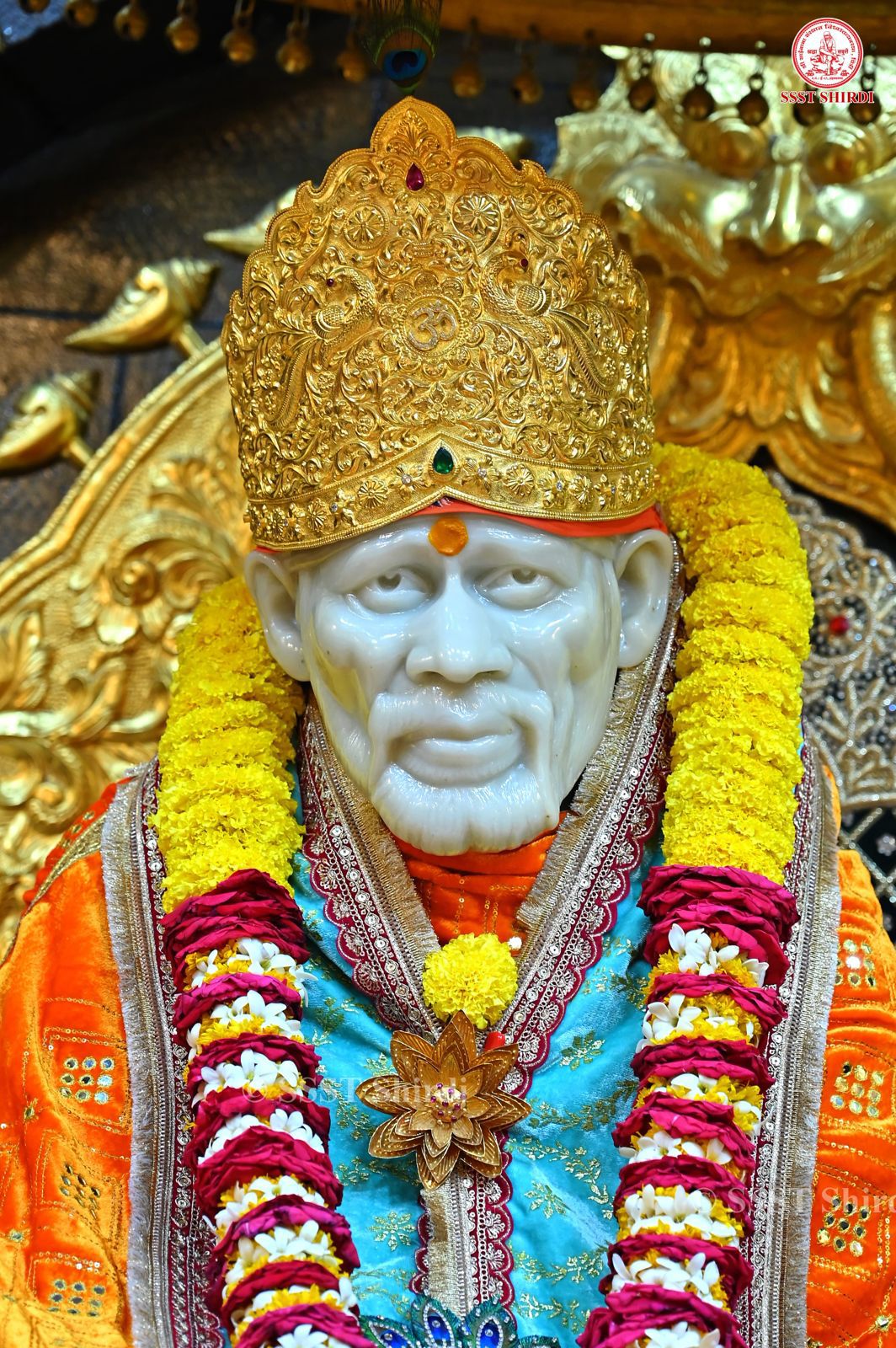
    • aย gold and diamond-studded crownย weighing 655 grams, valued at approximatelyย โ‚น80 lakh.

    Sansthan Trust served:

    • Free Meals:ย Over 6 lakh devotees at the Shri Sai Prasadalaya.
    • Food Packets:ย Over 1.09 lakh food packet service.
    • Ladoo Prasad:ย 7.67 lakh packets were sold, for โ‚น2.30 crore.
    • Free Boondi Prasad: 5.76 lakh packets were distributed.

    CEO emphasized that these funds are utilized for the Shri Saibaba and Shri Sainath Hospitals, educational institutions, charitable medical aid for outpatients, and enhancing infrastructure and social welfare projects for devotees.

  • Self-Affirmation from Chapter IX of SSSC for Sai Babaย devotees

    Self-Affirmation from Chapter IX of SSSC for Sai Babaย devotees

    1. ๐Ÿ–•I follow Sai Baba’s orders and suggestions at the time of taking leave, knowing that obedience ensures safety and happiness .
    2. ๐Ÿง‘โ€๐Ÿง’I recognize that Sai Baba’s mendicancy teaches householders the sacred duty of atoning for their daily sins, by providing Alms .
    3. ๐ŸŽญI understand that Sai Baba knows my mind completely, and nothing is veiled from Him .
    4. ๐ŸฅI perform my worship with sincere intent, ensuring it is not merely a โ€˜formal drillโ€™ .
    5. ๐ŸงœI abandon the sense of duality and distinction and serve Sai Baba, who is roaming in the forms of all creatures
    6. ๐Ÿ•I am heartily contented by acting on compassion like giving food to the hungry creature (even dog ), before eating myself .
  • Self-Affirmation from Chapter VIII of SSSC for Sai Babaย devotees

    Self-Affirmation from Chapter VIII of SSSC for Sai Babaย devotees

    1. ๐ŸงI got lucky a human body, which is essential for attaining God-vision.
    2. ๐Ÿง˜I use my body to achieve God-vision or self-realization, the supreme end of life, without neglecting or pampering it .
    3. ๐ŸƒI strive with all earnestness and speed to attain my end-goal, casting aside sloth and laziness .
    4. โ˜€๏ธMy mind is filled with bliss and joy in the company of the Saint (Sai Baba)
    5. ๐Ÿ‘๏ธI accept the moral to โ€œSee God in all beings,โ€ so I always feed the hungry, first.
    6. ๐Ÿ›I consistently remember the service and penance (Upasana) I practice, which benefits me greatly.
    7. ๐Ÿ“ฟI believe Sai Baba is a liberal and charitable Fakir, always engrossed in the Self .
    8. ๐ŸงšI trust that Sai Baba will make me happy in this world and the next .
  • Tips for daily living. (@35)

    Tips for daily living. (@35)

    Chapter 35 of the “Shri Sai Sat Charitra” provides several important tips and teachings for daily living, conveyed through Sai Baba’s words and actions. These include:

    • Overcoming the sense of differentiation: Sai Baba advised a friend of Kakasaheb Mahajani to “destroy the Teli’s (Adjacent oil store) wall (sense of difference) between us, so that we can see and meet each other face to face”. This highlights the importance of removing perceived distinctions between individuals and fostering a sense of unity in one’s interactions and outlook.
    • Cultivating steady faith and avoiding a fickle mind: To a “fickle-minded gentleman” (referring to Kaka Mahajani’s master, Mr. Thakkar), Baba advised: “Now please keep your faith on any one place (point) you like, why roam like this? Stick quietly to one place”. This emphasizes the need for steadfastness and focus in one’s spiritual or daily pursuits, rather than being swayed by various anxieties or external circumstances.
    • Understanding the spiritual significance of giving (Dakshina): Baba explained that His practice of asking for Dakshina was not for personal gain but to teach devotees about renunciation and purification. He stated that wealth should be used to “work out Dharma” (righteous conduct) and that if it is used only for personal enjoyment, it is wasted. He further taught that “The best way to receive is to give” and that “The giving of Dakshina advances Vairagya (Non-attachment) and thereby Bhakti and Jnana. Give one and receive tenfold“. This provides a profound insight into the spiritual benefits of charity and detachment.
    • Embodying non-attachment and transcending dualities: Baba’s own conduct served as an example; He was “totally non-attached” to worldly praise or disregard, remaining unaffected by “pleasure and pain”. This illustrates the principle of living with detachment, not being excessively elated by positive experiences nor depressed by negative ones.
    • The power and efficacy of Udi with faith: The story of Mrs. Newaskar, who faced a food shortage, demonstrates that when Udi (sacred ashes) is used with intense faith (“As one feels intently, so he realizes accordingly”), difficulties can be overcome, and needs can be met. This suggests that faith in Baba’s grace and His Udi can bring about practical solutions in daily life.
    • Perceiving God in all beings: Balaji Patil’s response to a serpent, which he believed to be Sai Baba, exemplifies the spiritual practice of seeing God or divinity in all creatures. His fearless and devotional approach to the serpent, offering it milk, highlights that recognizing the divine in everything leads to fearlessness and compassion.

    Additionally, while not directly “tips given” by Baba in this chapter, the narrative also shows:

    • The effectiveness of worshipping Baba’s picture with faith and devotion for overcoming personal troubles like insomnia, as seen in the Bandra Insomnia Case.
    • The value of disinterested service and complete surrender to the Guru, as exemplified by Balaji Patil Newaskar, who dedicated his efforts and possessions to Baba.
  • Why Shirdi Sai Baba is a Universal Spiritual Guide

    Why Shirdi Sai Baba is a Universal Spiritual Guide

    A captivating exploration of the profound themes and vital truths surrounding Shirdi Sai Baba reveals a figure of immense spiritual significance.

    I. The Nature and Identity of Sai Baba

    Sai Baba is a divine, omniscient, and omnipresent, being whose true nature transcends conventional human and religious classifications.

    • Ambiguity of Origin and Faith:
      • Baba’s identity as Hindu or Muslim is deliberately obscured, highlighting his universality.
      • He celebrated both Hindu festivals (Rama-Navami, Gokul Ashtami) and allowed Muslim practices (Sandal procession, Namaj in Masjid).
      • His physical attributes (pierced ears like a Hindu, advocacy of circumcision, but not circumcised himself) further blurred the lines.
      • No one definitely knew whether He was a Hindu or a Mahomedan.
    • Divine Incarnation and Sadguru:
      • Baba is depicted as a “Wonderful Incarnation,” a “precious Jewel,” and a “precious Diamond.”
      • He is the “crest-jewel of the Saints, who is the home of all auspicious things, who is our Atmaram (Dear Self), and who is the able refuge of the devotees.”
      • He is explicitly referred to as a “Sadguru,” a true spiritual master.
      • “Lord (God) dwells in the Saints.
        • In fact they are not different from Him.
        • Our Sai is One of these,
          • Who incarnated for the welfare of the devotees,
          • Supreme in knowledge and surrounded with divine lustre.”
    • Omniscience and Omnipresence: Baba has absolute knowledge of the past, present, and future.
      • He knew Mr.Damu Anna’s secret thoughts about cotton speculation and his desire to offer Baba a share of profits.
      • He knew Mr. Cholkar’s secret vow regarding sugar and his decision to forego sugar. Baba remarked, “Though, I am here bodily, still I know what you do; beyond the saven seas. Go wherever you will, over the wide world, I am with you. My abode is in your heart and I am within you.”
      • He knew Mr.Hari Kanoba’s name, parentage, and other details about him, even though it was Hari’s first visit to Shirdi.
      • He read Somadeva Swami’s critical thoughts about the flags at the Mosque, directly addressing them.
      • He knew about one pleader’s slander behind His back at Bar Council, demonstrating “His omniscience and His using it for correcting people and setting them on the right path.”
      • He correctly predicted and averted the death of Ramachandra Patil and foresaw Tatya Patil’s passing.
    • He is described as “omnipresent, occupying land, air, country, world, light and heaven, and that He was not limited.”
    • Detachment and Humility: Despite his divine powers, Baba lived a life of extreme simplicity and humility. He lived on alms, possessing nothing, and residing in a deserted Masjid. He begged for food daily, mixing all offerings together, and “His tongue knew no taste.” Dogs, cats, and crows freely ate from his earthen pot, and “Baba never drove them away.”

    II. The Role and Importance of the Sadguru

    The Sadguru (Guru, who realized Self) as the sole means to spiritual liberation and worldly well-being.

    • Bridge to Salvation:
      • The Sadguru is essential for crossing the “worldly ocean.”
      • “Where Real or Sadguru is the helmsman, he is sure to carry us safely and easily beyond the worldly ocean.”
      • The Vedas alone cannot achieve this; “It is only the Sad-guru, who can do so and make you, see the Lord in all creatures.”
    • Destroys Egoism and Sins:
      • The touch of the Guru’s hand is described as having “wonderful… power.”
      • It can destroy the “subtle-body (consisting of thoughts and desires)” and cleanse “sins of many past births.”
      • M. Hemadpant said, when starting writing Shri Sai SatCharitra, “Sai Baba took away my egoism and wrote Himself His stories.”
    • Catalyst for Transformation:
      • Baba’s darshan (sight) leads to profound inner change:
        • “by His darshana our thoughts are changed,
        • the force of previous actions is abated and
        • gradually non-attachment of dispassion towards worldly objects grows up.”
      • He transforms his devotees into “Himself (His nature).”
    • Teacher and Guide:
      • The Sadguru Sai teaches based on the disciple’s qualifications, without unsettling their minds.
      • He dispels ignorance (“Destroying ignorance is Jnana”) and
      • He helps the disciple realize their true Self (“You are God, you are mighty and opulent.”).
    • Unconditional Love and Service:
      • A true Sadguru expects no service or profit,
      • but instead wishes to serve his disciples, treating them as equals or even as Brahma.
      • “Baba had great love for the disciples.”
        • He “loved all beings equally.
        • He was unattached. Foes and friends, kings and paupers, were the same to Him.”

    III. Key Teachings and Practices Advocated by Sai Baba

    Baba’s teachings, though sometimes indirect, emphasized faith, surrender, moral conduct, and devotion.

    • Faith (Nishtha) and Patience (Saburi): These were presented as two coins of devotion by Baba to His Guru.
      • Baba said: “This is one pice -Faith. Patience or perseverance is the other pice. I waited patiently and very long on My Guru and served him. This Saburi will ferry you across the sea of this mundane existence.” (pice=1/100 INR)
    • Complete Surrender: “If any one prostrates before Sai and surrenders heart and soul to Him,
      • then unsolicited, all the chief objects of life viz. Dharma (righteousness), Artha (wealth), Kama (Desire) and Moksha (Deliverance), are easily and unsolicitedly attained.”
      • “The best way, therefore, to get free from the shackles of Maya is our complete and whole-hearted surrender to Baba.”
    • Charity and Non-Attachment to Wealth: Baba frequently extracted “Dakshina” (offerings),
      • not for personal gain, but “to teach the devotees the lesson of charity and to remove their attachment to money and thus to purify their minds.”
      • He asserted that “He had to give back hundred times more of what He received.”
      • He discouraged debt for spiritual purposes: “Baba never liked people to run into debt for taking His darshan, or celebrating any holiday or making any pilgrimage.”
      • He considered “money as a danger or bar to spiritual progress.”
    • Ethical Conduct and Self-Correction:
      • He advised against discourteously turning away those who come to you, emphasizing:
      • “Shri Hari (God) will be certainly pleased, if you give
        • water to the thirsty,
        • bread to the hungry,
        • clothes to the naked, and
        • your verandah of your Home to strangers for sitting and resting.”
    • Baba condemned slander:
      • “Let anybody speak hundreds of things against you,
      • do not resent by giving any bitter reply.
      • If you always tolerate such things, you will certainly be happy.”
      • He used the example of a pig eating filth to correct a slanderer, stating, “Your conduct is similar. You go on reviling your own brethren to your heart’s content.”
    • Baba taught the importance of offering everything to the Guru before enjoyment:
      • “before the senses, mind and intellect enjoy their objects, Sai should first be remembered, and if this be done, it is in a way an offering to Him...
      • all the Vrittis (thoughts) regarding Desire, Anger, Avarice etc. should first be offered and directed to the Guru.”
    • He guided devotees to remain calm and composed, engage in good actions, and perform duties without attachment.
    • Remembrance of God/Guru (Dhyana/Bhajan): Baba advised various forms of devotion, including
      • “remembering My name,”
      • “hearing His Leelas,”
      • “worship of His Feet,” and
      • studying sacred scriptures like Shri Sai SatCharitra, Bhagwat, Jnaneshwari, and Vishnu-Sahasra-Nam.
      • He stated, “If you always say ‘Sai, Sai’ I shall take you over the seven seas.”

    IV. The Human and the Divine

    • Interaction with Devotees:
      • Baba allowed devotees to serve him in their own way,
      • demonstrating his “dependency on Bhaktas” (in the sense that he allowed their devotion to manifest).
      • He engaged in normal conversation, jokes, and sometimes strong reprimands, always with a deeper purpose.
    • The Guru-Disciple Relationship: The relationship is central. Disciples are encouraged to fully surrender and trust the Guru. The Guru sees beyond superficiality and acts for the disciple’s ultimate good.
    • Transcending Form:
      • While he had a physical form, Baba’s true nature was “unattached and indifferent” and “the state of Brahman.”
      • He demonstrated “Khandayoga, i.e., separating His limbs and joining them again,”
      • His visible form was merely a “mould” for the “liquid essence of Pure Self.”

    V. Miraculous Powers (Leelas) and Their Purpose

    Baba’s “Leelas” (divine plays or miracles) are frequently cited, serving not as ends in themselves, but as tools to deepen devotees’ faith, teach spiritual lessons, and alleviate suffering.

    • Manifestation of Divine Power:Grinding Wheat: Initially misunderstood as mundane, Baba’s grinding of wheat was a symbolic act to “destroy the cholera epidemic in Shirdi” with the flour.
    • Turning Water into Oil: This demonstrated his control over natural elements(fire) and taught the Banias (Oil Traders) a lesson in /
    • ‘truthfulness.
    • Curing Diseases: He cured various ailments, including eye problems with Beeba (marking nuts-Carpus Ana Cardium) and diarrhea with groundnuts, emphasizing that “The true medicine… was Baba’s word.”
    • Saving from Calamities: He averted the snake bite for Shama and predicted/averted the death of Ramachandra Patil. He also saved Mr. Mirikar from a potential snake bite.
    • Fulfilling Desires (within divine plan):
      • The “Amra-Leela” story illustrates his power. Four mangoes, given by Sai resulted in four sons and four daughters for Damu Anna. This happened despite astrological predictions.
      • He facilitated the return of a stolen jewel-box and a stolen sum of money.
    • Disguised Blessings and Tests:Baba’s “rage” and “abuses” were often a “blessing in disguise,” as seen with Somadeva Swami, or a direct command to the poison in Shama’s case.
    • Drawing Devotees and Confirming Faith:
      • The numerous anecdotes of individuals being drawn to Shirdi, despite their initial reluctance (Hemadpant’s own journey, Kakaji Vaidya being directed by Goddess Sapta-Shringi, the “idolater” friend of Kaka Mahajani) highlight Baba’s magnetic spiritual pull.
      • His precise knowledge of hidden thoughts or distant events served to “create faith and devotion” in his devotees.
    • Guaranteeing the Welfare of His devotees:
      • “There will never be any dearth or scarcity, regarding Food and clothes in My devotee’s home.”
    • In a nutshell
      • Baba’s teachings
        • emphasize love, compassion, and faith,
        • uniting all religions and
        • inspiring devotion beyond boundaries.
      • His miraculous acts instill hope, and
      • His wisdom fosters inner peace.
  • Control senses to increase lifespan.

    Control senses to increase lifespan.

    With determination, man can touch the sky and conquer the world. But today man is losing this strength. What is the reason for this?

    He is losing his mastery over the senses. The more sensual he is, the lesser is the lifespan.

    Todayโ€™s man is losing his physical strength and consequently destroying his inner strength completely. To remain immortal and retain youth, the power of the senses should be developed by controlling them.

    There should be no body-attachment. If on one hand, man loses control over the senses and on the other hand, he develops body-attachment, then what will be his plight? 

    These two can be compared to two holes in a pot filled with water. Water is filled in such a pot, which gets drained.

    Similarly, the pot of our heart is filled with nectarous grace of God. Man has to foster his heart. But without forbearance and sympathy, he has drilled holes into it. Consequently, his lifespan has decreased.

    In this limited life span,

    what good deeds can he do? How can he work for the welfare of the society? God-given strength should be utilized properly by Satsangam (Good Company), by Satpravartana (Good conduct) and by Seva (Service). Only then can your strength improve.

    – Puttaparti Satya Sai Baba in the Divine Discourse, Oct 02, 2000.

  • Where certain actions or entities are considered better than others

    Where certain actions or entities are considered better than others

    1. A human body is better than other bodies–
      • Despite its filth, mucus, and susceptibility to decay, disease, and death, the human body’s special value lies in its capacity to acquire knowledge and attain God-vision, which is impossible in any other birth.
    2. Love is better than intelligence-
      • The pure love of Shirdi women, despite their ignorance, inspired them to compose poems, implying that love is more inspiring than intelligence.
    3. Giving food is better than other charities-
      • While other charities like giving away wealth, property, and clothes require some discrimination, offering food requires no such consideration.
      • Also, the merit of feeding lame, crippled, blind, and diseased paupers is much greater than that of feeding able-bodied persons and relations.
    4. Butter-milk (Leelas) is better than Milk (Darshan)-
      • If one desires to see Sai Baba’s but they did not get any opportunity of taking His darshan, their quest for milk (darshan) will be, to a great extent, satisfied by the butter-milk (Leelas).
    5. Remembering and chanting Hari’s and Guru’s name confers salvation is better than getting the powerful Bhakti of the Nathas-
      • one Madhavarao did not like Kakasaheb’s pessimistic attitude of how to get the powerful Bhakti of the Nathas, as he said, ‘has not Baba told us authoritatively that remembering and chanting Hari’s and Guru’s name confers salvation? Then where is the cause for fear and anxiety?’
    6. The observance of the vow of silence is the best way of praising the Sad-guru-
      • In reality, the observance of the vow of silence is the best way of praising the Sad-guru.
    7. Having recourse to Sai Baba’s Feet and surrendering to Him is the best luck-
      • The best luck is to get an opportunity to have recourse to Sai Baba’s Feet and surrender to Him, than any other
  • How Baba prepared food and distributed

    How Baba prepared food and distributed

    Let us see how Baba prepared food and distributed it.

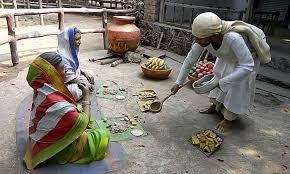
    Baba required very little food for Himself and what little He wanted, was obtained by begging from a few houses.

    But when He took it into His mindย  to distribute food to all, He made all preparations from beginning to end, Himself.

    He depended on nobody and troubled none in this matter. First He went to the bazar andย  bought all the things, corn, flour, spices etc., for cash. He did also the grinding.

    In theย  open courtyard of the Masjid, He arranged a big hearth and after lighting a fire underneath kept a Handi over it with a proper measure of waterโ€ฆ

    Sometimes He cooked โ€˜Mitthe Chavalโ€™ (sweet rice), and at other times โ€˜pulavaโ€™ withย  meat. At times in the boiling varan (soup), He let in small balls of thick or flat breads ofย  wheat flour. He pounded the spices on a stone-slab, and put the thin pulverized spicesย  into the cooking-pot. He took all the pains to make the dishes very palatable.

    He preparedย  โ€˜Ambilโ€™ by boiling jawari-flour in water and mixing it with butter-milk. With the food Heย  distributed this Ambil to all alike.

    To see whether the food was properly cooked or not,ย  Baba rolled up the sleeve of His Kafni. He put His bare arm in the boiling cauldron without the least fear. He churned (moved) the whole mass from side to side and up andย  down. There was no mark of burn on His arm, nor fear on His face.

    When the cookingย  was over, Baba got the pots in the Majid, and had them duly consecrated by the moulvi.

    ย  First He sent part of the food as prasad to Mhalasapati and Tatya Patil. Then, He served the remaining contents with His own hand to all the poor and helpless people. They ate to their heartsโ€™ content.

    Really blessed and fortunate must be those people who got food preparedย  by Baba and served by Him.