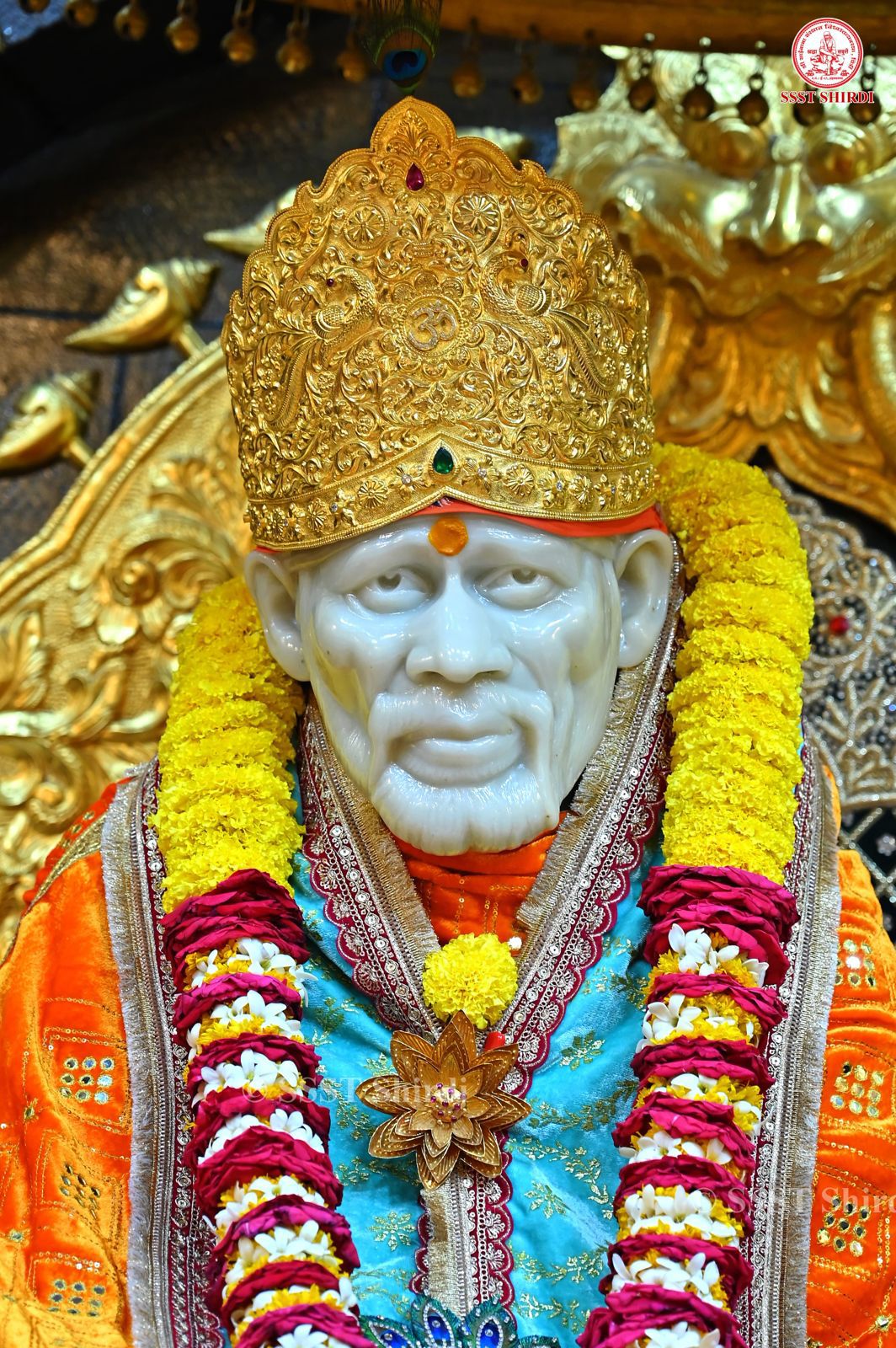
Category: Dharbar

  • Why Shirdi Sai Baba is a Universal Spiritual Guide

    Why Shirdi Sai Baba is a Universal Spiritual Guide

    A captivating exploration of the profound themes and vital truths surrounding Shirdi Sai Baba reveals a figure of immense spiritual significance.

    I. The Nature and Identity of Sai Baba

    Sai Baba is a divine, omniscient, and omnipresent, being whose true nature transcends conventional human and religious classifications.

    • Ambiguity of Origin and Faith:
      • Baba’s identity as Hindu or Muslim is deliberately obscured, highlighting his universality.
      • He celebrated both Hindu festivals (Rama-Navami, Gokul Ashtami) and allowed Muslim practices (Sandal procession, Namaj in Masjid).
      • His physical attributes (pierced ears like a Hindu, advocacy of circumcision, but not circumcised himself) further blurred the lines.
      • No one definitely knew whether He was a Hindu or a Mahomedan.
    • Divine Incarnation and Sadguru:
      • Baba is depicted as a “Wonderful Incarnation,” a “precious Jewel,” and a “precious Diamond.”
      • He is the “crest-jewel of the Saints, who is the home of all auspicious things, who is our Atmaram (Dear Self), and who is the able refuge of the devotees.”
      • He is explicitly referred to as a “Sadguru,” a true spiritual master.
      • “Lord (God) dwells in the Saints.
        • In fact they are not different from Him.
        • Our Sai is One of these,
          • Who incarnated for the welfare of the devotees,
          • Supreme in knowledge and surrounded with divine lustre.”
    • Omniscience and Omnipresence: Baba has absolute knowledge of the past, present, and future.
      • He knew Mr.Damu Anna’s secret thoughts about cotton speculation and his desire to offer Baba a share of profits.
      • He knew Mr. Cholkar’s secret vow regarding sugar and his decision to forego sugar. Baba remarked, “Though, I am here bodily, still I know what you do; beyond the saven seas. Go wherever you will, over the wide world, I am with you. My abode is in your heart and I am within you.”
      • He knew Mr.Hari Kanoba’s name, parentage, and other details about him, even though it was Hari’s first visit to Shirdi.
      • He read Somadeva Swami’s critical thoughts about the flags at the Mosque, directly addressing them.
      • He knew about one pleader’s slander behind His back at Bar Council, demonstrating “His omniscience and His using it for correcting people and setting them on the right path.”
      • He correctly predicted and averted the death of Ramachandra Patil and foresaw Tatya Patil’s passing.
    • He is described as “omnipresent, occupying land, air, country, world, light and heaven, and that He was not limited.”
    • Detachment and Humility: Despite his divine powers, Baba lived a life of extreme simplicity and humility. He lived on alms, possessing nothing, and residing in a deserted Masjid. He begged for food daily, mixing all offerings together, and “His tongue knew no taste.” Dogs, cats, and crows freely ate from his earthen pot, and “Baba never drove them away.”

    II. The Role and Importance of the Sadguru

    The Sadguru (Guru, who realized Self) as the sole means to spiritual liberation and worldly well-being.

    • Bridge to Salvation:
      • The Sadguru is essential for crossing the “worldly ocean.”
      • “Where Real or Sadguru is the helmsman, he is sure to carry us safely and easily beyond the worldly ocean.”
      • The Vedas alone cannot achieve this; “It is only the Sad-guru, who can do so and make you, see the Lord in all creatures.”
    • Destroys Egoism and Sins:
      • The touch of the Guru’s hand is described as having “wonderful… power.”
      • It can destroy the “subtle-body (consisting of thoughts and desires)” and cleanse “sins of many past births.”
      • M. Hemadpant said, when starting writing Shri Sai SatCharitra, “Sai Baba took away my egoism and wrote Himself His stories.”
    • Catalyst for Transformation:
      • Baba’s darshan (sight) leads to profound inner change:
        • “by His darshana our thoughts are changed,
        • the force of previous actions is abated and
        • gradually non-attachment of dispassion towards worldly objects grows up.”
      • He transforms his devotees into “Himself (His nature).”
    • Teacher and Guide:
      • The Sadguru Sai teaches based on the disciple’s qualifications, without unsettling their minds.
      • He dispels ignorance (“Destroying ignorance is Jnana”) and
      • He helps the disciple realize their true Self (“You are God, you are mighty and opulent.”).
    • Unconditional Love and Service:
      • A true Sadguru expects no service or profit,
      • but instead wishes to serve his disciples, treating them as equals or even as Brahma.
      • “Baba had great love for the disciples.”
        • He “loved all beings equally.
        • He was unattached. Foes and friends, kings and paupers, were the same to Him.”

    III. Key Teachings and Practices Advocated by Sai Baba

    Baba’s teachings, though sometimes indirect, emphasized faith, surrender, moral conduct, and devotion.

    • Faith (Nishtha) and Patience (Saburi): These were presented as two coins of devotion by Baba to His Guru.
      • Baba said: “This is one pice -Faith. Patience or perseverance is the other pice. I waited patiently and very long on My Guru and served him. This Saburi will ferry you across the sea of this mundane existence.” (pice=1/100 INR)
    • Complete Surrender: “If any one prostrates before Sai and surrenders heart and soul to Him,
      • then unsolicited, all the chief objects of life viz. Dharma (righteousness), Artha (wealth), Kama (Desire) and Moksha (Deliverance), are easily and unsolicitedly attained.”
      • “The best way, therefore, to get free from the shackles of Maya is our complete and whole-hearted surrender to Baba.”
    • Charity and Non-Attachment to Wealth: Baba frequently extracted “Dakshina” (offerings),
      • not for personal gain, but “to teach the devotees the lesson of charity and to remove their attachment to money and thus to purify their minds.”
      • He asserted that “He had to give back hundred times more of what He received.”
      • He discouraged debt for spiritual purposes: “Baba never liked people to run into debt for taking His darshan, or celebrating any holiday or making any pilgrimage.”
      • He considered “money as a danger or bar to spiritual progress.”
    • Ethical Conduct and Self-Correction:
      • He advised against discourteously turning away those who come to you, emphasizing:
      • “Shri Hari (God) will be certainly pleased, if you give
        • water to the thirsty,
        • bread to the hungry,
        • clothes to the naked, and
        • your verandah of your Home to strangers for sitting and resting.”
    • Baba condemned slander:
      • “Let anybody speak hundreds of things against you,
      • do not resent by giving any bitter reply.
      • If you always tolerate such things, you will certainly be happy.”
      • He used the example of a pig eating filth to correct a slanderer, stating, “Your conduct is similar. You go on reviling your own brethren to your heart’s content.”
    • Baba taught the importance of offering everything to the Guru before enjoyment:
      • “before the senses, mind and intellect enjoy their objects, Sai should first be remembered, and if this be done, it is in a way an offering to Him...
      • all the Vrittis (thoughts) regarding Desire, Anger, Avarice etc. should first be offered and directed to the Guru.”
    • He guided devotees to remain calm and composed, engage in good actions, and perform duties without attachment.
    • Remembrance of God/Guru (Dhyana/Bhajan): Baba advised various forms of devotion, including
      • “remembering My name,”
      • “hearing His Leelas,”
      • “worship of His Feet,” and
      • studying sacred scriptures like Shri Sai SatCharitra, Bhagwat, Jnaneshwari, and Vishnu-Sahasra-Nam.
      • He stated, “If you always say ‘Sai, Sai’ I shall take you over the seven seas.”

    IV. The Human and the Divine

    • Interaction with Devotees:
      • Baba allowed devotees to serve him in their own way,
      • demonstrating his “dependency on Bhaktas” (in the sense that he allowed their devotion to manifest).
      • He engaged in normal conversation, jokes, and sometimes strong reprimands, always with a deeper purpose.
    • The Guru-Disciple Relationship: The relationship is central. Disciples are encouraged to fully surrender and trust the Guru. The Guru sees beyond superficiality and acts for the disciple’s ultimate good.
    • Transcending Form:
      • While he had a physical form, Baba’s true nature was “unattached and indifferent” and “the state of Brahman.”
      • He demonstrated “Khandayoga, i.e., separating His limbs and joining them again,”
      • His visible form was merely a “mould” for the “liquid essence of Pure Self.”

    V. Miraculous Powers (Leelas) and Their Purpose

    Baba’s “Leelas” (divine plays or miracles) are frequently cited, serving not as ends in themselves, but as tools to deepen devotees’ faith, teach spiritual lessons, and alleviate suffering.

    • Manifestation of Divine Power:Grinding Wheat: Initially misunderstood as mundane, Baba’s grinding of wheat was a symbolic act to “destroy the cholera epidemic in Shirdi” with the flour.
    • Turning Water into Oil: This demonstrated his control over natural elements(fire) and taught the Banias (Oil Traders) a lesson in /
    • ‘truthfulness.
    • Curing Diseases: He cured various ailments, including eye problems with Beeba (marking nuts-Carpus Ana Cardium) and diarrhea with groundnuts, emphasizing that “The true medicine… was Baba’s word.”
    • Saving from Calamities: He averted the snake bite for Shama and predicted/averted the death of Ramachandra Patil. He also saved Mr. Mirikar from a potential snake bite.
    • Fulfilling Desires (within divine plan):
      • The “Amra-Leela” story illustrates his power. Four mangoes, given by Sai resulted in four sons and four daughters for Damu Anna. This happened despite astrological predictions.
      • He facilitated the return of a stolen jewel-box and a stolen sum of money.
    • Disguised Blessings and Tests:Baba’s “rage” and “abuses” were often a “blessing in disguise,” as seen with Somadeva Swami, or a direct command to the poison in Shama’s case.
    • Drawing Devotees and Confirming Faith:
      • The numerous anecdotes of individuals being drawn to Shirdi, despite their initial reluctance (Hemadpant’s own journey, Kakaji Vaidya being directed by Goddess Sapta-Shringi, the “idolater” friend of Kaka Mahajani) highlight Baba’s magnetic spiritual pull.
      • His precise knowledge of hidden thoughts or distant events served to “create faith and devotion” in his devotees.
    • Guaranteeing the Welfare of His devotees:
      • “There will never be any dearth or scarcity, regarding Food and clothes in My devotee’s home.”
    • In a nutshell
      • Baba’s teachings
        • emphasize love, compassion, and faith,
        • uniting all religions and
        • inspiring devotion beyond boundaries.
      • His miraculous acts instill hope, and
      • His wisdom fosters inner peace.
  • Love as Forgiveness

    Love as Forgiveness

    Baba’s Forgiveness:

    • Transforming Initial Displeasure into Blessings: Baba’s “anger” was often a tool for spiritual correction rather than true wrath.
      • Initially enraged at the women who forcibly took the hand-mill to grind wheat, He quickly became pleased by their love and devotion.
      • He allowed Dr. Pandit to apply sandal paste to His forehead, a personal practice usually restricted to Mhalsapati. Baba explained it was because Dr. Pandit saw Him as his own Guru, showing acceptance of sincere devotion despite unconventional acts.
      • He sometimes appeared as “wrath Incarnate.” However, internally, He was “a stream of affection and motherly love.” Baba stated, “He is ever angry with His devotees.”
      • Baba used seemingly harsh words with Haji Sidik Falke. Initially, he prevented him from entering the Masjid and demanded a large sum. This ultimately led Haji to humility and acceptance. After this, Baba treated him with respect and gave him mangoes and money. This showed Baba clearing Haji’s spiritual block related to pride.
      • He confronted a Pandharpur pleader for slandering Him and others behind their backs. Baba directly addressed the pleader’s inner thoughts. “Baba’s remark was aimed at me. It was a hint to me. I should not indulge in reviling or scandalizing others”. This led to the pleader’s sincere reform. It resulted in the riddance of this “evil tendency”.
      • He initially gave Mr. Sapatnekar a harsh “Get out” upon his visit, likely due to Sapatnekar’s prior derision of Baba. Sapatnekar showed genuine penitence and perseverance. Baba then blessed him with a son. He said, “These feet are old and holy, you are care-free now; place entire faith in Me and you will soon get your object”.
      • He similarly dealt with Somadeva Swami, who initially judged Baba by outward appearances (like flags on Baba’s mosque). Baba’s “wild” response exposed the Swami’s inner thoughts, which led to the Swami realizing Baba’s omniscience and transforming into a staunch devotee. The Swami realized “Baba’s wrath was a blessing in disguise”.
      • Baba gently corrected Nanasaheb Chandorkar’s wandering mind. When he was smitten by a lady’s beauty, Baba advised him to let the senses do their work. He cautioned not to meddle with them. Baba also said, “When the heart is pure, there is no difficulty”.
      • When devotees tried to interfere with Mavsibai’s intense abdominal massage of Baba, as they feared she would hurt Him; Baba became enraged. He took hold one end of his Satka with both hands and pressed it in the hollow of His abdomen and other end on fixed on a Post ie. His body could withstand anything. This demonstrated that He permitted devotees to serve Him as they chose, and His “rage soon cooled down”, showing His understanding and forgiveness of well-intentioned but misguided interventions.
  • Can we follow other Gods?

    Can we follow other Gods?

    In BG VII(7) 21-2, Sri Krishna said “In whatever from people surrender to Me, in that very form, I serve them. Every one following his own form of worship is really following My worship’.

    God can be approached under any name and in any manner, and

    Mahlsapathy (Baba’s closest devotee),

    • though sticking to the idea that Khandoba was his God,
    • derived the advantage of getting all his
    • other needs safeguarded and provided as far as possible
    • by Baba acting as his Providence.

    Other bhaktas also

    • who have their own particular forms, who however note the need or importance of food, shelter and other things for themselves and their familes, being provided by Baba
    • would be thus encouraged by Mahlsapathy’s example to seek Baba and place themselves under his protection.
    • Baba never interfered with
      • anybody’s orthodoxy or religious worship, and
      • the orthodox now in various places need not have any fears about the loss of their existing spiritual position by contacting Baba.
      • All the while, they would get unconscious expansion and refinement of their idea of God and Gods, and become ready for reaching the “Ekam Sat-That which exists is One”

    LoSB-P245

  • Baba is a Scientist in Teaching Education

    Baba is a Scientist in Teaching Education

    Pedagogics is the art and science of teaching and education. It involves not only conveying information, but also understanding how people learn. It requires creating environments, that foster growth and development.

    Sai Baba is also not only delivering information, but create environment for learning and growing of His devotees. viz:

    • One,
      • totally devoid of any book study, but
      • possessed of
        • perfect self-surrender,
        • humility,
        • trust, and
        • love towards the Guru Baba,
        • was and is the person who could derive
        • the fullest benefits from Baba.
    • The idea that
      • one has understood all about Jiva and Paramatma and
      • the methods by which Paramatma could be reached by a Jiva,
      • forms the greatest obstacle to one’s progress.
    • It is
      • not the intellect, the keenness of intellect, that is
      • wanted from a person approaching Baba.
    • It is
      • humility,
      • receptivity, and
      • a readiness to receive all that Baba gives, that counts.
    • As Baba pointed out to the Valambi Station Master,
      • persons (evidently with much conceit of learning etc.) came to him
      • like vessels the mouth of which was kept inverted; and were therefore
      • incapable of receiving any benefits from him.
    • In the case of Nana (Devotee),
      • his very high learning and
      • great ability in official and other matters were naturally accompanied
      • by a high degree to self-assertion and egotism;
      • which make for success in
        • literary study,
        • official matters, and to a certain extent even in
        • spiritual matters.
      • But for the highest results in spiritual matters, it is just the opposite, namely,
        • utter reduction of egotism,
        • the power to relax the Ego and
        • keep it relaxed for long periods, that is essential.
    • This is why
      • the consumption of water, that was used to washing of the feet of the Guru, and
      • the acceptance of his Uchchishta tirtha (the remnants of food that have been contaminated by the Guru’s saliva) are emphasized in the
      • “Guru Gita” for a pupil’s advancement,
      • as these practices foster a profound annihilation of Ahamkara, or Ego,
      • through deep reverence for the Guru, culminating in Love.
    • In Baba’s system,
      • the Guru-Teacher imparts virtue after virtue to the sishya-Student.
      • HE trains him step by step to secure these virtues and the knowledge, he wishes to equip the pupil with.
      • This process is just as the cat carries its kittens to safe and good places.
    • The first essential preparatory step in Baba’s course is thus,
        • not book learning, but the
        • development of
          • humility and
          • receptivity.
        • These would result from
          • perfect faith, absolute faith,
          • unlimited and powerful faith in the Guru.
        • The Guru must be everything to the sishya,
          • the giver of bread,
          • the giver of life and light and
          • the giver of all that life is worth living for, and
          • at one stroke.
          • He must not regard anything else. This alone is the tyaga of Tan, Man, Dhan – body, mind and possessions.

      LoSB-Vol II’ Ch 2

      • Baba’s company was the highest education one could get. As a Mahratta saying goes, ‘Let us stay with saints. If they do not give us Upadesa, let us note what they do and say. That is the best Upadesa‘.
    • Quotation 323

      Quotation 323

      LoSB-Chapter 3 of Part II, to Das Ganu Maharaj who had said that “that man is my enemy”, when not getting sira/drink

    • Quotations 141

      Quotations 141

      “Oh Shama,  this book is very valuable and efficacious, so I present it to you, you read it.

      • Once I suffered intensely and My heart began to palpitate and My life was in danger.
      • At that critical time, I hugged this book to My heart and
      • then, Shama, what a relief it gave me!
      • I thought that Allah (God) Himself came down and saved Me.
      • So I give this to you, read it slowly, little by little.
      • Read daily one name at least, and it will do you good.”

      Baba to Shama in SSSC Ch-27 about the Book “Vishnu-Sahasra-Nam”

    • Mahlsapaty

      Mahlsapaty

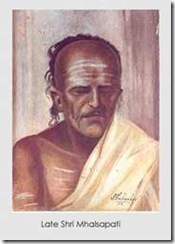
      Mahlsapathy is the First & top most person in Sai Baba’s Court-Member of King’s Dharbar, and one among the VIBGYOR* member of Baba’s Dharbar.

      Sai Baba stayed at one Chandbhai’s [headman of Dhoopkheda village] home for some days. The nephew of Chandbhai’s wife got betrothed to a girl from Shirdi. So, Baba came to Shirdi in that wedding procession, in 1872.
      The marriage party had alighted at the pounding grounds, near Khandoba’s (incarnation of Shiva) temple, outside the village. When Baba went to the Khandoba temple, He met Mhalsapaty there.

      This Mhalsapaty was a resident of Shirdi and a goldsmith. As he was a devotee of Khandoba, and regular visitor of Khanderaya (Deity of Jejuri, who is also Khandoba), since many generations. As soon as Mhalsapaty saw Him, he welcomed Him with the words: “Welcome Sai”. Then, all the devotees of Sai Baba called Him “Sai Baba or Sai or Baba”.
      Mhalsapati brought Sai Baba into the village and introduced Him to his friends Kashiram Shimpi and Appa Jagale. These three usually served, according to their capacity, the sadhus, saints , fakirs and ascetics visiting the village, and graciously took care of them.

      Baba was an absolute “Vairagya Purusha” and never cared for wealth or women. Mahlsapalhy, being himself highly detached i.e. of a vairagya temperament and not being overned by lust or other low urges, could easily appreciate Baba, from the very beginning was drawn to Baba;

      when other people began to worship Baba, only when they saw Baba’s psychic powers e. g. when he turned water into oil to feed his lamps, and then they regarded him as God.

      An important event in Mahlsapathy’s life that was- “Baba’s trying to leave his body about 1886 and returning to it three days later”.

      Baba had made him the guardian of his body and told him, “Arre Bhagat, look after this body for three days. I am going to Allah. If I do not return, then get it buried in due course at that place, (that is, near the sacred gode neem tree).”

      Mahlsapathy supported Baba’s body on his own knee, and when officers, including the village headman karnam, etc., held an inquest over the body, declared it dead, and wanted it to be buried. Mahlsapathy with the help of others stoutly opposed their proposal, and saved Baba from losing his body.

      Thus, he rendered a valuable service in 1886, after which Baba lived for 32 years to create this huge Sai movement that has covered this World.

      If Mahlsapathy had failed in his duty, and Baba had been buried, perhaps the course of history might have been different.

      ‘Whatever a person thinks of at the time of death he reaches’. When Mahlsapathy’s death was approaching, he retained full-consciousness and control of his mind.

      That was on 11th Sep 1922, Monday (in the month of Badrapada, Ekadasi Somavara, sacred to Shiva and Khandoba), having finished all his puja, he said to his family, ‘To-day is my father’s Shraddha day. Finish cooking soon. To-day, I close my earthly life and go to Heaven’.

      So, a Brahmin came and finished the Sraddha at once; and finished the gift of balis to crows, cows, etc, and guests were fed. Then the family meals were finished.

      Mahlsapathy took betel and nuts after his meal. After chewing a bit, he put on a kupni. Having near him, Bala Gurav, Ramachandra Kothe, etc., he told them all to do Ramachandrajapa Japa.

      Muhlsapaty said to his son that ‘Spend time piously in Uttama Bhakti Marga i.e. in holy devotion. All that I told you will happen.” Then Mahlsapathy uttered the word ‘Ram’ and breathed his last.

      Thus he passed away in calm, faith and cheerfulness, on the 11th September 1922. This death was a fitting termination to a pure, lofty and dedicated life—a life of Love, faith and total surrender.

      His remains are interred in a tomb at Shirdi, which is still worshipped by many.

      * 1. Mahlsapathy 2. Narayan Govind Chandorkar 3. Das Ganu Maharaj 4. H.S. Dixit, 5. Hemadpant 6. Sri Upasani Baba and 7. G.S. Khaparde.

    • Baba is a Carpology Scientist

      Baba is a Carpology Scientist

      Carpology is a branch of botany. It focuses on the study of seeds and fruits, particularly their structure and morphology. It helps in understanding the evolution of plant species and reconstructing

      Here is the proof of the Baba’s knowledge in this Science

      Kaka was the Manager in the firm of Thakkar Dharmasey Jethabhai, a solicitor of Bombay. Out of curiosity and just to test Baba, Mr. Thakkar once decided to go to Shirdi with Kaka during Shimga holidays.

      Kaka bought two seers of raisins (dried grapes with seed) on the way for presentation to Baba. Then Kaka prostrated himself before Baba and offered the raisins to Him. Baba ordered them to be distributed.

      Mr. Thakkar got a few of them. He did not like the raisins and he was advised by his doctor not to eat them without washing and cleaning them. So he was in a fix. He did not like to eat them, nor could he reject them.

      To keep up formalities, he put them into his mouth, but did not know what to do with the seeds. He could not spit them out on the floor of the Masjid, so he pocketed them against his wish.

      He then thought about Baba being a Saint. He questioned how Baba could be ignorant of his dislike for the raisins. Could Baba force them on him?

      When this thought arose in his mind Baba again gave him some more raisins. He could not eat them, but held them in his hand. Then Baba asked him to eat them up.

      He obeyed and found, to his surprise, that they were all seedless. He wanted to see miracles and here was one. He knew that Baba read his thought; and as per his wish converted raisins (with seeds) into seedless grapes. What a wonderful power!

      Again to test further he asked Tarkhad, who was sitting by and who also got some raisins, “What kind of grapes you got?” He replied “They variety with seeds.” Mr. Thakkar was still more surprised to hear this.

      Then to confirm his growing faith Thakkar thought in his mind that if Baba was a real Saint, the raisins should be now given to Kaka first.

      Reading this thought also, Baba ordered that distribution should be commenced from Kaka. These proofs were sufficient for Thakkar.

    • BABA WORSHIP III -Kings Durbar

      To make the congregational worship more advanced and attractive, there was an enthusiastic set gathering at Shirdi.

      One Ramakrishna Ayi, a young widow, being highly accomplished, was intent upon using all her gifts and cleverness for developing Sai Baba’s worship. She drew a large number of people to herself and made them more enthusiastic in the cause of Sai Worship

      Ramakrishna Ayi introduced silver whisks, silver maces, silver umbrellas, silver candelabras, moons, and artificial gardens to deck the chavadi, where Baba was worshipped on alternate nights. A (ratha) car, a palanquin with silver appurtenances, a horse, and other regal paraphernalia were furnished on her insistence and the insistence of other devotees to make Baba worship run exactly like Vittal worship or the worship of great Acharyas in their mutts.

    • BABA WORSHIP II- Congregational

      The next step was from individual worship to congregational worship. It was in 1908 that the change was started. Congregational worship implied that there would be some one to officiate as the pujari (Priest) and that he would be available at various periods of worship viz. Matins, vespers, night artis and noon artis etc.

      For this purpose, Hari  Vinayak Sathe, a Settlement Officer, (who in 1905 was blessed by Baba, with the promise of a son in case he married, and who got married in consequence) sent up one Megha-shyam called Megha to Shirdi. So that he might officiate as the pujari and carry on congregational worship.

      Megha usually went out five miles to fetch Godavari water for the daily worship, and three or four miles to fetch bel leaves which are said to be specially appropriate for Siva (=Sai, for Megha) worship (Eka Bilvam Sivarpanam that is one bel leaf even is sufficient offering to Siva). When the very orthodox Megha thus became an ardent devotee of Baba, others followed suit and joined in the congregational worship.