Category: Special meaning

  • Baba’s Compassion and Love

    Baba’s Compassion and Love

    Shirdi, Shri Sai Baba’s life is a testament to His boundless compassion, profound gentleness, and unwavering selflessness. He consistently demonstrated these qualities through His actions, teachings, and interactions with His devotees. Here are instances:

    Baba’s Compassion:

    • Protection from Epidemics: Baba displayed compassionate foresight by grinding wheat and having the flour thrown on the Shirdi village borders to curb a cholera epidemic.
      • Villagers understood that He was not only grinding wheat.
      • He was also grinding the cholera itself to pieces. This act pushed cholera, out of the village. This led to the epidemic’s subsidence.
    • Encouragement of Hemadpant: When Hemadpant expressed self-doubt about writing Baba’s biography,
      • Baba gently encouraged him. He blessed him with Udi (sacred ashes) and placed His boon-bestowing hand on his head.
      • Baba assured,
        • “I will help him.
        • He is only an outward instrument.
        • I should write Myself My autobiography and
        • satisfy the wishes of My devotees”.
        • This shows His desire for devotees’ spiritual growth and His loving support.
    • Motherly Love for Disciples: Baba exhibited a unparalleled motherly love towards His disciples. He was always attending to their needs. Sadgurus like Baba have this peculiar and extraordinary love for their disciples.
      • All-Embracing Love and Tolerance:
        • Baba’s all-embracing love was evident in His defense of the Rohilla, who disturbed villagers with loud prayers.
        • Baba took the villagers to task, explaining that the Rohilla’s prayers kept away “Durbuddhi” (bad thoughts),
        • thus protecting even those perceived as troublesome.
    • Omnipresence and Constant Protection: Baba’s statement: “I am the Inner Ruler of all and seated in their hearts. I envelope all the creatures, the movable and immovable world.
    • Curing Ailments through Grace: Baba cured numerous diseases without using conventional medicine. He did so through His Grace, Words, or Udi. This demonstrated His compassion for the suffering. Examples include:
        • Bhimaji Patil’s severe tuberculosis, cured by Baba’s words of hope and mercy, through two dreams.
        • Bala Ganapat Shimpi’s malaria, cured by instructing him to feed a black dog, with rice mixed with curds.
        • Bapusaheb Booty’s dysentery and vomiting, instantly cured by Baba’s command, “Now take care, you should not purge any more” and “The vomiting must also stop”. He also cured in another time, Booty’s cholera with a seemingly fatal remedy, effective due to Baba’s word.
        • A Swami from Alandi’s ear pain, relieved by Baba saying, “Alla Accha Karega (God will do good)”.
        • Madhavrao Deshpande’s piles and Gangadharpant’s stomach-pain, cured by simple words and touch, and Nanasaheb Chandorkar’s stomach-pain with a sweetmeat.
        • A doctor’s nephew of tubercular bone-abscess, cured with Udi and Baba’s “loving glances”.
        • Dr. Pillay’s excruciating guinea-worm pain, relieved by Baba’s command to be ‘fearless’ and allowing an accidental step on the wound, to expel the worms.
        • Shama’s sister-in-law’s bubonic plague, cured overnight by sending Udi and giving instructions.
        • A Harda gentleman’s bladder stone, dissolved with Udi mixed with water.
        • A Bombay lady’s painless delivery, despite a stillborn issue, by her praying to Baba and consuming Udi-mixture.
      • Acceptance of Sincere Offerings: Baba lovingly accepted offerings made with devotion, such as
        • Mr. Cholkar’s small offering of sugar-candy, knowing his secret vow to save money for his trip by abstaining from sugar.
        • He knew devotees’ sincere intentions,
          • even reminding them if they
          • forgot to offer something,
          • demonstrating His acceptance of their inner devotion over the material value.
      • Teaching Non-duality through Action: Baba profoundly taught the principle of “See God in all beings”
        • when He told Mrs. Tarkhad, “Mother, you have fed Me sumptuously… The dog which you saw before meals and to which you gave the piece of bread is, one with Me, so also other creatures… I am roaming in their forms. He, who sees Me in all these creatures is My beloved.“. This practical demonstration encouraged compassion for all life.
      • Drawing Devotees and Fulfilling Desires: Baba had an incredible ability to draw devotees to Shirdi, “like a sparrow, with a thread tied to its feet.” He was omniscient and knew their innermost thoughts and desires. Often, His compassion led Him to fulfill them. Examples include:
          • Knowing Lakhamichand’s taking a loan for his darshan and forgetting to buy guavas, but arranging for an old woman to sell him the fruits.
          • Knowing Damu Anna’s secret thoughts about speculative business and gently dissuading him, saving him from financial ruin. He blessed Damu Anna’s wife with four sons and four daughters, by gave her four mangoes as Prasad. This act overrode astrological predictions.
          • Fulfilling Mrs. Tendulkar’s dream of her son passing his medical examination despite unfavorable astrological predictions, emphasizing faith. He also blessed Mr. Tendulkar with a higher pension after a dream.
          • Ensuring painless death and salvation (Sadgati) for devotees like Sannyasi Vijayanand, Balaram Mankar, and Tatya Noolkar; Even showering flowers on Megha’s body and arranging his funeral rites after his passing shows, deep affection.
        • Compassion for Animals: Baba displayed immense compassion for animals.
          • Notably, he bought two goats for an exorbitant sum. He explained their past lives and their enmity in their previous human forms. Out of pity, he fed them.
          • He also taught not to kill creatures, stating “God lives in all beings and creatures”.
        • Personal Sacrifice for Devotees:
          • A supreme act of compassion was when Baba
          • sacrificed His own life to save Tatya Kote Patil’s life, fulfilling an earlier prophecy that Tatya would pass away, but Baba took his place.

        Shirdi’s Shri Sai Baba exemplified unparalleled compassion and selflessness through numerous acts. He protected villagers from epidemics, encouraged disciples, healed ailments without medicine, and accepted sincere offerings. Baba’s teachings emphasized seeing God in all beings, fulfilling devotees’ desires, and displaying profound love for both people and animals, often embodying true sacrificial spirit.

      • Give one and receive tenfold

        Give one and receive tenfold

        “If I take one rupee as Dakshina from anybody I have to return it tenfold to him.

        I never take anything gratis. I never ask any one indiscriminately.

        I only ask and take from him whom the Fakir (My Guru) points out. If any one is indebted formerly to the Fakir money is received from him.

        The donor gives, i.e. sows his seeds, only to reap a rich harvest in future.

        Wealth should be the means to work out Dharma. If it is used for personal enjoyment, it is wasted.

        Unless you have given it before, you do not get it now. So the best way to get is to give.

        The giving of Dakshina advances Vairagya (Non-attachment) and thereby Bhakti and Jnana. Give one and get tenfold”.

        Sai Baba in SSS- Ch31

      • Baba is a Aerobiology Scientist

        Baba is a Aerobiology Scientist

        Aerobiology – The study of the dispersion of airborne biological materials, as pollen, spores, microorganisms, or viruses in atmosphere

        Let us see How Sai Baba dispersed the airborne viruses in Shirdi, here from Hemadpant Book.

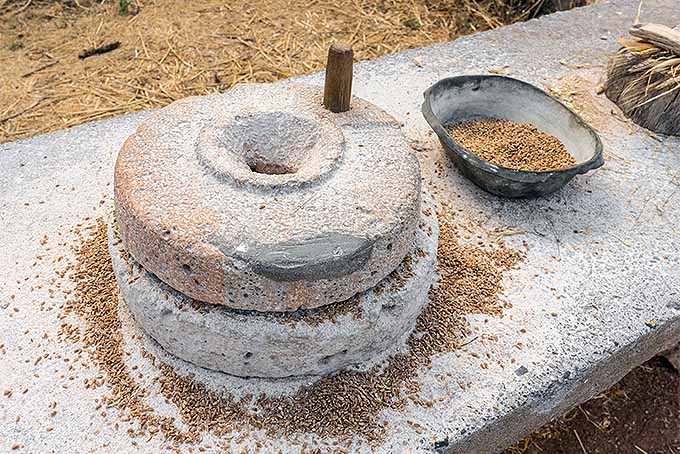
        “It was sometime after 1910 A.D. that I went, one fine morning, to the Masjid in Shirdi for getting a darshan of Sai Baba. I was wonder-struck to see the following phenomenon. After washing His mouth and face, Sai Baba began to make preparations for grinding wheat. He spread a sack on the floor; and thereon set a hand-mill.

        He took some quantity of wheat in a winnowing fan. Then he drew up the sleeves of His Kafni (robe) and took hold of the peg of the hand-mill. He started grinding the wheat. He put a few handfuls of wheat in the upper opening of the mill and rotated it.

        I thought ‘what business Baba had with the grinding of wheat? He possessed nothing and stored nothing. He lived on alms!’ Some people who had come there thought likewise, but none had the courage to ask baba what He was doing. Immediately, this news of Baba’s grinding wheat spread into the village. At once, men and women ran to the Masjid and flocked there to see Baba’s act.

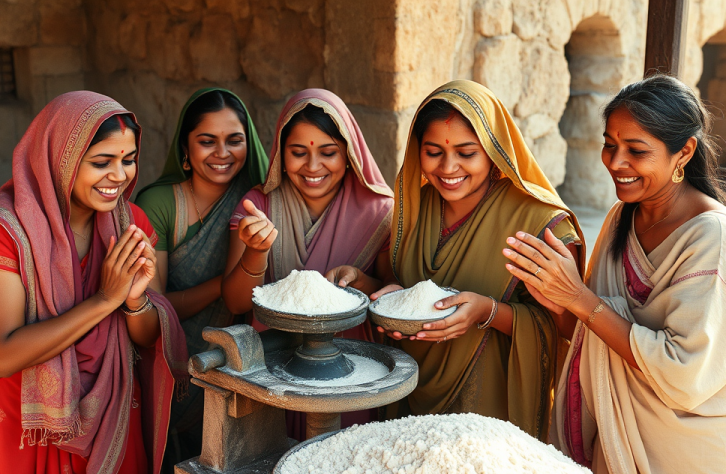
        Four bold women, from the crowd, forced their way up and pushing Baba aside, took forcibly the peg or handle into their hands, and, singing Baba’s Leelas, started grinding. At first Baba was enraged, but on seeing the women’s love and devotion, He was much pleased and began to smile. While they were grinding, they began to think. Baba had no house, no property, no children, none to look after. He lived on alms. He did not require any wheat-flour for making bread or roti. What will He do with this big quantity of flour? Perhaps as Baba is very kind, He will distribute the flour amongst us. Thinking in this way while singing, they finished the grinding. After putting the hand-mill aside, they divided the flour into four portions. They began to remove them one per head.

        Baba, Who was calm and quiet up till now, saying, “Ladies, Now please do this. Take the flour and throw it on the village border limits.” On hearing this, the women felt abashed. Whispering amongst them, they went away to the outskirts of the village. They spread the flour as directed by Baba.
        I asked the Shirdi people – “What was this that Baba did?” They replied that as the Cholera Epidemic was spreading in the village. This was Baba’s remedy against the same. It was not wheat that was ground. The Cholera itself was ground to pieces and pushed out of the village. From this time onward, the Cholera Epidemic subsided and the people of the village were happy.”- Hemadpant in Shri Sai Sat Charitra.

      • “Give your guest, cups of tea, fully saturated with Sugar.”

        “Give your guest, cups of tea, fully saturated with Sugar.”

        Dasganu was once performing his Kirtan and singing the glory of Sai Baba, in the Koupineshwar temple in Thana.

        One Mr. Cholkar, a poor man serving as a candidate in the Civil Courts in Thana, was amongst the audience. He heard Dasganu’s Kirtan most attentively and was much moved.

        He there and then mentally bowed and vowed to Baba saying – “Baba, I am a poor man, unable to support my family. If by your grace, I pass the departmental examination and get a permanent post, I shall go to Shirdi. I will fall at Your Feet. I will also distribute sugar-candy in Your name.” As good luck would have it, Mr.Cholkar did pass the examination. He got the permanent post. Now it remained for him to fulfil his vow. The sooner, the better.

        Mr. Cholkar was a poor man with a large family to support; and he could not afford to pay for the expenses of a Shirdi trip. As is well said, one can easily cross over Nahne ghat in Thana District. It is easy even to cross the Sahyadri Range. However, it is very difficult for a poor man to cross Umbareghat, i.e., the threshold of his house.

        As Mr. Cholkar was anxious to fulfill his vow as early as possible, he resolved to economize, cut down his expenses, and save money. He determined not to use sugar in his diet; and began to take his tea without it.

        He saved some money in this way. Then, he came to Shirdi and took Baba’s darshan. He fell at His Feet and offered a coconut. He distributed it with a clean conscience along with sugar-candy as per his vow. He told Baba that he was much pleased with His darshan and that his desires were fulfilled that day.

        Mr. Cholkar was in the Masjid with his host Bapusaheb Jog. When the host and the guest both got up and were about to leave the Masjid, Baba spoke to Jog as follows:- “Give him (your guest) cups of tea, fully saturated with Sugar.”

        Hearing these significant words, Mr. Cholkar was much moved, he was wonderstruck, his eyes were bedewed with tears, and he fell at Baba’s Feet again. Mr. Jog was also curious about this direction, regarding the tea-cups to be given to his guest.

        Baba wanted by His words to create faith and devotion in Cholkar’s mind. He hinted as it were, that He got the sugar-candy as per his vow and that He knew full well his secret determination not to use sugar in his diet.

        Baba meant to say, “If you spread your palms with devotion before Me, I am immediately with you, day and night. Though, I am here bodily, still I know what you do; beyond the saven seas. Go wherever you will, over the wide world, I am with you. My abode is in your heart and I am within you. Always worship Me, Who is seated in your heart, as well as, in the hearts of all beings, Blessed and fortunate, indeed, is he who knows Me thus.”

        SSSC Ch-15

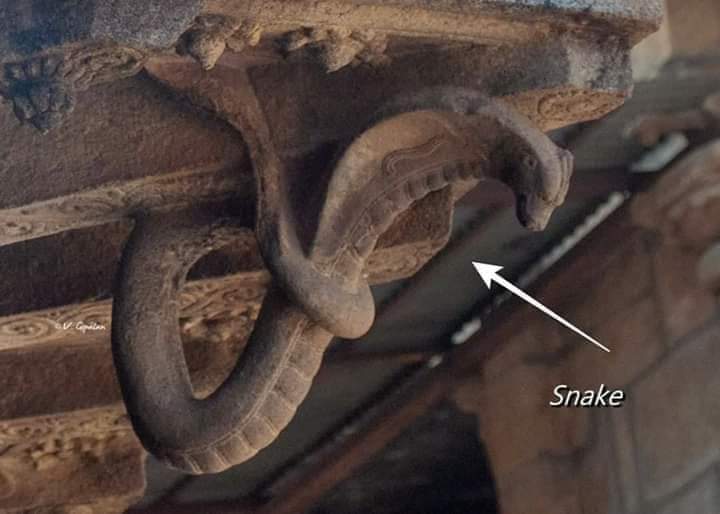
      • What can the Snake do?”

        What can the Snake do?”

        Balasaheb Mirikar, son of Sirdar Kakasaheb Mirikar was Mamlatdar of Kopergaon. He was going on tour to Chitali. On the way he came to Shirdi to see Sai Baba.

        When he went to the Masjid and prostrated himself before Baba, usual conversation regarding health and other matters commenced, when Baba sounded a note of warning as follows:- “Do you know our Dwarakamayi?”

        As Balasaheb did not understand he kept quiet, Baba continued – “This is our Dwarakamayi, where you are sitting. She wards off all dangers and anxieties of the children, who sit on her lap. This Masjidmayi (its presiding Deity) is very merciful. She is the mother of the simple devotees. She will save them in calamities. Once a person sits on her lap, all his troubles are over. He, who rests in her shade, gets Bliss”.

        Then Baba gave him Udi, and placed His protecting hand on his head.

        When Balasaheb was about to depart, He again said- “Do you know the “Lamba Bava” (long gentleman), Viz. serpent?” And then he closed his left arm like a fist. He brought it near the right elbow. Moving his left arm like the hood of a serpent, Baba said, “He is so terrible. But what can he do to the children of Dwarakamayi? When the Dwarakamayi (its presiding deity) protects, what can the serpent do?”

        Everyone present there was curious. They wanted to know the meaning of all this and its reference to Mirikar. However, none had the courage to ask Baba about this. Then Balasaheb saluted Baba and left the Masjid with Shama. Baba called Shama back and asked him to accompany Balasaheb, and enjoy the Chitali trip.

        They reached Chitali at 9 P.M. and encamped in the Maruti temple. The office-people had not come; so they sat quiet in the temple, talking and chitchating.

        Balasaheb was sitting on a mat reading a newspaper. His Uparani (upper dhotar) was spread across his waist and on a part of it a snake was sitting unobserved. It began to move with a rustling sound which was heard by the peon. He brought a lantern, saw the snake and raised an alarm- ‘serpent, serpent’. Balasaheb was frightened and began to quiver.

        Shama was also amazed. Then he and others moved noiselessly and took sticks and clubs in their hands. The snake got down slowly from the waist and it moved away from Balasaheb; it was immediately done to death. Thus this calamity, which was prophesied by Baba, was averted and Balasaheb’s love for Baba was deeply confirmed.

      • Baba grinding the sins, afflictions and miseries of His devotees.

        Baba grinding the sins, afflictions and miseries of His devotees.

        1–2 minutes

        Hemadpant asked the Shirdi people “What was this (ie. Preparing and taking the wheat-flour to the outskirts of Shirdi and throw it on the village borders) that Baba did?” They replied that as the Cholera Epidemic was spreading in the village and this was Baba’s remedy against the same.

        It was not wheat that was ground but the Cholera itself was ground to pieces and pushed out of the village. From this time onward, the Cholera Epidemic subsided and the people of the village were happy.

        Hemadpant began to ask himself – “What earthly connection was there between wheat flour and Cholera? What was the casual relation between the two? And how to reconcile them? The incident seems to be inexplicable. I should write something on this and sing to my heart’s content Baba’s sweet Leelas (play). Thinking in this way about this Leela, my heart was filled with joy and I was thus inspired to write Baba’s Life – The Satcharita.”

        Philosophical Significance of Grinding :
        Apart from the meaning that the people of Shirdi put on this incident of grinding wheat, there is, we think, a philosophical significance too.

        Sai Baba lived in Shirdi for about sixty years and during this long period. HE did the business of grinding almost every day. He ground not, however, the wheat alone. He also ground the sins, the mental and physical afflictions, and the miseries of His innumerable devotees.

        The two stones of His mill consisted of Karma and Bhakti, the former being the lower and the latter the upper one. The handle with which Baba worked the mill consisted of Jnana. It was the firm conviction of Baba that Knowledge or Self-realization is not possible, unless there is the prior act of grinding of all our impulses, desires, sins; and of the three gunas, viz. Sattva, Raja and Tama; and the Ahamkara, which is so subtle and therefore so difficult to be got rid of.

        SSSC -ch1

      • Baba’s Methods of Teaching

        Baba’s Methods of Teaching

        Rao Bahadur bought a good Chirdi (small Sari) and presented it to the mind-servant of Kaka (Kakasaheb Dixit)

        Like a starving person getting luckily good dishes to eat, her joy knew to bounds. Next day she wore the new Sari, and out of great joy and merriment, whirled, danced round and played `Fugadi’ with other girls and excelled them all.

        The Day following, she kept the new Sari in her box at home and came with the old and torn rags, but she looked as merry as she did the previous day.

        On seeing this, Das Ganu’s pity was transferred into admiration. He thought that the girl being poor had to wear a torn rag, but now she had a new Sari which she kept in reserve and putting on the old rag, strutted herself, showing no trace of sorrow or dejection.

        Thus he realized that all our feelings of pain and pleasure depend upon the attitude of our mind.

        On thinking deeply over this incident, he realized that a man ought to enjoy whatever God has bestowed on him in the firm conviction that He besets every thing, from behind and before, and on all sides and that whatever is bestowed on him by God must be for his good.

        In this particular case, the impoverished condition of the poor girl, her torn rag and the new Sari, the donor, the dance and the acceptance were all parts of the Lord and pervaded by HIM

        Hence, Das Ganu got a practical demonstration of the lesson of the Upanishad – the lesson of contentment with one’s own lot in the belief that whatever happens, is ordained by God, and is ultimately good for us.


        Unique Method of Teaching

        In this particular case, He sent Das Ganu to Vile Parle, where he got his problem solved,through the maid-servant. To those, who say that it was not necessary to sent Das Ganu outside and that Baba could have personally taught him, we say that Baba followed the right or best course, or how else could Das Ganu would have learnt a great lesson, that the poor maid-servant and her Sari were pervaded by the Lord.

        SSSC ch-20

      • Baba uttered ‘hard words.’ Why?

        Gadgi Bua, that is, a very poor saint. who was the owner of only a mud pot, had the ambition to build a grand edifice for charitable purposes and somehow destiny aided him in putting up a grand structure at Pandharpur.

        (This reminds of George Muller’s powerful faith that enabled him to get nearly twenty millions of pounds voluntarily sent to him from time to time in the course of imany years to construct many children’s orphanages).

        When Gadgi Buu started building his dharmasala at Nasik, the flow of monetary help stopped abruptly after he reached a limited success only in putting up a set of rooms.

        Then he felt disgusted and thought that the best thing he could do was to approach a person like Sai Baba lor help. So he went to Shirdi and came to Baba.

        At once Sai Baba uttered a lot of foul abuse, ‘hard words’ as Khaparde calls them. Gadgi Bua at once understood what they meant. It is not Gadgi Bua that Baba was abusing foully, but he was cursing away and driving away the bad fortune that hampered the progress of his work.

        Gadgi Bua laughed at once and Baba also laughed at once. Gadgi Bua went back. His bad fortune had been driven away and money again came enabling him to build the dharmasala he had begun.

      • When and How to think about Baba!

        Am I not always with you? Then do you offer Me anything before you eat?”. Baba said to Hemadpant.

        Let us mark and note carefully, what Baba has taught us, by this incident.

        He has advised us that before the senses, mind and intellect enjoy their objects, he should first be remembered, and if this be done, it is in a way an offering to Him.

        The senses etc. can never remain without their objects, but if those objects are first offered to the Guru, the attachment for them will naturally vanish. In this way, all the Vrittis (thoughts) regarding Desire, Anger, Avarice etc. should first be offered and directed to the Guru and if this practice be followed, the Lord will help you in eradicating all the Vrittis.

        When before enjoyment of the objects, you think that Baba is close by, the question whether the object is fit to be enjoyed or not will at once arise. Then the object that is not fit to be enjoyed will be shunned and in this way our vicious habits or vices will disappear and our character will improve. Then love for the Guru will grow and pure knowledge will sprout up. When this knowledge grows, the bondage of body – consciousness (we are the body) will snap and our intellect will be merged in spirit-consciousness (we are the spirit). Then we shall get Bliss and contentment.

        To put the matter in a nut-shell, we should not enjoy any object with our senses etc. without first remembering our Guru. When the mind is trained in this way, we will be always reminded of Baba, and our meditation on Baba will grow apace.

        The Sagun Form of Baba will ever be before our eyes and then devotion, non-attachment and salvation will all be ours. When Baba’s Form is thus fixed before our mental vision, we forget hunger, thirst, and this samsar; the consciousness of worldly pleasures will disappear and our mind shall attain peace and happiness.

      • How differently Baba cured

        Baba anger was merely a device to enable a diarrhoea patient to get groundnuts . Kaka Mahajani had diarrhoea , and he carried a ( chombu ) vessel of water with him , and was in front of the Dwarakamayee . Baba was inside , and there were plenty of persons outside . Suddenly Baba burst out into violent rage and people fled in all directions . See B. C. & S. 392. People took to their heels and cleared the premises .

        Kaka Mahajani also was slowly moving towards his ” chombu ” and wanted to go out. Baba suddenly came and stopped him and sat next to him . There was a packet of groundnuts left by some one who was eating them, and who in his hurry to escape safe , left the groundnuts behind .

        Baba took up the groundnuts and shared it with Kaka Mahajani saying , ‘ Let us eat groundnuts’. They both ate the groundnuts and Baba asked Kaka Mahajani to drink water on top of it . This is not exactly the treatment for diarrhoea which any doctor would dare to give, for that would aggravate it . But Baba said , ‘ Your anal sphincter is now tightly closed ” . This cured Kaka Mahajani of his diarrhoea