Tag: Khandoba

Temple

  • Can we follow other Gods?

    Can we follow other Gods?

    In BG VII(7) 21-2, Sri Krishna said “In whatever from people surrender to Me, in that very form, I serve them. Every one following his own form of worship is really following My worship’.

    God can be approached under any name and in any manner, and

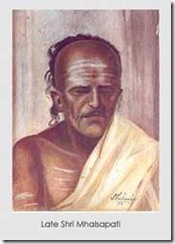
    Mahlsapathy (Baba’s closest devotee),

    • though sticking to the idea that Khandoba was his God,
    • derived the advantage of getting all his
    • other needs safeguarded and provided as far as possible
    • by Baba acting as his Providence.

    Other bhaktas also

    • who have their own particular forms, who however note the need or importance of food, shelter and other things for themselves and their familes, being provided by Baba
    • would be thus encouraged by Mahlsapathy’s example to seek Baba and place themselves under his protection.
    • Baba never interfered with
      • anybody’s orthodoxy or religious worship, and
      • the orthodox now in various places need not have any fears about the loss of their existing spiritual position by contacting Baba.
      • All the while, they would get unconscious expansion and refinement of their idea of God and Gods, and become ready for reaching the “Ekam Sat-That which exists is One”

    LoSB-P245

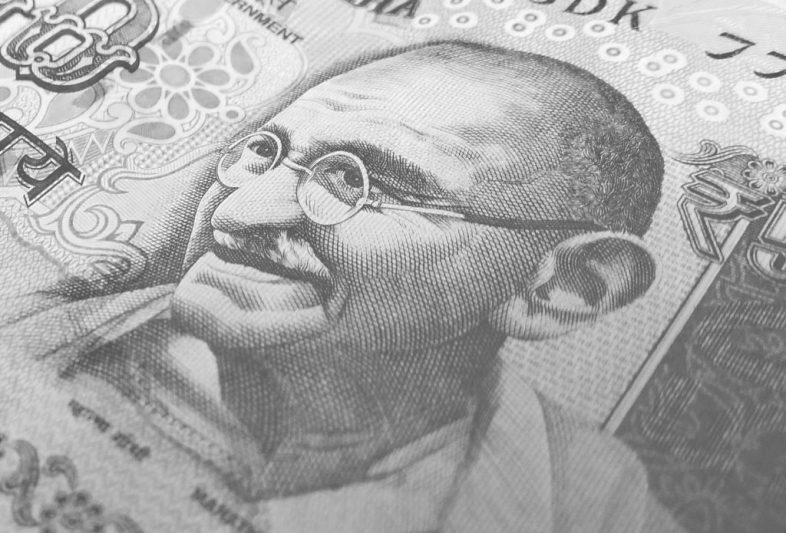
  • Baba’s standpoint similar to Mahatma Gandhi

    Baba’s standpoint similar to Mahatma Gandhi

    That is ‘Live and let live’- and To unite persons, use common joint formula.

    Mahtama Gandhi (freedom fighter of India) tried to effect a rapproachment between Hindus and Muslims. He started the formula noted below, where Rahim and Ram are put together. He also made his Hindu and Muslim followers repeat the formula or mantra.

    Raghupati Raghava Rajaram Patita paavana Sitaram,

    Iswara Allah Tere nam, Sabko Sanmati De Bhagavan,

    Rama Rahim Krishna Karim, Sabko Sanmati de Bhagavan.

    Mahatma Gandhi aimed to familiarise the ears of impartial and co-operatively minded Hindus and Muslims, with a mix of both cultures. This would help both groups to hear each other’s names without losing equanimity.

    This would become easier and inspiring by habit for future generations. That was the great object of Mahatma Gandhi’s formula. Baba added to Gandhiji’s plan of work. He secretly worked on the hearts of all.

    Baba was perfectly neutral and submitted to the peculiar idiosyncracies of his worshippers in order to avoid offending them. Left to himself Baba would have no mark on his forehead. Baba did not believe at all that there is a separate Siva and a separate Vishnu as Gods. ‘To him, there was only one God. It might be called Siva or Vishnu, Vittal, Rama or Datta. Khuda, Khandoba, Devi, Allah or Hari; might all be names given with equal justification’. “A rose by any other name would smell as sweet”.

    If each wants to get on in his own way, he should do so. He should choose the way that suits him best. By all means, let him do so. He should not be hindered. This is the only way to unite all sincere worshippers. Sincere bhaktas’ worship of Sai is the same as the worship of God.

    That is their feeling and according to correct metaphysics and philosophy, there is no difference between the worship of Sai treated as God and the worship of God under any other name or any other form. Both achieve the same ends.

    “In whatever form you surrender to Me, in that form, I respond- BG (4) 11.

    LoSB/Part I: Ch-XIV

  • Mahlsapaty

    Mahlsapaty

    Mahlsapathy is the First & top most person in Sai Baba’s Court-Member of King’s Dharbar, and one among the VIBGYOR* member of Baba’s Dharbar.

    Sai Baba stayed at one Chandbhai’s [headman of Dhoopkheda village] home for some days. The nephew of Chandbhai’s wife got betrothed to a girl from Shirdi. So, Baba came to Shirdi in that wedding procession, in 1872.
    The marriage party had alighted at the pounding grounds, near Khandoba’s (incarnation of Shiva) temple, outside the village. When Baba went to the Khandoba temple, He met Mhalsapaty there.

    This Mhalsapaty was a resident of Shirdi and a goldsmith. As he was a devotee of Khandoba, and regular visitor of Khanderaya (Deity of Jejuri, who is also Khandoba), since many generations. As soon as Mhalsapaty saw Him, he welcomed Him with the words: “Welcome Sai”. Then, all the devotees of Sai Baba called Him “Sai Baba or Sai or Baba”.
    Mhalsapati brought Sai Baba into the village and introduced Him to his friends Kashiram Shimpi and Appa Jagale. These three usually served, according to their capacity, the sadhus, saints , fakirs and ascetics visiting the village, and graciously took care of them.

    Baba was an absolute “Vairagya Purusha” and never cared for wealth or women. Mahlsapalhy, being himself highly detached i.e. of a vairagya temperament and not being overned by lust or other low urges, could easily appreciate Baba, from the very beginning was drawn to Baba;

    when other people began to worship Baba, only when they saw Baba’s psychic powers e. g. when he turned water into oil to feed his lamps, and then they regarded him as God.

    An important event in Mahlsapathy’s life that was- “Baba’s trying to leave his body about 1886 and returning to it three days later”.

    Baba had made him the guardian of his body and told him, “Arre Bhagat, look after this body for three days. I am going to Allah. If I do not return, then get it buried in due course at that place, (that is, near the sacred gode neem tree).”

    Mahlsapathy supported Baba’s body on his own knee, and when officers, including the village headman karnam, etc., held an inquest over the body, declared it dead, and wanted it to be buried. Mahlsapathy with the help of others stoutly opposed their proposal, and saved Baba from losing his body.

    Thus, he rendered a valuable service in 1886, after which Baba lived for 32 years to create this huge Sai movement that has covered this World.

    If Mahlsapathy had failed in his duty, and Baba had been buried, perhaps the course of history might have been different.

    ‘Whatever a person thinks of at the time of death he reaches’. When Mahlsapathy’s death was approaching, he retained full-consciousness and control of his mind.

    That was on 11th Sep 1922, Monday (in the month of Badrapada, Ekadasi Somavara, sacred to Shiva and Khandoba), having finished all his puja, he said to his family, ‘To-day is my father’s Shraddha day. Finish cooking soon. To-day, I close my earthly life and go to Heaven’.

    So, a Brahmin came and finished the Sraddha at once; and finished the gift of balis to crows, cows, etc, and guests were fed. Then the family meals were finished.

    Mahlsapathy took betel and nuts after his meal. After chewing a bit, he put on a kupni. Having near him, Bala Gurav, Ramachandra Kothe, etc., he told them all to do Ramachandrajapa Japa.

    Muhlsapaty said to his son that ‘Spend time piously in Uttama Bhakti Marga i.e. in holy devotion. All that I told you will happen.” Then Mahlsapathy uttered the word ‘Ram’ and breathed his last.

    Thus he passed away in calm, faith and cheerfulness, on the 11th September 1922. This death was a fitting termination to a pure, lofty and dedicated life—a life of Love, faith and total surrender.

    His remains are interred in a tomb at Shirdi, which is still worshipped by many.

    * 1. Mahlsapathy 2. Narayan Govind Chandorkar 3. Das Ganu Maharaj 4. H.S. Dixit, 5. Hemadpant 6. Sri Upasani Baba and 7. G.S. Khaparde.
  • TIPS relate to Shirdi and Mandir Visits

    TIPS relate to Shirdi and Mandir Visits

    Day and Time:

    Mondays, Tuesdays and Wednesdays are least crowded, normally.

    Fridays from 12 Noon-8 p.m. & Daily from 3 to 4 p.m. are also less crowded.

    The best day to visit is on Thursday; many people visit the temple and fast for nine consecutive Thursdays (referred to as the Sai Vrat Pooja). You do visit on Thursdays, but be prepared for the crowd.

    Other busy times are on weekends and celebration like Holi, Guru Purnima, Dussehra, Ram Navami festivals. The temple is kept open overnight during these festivals.

    Months

    Best period to visit Shirdi is October to March.

    But crowd is more, during the festive months ie September to December; and maximum during Dussehra and Diwali

    Others

    • There’s a procession of Sai Baba’s chariot around 9.15 p.m on Thursdays.
    • The main temple (Samadhi Mandir) is open from 5am to 10.30pm,
    • where as Dwarkamayi Masjid, Chavadi, Gurusthan are closed around 8.30pm.
    • But first ‘darshan’ of the day starts, after the morning program of worship (Morning aarti and others ), at around 7am.
    • There is no restriction on darshan during the day in Dwarkamayi Masjid, Chavadi, Gurusthan, and Nanda deep.
    • However, there are a few minutes of restriction during Dhuni Pooja or while offering food to Shri Sai.

    PLACE:

    • Free Bus is also available from Sai Nivas and Mandir to here.
    • Mobile phones, cameras and other electronic devices aren’t permitted inside the temple area.
    • Have “Mukh darshan” of  Baba Face, adjoins Dwarkamayi . DO mediation here, while leaving Shirdi pilgrimage, by sitting few minutes. (Quick one, as small queue, but some distance darshan)
    • The Museum displays articles used by Sai Baba. Do not forget to visit it, near Gurusthan.
    • FREE food provided at Prasadalaya. Devotees and visitors can take unlimited food (rice, vegetables, dal with Sweet). The capacity of Prasadalaya is huge and 1000s of people come every day. It is open from 10 a.m. to 10 p.m.
    Free Food Token Counter
    • In Chavadi, ladies are not allowed to enter the section where Baba used to sleep.

    Accommodation:

    Accommodation Booking Counter
    • Avoid the touts for getting any accommodation.
    • It is advisable to approach any hotel/lodge directly, ONLY if not available accommodation i)through https://online.sai.org.in/ OR ii)directly at Mandir Accommodation Offices.
    • There is a wide choice of hotels/lodges in Shirdi, suiting the budget of all.

    Don’t go to any shop for keeping Mobile, Free Slippers and Luggage, BUT USE Trust’s counters, very near to Gate No. 2 to keep all these.

    Be cautious about the prices while taking the garland, coconut etc particularly as a package from the nearby shops and avoid being overcharged by them.

    Prasadam and Books:

    • BUY Prasadam at SAI SANSTHAN EMPLOYEES CREDIT CO-OPERATIVE SOCIETY LTD, SHIRDI” stall, near Sai Commercial Complex and

    Donation:

    Each gift item must be registered in the Donation Office of the temple. Devotees can donate at SRI SAIBABA SANSTHAN TRUST Office

    • cash either in the Donation Office, with due receipt or
    • put into directly any of the donation boxes, placed at all important places of temple complex or
    • Crossed and A/C payee Cheques, Demand Drafts, Indian Postal Orders, Foreign Postal Order, Travelers  Cheques or Money Orders are accepted. Transactions are handled only at the Official address of Sansthan.
    • Andhra bank is authorized to collect the donations for Nitya Prasadalaya Annadan (Free Food Scheme) through their network of branches. But then, official receipt is issued by Sansthan itself.

    Prior registration is mandatory before you make any offering at the temple.

    Communication:

    Devotees are requested to call, ONLY 02423-258500 for any information regarding Saibaba Sansthan. 2] For all Online Services please do contact on 02423-258956/63 & WhatsApp-07720077203

  • Interesting Spot in and around Shirdi Mandir

    Interesting Spot in and around Shirdi Mandir

    INTERESTING PLACEs MUST VISIT IN AND NEAR SHIRDI

    • WITHIN/CLOSE TO SHIRDI MANDIR
      • Samadhi Mandir
      • Gurusthan [Neem Tree]
      • Lendi Baug
      • Dwarkamai
      • Chavadi
      • Dixit Wada Museum
      • Meditation Hall
      • Nanda Lamp
      • Ganapthy, Siva_Parvathy & Sani Temples
      • Maruti Mandir
      • Abdul Baba cottage
      • Thursday Palki procession

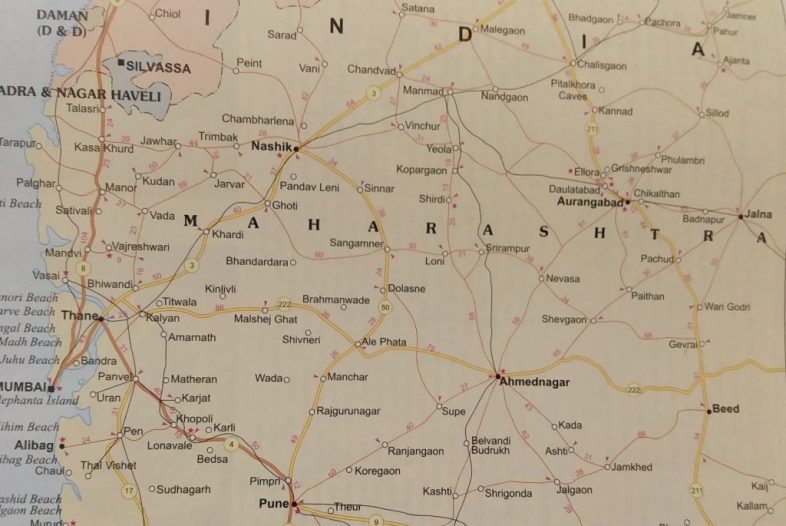
    • AROUND SHIRDI
    • 1 Upasani Maharaj Ashram – A serene place for reflection and spiritual growth.
    • 2 Shani Shingnapur, (70 kms. Nevasa Taluk, Ahmednagar Dt.) – This temple is dedicated to Lord Shani, related Plant Saturn. Its unique feature is that the houses and shops in the village have no doors or locks. Visitors can perform puja and seek blessings from Lord
    • 3 Nevasa, (Nevasa Taluk, Ahmednagar Dt.) – A peaceful area rich in cultural heritage and ancient Mohiniraj (Vishnu) temple.
    • 4 Muktidham (Nashik) – A place where the essence of devotion and tranquility beautifully converge. Marble temple. Replicas of 12 Jyotirlingas which have built as per dimension of original
    • 5 Kalaram Temple, (Panchavati – Nashik) – An important pilgrimage site for Lord Ram, built in 1782.
    • 6 Pandavleni Caves, (Nashik) – These are ancient caves. Buddhist monks built them in these serene surroundings. They date back to the 2nd century.
    • 7 Ramkund, (Panchavati – Nashik) – A sacred water spot that invites introspection and calm.
    • 8 Manmad Thumbs Up Mountain Trek – A thrilling adventure surrounded by breathtaking nature.
    • 9 Ellora Caves, (Aurangabad) – A remarkable UNESCO World Heritage site, showcasing the grandeur of ancient art and architecture.
    • 10 Daulatabad, (Aurangabad) – A historic fort that stands as a testament to the strategic brilliance of the past.
    • 11 Coin Museum, (Anjaneri Village – Nashik) – A fascinating place that takes you on a journey through history via rare coins.
    • 12 Trimbakeshwar, (Nashik) – A sacred temple that holds deep significance in the hearts of devotees.
    • 13 Alandi, (Khed Taluk– Pune) – A tranquil town that offers peace and spiritual solace such as Dnyaneshwar samadhi
    • 14 Bhimashankar, (75 kms. Khed – Pune) – a scenic hill station that offers picturesque views of mountains, valleys, and waterfalls. It is a perfect place for nature lovers and adventure enthusiasts.
    • 15 Nashik: (90 km) A city on the banks of the Godavari River, famous for its historical and religious ancient temples, like Trimbakeshwar Temple, one of the twelve Jyotirlingas in India
    • 15 Ellora Caves: (100 km) An UNESCO World Heritage site, showcase a blend of Hindu, Buddhist, and Jain architecture; intricate carvings and sculptures that depict the ancient Indian culture
    • 16 Ajanta Caves: (110 km) An UNESCO World Heritage site and showcase exquisite rock-cut Buddhist cave monuments and frescoes that date back to the 2nd century BC