Tag: Dwarkamayi

Ob Masjid -Mosque at Shirdi Mandir

  • Baba’s Yoga Practices

    Baba’s Yoga Practices

    Sai Baba knew all the processes and practices of Yoga. Some of them will be described here:

    • 1) DHAUTI or CLEANING PROCESS: Baba went to the well near a Banyan tree. It was at a considerable distance from the Masjid. Every third day, he washed his mouth and had a bath.
    • On one occasion, He vomited out his intestines. He cleaned them inside and outside. Then, he placed them on a Jamb tree for drying. There are persons in Shirdi, who have actually seen this, and who have testified to this fact.
    • Ordinary Dhauti is done by a moistened piece of linen, 3 inches broad 22 1/2ft. long. This piece is swallowed. It remains in the stomach for about half an hour to react there. Then, it is taken out. But Baba’s Dhauti was quite unique and extraordinary.
    • 2.) KHANDA YOGA: In this practice, Baba extracted the various limbs from His body. He left them separately at different places in the Masjid.
    • Once, a gentleman went to the Masjid, and saw the limbs of Baba lying separately at separate places. He was much terrified; and he first thought of running to the village officers, and informing them of Baba being hacked to pieces and murdered. He thought that he would be held responsible, as he was the first informant and knew something of the affair. So he kept silent. But the next day when he went to the masjid, he was surprised. Baba was hale, healthy, and sound, as before. He thought, that what he had seen the previous day, was only a dream.
    • 3) Baba was an adept of all the margas. (Path) . His chief marga was Bhakti marga. The special form of it is described as Guru Marga in the ‘Guru Gita’.
    • Jnana and siddhis, including yoga siddhis, came in the wake of his Guru bhakti.

    Baba had no particular marga, as the yoga marga etc. But if any person came to grief in his yoga marga, he could give relief. One yoga sadhaka had bleeding piles and came to Baba and got relief at Baba’s hands.

    • 4) Baba said, ‘Life is lived in vain if no yoga, yaga, tapas, or jnana be achieved’. He asked a devotee, ‘Will you sit idle merely eating your food? Have Saburi, that is patience and courage’.
    • Baba set the example himself of tapas. He kept awake the whole night, lying on a small narrow plank making Namasmaran, keeping his eyes open, and holding his mind in trance.
    • 5) What took place was the Baba’s conversion of water into oil. Somehow oil came into the lamp in a sufficient quantity, from Water to burn all night. Now this is not explicable to ordinary men with their notions of chemistry and physics.
    • Water is not converted into oil in a straightforward manner. Castor and other plants absorb water and combine it with their ingredients. They then produce oil in the seeds of their fruits. Without any such process, Baba was able to fill his lamps with oil.
    • 6) We take Baba’s first achievement at Selu of reviving the dead man with no other remedy or mantras than the throwing of his Guru’s pada duti on the corpse with a prayer for revival: or His taking water at his Shirdi Masjid and filling his lamps with that water for feeding the wicks with a prayer, we find his concentration on his Guru God is the only means.
    • 7) Baba was always thinking of God. Serving God is serving man and serving creation. He had evidently no need to determine the time of his death by noting the Arishta or omens or ripeness of his karma, according to Patanjali Yoga Sutra No. 23 for all knowledge to him was an open book.
    • His undertaking on behalf of his devotees to give them happy and blessed deaths, e.g., his promise to H. S. Dixit to carry him in a vimana, were fulfilled by him with remarkable accuracy of Dixit’s death, through his divine power.
    • 8) G.S. Khaparde was a highly cultured Sanskrit scholar and had evidently read yoga shastra. He has referred to certain instances and experiences of his in his diary in the year 1911-12, while he stayed at Shirdi.
    • In his Diary, he repeatedly mentions that Baba cast Yogic glances at certain persons. These individuals were immediately filled with a wave of bliss. This wave overpowered all their other mental activities. It kept them immersed in bliss for hours without break. Khaparde experienced such bliss after a yogic glance from Baba. This state lasted for three or four hours. He has noted this in his diary.
    • 9) Baba’s yoga sampoorna state enabled him to keep several people in such happy state, as they themselves have recorded in their experiences.
    • Mrs. Tarabai Sadasiva Tarkhad says that though she had physical pains in her body and mental worries, life was quite miserable. Yet when she went and sat before Baba, that very moment she felt steeped in Lethe. All her anxieties, pains, and cares, both physical and mental, vanished. Till her departure from Dwarakamayee, she was enjoying a happy state.

    What is this siddhi called? Patanjali’s Yoga Sutras and Srimad Bhagavata, llth Skanda, 15th Chapter, amongst other books, give a list of siddhis attained by yoga processes. What Baba did would be called ‘Yatha Sankalpa Samsiddhih’ and ‘Apratihata Ajna.’ This means producing whatever one wants by mere will power or supreme command.

    Srimad Bhagavata says ‘When one gets laya in God, all powers, all knowledge, all wisdom, all perfection, that are termed divine, shine forth from such a person’. Baba was perfect in his concentration on God. Therefore in the above quoted instances as in the other innumerable instances to be found in the Gospel of Sai Baba (i.e. BCS) or other books on Baba, the powers exercised by Baba were the result of his laya in God, that is, they were really divine powers

    SSSC Ch-7

  • Wise, avoid anxiety!

    Wise, avoid anxiety!

    “Stay, cast off anxiety. the wise avoid anxiety.

    Your sufferings for your past karma have come to an end, as soon as you put your feet on Shirdi. Persons in great trouble, sunk in their misery, rise to joy and happiness as soon as they climb the steps of this mosque (Dwarakamai)

    That Fakir (God) is very kind and will eradicate your disease. He will show his love. He is kind to all. “Baba

  • TIPS relate to Shirdi and Mandir Visits

    TIPS relate to Shirdi and Mandir Visits

    Day and Time:

    Mondays, Tuesdays and Wednesdays are least crowded, normally.

    Fridays from 12 Noon-8 p.m. & Daily from 3 to 4 p.m. are also less crowded.

    The best day to visit is on Thursday; many people visit the temple and fast for nine consecutive Thursdays (referred to as the Sai Vrat Pooja). You do visit on Thursdays, but be prepared for the crowd.

    Other busy times are on weekends and celebration like Holi, Guru Purnima, Dussehra, Ram Navami festivals. The temple is kept open overnight during these festivals.

    Months

    Best period to visit Shirdi is October to March.

    But crowd is more, during the festive months ie September to December; and maximum during Dussehra and Diwali

    Others

    • There’s a procession of Sai Baba’s chariot around 9.15 p.m on Thursdays.
    • The main temple (Samadhi Mandir) is open from 5am to 10.30pm,
    • where as Dwarkamayi Masjid, Chavadi, Gurusthan are closed around 8.30pm.
    • But first ‘darshan’ of the day starts, after the morning program of worship (Morning aarti and others ), at around 7am.
    • There is no restriction on darshan during the day in Dwarkamayi Masjid, Chavadi, Gurusthan, and Nanda deep.
    • However, there are a few minutes of restriction during Dhuni Pooja or while offering food to Shri Sai.

    PLACE:

    • Free Bus is also available from Sai Nivas and Mandir to here.
    • Mobile phones, cameras and other electronic devices aren’t permitted inside the temple area.
    • Have “Mukh darshan” of  Baba Face, adjoins Dwarkamayi . DO mediation here, while leaving Shirdi pilgrimage, by sitting few minutes. (Quick one, as small queue, but some distance darshan)
    • The Museum displays articles used by Sai Baba. Do not forget to visit it, near Gurusthan.
    • FREE food provided at Prasadalaya. Devotees and visitors can take unlimited food (rice, vegetables, dal with Sweet). The capacity of Prasadalaya is huge and 1000s of people come every day. It is open from 10 a.m. to 10 p.m.
    Free Food Token Counter
    • In Chavadi, ladies are not allowed to enter the section where Baba used to sleep.

    Accommodation:

    Accommodation Booking Counter
    • Avoid the touts for getting any accommodation.
    • It is advisable to approach any hotel/lodge directly, ONLY if not available accommodation i)through https://online.sai.org.in/ OR ii)directly at Mandir Accommodation Offices.
    • There is a wide choice of hotels/lodges in Shirdi, suiting the budget of all.

    Don’t go to any shop for keeping Mobile, Free Slippers and Luggage, BUT USE Trust’s counters, very near to Gate No. 2 to keep all these.

    Be cautious about the prices while taking the garland, coconut etc particularly as a package from the nearby shops and avoid being overcharged by them.

    Prasadam and Books:

    • BUY Prasadam at SAI SANSTHAN EMPLOYEES CREDIT CO-OPERATIVE SOCIETY LTD, SHIRDI” stall, near Sai Commercial Complex and

    Donation:

    Each gift item must be registered in the Donation Office of the temple. Devotees can donate at SRI SAIBABA SANSTHAN TRUST Office

    • cash either in the Donation Office, with due receipt or
    • put into directly any of the donation boxes, placed at all important places of temple complex or
    • Crossed and A/C payee Cheques, Demand Drafts, Indian Postal Orders, Foreign Postal Order, Travelers  Cheques or Money Orders are accepted. Transactions are handled only at the Official address of Sansthan.
    • Andhra bank is authorized to collect the donations for Nitya Prasadalaya Annadan (Free Food Scheme) through their network of branches. But then, official receipt is issued by Sansthan itself.

    Prior registration is mandatory before you make any offering at the temple.

    Communication:

    Devotees are requested to call, ONLY 02423-258500 for any information regarding Saibaba Sansthan. 2] For all Online Services please do contact on 02423-258956/63 & WhatsApp-07720077203

  • Dwarkamayi, How Powerful

    At Malegaon, Nasik Dt., there lived a doctor (qualified and degree-holder). His nephew suffered from an incurable disease – Tubercular bone-abcess. The doctor himself and his brothers, the medical practitioners, tried all sorts of remedies and even an operation. There was no relief and there was no end to the little boy’s suffering.

    Friends and relations advised the parents of the boy to seek divine aid and recommended them to try Sai Baba, who was known to have cured such incurable cases by His mere glance. The parents, therefore, came to Shirdi. They prostrated themselves before Baba, placed the boy before Him and pleaded humbly and respectfully, and implored Him to save their son.

    The merciful Baba comforted them saying “Those who resort to this Masjid shall never suffer anything in this life and to the end of time. Be now care-free. Apply Udi on the abcess and within one week he will recover. Believe in God. This is no Masjid, but Dwarawati. He who steps here will soon get health and happiness and his sufferings will come to an end”.

    The boy was made to sit before Baba, Who moved his hands on the affected part and cast His loving glances on him. The patient was pleased and with the application of the Udi, he began to recover, and was all right after some days

  • What can the Snake do?”

    What can the Snake do?”

    Balasaheb Mirikar, son of Sirdar Kakasaheb Mirikar was Mamlatdar of Kopergaon. He was going on tour to Chitali. On the way he came to Shirdi to see Sai Baba.

    When he went to the Masjid and prostrated himself before Baba, usual conversation regarding health and other matters commenced, when Baba sounded a note of warning as follows:- “Do you know our Dwarakamayi?”

    As Balasaheb did not understand he kept quiet, Baba continued – “This is our Dwarakamayi, where you are sitting. She wards off all dangers and anxieties of the children, who sit on her lap. This Masjidmayi (its presiding Deity) is very merciful. She is the mother of the simple devotees. She will save them in calamities. Once a person sits on her lap, all his troubles are over. He, who rests in her shade, gets Bliss”.

    Then Baba gave him Udi, and placed His protecting hand on his head.

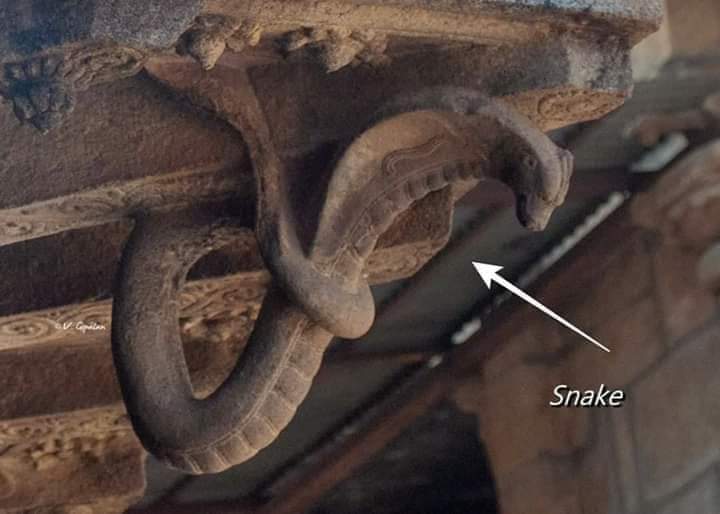
    When Balasaheb was about to depart, He again said- “Do you know the “Lamba Bava” (long gentleman), Viz. serpent?” And then he closed his left arm like a fist. He brought it near the right elbow. Moving his left arm like the hood of a serpent, Baba said, “He is so terrible. But what can he do to the children of Dwarakamayi? When the Dwarakamayi (its presiding deity) protects, what can the serpent do?”

    Everyone present there was curious. They wanted to know the meaning of all this and its reference to Mirikar. However, none had the courage to ask Baba about this. Then Balasaheb saluted Baba and left the Masjid with Shama. Baba called Shama back and asked him to accompany Balasaheb, and enjoy the Chitali trip.

    They reached Chitali at 9 P.M. and encamped in the Maruti temple. The office-people had not come; so they sat quiet in the temple, talking and chitchating.

    Balasaheb was sitting on a mat reading a newspaper. His Uparani (upper dhotar) was spread across his waist and on a part of it a snake was sitting unobserved. It began to move with a rustling sound which was heard by the peon. He brought a lantern, saw the snake and raised an alarm- ‘serpent, serpent’. Balasaheb was frightened and began to quiver.

    Shama was also amazed. Then he and others moved noiselessly and took sticks and clubs in their hands. The snake got down slowly from the waist and it moved away from Balasaheb; it was immediately done to death. Thus this calamity, which was prophesied by Baba, was averted and Balasaheb’s love for Baba was deeply confirmed.

  • Interesting Spot in and around Shirdi Mandir

    Interesting Spot in and around Shirdi Mandir

    INTERESTING PLACEs MUST VISIT IN AND NEAR SHIRDI

    • WITHIN/CLOSE TO SHIRDI MANDIR
      • Samadhi Mandir
      • Gurusthan [Neem Tree]
      • Lendi Baug
      • Dwarkamai
      • Chavadi
      • Dixit Wada Museum
      • Meditation Hall
      • Nanda Lamp
      • Ganapthy, Siva_Parvathy & Sani Temples
      • Maruti Mandir
      • Abdul Baba cottage
      • Thursday Palki procession

    • AROUND SHIRDI
    • 1 Upasani Maharaj Ashram – A serene place for reflection and spiritual growth.
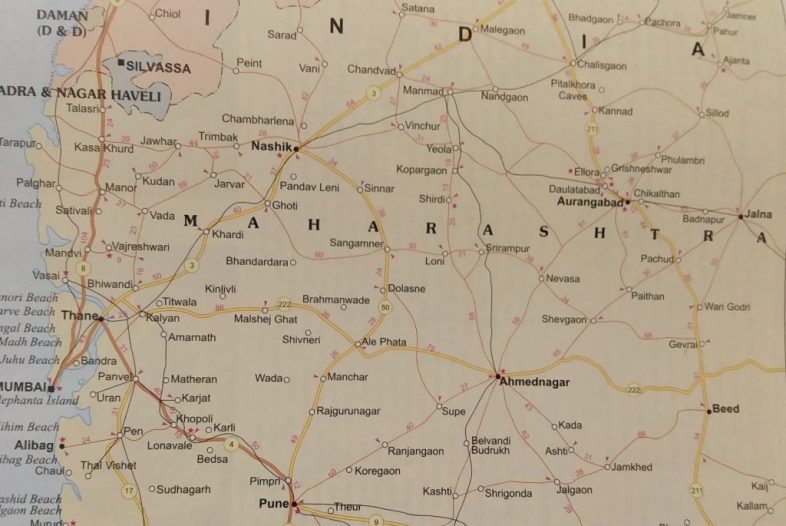
    • 2 Shani Shingnapur, (70 kms. Nevasa Taluk, Ahmednagar Dt.) – This temple is dedicated to Lord Shani, related Plant Saturn. Its unique feature is that the houses and shops in the village have no doors or locks. Visitors can perform puja and seek blessings from Lord
    • 3 Nevasa, (Nevasa Taluk, Ahmednagar Dt.) – A peaceful area rich in cultural heritage and ancient Mohiniraj (Vishnu) temple.
    • 4 Muktidham (Nashik) – A place where the essence of devotion and tranquility beautifully converge. Marble temple. Replicas of 12 Jyotirlingas which have built as per dimension of original
    • 5 Kalaram Temple, (Panchavati – Nashik) – An important pilgrimage site for Lord Ram, built in 1782.
    • 6 Pandavleni Caves, (Nashik) – These are ancient caves. Buddhist monks built them in these serene surroundings. They date back to the 2nd century.
    • 7 Ramkund, (Panchavati – Nashik) – A sacred water spot that invites introspection and calm.
    • 8 Manmad Thumbs Up Mountain Trek – A thrilling adventure surrounded by breathtaking nature.
    • 9 Ellora Caves, (Aurangabad) – A remarkable UNESCO World Heritage site, showcasing the grandeur of ancient art and architecture.
    • 10 Daulatabad, (Aurangabad) – A historic fort that stands as a testament to the strategic brilliance of the past.
    • 11 Coin Museum, (Anjaneri Village – Nashik) – A fascinating place that takes you on a journey through history via rare coins.
    • 12 Trimbakeshwar, (Nashik) – A sacred temple that holds deep significance in the hearts of devotees.
    • 13 Alandi, (Khed Taluk– Pune) – A tranquil town that offers peace and spiritual solace such as Dnyaneshwar samadhi
    • 14 Bhimashankar, (75 kms. Khed – Pune) – a scenic hill station that offers picturesque views of mountains, valleys, and waterfalls. It is a perfect place for nature lovers and adventure enthusiasts.
    • 15 Nashik: (90 km) A city on the banks of the Godavari River, famous for its historical and religious ancient temples, like Trimbakeshwar Temple, one of the twelve Jyotirlingas in India
    • 15 Ellora Caves: (100 km) An UNESCO World Heritage site, showcase a blend of Hindu, Buddhist, and Jain architecture; intricate carvings and sculptures that depict the ancient Indian culture
    • 16 Ajanta Caves: (110 km) An UNESCO World Heritage site and showcase exquisite rock-cut Buddhist cave monuments and frescoes that date back to the 2nd century BC
  • Omniscient

    Kaka was the Manager in the firm of Thakkar Dharmasey Jethabhai, a solicitor of Bombay. Both the Master and the Manager were on intimate terms.

    Mr. Thakkar knew that Kaka was often going to Shirdi, staying there for some days and returning, when Baba permitted him.

    Out of curiosity and just to test Baba, Mr. Thakkar decided to go to Shirdi with Kaka during Shimga holidays.

    and Kaka bought two seers of raisins (dried grapes with seed) on the way for presentation to Baba. They reached Shirdi in due time, and went to the Masjid for darshan.

    Then Babasaheb Tarkhad was there, Mr. Thakkar asked him why he came there. “For darshan”, Tarkhad replied.Mr. Thakkar asked if miracles took place there. Tarkhad replied that it (to see miracles) was not his attitude, but the earnest intentions of the Bhaktas were satisfied here.

    Then Kaka prostrated himself before Baba and offered the raisins to Him. Baba ordered them to be distributed.

    Mr. Thakkar got a few of them. He did not like the raisins and he was advised by his doctor not to eat them without washing and cleaning them. So he was in a fix. He did not like to eat them, nor could he reject them. To keep up formalities, he put them into his mouth, but did not know what to do with the seeds. He could not spit them out on the floor of the Masjid, so he pocketed them against his wish.

    He then said in his mind that if Baba was a Saint, how could He be ignorant of his dislike for the raisins and could He force them on him.

    When this thought arose in his mind Baba again gave him some more raisins. He could not eat them, but held them in his hand. Then Baba asked him to eat them up. He obeyed and found, to his surprise, that they were all seedless.

    He wanted to see miracles and here was one. He knew that Baba read his thought; and as per his wish converted raisins (with seeds) into seedless grapes. What a wonderful power!

    Again to test further he asked Tarkhad, who was sitting by and who also got some raisins, “What kind of grapes you got?” He replied “They variety with seeds.” Mr. Thakkar was still more surprised to hear this.

    Then to confirm his growing faith Thakkar thought in his mind that if Baba was a real Saint, the raisins should be now given to Kaka first. Reading this thought also, Baba ordered that distribution should be commenced from Kaka. These proofs were sufficient for Thakkar.

  • Online Booking at Shirdi Temple (Accommodation, Darshan, Aarti, Pooja, Do Free Service at Shirdi, etc*)

    Online Booking at Shirdi Temple (Accommodation, Darshan, Aarti, Pooja, Do Free Service at Shirdi, etc*)

    Visit the official website of the Shirdi Sai Sansthan at https://online.sai.org.in for information about the Sai Baba Temple in Shirdi.

    1. Register for regular use [Else, use mobile and OTP for one time booking] with
      a. Valid email address (for confirmation letter)
      b. Personal details: Name, Address, Mobile Number (for OTP)
      c. One photo (Scanned).
      d. One ID: Passport, National Identity Card, Voter ID, PAN Card, Ration Card, Driver’s License, or other allowed ID.
    2. Log in with your details.
    3. Choose your facilities (*) using credit/debit card or internet banking.
    4. After the payment is successful, your facilities will be booked.

    (*)Full List of Online Facilities:

    1. Donation
    2. Darshan
    3. Aarti (Morning at 5:15, Noon at 12:00, Evening Sun set, Night at 10:00)
    4. Pooja (Abishek or Satyanarayana)
    5. Accommodation (Room or Dormitory)
    6. Membership (Rs. 3000 onwards)
    7. Saileela Magazine Subscription
    8. Publications
    9. Festival Time SSSC Reading Registration (Devotees selected by lucky draw)
    10. Do Free Service at Sai Mandir and related places
    • Registration is best for each devotees visiting Shirdi, to avoid long Q
    • Facilities are given, only when the registered devotee is present.
    • Registration must be in one of the visitor’s name; no transfers allowed.
    • Rescheduling is not permitted.

    Tips related to Shirdi Temple visits, here

    Devotees can call the Help Desk for online services at 02423-258956, 258963; voice support is available from 10 am to 6 pm (IST).

    Outside of these hours, you can email support@sai.org.in.

    Shri Saibaba Sansthan Trust can change terms and conditions anytime. Please check the information before booking.