Category: BABA IS A SCIENTIST

Shirdi Sai Baba’s teachings align remarkably with modern science — from quantum physics to metaphysics, chemistry to the five elements. Explore the scientific depth hidden within Baba’s divine wisdom.

  • Nature, Uses, and Preparation of Udi- Holy Ash

    Nature, Uses, and Preparation of Udi- Holy Ash

    Based on Chapter 33 of the Sree Sai Samartha Satcharita, here is the discussion on the nature, uses, and preparation of Udi:

    What is Udi?

    Udi is the sacred ash taken from the dhuni, the eternally burning fire kindled by Shirdi Sai Baba in the Masjid. It is regarded by devotees as a miraculous and holy substance that embodies Baba’s power and grace.

    Preparation by Baba

    Baba prepared Udi by offering an oblation of firewood (logs and sticks) into the dhuni. He purchased this wood using the dakshina (monetary offerings) collected from devotees, piling it in large heaps to keep the fire burning day and night. The resulting ashes were then distributed to his followers as a blessing.

    Uses of Udi

    The sources categorize the significance of Udi into both material and spiritual realms:

    • Material World (Health and Prosperity): Udi is frequently used to cure physical and mental ailments. The text states there are “innumerable stories” where Udi was used to benefit the health and prosperity of devotees, acting as a “healing touch in the afflictions of life”.
    • Devotional and Spiritual (Destruction of Sins): Spiritually, Udi serves as a reminder of the transience of the human body and the illusory nature (Maya) of the universe. It teaches that the body will ultimately be reduced to ashes, prompting a focus on the eternal Brahman. Applying Udi with devotion is said to destroy sins and help seekers cross the “ocean of existence”.

    Notable Instances of its Power

    The sources describe two specific instances where Udi—or even road dust used in its stead—demonstrated Baba’s omnipresence:

    • The Jamner Miracle: When Nana Chandorkar’s daughter was suffering from intense labor pains in Jamner, Baba felt compassion from Shirdi. He sent a packet of Udi with Gosavi Ramgir (Bapugir) to Nana. Nana gave the Udi to his wife to administer to their daughter with water, resulting in an immediate safe delivery.
    • The “Road Dust” Incident: In another case, a devotee’s daughter was suffering from the plague. Her father sent a message to Nana Chandorkar asking for Udi. Nana, who was at Thane railway station and had no Udi with him, picked up a little dust from the ground, invoked Sai Baba’s name, and applied it to his own wife’s forehead on behalf of the girl. At that exact moment, the girl’s fever broke and she began her recovery.
  • Ever wondered if science and spirituality are connected

    Ever wondered if science and spirituality are connected

    Balance your inner electron, neutron, and proton, and in that harmonious alignment, you will discover the exquisite balance of your life!

    ⚛️ Scientific Spirituality: Gunas and the Atom

    Ever wondered if science and spirituality are connected? Here’s a logical way to see it:

    🔮 The Three Gunas of Indian Spirituality:

    • Rajas → Activity, passion, motion
    • Tamas → Inertia, heaviness, stability
    • Satva → Purity, clarity, illumination

    🔬 Atomic Parallels:

    • Electron = Rajas → restless, orbiting, shaping reactions
    • Neutron = Tamas → heavy, neutral, stabilizing the nucleus
    • Proton = Satva → positive, identity‑giving, the “light” of the atom

    🌌 The Equation of Existence

    Rajas + Tamas + Satva = Manifest Universe

    Atoms balance particles. Life balances energies. Both create stability.

    🧠 Youth‑Friendly Analogy

    You are an inner atom:

    • Too much Rajas (electron‑like restlessness) → anxiety, burnout
    • Too much Tamas (neutron‑like inertia) → laziness, stagnation
    • Balanced Satva (proton‑like clarity) → focus, positivity, identity

    🚀 Practice Exercise

    ⚛️ Balance Your Inner Atom — A Scientific Spirituality Practice
    • Atoms stay stable when electrons, neutrons, and protons are balanced.
    • Your mind works the same way with Rajas, Tamas, and Satva. SO DO

    🧪 Daily Practice

    • Calm Rajas → When restless, pause for 3 deep breaths. Try a 5‑minute focus meditation.
    • Break Tamas → When heavy or stuck, move your body. Walk, stretch, or learn something new.
    • Grow Satva → When seeking clarity, journal your thoughts or study uplifting knowledge.

    🌌 Weekly Challenge

    • Track your “inner atom” balance in a notebook.
    • Each day, note: Was I more electron (Rajas), neutron (Tamas), or proton (Satva), today?
    • Aim for harmony by the weekend.

    🚀 Call to Action

    Want to go deeper?

    🌟 Takeaway

    • Science explains how atoms work.
    • Spirituality explains why forces exist.
    • Together, they show: You are a living atom of consciousness.

    So Balance your inner electron, neutron, and proton… and you balance your life

    Copy Right

  • Significance of Sai’s smile

    Significance of Sai’s smile

    Sai’s smile is not merely a physical expression but a source of good fortune, a tool for teaching, and a manifestation of Supreme Bliss.


    1. The Smile as a Bridge from Anger to Love

    In the opening of the Source* text, Baba uses his smile to transform a tense situation into one of spiritual affection.

    • Chapter 1: When village women attempted to “loot” the flour Baba was grinding, he initially feigned anger. However, upon seeing their genuine love, his “anger turned into love and Baba started smiling”. This illustrates that the divine smile is the natural result of a devotee’s sincere devotion.

    2. The Smiling Face as a Bestower of Fortune

    The source emphasizes that simply witnessing the smile of a Saint is a spiritual milestone for a human being.

    • Chapter 20: The author Shri Hemadpant notes that “the smiling face of a saint – bestow the devotees with good fortune”. This expression is described as a “nectar” that washes away sins and brings internal satisfaction.
    • Chapter 44: Reflecting on Baba’s persona, the text asks, “How wonderful was Sai’s smiling visage which granted the purest of happiness!”. It is described as a sight that allows a devotee to “forget all worldly sorrows” and find immediate contentment.

    3. The Smile of Omniscience and Understanding

    Baba often used a smile to signal to his devotees that he was aware of their innermost thoughts and past actions.

    • Chapter 11: When discussing a devotee’s perceived inconsistency in worship (tilak of paste to Sai’s forehead), “lovingly Sai smiled” before delivering a sweet remark about the nature of true faith on Guru.
    • Chapter 21: Upon meeting a gentleman , Kanarese Appa had told he would meet a great man, Baba said to him ‘The path of this place is not so easy…even as thebuffalo ride in the ghat’ with a smile of understanding, as he was omniscient”. This smile served as a confirmation of the divine prophecy.

    4. The Role of the Smile in “Splendid Humour”

    Baba’s smile was an integral part of his unique method of teaching through wit and parables.

    • Chapter 24: The source describes Baba’s “splendid humour” as being accompanied by “a smiling face and playful eyes,” which added to the sweetness and effectiveness of his jests. These smiles helped “impress on us the most profound teachings” in a way that was easily remembered.

    5. The Smile as a Goal for Human Learning

    Smile is the “first learning of each human.” The sources support this by presenting the Saint’s smile as the ultimate refuge for the human mind.

    • Chapter 44: The author suggests that for a fortunate devotee, a single “glance at your smiling face was enough to forget all worldly sorrows”.
    • Chapter 49: Even when addressing a devotee’s inner infatuation or mental disturbance, Baba’s calm and potentially smiling guidance aimed to make the “mind get steady and calm, slowly and gradually”.

    Source*:English Translation of Sree Sai Samartha Satcharita (2004) by Zarine .

  • AUM: The Divine Sound for Spiritual Growth

    AUM: The Divine Sound for Spiritual Growth

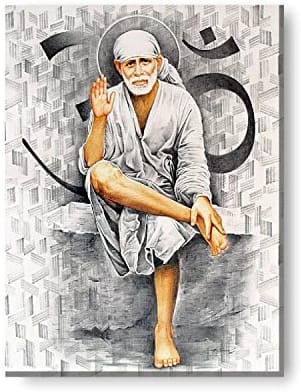
    The sound ‘AUM’ (or Aumkar) serves as a primary vehicle for enlightenment in the Satcharita by acting as the mystical symbol and vibration of the Supreme Spirit (Brahman).

    According to the sources, ‘AUM’ facilitates the spiritual path in the following ways:

    The Essence of Divine Nature

    • Connotation of the Divine: Baba revealed that the symbol ‘AUM’ expresses His true nature and that He is the only connotation of it. He identified Himself as “the sacred letter ‘AUM’” and the “Truth”.
    • Representation of Brahman: The entire nature of Brahman is seen in the representation of ‘AUM’. It is the sign and symbol for both the unmanifest (Parabrahma) and the manifest (Apar Brahma), and it is intended to be meditated upon and worshipped forever.
    • Primeval Sound: It is described as the “primeval sound” upon which the eternal and ancient soul rests.

    The Core of Spiritual Practice

    • Essence of Tapas: ‘AUM’ is described as a word, a sentence, and a letter that constitutes the essence of all tapas (austerities and spiritual practices).
    • Source of Enlightenment: The text states that while the very utterance of ‘AUM’ reveals its meaning, constant repetition of the sound gives enlightenment.
    • Essence of Knowledge: It is considered the “thought behind all knowledge” and the core essence of the four Vedas.

    Facilitating Oneness

    • Modes of Speech: In the yogic tradition, ‘AUM’ symbolises para, the highest of the four modes of speech, which is practised by yogis to transcend physical articulation.
    • Meditation and Death: The sources suggest that meditating upon ‘Aumkar–Brahman’ is so powerful that a person who dies while in this state of meditation, remembering the Lord, is considered truly blessed.
    • Bridge from Unmanifest to Manifest: ‘AUM’ is the spoken word from which the unseen form of Brahman manifests into the world; by meditating on it, a seeker can transition from material involvement back to a state of oneness with the Supreme.

    Ultimately, ‘AUM’ facilitates enlightenment by helping the seeker introvert the senses, move from gross to subtle perceptions, and eventually reach a state of unity consciousness where the distinction between the meditator and the divine disappears.

    Source Book: Shree Sai Samartha SatCharita

  • Sai Baba’s Wisdom for the Modern World

    Sai Baba’s Wisdom for the Modern World

    🌟 Sai Baba’s Wisdom for the Modern World: Questions & Answers

    🧘 What is the essence of Sai Baba’s teachings?

    Sai Baba’s teachings revolve around universal love, faith, patience, humility, and spiritual transformation. He offered practical guidance rooted in deep spiritual truths that transcend time and cultural differences.

    ❤️ How did Sai Baba promote universal love and service?

    He taught that divinity resides in all beings. His quote, “He who sees Me in all these creatures is My beloved…” encourages compassion and service to others—feeding the hungry, helping the poor, and caring for strangers.

    ⏳ Why are faith and patience (Nishtha and Saburi) important?

    Baba emphasized faith in a higher power and patience to endure life’s hardships. He said Saburi “removes all sins… casts aside all fear, and ultimately gives success,” making these virtues essential tools for inner strength today.

    🙇‍♀️ What does Sai Baba teach about surrender and ego?

    He taught that spiritual progress requires dropping ego and desire. His promise: “When his ego is annihilated… I Myself shall enter into him.” This path leads to serenity and freedom from modern anxieties.

    🧘‍♂️ Is spirituality complex according to Baba?

    Not at all. Baba advocated simple spiritual practices, saying, “Leave off all cleverness and always remember ‘Sai’ ‘Sai’.” Meditation and mantra repetition are accessible paths to self-realization—no need to renounce daily life.

    🌿 What is the meaning behind Baba’s use of Udi and Dakshina?

    He used sacred ash and offerings to symbolize impermanence and detachment. His teachings encourage mindfulness and non-attachment, helping people navigate today’s material world with clarity and peace.

    🏠 How did Baba model acceptance and detachment?

    Living humbly, Baba embraced simplicity and remained untouched by praise or criticism. His life teaches us to remain grounded and peaceful despite external chaos or changes.

    🤝 What was Baba’s message about religious harmony?

    He celebrated both Hindu and Muslim traditions, uniting communities. Baba’s example speaks powerfully to the importance of transcending divisions and fostering unity and acceptance.

    🧙‍♂️ Is a spiritual teacher (Sadguru) still relevant today?

    Yes. Baba emphasized that a Sadguru can guide the soul to self-realization. Even without physical presence, the essence lies in finding spiritual teachings or mentors that deeply resonate with one’s inner journey.

    🌈 How can we apply Sai Baba’s wisdom in our daily lives?

    By living with love, compassion, humility, faith, patience, surrender, and detachment, we can achieve inner peace and clarity, no matter our external circumstances.

  • Promoting Love

    Promoting Love

    Sai Baba actively promoted love and unity, both among his devotees and towards animals, through his teachings, actions, and the examples he set. Here’s how the sources illustrate these aspects:

    • Unification and Harmony:
      • Sai Baba worked towards the unification of communities, particularly Hindus and Muslims.
      • He celebrated Hindu festivals like Rama-Navami with all due formalities.
      • He also permitted the ‘Sandal’ procession of Mahomedans and allowed Muslims to offer prayers (Namaj) in his Masjid. This demonstrated his disregard for religious distinctions and his wish for communal harmony.
      • His constant advice was that “Rama (the God of the Hindus) and Rahim (the God of the Mahomedans) were one and the same.” He emphasized that their devotees should not quarrel. Instead, they should “join hands and bring both the communities together” for national unity.
    • Fostering Unity and Eradicating Duality: Baba emphasized the importance of dissolving the sense of difference between individuals and with God.
      • He explicitly stated, “Demolish the wall of difference that separates you from Me; and then the road for our meeting will be clear and open. The sense of differentiation, as I and thou, is the barrier that keeps away the disciple from his Master, and unless that is destroyed the state of union or atonement is not possible“.
      • This teaching directly supports universal love by promoting the realization of oneness.
    • He also encouraged his devotees to love their Guru with whole-hearted affection. He advised them to surrender completely. He suggested prostrating reverentially before Him to attain this unity.
    • Direct Instruction on Conduct:
      • Baba provided invaluable general advice for interacting with others:
      • If any men or creatures come to you,
        • do not discourteously drive them away,
        • but receive them well and treat them, with due respect.
      • Shri Hari (God) will be certainly pleased, if you give water to the thirsty, bread to the hungry, clothes to the naked, and your verandah to strangers for sitting and resting“.
      • This emphasizes hospitality, compassion, and respectful treatment of all.
    • Discouraging Slander and Gossip: Baba strongly disliked slander.
      • He stated, “He who carps and cavils at others, pierces Me in the heart and injures Me, but he that suffers and endures, pleases Me most“.
      • In one instance, he corrected a slanderer by pointing to a pig eating filth and comparing the slanderer’s actions to the pig’s,
      • thereby teaching a powerful lesson against reviling others.
    • Personal Relationships and Care: Baba demonstrated deep personal love and care for his close devotees.
      • He shared his dormitory with Tatya Kote Patil and Bhagat Mhalsapati for 14 years, showing immense affection and intimacy.
      • He loved Khushalchand of Rahata and “watched his welfare, day and night,” even visiting him.
      • He exhibited “motherly love” towards his disciples, knowing their wants and feeling boundless joy when they were adorned.
      • He ensured the proper execution of religious functions in devotees’ homes, even attending a dinner in Mr. B.V. Deo’s house through an appearance.
      • His “anger” was often a disguise for blessings or tests, as seen
        • when he appeared enraged with the women grinding wheat but later smiled at their devotion, or
        • when he seemingly scolded Haji Sidik Falke only to then show him great favor.
    • He sometimes appeared in dreams or visions to guide and comfort his devotees, like the instance of Hemadpant’s Shimga dinner.
    • Importance of Guru-Disciple Relationship: Baba emphasized
      • complete surrender and unwavering faith in the Guru, assuring that such
      • devotion leads to spiritual progress and self-realization. This deep bond fosters profound love and trust.
    • Saints, like Baba and Shri Tembye Swami, are shown to love each other with “fraternal affection,” indicating a wider spiritual family bound by love.

    Promoting Love with Animals:

    • Oneness with All Creatures: Sai Baba explicitly taught the principle of seeing God in all beings, including animals. When Mrs. Tarkhad fed a hungry dog, Baba told her, “The dog which you saw before meals and to which you gave the piece of bread is, one with Me, so also other creatures (cats, pigs, flies, cows etc.) are one with Me. I am roaming in their forms. He, who sees Me in all these creatures is My beloved. So abandon the sense of duality and distinction, and serve Me, as you did today“. This is a profound teaching that directly connects compassion for animals with devotion to God.
    • Compassion and Non-violence: Baba’s conduct consistently demonstrated compassion for animals. He never drove away dogs, cats, or crows that ate from his food pot, indicating his acceptance and care for them. He also gave a clear opinion on the killing of serpents, stating, “God lives in all beings and creatures, whether they be serpents or scorpions… So we should take pity and love all creatures, leave off adventurous fights and killings and be patient. The Lord (God) is the Protector of all“.
    • Reminiscences of Past Lives: In a remarkable instance, Baba purchased two goats for a significantly high price, explaining to his surprised devotees that these goats were formerly two human brothers who had fought bitterly and killed each other. He bought them out of pity, fed them, and then returned them. This story highlights Baba’s boundless love and compassion for all creatures, acknowledging their karmic journeys.
    • Protection of Animals:
      • Baba saved his devotees from potential harm from animals like snakes,
      • sometimes by foretelling the danger and
      • other times by direct intervention,
      • but he always advised against killing them,
        • emphasizing universal love and the divine presence in all creatures.
      • Even a fierce tiger was drawn to his feet and found a blessed end in his presence, demonstrating Baba’s all-encompassing mercy towards even wild animals.
  • Baba’s Compassion and Love

    Baba’s Compassion and Love

    Shirdi, Shri Sai Baba’s life is a testament to His boundless compassion, profound gentleness, and unwavering selflessness. He consistently demonstrated these qualities through His actions, teachings, and interactions with His devotees. Here are instances:

    Baba’s Compassion:

    • Protection from Epidemics: Baba displayed compassionate foresight by grinding wheat and having the flour thrown on the Shirdi village borders to curb a cholera epidemic.
      • Villagers understood that He was not only grinding wheat.
      • He was also grinding the cholera itself to pieces. This act pushed cholera, out of the village. This led to the epidemic’s subsidence.
    • Encouragement of Hemadpant: When Hemadpant expressed self-doubt about writing Baba’s biography,
      • Baba gently encouraged him. He blessed him with Udi (sacred ashes) and placed His boon-bestowing hand on his head.
      • Baba assured,
        • “I will help him.
        • He is only an outward instrument.
        • I should write Myself My autobiography and
        • satisfy the wishes of My devotees”.
        • This shows His desire for devotees’ spiritual growth and His loving support.
    • Motherly Love for Disciples: Baba exhibited a unparalleled motherly love towards His disciples. He was always attending to their needs. Sadgurus like Baba have this peculiar and extraordinary love for their disciples.
      • All-Embracing Love and Tolerance:
        • Baba’s all-embracing love was evident in His defense of the Rohilla, who disturbed villagers with loud prayers.
        • Baba took the villagers to task, explaining that the Rohilla’s prayers kept away “Durbuddhi” (bad thoughts),
        • thus protecting even those perceived as troublesome.
    • Omnipresence and Constant Protection: Baba’s statement: “I am the Inner Ruler of all and seated in their hearts. I envelope all the creatures, the movable and immovable world.
    • Curing Ailments through Grace: Baba cured numerous diseases without using conventional medicine. He did so through His Grace, Words, or Udi. This demonstrated His compassion for the suffering. Examples include:
        • Bhimaji Patil’s severe tuberculosis, cured by Baba’s words of hope and mercy, through two dreams.
        • Bala Ganapat Shimpi’s malaria, cured by instructing him to feed a black dog, with rice mixed with curds.
        • Bapusaheb Booty’s dysentery and vomiting, instantly cured by Baba’s command, “Now take care, you should not purge any more” and “The vomiting must also stop”. He also cured in another time, Booty’s cholera with a seemingly fatal remedy, effective due to Baba’s word.
        • A Swami from Alandi’s ear pain, relieved by Baba saying, “Alla Accha Karega (God will do good)”.
        • Madhavrao Deshpande’s piles and Gangadharpant’s stomach-pain, cured by simple words and touch, and Nanasaheb Chandorkar’s stomach-pain with a sweetmeat.
        • A doctor’s nephew of tubercular bone-abscess, cured with Udi and Baba’s “loving glances”.
        • Dr. Pillay’s excruciating guinea-worm pain, relieved by Baba’s command to be ‘fearless’ and allowing an accidental step on the wound, to expel the worms.
        • Shama’s sister-in-law’s bubonic plague, cured overnight by sending Udi and giving instructions.
        • A Harda gentleman’s bladder stone, dissolved with Udi mixed with water.
        • A Bombay lady’s painless delivery, despite a stillborn issue, by her praying to Baba and consuming Udi-mixture.
      • Acceptance of Sincere Offerings: Baba lovingly accepted offerings made with devotion, such as
        • Mr. Cholkar’s small offering of sugar-candy, knowing his secret vow to save money for his trip by abstaining from sugar.
        • He knew devotees’ sincere intentions,
          • even reminding them if they
          • forgot to offer something,
          • demonstrating His acceptance of their inner devotion over the material value.
      • Teaching Non-duality through Action: Baba profoundly taught the principle of “See God in all beings”
        • when He told Mrs. Tarkhad, “Mother, you have fed Me sumptuously… The dog which you saw before meals and to which you gave the piece of bread is, one with Me, so also other creatures… I am roaming in their forms. He, who sees Me in all these creatures is My beloved.“. This practical demonstration encouraged compassion for all life.
      • Drawing Devotees and Fulfilling Desires: Baba had an incredible ability to draw devotees to Shirdi, “like a sparrow, with a thread tied to its feet.” He was omniscient and knew their innermost thoughts and desires. Often, His compassion led Him to fulfill them. Examples include:
          • Knowing Lakhamichand’s taking a loan for his darshan and forgetting to buy guavas, but arranging for an old woman to sell him the fruits.
          • Knowing Damu Anna’s secret thoughts about speculative business and gently dissuading him, saving him from financial ruin. He blessed Damu Anna’s wife with four sons and four daughters, by gave her four mangoes as Prasad. This act overrode astrological predictions.
          • Fulfilling Mrs. Tendulkar’s dream of her son passing his medical examination despite unfavorable astrological predictions, emphasizing faith. He also blessed Mr. Tendulkar with a higher pension after a dream.
          • Ensuring painless death and salvation (Sadgati) for devotees like Sannyasi Vijayanand, Balaram Mankar, and Tatya Noolkar; Even showering flowers on Megha’s body and arranging his funeral rites after his passing shows, deep affection.
        • Compassion for Animals: Baba displayed immense compassion for animals.
          • Notably, he bought two goats for an exorbitant sum. He explained their past lives and their enmity in their previous human forms. Out of pity, he fed them.
          • He also taught not to kill creatures, stating “God lives in all beings and creatures”.
        • Personal Sacrifice for Devotees:
          • A supreme act of compassion was when Baba
          • sacrificed His own life to save Tatya Kote Patil’s life, fulfilling an earlier prophecy that Tatya would pass away, but Baba took his place.

        Shirdi’s Shri Sai Baba exemplified unparalleled compassion and selflessness through numerous acts. He protected villagers from epidemics, encouraged disciples, healed ailments without medicine, and accepted sincere offerings. Baba’s teachings emphasized seeing God in all beings, fulfilling devotees’ desires, and displaying profound love for both people and animals, often embodying true sacrificial spirit.

      • Love as Forgiveness

        Love as Forgiveness

        Baba’s Forgiveness:

        • Transforming Initial Displeasure into Blessings: Baba’s “anger” was often a tool for spiritual correction rather than true wrath.
          • Initially enraged at the women who forcibly took the hand-mill to grind wheat, He quickly became pleased by their love and devotion.
          • He allowed Dr. Pandit to apply sandal paste to His forehead, a personal practice usually restricted to Mhalsapati. Baba explained it was because Dr. Pandit saw Him as his own Guru, showing acceptance of sincere devotion despite unconventional acts.
          • He sometimes appeared as “wrath Incarnate.” However, internally, He was “a stream of affection and motherly love.” Baba stated, “He is ever angry with His devotees.”
          • Baba used seemingly harsh words with Haji Sidik Falke. Initially, he prevented him from entering the Masjid and demanded a large sum. This ultimately led Haji to humility and acceptance. After this, Baba treated him with respect and gave him mangoes and money. This showed Baba clearing Haji’s spiritual block related to pride.
          • He confronted a Pandharpur pleader for slandering Him and others behind their backs. Baba directly addressed the pleader’s inner thoughts. “Baba’s remark was aimed at me. It was a hint to me. I should not indulge in reviling or scandalizing others”. This led to the pleader’s sincere reform. It resulted in the riddance of this “evil tendency”.
          • He initially gave Mr. Sapatnekar a harsh “Get out” upon his visit, likely due to Sapatnekar’s prior derision of Baba. Sapatnekar showed genuine penitence and perseverance. Baba then blessed him with a son. He said, “These feet are old and holy, you are care-free now; place entire faith in Me and you will soon get your object”.
          • He similarly dealt with Somadeva Swami, who initially judged Baba by outward appearances (like flags on Baba’s mosque). Baba’s “wild” response exposed the Swami’s inner thoughts, which led to the Swami realizing Baba’s omniscience and transforming into a staunch devotee. The Swami realized “Baba’s wrath was a blessing in disguise”.
          • Baba gently corrected Nanasaheb Chandorkar’s wandering mind. When he was smitten by a lady’s beauty, Baba advised him to let the senses do their work. He cautioned not to meddle with them. Baba also said, “When the heart is pure, there is no difficulty”.
          • When devotees tried to interfere with Mavsibai’s intense abdominal massage of Baba, as they feared she would hurt Him; Baba became enraged. He took hold one end of his Satka with both hands and pressed it in the hollow of His abdomen and other end on fixed on a Post ie. His body could withstand anything. This demonstrated that He permitted devotees to serve Him as they chose, and His “rage soon cooled down”, showing His understanding and forgiveness of well-intentioned but misguided interventions.
      • Baba is a Scientist in Teaching Education

        Baba is a Scientist in Teaching Education

        Pedagogics is the art and science of teaching and education. It involves not only conveying information, but also understanding how people learn. It requires creating environments, that foster growth and development.

        Sai Baba is also not only delivering information, but create environment for learning and growing of His devotees. viz:

        • One,
          • totally devoid of any book study, but
          • possessed of
            • perfect self-surrender,
            • humility,
            • trust, and
            • love towards the Guru Baba,
            • was and is the person who could derive
            • the fullest benefits from Baba.
        • The idea that
          • one has understood all about Jiva and Paramatma and
          • the methods by which Paramatma could be reached by a Jiva,
          • forms the greatest obstacle to one’s progress.
        • It is
          • not the intellect, the keenness of intellect, that is
          • wanted from a person approaching Baba.
        • It is
          • humility,
          • receptivity, and
          • a readiness to receive all that Baba gives, that counts.
        • As Baba pointed out to the Valambi Station Master,
          • persons (evidently with much conceit of learning etc.) came to him
          • like vessels the mouth of which was kept inverted; and were therefore
          • incapable of receiving any benefits from him.
        • In the case of Nana (Devotee),
          • his very high learning and
          • great ability in official and other matters were naturally accompanied
          • by a high degree to self-assertion and egotism;
          • which make for success in
            • literary study,
            • official matters, and to a certain extent even in
            • spiritual matters.
          • But for the highest results in spiritual matters, it is just the opposite, namely,
            • utter reduction of egotism,
            • the power to relax the Ego and
            • keep it relaxed for long periods, that is essential.
        • This is why
          • the consumption of water, that was used to washing of the feet of the Guru, and
          • the acceptance of his Uchchishta tirtha (the remnants of food that have been contaminated by the Guru’s saliva) are emphasized in the
          • Guru Gita” for a pupil’s advancement,
          • as these practices foster a profound annihilation of Ahamkara, or Ego,
          • through deep reverence for the Guru, culminating in Love.
        • In Baba’s system,
          • the Guru-Teacher imparts virtue after virtue to the sishya-Student.
          • HE trains him step by step to secure these virtues and the knowledge, he wishes to equip the pupil with.
          • This process is just as the cat carries its kittens to safe and good places.
        • The first essential preparatory step in Baba’s course is thus,
            • not book learning, but the
            • development of
              • humility and
              • receptivity.
            • These would result from
              • perfect faith, absolute faith,
              • unlimited and powerful faith in the Guru.
            • The Guru must be everything to the sishya,
              • the giver of bread,
              • the giver of life and light and
              • the giver of all that life is worth living for, and
              • at one stroke.
              • He must not regard anything else. This alone is the tyaga of Tan, Man, Dhan – body, mind and possessions.

          LoSB-Vol II’ Ch 2

          • Baba’s company was the highest education one could get. As a Mahratta saying goes, ‘Let us stay with saints. If they do not give us Upadesa, let us note what they do and say. That is the best Upadesa‘.
        • People benefited immensely  by having Baba’s Darshan.

          People benefited immensely by having Baba’s Darshan.

          • Some became vibrantly hale and hearty;
          • wicked souls were transformed into paragons of virtue.
          • Leprosy was miraculously cured in certain instances,
          • countless hearts had their deepest desires fulfilled,
          • without any medicine being into their eyes, some blind men get back their sight, and
          • the lame were blessed with limbs.
          • No one can fathom the boundless depth of His extraordinary greatness.

          SSSC Ch-7