"I draw to Me, My man from far off or even across the seven Seas to Shirdi, like a sparrow with a string fastened to its feet"-Shirdi Sai Baba, Indian Spiritual Guru-God
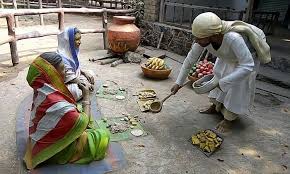
“Eating that lovely bread I(Baba) am heartily contended and I am still belching. The dog which you saw before meals, and to which you gave the piece of bread is, one with Me.
So also other creatures (cats, pigs, flies, cows etc.) are one with Me. I am roaming in their forms. He, who sees Me in all these creatures is My beloved.
So abandon the sense of duality and distinction, and serve Me, as you did today.
“Athiti is what ever creature is hungry and comes on to you, at that (kakabali-crow offering) time, whether it is human or a bird, beast or insect.
All these seek food. The real Athiti that you get, (but) you do not regard as such. These have come to you in lakhs.
Nana! give up your rotten interpretation*. At kakabali, take plenty of boiled rice outside the house and leave it there.
Do not shout or call for any, nor drive away. Whatever the creature that comes to eat, let not that disturb your mind. You get thus the merit of feeding lakhs of guests. “
Baba in BCS para 309 to N G Chandorkar alias Nana
*The phrase “Atithi Devo Bhava” translates to “The guest is akin to God,” highlighting the reverence and care that should be given to guests.
In Hinduism, welcoming guests, especially unexpected ones, is considered a sacred duty. This practice is deeply embedded in the culture and traditions, emphasizing the hospitality that should be extended to guests. Here are a few key aspects:
Rituals and Practices for Welcoming Guests
1. Traditional Welcome: – Guests are often greeted with a warm “Namaste,” a gesture of respect and reverence. – In some households, a ceremonial welcome called Aarti might be performed, where a small lamp is waved in front of the guest, accompanied by singing or chanting. – Some families may apply a small mark (often a red dot known as tilak) on the guest’s forehead as a sign of blessing and respect.
2. Offering Refreshments: – Guests are typically offered water, tea, butter-milk or other beverages upon arrival. This practice signifies hospitality and the intention to make the guest feel comfortable and valued. – Following this, guests may be served snacks or meals, often including traditional and home-cooked dishes.
3. Providing Comfort: – Hosts ensure that the guests have a comfortable place to sit and rest. Clean towels, refreshments, and any other necessities are provided. – In many cases, if the guest is staying overnight, special arrangements are made to ensure their comfort, including clean bedding and private space.
4. Treating Guests with Respect: – Throughout the visit, guests are treated with utmost respect. Conversations are often centered around the guest’s well-being, their travel experiences, and any needs they might have. – Hosts may also offer small gifts or tokens of appreciation when the guest departs, further signifying the importance of their visit.
These practices not only reflect the value placed on hospitality in Hindu culture, but also emphasize the spiritual aspect of serving and honoring guests as part of one’s duty (dharma).
Catechectics is an Art of teaching by Question and answer (as a Part of ‘How emotional investments shape our behaviors and thoughts’). Baba is in very advanced stage in this science. This is an example:-
It was in the year 1916, a Chennai Bhajani Mela (Party of the Ramadasi Panth) started on a Pilgrimage to the holy city of Kasi/Banaras. The Party consisted of a man, his wife, daughter and sister-in-law; and they had come to Shirdi to get Gift of money from Baba. There the husband got a wonderful vision in his dream one night as follows :-
He was in a big city, the police there had arrested him, tied his hands with a rope, and put him up in lock-up. As the police were tightening the grip, he saw Sai Baba standing quiet outside, near the cage. On seeing Baba so near, he said in a plaintive tone – “Hearing Your fame, I came to Your Feet, and why should a calamity befall me, when You are standing here in person?”
Baba said – “You must suffer the consequences of your action”
He said – “I have not done anything in this life, which would bring such a misfortune on me.”
Baba said – “If not in this life, you must have committed some sin in your past life.”
He replied, “I do not know anything of my past life, but assuming that I did commit some sin; then why should it not be burnt and destroyed in Your presence, as dry grass before fire? “.
Baba – “Have you got such faith?”
He – “Yes.”
Baba then asked him to close his eyes.
No sooner did he shut them, than he heard a thumping sound of something falling down, opening his eyes,
he saw that he was free and the police had fallen down, bleeding.
Being much frightened, he began to look at Baba who said – “Now you are well caught, officers will now come and arrest you.”
Then he begged – “There is no other saviour except You, save me anyhow.”
Then Baba again asked him to close his eyes. He did so and when he opened them,
he saw that he was free, out of the cage and
that Baba was by his side.
He then fell at Baba’s Feet.
Baba then asked him –
“Is there any difference between this namaskar (Hello) and your previous ones? Think well and reply.”
He said “There is a lot of difference; my former namaskaras were offered with the object of getting money from You, but the present namaskar is one offered to You as God”
Then a desire arose in his mind, to get the darshan of his Guru Ramdas;
when Baba asked him to turn back and see. And when he turned,
lo, Ramadas was in front of him.
No sooner did, he begin to fall at His Feet, Ramadas vanished.
Then he inquisitively asked Baba,”You look old. Do You know Your age?”. Baba – “What! Do you say I am old! just run a race with Me and see.” Saying this, Baba began to run and he too followed. Baba disappeared in the dust raised by His foot-steps while running, and the man was awakened.
After awakening, he began to think seriously about the dream-vision. His mental attitude was completely changed and he realised the greatness of Baba. After this, his grabbing and doubting tendencies disappeared and true devotion to Baba’s Feet sprang in his mind.
The vision was a mere dream, but the questions and answers therein were most significant and interesting.
Next morning, when all the persons assembled in the Masjid for the Arati, Baba gave him as prasad two rupees’ worth sweetmeats and also two rupees from His pocket and blessed him.
Baba made him stay there for a few more days and gave him His blessing, saying, “Allah (God) will give you plenty and He will do you all good”. He did not get more money there, but he got far better things viz. Baba’s blessing, which stood him in good stead all along.
The party got plenty of money afterwards; and their pilgrimage was successful: as they had not to suffer any trouble or inconvenience during their journey.
They all returned home safe and sound, thinking of Baba’s words and blessings and the Anand(Bliss) they experienced by His grace.
Sri Krishna, Sri Rama, Sai Baba, are all divinely gifted or perfected souls and expressions of divinity. They transform everyone who comes into contact with their divine personality. This is especially true for those who are drawn through Rinanubandha (karmic Bond) by their divinity. That is the purpose or mission of their lives.
Baba’s Birth and Grown-up:
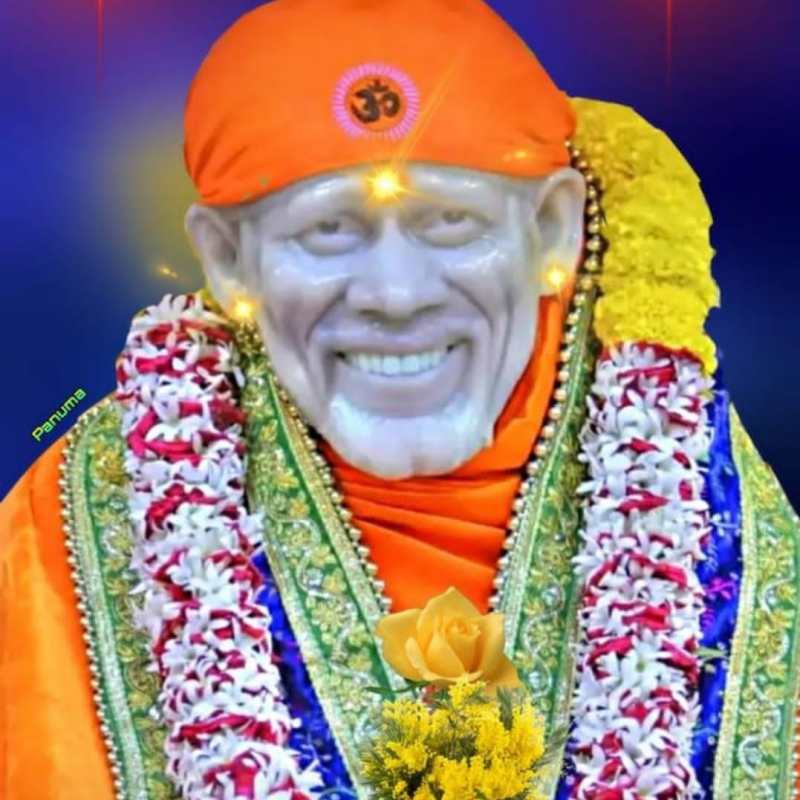
Sai Baba (1838-1918) was an Indian spiritual Guru, Yogi, and Fakir, revered as a saint by millions of devotees, both Hindu and Muslim, across the world.
Sai Baba stated that while still a young child, his parents entrusted him to the care of a fakir. The fakir raised him.
From this foster father, Baba readily acquired Vairagya (detachment from worldly pleasures and pains) and developed a spiritual mindset.
That fakir passed away within four or five years after taking charge of him.
This fakir instructed his wife to take the young Baba and leave him in the care of the renowned saintly zaminder, Gopal Rao Deshmukh (Provincial Governor) in Selu.
Gopal Rao was an exceedingly devout individual, deeply attached to Tirupati Lord Venkatesa. He was affluent and generous, and he supported education and piety.
A wealth of true education was available to the young Baba, as he was consistently in attendance on this master.
Gopal Rao, upon departing from this world peacefully, signaled to the young Baba with a wave of his hand, instructing him to leave Selu and proceed westward to his new abode. (Shirdi is situated along the banks of the Godavari river, directly west of Selu).
After some time, Chand Bhai Patel, the Headman of Dhoop (Dhukeda) Village in Nizam’s State, arrived in Shirdi with a grand procession. He had come for the marriage of his wife’s nephew at Shirdi, around 1872. Sai Baba accompanied him for this occasion. When the marriage party arrived in Shirdi, they halted at Mhalsapati’s land near the Khandoba temple.
Bhagat Mhalsapati noticed the young Fakir disembarking from the bullock cart and greeted him with “YA SAI” (Welcome Sai). Others began to address him as Sai, and henceforth he became known as Sai Baba.
Baba’s final residence was Shirdi, where he lived from 1872 until the end of his life in 1918.
Baba’s Mission:
Baba has not one mission, but a hundred missions. Divine personalities have specific functions. They protect the good (virtuous). They punish or reform the wicked. They also establish Dharma (Virtue) or its hold on the people. And Baba was performing all these functions.
His mission is to help every one, that means, of course, everyone capable of benefiting, not persons who come in an unreceptive mood .
Baba’s marga-Path:
Studying Gitas, one sees that there is no meaning in asking for ‘any one marga (path)‘ expounded by the Divine Person. Saints expound all the margas. They find which marga or combination of margas would suit each approaching devotee. Then they give the same to him.
Thus Baba adopted every marga. In particular, one may note that the predominance in his methods was neither for ritual nor for Vedic study. Instead, it was for living in consonance with the Supreme manifestation of Divinity in himself.
Baba distributes:
Baba quoted occasionally his master’s or Guru’s behest. “As he had received liberally from his master, he must similarly distribute liberally amongst those that approached him.” Baba was distributing not merely wealth, worldly relief and comforts. He was also giving spiritual gifts and spiritual blessings to all and sundry capable of receiving those benefits.
Baba advises :
‘Love all creatures.
Do not fight with any.
Do not retaliate nor scandalize any.
When any one talks ill of you, that is, against you, pass on unperturbed. His words cannot pierce into your body. Others’ acts will affect them alone and not you.’
Baba was ever active and never idle and His advice was, ‘Do not be idle. Work, Utter God’s name. Read scriptures’.
Baba is also advising:
‘We should not harbour envy, rivalry, or combative disposition towards others.
If others hate us, let us simply take to Nama Japa and avoid their company.
Hearken to the words of your parents.
Help your mother in her tasks.
Speak the truth and truth alone’.
Baba’s advice was always simple and capable of being accepted and acted upon by even persons of the meanest capacity.
Baba’s moral teachings:
Important thing for peace and happiness is love of all creation. Baba’s moral teachings were conveyed by his own life and activity. Baba loved all creatures. The underlying motive of every act of his was love towards all human beings and all creatures.
Baba’s Powers:
He did not even appear to be a teacher and was chiefly a granter of wishes. But all the same, he was a powerful instiller of principles and virtue. He instilled these into the hearts of those capable of receiving such impress.
Other Saints, about Sai Baba:
One Saint, from Puntambe by name Gangagir always frequented Shirdi. When he first saw Sai Baba, carrying pitchers of water in both hands, for watering the garden, he was amazed. And said openly, “Blessed is Shirdi, that it got this precious Jewel. This man is carrying water today; but He is not an ordinary fellow. As this land (Shirdi) was lucky and meritorious, it secured this Jewel.”
So also one famous Saint by name Anandnath of Yewala Math, a disciple of Akkalkot Maharaj came to Shirdi with some Shirdi people. When he saw Sai Baba, he said openly, “This is a precious Diamond in reality. Though he looks like an ordinary man, he is not a ‘gar’ (ordinary stone) but a Diamond. You will realize this in the near future.”
The meaning of the name, ‘Sai Baba’:
‘Sa’ means ‘Divine’; ‘ai’ or ‘ayi’ means ‘mother’ and ‘Baba’ means father. The Name indicates Divine Mother and Father.
Your physical parents exhibit love with a dose of selfishness. But this Sai, ‘Mother and Father’, showers affection or reprimands. This is only for leading you towards victory in the struggle for self-realisation.
Sai Baba/ Sai/ Baba has achieved, the supreme task of:-
Sai has come to achieve the supreme task of uniting the entire mankind as one family, through the bond of brotherhood of affirming;
And illumining the Atmic Reality of each. This is done in order to reveal the Divine, which is the basis on which the entire Cosmos rests.
And also instructing all to recognise the common Divine Heritage that binds man to man. This way, man can rid himself of the animal. He can rise into the Divine, which is his goal.
The most important facts to remember about Baba is that,
Baba was the embodiment of all virtues,
Baba did nothing which he did not preach.
In Himself, all the virtues were the efflorescence of the central root in Him, with which he began as a little child, namely:-
love for the Guru,
love that knows no bounds of time, place, or circumstance, and
love that sacrifices anything and everything at its altar.
Gratitude, service, equality, justice, consideration and so many other good qualities that were in him and taught by him were the direct issue of this love. These qualities could not have all been sustained without this love. This is the central point to remember about Baba.
This enables the sishya (student or Devotee) to get more and more like unto the Guru. By constant meditation on him, the sishya becomes the soul of the Guru.ie
The sishya grows in love,
absorbs the love from the Guru, and
returns it with all his soul and body.
Does not consider himself as anything except as the lover and the beloved of the Guru.
Thus he attains –
moral perfection,
spiritual perfection,
perfection of siddhis and
perfection of every sort .
This is the natural result of Baba’s moral teachings.
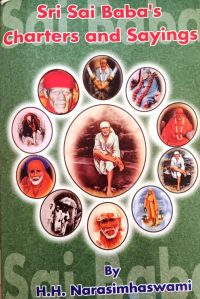
As Lord Sree Krishna manifests Himself in the Bhagavad Gita, so does Baba in the “Sri Sai Baba’s Charters and Sayings”- which was compiled by Sri B.V. Narasimha Swami Ji, India. This Book was published by All India Sai Samaj, Mylapore, Chennai-600004, INDIA
“Self-realisation is the aim of Mysticism; but the ‘means to the end’ must be suited to the needs of the individual.
Baba in the flesh was the embodiment of the Supreme Spirit, lighting the Sadhakas’ path by His every word and action, to his devotees.
The ‘Charters and Sayings’ were compiled by Narasimha Swami. They originate from Shirdi Sai Baba’s Word and Action. This compilation will serve as a manifestation of that Supreme Spirit in words.
As Lord Sree Krishna manifests Himself in the Bhagavad Gita, so does Baba in the ‘Charters and Sayings’.
It would transport persons, like my humble self who had the privilege of being at Baba’s feet when HE was in the body, back into the old times. It revive fond memories of the blissful moments spent with the Master.
At one stage says Baba “I am your servant’s servant”; next “I am a servant of Allah”; and yet again “I am HE.” Intellect fails here; but the spirit beyond the intellect and mind is manifest.
In the body, Baba was the insignificant human being. He was between it and the supreme Shiva as “Jeeva,” a wheel in the great machine. Transcending these, He stood as Shiva Himself.
The miracles referred to in the book may cause a sceptic to stare. Devotees in tune with the Infinite Baba see them as events in evolution. These events are mysterious to the mere man. However, they are explicable in the light of Faith and Love.
The onward march of Science may someday co-ordinate these phases in the frame of the Intellect.
The ‘Charters and Sayings’ are useful as precepts both in the world spiritual and the world material”
We cannot be too grateful to Nara Simha Swamiji for the labour of love. It has crystallized this phase of Baba’s divine personality in the ‘Charters and Sayings’. May the book serve to create and foster Faith and Devotion in all corners of the country (World)”.
– By Mr. Justice M. B. Rege, B.A., L.B., High Court ex-Judge, Indore, India, in his Foreword Note
Alms giving without discrimination “Athiti is what ever creature is hungry and comes on to you, at that (kakabali-crow offering) time, whether it is human or a bird, beast or insect. All these seek food. The real Athiti that you get, (but) you do not regard as such. These have come to you in lakhs.…
The Book highlights the essence of Baba’s teachings as compiled in “Sri Sai Baba’s Charters and Sayings” by Sri B.V. Narasimha Swami. It emphasizes the divine nature of Baba, his life lessons, moral teachings, and the transformative power of faith and devotion. The compilation aims to inspire and foster spiritual growth worldwide.
Baba’s saving life Para Number in the Book & About His Saving Life SAVING LIFE (a) S.B. Nachne’s 579. Baba, in the presence of S.B.N. and many others in 1913 said: “We should not trust mad men.” In 1914 Nachne was doing puja at home and a mad man rushed inside, seized his throat, and said, “I will drink your blood, and opened his mouth wide to bite throat. S.B.N. thrust a spoon into the man’s open…
Baba’s Says on Marriage Para Number in the Book & About Marriage (a) Adam Dalali 575. Adam Dalali (to Baba): My son has to be married. Unless you bless and give permission, how am I to get the money for it? B.: “Wait.” After a time, Baba said to A.D. : ‘Now, celebrate your son’s…
Baba helped his devotees in travel Para Number in the Book ‘BCS” , About His Help in Travelling 564. Baba to Nana (with Haridas): “Take food and go to the train.” [Haridas having no faith in Baba started without meal and …Nana Chandorkar started only after taking his meal and again taking leave of Baba,…
Baba’s kindness even to criminals Para Number in the Book &About His kindness to Criminals A clerk then came and prostrated before Baba. There was a warrant out for him for having embezzled his master’s money. So his immediate senior officer, who was present at the mosque, thought that he must go and inform the…
Shirdi Sri Sai Baba, having infinite awareness, understanding and insight of Universal, possess complete knowledge of Every Science.
Also Sai Baba is a Master of all Arts.
See, Read and Assimilate on the incidents given below, in Sai Baba’s Life and also in his Devotees’ life. Both these Art and Science happenings, contribute to your Physical, Mental and Soul Well-being, significantly.
Shirdi, Shri Sai Baba’s life is a testament to His boundless compassion, profound gentleness, and unwavering selflessness. He consistently demonstrated…
Aerobiology – The study of the dispersion of airborne biological materials, as pollen, spores, microorganisms, or viruses in atmosphere
Let us see How Sai Baba dispersed the airborne viruses in Shirdi, here from Hemadpant Book.
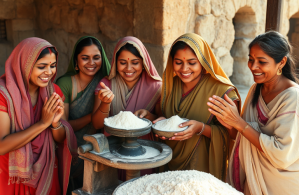
“It was sometime after 1910 A.D. that I went, one fine morning, to the Masjid in Shirdi for getting a darshan of Sai Baba. I was wonder-struck to see the following phenomenon. After washing His mouth and face, Sai Baba began to make preparations for grinding wheat. He spread a sack on the floor; and thereon set a hand-mill.
He took some quantity of wheat in a winnowing fan. Then he drew up the sleeves of His Kafni (robe) and took hold of the peg of the hand-mill. He started grinding the wheat. He put a few handfuls of wheat in the upper opening of the mill and rotated it.
I thought ‘what business Baba had with the grinding of wheat? He possessed nothing and stored nothing. He lived on alms!’ Some people who had come there thought likewise, but none had the courage to ask baba what He was doing. Immediately, this news of Baba’s grinding wheat spread into the village. At once, men and women ran to the Masjid and flocked there to see Baba’s act.
Four bold women, from the crowd, forced their way up and pushing Baba aside, took forcibly the peg or handle into their hands, and, singing Baba’s Leelas, started grinding. At first Baba was enraged, but on seeing the women’s love and devotion, He was much pleased and began to smile. While they were grinding, they began to think. Baba had no house, no property, no children, none to look after. He lived on alms. He did not require any wheat-flour for making bread or roti. What will He do with this big quantity of flour? Perhaps as Baba is very kind, He will distribute the flour amongst us. Thinking in this way while singing, they finished the grinding. After putting the hand-mill aside, they divided the flour into four portions. They began to remove them one per head.
Baba, Who was calm and quiet up till now, saying, “Ladies, Now please do this. Take the flour and throw it on the village border limits.” On hearing this, the women felt abashed. Whispering amongst them, they went away to the outskirts of the village. They spread the flour as directed by Baba. I asked the Shirdi people – “What was this that Baba did?” They replied that as the Cholera Epidemic was spreading in the village. This was Baba’s remedy against the same. It was not wheat that was ground. The Cholera itself was ground to pieces and pushed out of the village. From this time onward, the Cholera Epidemic subsided and the people of the village were happy.”- Hemadpant in Shri Sai Sat Charitra.
The devout reader would like to have a further sketch of the nature and the works of devotion at this stage . So, we may refer to Sri Adi Sankaracharaya who, describes what Bhakti is as the
i) seeds of the or plant are re-grasped by the parent tree,
ii) parent magnetic block attracts needles one behind another,
iii) Chaste wife clasps her husband,
iv) tendril (creeper) clings to the adjoining tree and mounts upward and upward,
v) waters of the rivers are for ever drawn downward and downward, till they reach the ocean and get inextricably and indistinguishably lost in it,
similarly the heart of the devotee longs after the Divine feet of Pasupati, God Siva to be ever there. This is called Bhakti.
Each illustration takes bhakti one stage further up.
I. Ankolam– even vegetables is to get back to the original source and get reabsorbed in it. Similarly, we are parts/ sparks from God, must reach the original source of all creation, namely, God.
II. Magnetic stone -a string of even seven needles might be found attached one behind another to a big magnet. Similarly every growing bhakta tends to attract others and impart his devotion to them; and through them to others ad infinitum.
III. Chaste wife longs for her husband, and even his slightest absence for even a short period makes her full of unrest, (EVEN now, wife calling husband frequently and asking Where are you? When are you coming? etc.). Similarly The Bhagavata treats all devotees as females, Gopis, and the only male in the Universe is Krishna.
iv) The creeper– go further and further upward and upward till the top of the tree is reached, to get more light from the Sun, more of air and more of freedom and safety from animals. Similarly, devotee tends to mount up higher and higher in his spiritual levels to achieve nobler and nobler objects; and to transform himself into more and more of the like-ness of God, till he reaches full Sarupyam, Sameepyam and Sayujyam (Bliss)
v) Rivers – The waters of the rivers were originally part of the ocean, and after being held up in the form of water vapour, cloud and rain, they take the shape of a river. Similarly Purnalaya is the end of the devotion and that is obtained by the Jivas surrendering themselves, that is, making Atma-nivedana, which is the ninth mode mentioned in the Navavidha bhakti.
That is both devotion and also absorption. After that there is nothing further to reach. Thus the various stages, attitudes, and relations of a bhakta can be very well dwelt upon and learnt by studying the above illustrations and applying them to oneself.
Loving bhaktas/ Important Devotees:
The Names of a number of loving bhaktas; so that they may ever remain in one’s heart and show how bhakti achieves its ends. The end of bhakti is not achieved by the offer of money to God or by mere learning or by age or beauty of a person, God does not want any of these. “God wants only your heart, that is, your self”,
As ,
1. For the hunter Kannappa, what Achara or religious course of conduct had he?
2. For Dhruva, what was his age? (At the age of 5, God appeared before him. Also His name is given to Pole Star)
3. For the elephant Gajendra, what education or degrees and titles had he?
4. Had Vidura (favourite of Krishna) any qualification in respect of caste? He was the son of a slave dancing girl.
5. For the king of Yadavas called Ugrasena,who was favoured by Krishna what manliness had he? He was a great coward
6. For Kubja also was favoured by Krishna, had she any great beauty? She was deformed in person.
9. For Sudhama, known as Kuchela ( favoured by Krishna), had he any wealth?
God is pleased by bhakti/Devotion alone and bhakti can capture Him. This contains the essence of the doctrine of bhakti or devotion
Very late in his life, Baba revealed to Mahlsapathy an interesting fact. He disclosed that his parents were from Patri in the Nizam’s State, India. Patri is part of Parvani taluk, near Manwath. Sai Baba added that when he was still a tender child, his parents handed him over to a fakir. The fakir brought him up. Sai Baba occasionally showed his interest in Patri and Parvani when people from those parts came to him, by questioning them about the residents of those places. This is practically all that, we have about the birth and parentage of Sri Sai Baba.
Stage -2
But who ever his parents were, it is quite important to remember that from his earliest infancy, he experienced a true vairagi or jnani detachment. He had all the associations or dissociation needed for this. Having no parents or kinsmen, and being brought up by a fakir, he easily picked up his foster-father’s vairagya and spiritual turn of mind.
Even that fakir passed away within four or five years after taking charge of him. The fakir directed his wife to take the young Baba, and leave him in charge of a noted saintly zamindar, Gopal Rao Deshmukh at Selu.
Stage -3
Young Baba was left under the care of Gopal Rao Deshmukh. He spent the best and most impressionable part of his life at Selu. Selu had a fort and castle, where the Deshmukh resided.
The young boy was very greatly attached to his master, and the master in turn was deeply interested in the boy. The boy stayed with the master at all times. He was present, whether the master was in the field or at puja, and whether he was in the garden or in the Court.
Education:
Baba seems to have had no formal education given to him at any time. He had no book study. There were no masters, either in the regional language (which must have been Marathi or Telugu) or in any other language.
But real education of the highest sort, he had in plenty. This Deshmukh, was an extremely pious devotee greatly attached to Tirupati Venkatesa, whose image he worshipped daily in his own castle. He was rich, liberal, and patronised learning and piety. Hence an abundance of real education could be picked up by the young child Baba, when attending on his master.
Perfect chastity and thorough self-control were the leading characteristics of his Guru. Invariable rectitude and perfect truthfulness also defined him. Generosity and serviceability to all became transplanted and took deep root in the disciple, Sai Baba.
Stage- 4
Sai was very young, when he first came Shirdi. In the beginning he left Shirdi off and on, and returned to it. The date of his first arrival at Shirdi cannot be fixed.
On one of his later visit to Shirdi, possibly the final one, Baba arrived on the momentous occasion of Chand Bhai Patel’s advent to Shirdi.
Chand Bhai Patel was a rich and influential village Patel or Headman, of Dhupkeda village in the Nizam’s State, not far from Shirdi. His wife’s nephew was to be married to a bride at Shirdi. In 1872, he arrived with a huge marriage procession. Sai Baba accompanied Patel on that occasion from Dhupkeda to Shirdi. Sai Baba stayed there until Mahasamathi.
After that time, except for two months when he was under Jawar Ali Maulana, Sai Baba never left Shirdi but only made a few occasional visits off and on to the neighbouring villages of Rahata or Nimgam, from which he immediately returned to Shirdi.
So His final residence was Shirdi, from about 1872 till the end of his life in 1918.














 Welcome to https://ShirdiSaiBaba.InterNational