

Baba’s Selflessness:
- Life of Mendicancy: Despite His divine status, Baba lived a life of mendicancy. He begged for food from five houses daily and did not care for the taste of the mixed food. He also did His own grinding for cooking.
- Generous Distribution of Wealth: “The money He used to collect as Dakshina was freely distributed, Rs.20 to some, Rs.15 or 50, to others everyday.”. He “would distribute the whole amount the same day, and the next morning He would become a poor Fakir as usual”. He only used a very small portion for Himself (chilam and fuel).
- Taking on Devotees’ Suffering: Baba literally absorbed the ailments and sufferings of His devotees onto Himself.
- He displayed four bubos on His own body, stating to Mrs. Khaparde, “See, how I have to suffer for My devotees; their difficulties are Mine.“.
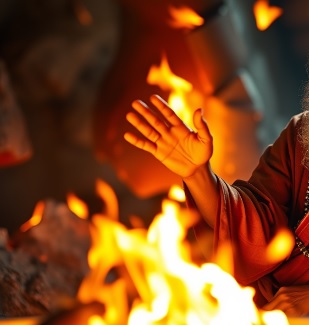
- Similarly, He burnt His arm to save a blacksmith’s child from a furnace, proclaiming, “I do not mind My arm being burnt, but I am glad that the life of the child is saved”.
- He “always worked for the good and welfare of others, Himself suffering unbearable and terrible pain many a time in the process”.
- He readily allowed a peculiar devotee named Nanavalli to take His seat, showing not “the slightest displeasure”. He was described as “meek, humble and egoless”.
- Disregard for Worldly Possessions and Fame:
- He had “no love for perishable things” and
- “never cared for wealth and fame”.
- His entire “property” consisted of a koupin, a piece of cloth, a Kafni, and a tinpot, and He disliked devotees bringing costly articles.
- He was “indifferent” to pleasures and misfortunes, treating kings and paupers alike, and did not care for honor or dishonor.
- Focus on Spiritual Welfare: Baba’s actions and teachings were consistently aimed at the spiritual welfare and liberation of His devotees.
- He stated, “The Lord (God) is the Protector of all.“.
- He emphasized simple devotion and faith over complex rituals. He asked devotees to remember “Sai, Sai” to remove shackles and attain freedom.
- He guided devotees to self-realization by diverse methods suited to individual needs.
- Disapproval of Fasting:
- Baba neither fasted nor encouraged it in others, believing that “God is not attained on an empty stomach”. He would gently insist that devotees eat, as seen
- when He made Mrs. Gokhale prepare and eat Puran Polis despite her vow to fast.
- This illustrates His care for devotees’ physical well-being as a foundation for spiritual pursuit.
- Teaching Renunciation and Purification:
- Baba’s act of asking for Dakshina was not out of desire for money,
- but to teach devotees “the lessons of Renunciation and Purification” and
- to remove their “attachment to money”.
- He clarified that whatever was given to Him, He had to return a hundredfold, showing it was a means for the devotee’s benefit rather than His own
- Profound Humility: Baba lived a life of immense humility. He referred to Himself as “Slave of slaves,” “your debtor,”; considering Himself blessed by His devotees’ presence.
Baba exemplified selflessness through his mendicant lifestyle, generously distributing wealth collected as Dakshina. He absorbed his devotees’ suffering, prioritizing their welfare over his own desires. Indifferent to worldly possessions, Baba focused on spiritual liberation, advocating simple faith and rejecting fasting. His teachings emphasized renunciation and humility, reflecting profound devotion to others.

 Welcome to https://ShirdiSaiBaba.InterNational