- ❇️I embrace the wonderful power of the Guru’s touch, which destroys the sins of my past births and cleanses my subtle body.
- 🦶I touch Sai Baba’s hand and feet and awaken my ‘I am He (Brahman)’ consciousness, manifesting the joy of self-realization.
- 🧎If I prostrate before Sai and surrender heart and soul, the four chief objects of life (Dharma -Righteousness, Artha -Wealth, Kama -Desire, Moksha -Deliverance) are easily attained.
- 🚶I will walk the difficult path of Bhakti straight by relying on my Sadguru.
- 🍞There will be abundant of food and clothes in my home.
- 🧏I will fix the form of the Deity (Sai) firmly in my mind, so that it will not wander.
- 😌I will fix my mind on remembering Sai always, so that it will be calm, peaceful, and carefree.
Tag: Universe
-

Self-Affirmation from Chapter VI of SSSC for Sai Baba devotees
-

Navigate the Best “Shirdi Sai Baba Online Resources”
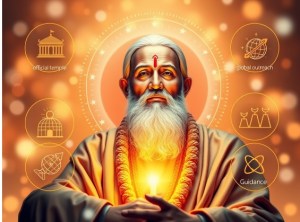
Categorized map of the top Shirdi Sai Baba related websites. You can easily navigate them depending on your purpose.
🏛 Official Temple & Trust
- sai.org.in
The official temple site offers ‘Live darshan, Book accommodation, donation services, offering Sai Satcharitra in PDF in many languages, e-library, and authentic updates.
🌍 Global Outreach & Philosophy
- shirdisaibaba.international
Dedicated to opening the heart of Sai Baba’s teachings to Western and global communities, fostering spiritual connections that resonate across cultures and ages. - saibaba.org
One of the oldest online resources and newsletters for worldwide devotees.
🙏 Devotee Experiences & Miracles
- saiyugnetwork.com
Community-driven site sharing miracles, prayers, and devotees’ experiences to strengthen faith.
🕉 Guidance & Resources
- shirdi-sai-baba.com
Interactive Q&A, teachings, and spiritual guidance for seekers looking for answers through Baba’s wisdom.
Welcome.
We kindly request information regarding authentic online resources that pertain to Sai Baba, Sai Temple and community of Sai devotees.
I declare that the following information is shared based on my personal experience; and genuine, helpful to Shirdi Sai Baba Devotees, globally.
Your message has been sent
Thank you for contributing to the community of Sai Baba devotees. Subscribe to get a FREE PDF on Sai Baba spirituality.
- sai.org.in
-

Tips for daily living. (@35)
Chapter 35 of the “Shri Sai Sat Charitra” provides several important tips and teachings for daily living, conveyed through Sai Baba’s words and actions. These include:
- Overcoming the sense of differentiation: Sai Baba advised a friend of Kakasaheb Mahajani to “destroy the Teli’s (Adjacent oil store) wall (sense of difference) between us, so that we can see and meet each other face to face”. This highlights the importance of removing perceived distinctions between individuals and fostering a sense of unity in one’s interactions and outlook.
- Cultivating steady faith and avoiding a fickle mind: To a “fickle-minded gentleman” (referring to Kaka Mahajani’s master, Mr. Thakkar), Baba advised: “Now please keep your faith on any one place (point) you like, why roam like this? Stick quietly to one place”. This emphasizes the need for steadfastness and focus in one’s spiritual or daily pursuits, rather than being swayed by various anxieties or external circumstances.
- Understanding the spiritual significance of giving (Dakshina): Baba explained that His practice of asking for Dakshina was not for personal gain but to teach devotees about renunciation and purification. He stated that wealth should be used to “work out Dharma” (righteous conduct) and that if it is used only for personal enjoyment, it is wasted. He further taught that “The best way to receive is to give” and that “The giving of Dakshina advances Vairagya (Non-attachment) and thereby Bhakti and Jnana. Give one and receive tenfold“. This provides a profound insight into the spiritual benefits of charity and detachment.
- Embodying non-attachment and transcending dualities: Baba’s own conduct served as an example; He was “totally non-attached” to worldly praise or disregard, remaining unaffected by “pleasure and pain”. This illustrates the principle of living with detachment, not being excessively elated by positive experiences nor depressed by negative ones.
- The power and efficacy of Udi with faith: The story of Mrs. Newaskar, who faced a food shortage, demonstrates that when Udi (sacred ashes) is used with intense faith (“As one feels intently, so he realizes accordingly”), difficulties can be overcome, and needs can be met. This suggests that faith in Baba’s grace and His Udi can bring about practical solutions in daily life.
- Perceiving God in all beings: Balaji Patil’s response to a serpent, which he believed to be Sai Baba, exemplifies the spiritual practice of seeing God or divinity in all creatures. His fearless and devotional approach to the serpent, offering it milk, highlights that recognizing the divine in everything leads to fearlessness and compassion.
Additionally, while not directly “tips given” by Baba in this chapter, the narrative also shows:
- The effectiveness of worshipping Baba’s picture with faith and devotion for overcoming personal troubles like insomnia, as seen in the Bandra Insomnia Case.
- The value of disinterested service and complete surrender to the Guru, as exemplified by Balaji Patil Newaskar, who dedicated his efforts and possessions to Baba.
-

Sai Baba temples in Australia
These Sai Baba temples in Australia including prayer centers, offer important spaces for worship, spiritual practices, and community interaction.
Readers are invited to share their experiences and offer any updates on the temple information. Such contributions are essential in ensuring the directory remains a reliable and beneficial tool for the broader Sai community.
New South Wales (NSW):
Shree Shirdi Sai Sansthan Sydney (Strathfield) Website
1] 420 Liverpool Road & Hill Street, Strathfield South, Sydney, NSW – 2136 Map.
2] Regents Park Temple.
25 Rose Crescent, Regents Park, NSW – 2143. Map.3] Kripasindhu Saibaba Temple Castle Hill, 47/5 Gladstone Rd, Castle Hill NSW 2154. Map. Facebook.
Victoria (VIC):
4] Shirdi Sai Sansthan Melbourne Inc. (Camberwell)
32 Halley Avenue, Camberwell, Melbourne, VIC – 3124, Map.
Websites: https://shirdisaimelbourne.org.au/OTHERS:
5] AUMSAI Sansthan Temple
12 Mechanics La, Mordialloc VIC 3195. Map.
Western Australia (WA):
6] Sai Baba Temple Perth / Shirdi Sai Community Centre
2 May Holman Drive, Bassendean, WA 6054. Map.
Website: https://shirdisaisansthanperth.org/South Australia (SA):
7. Sri Shirdi Saibaba Sansthan (Adelaide)
6 Blamey Ave, Adelaide, SA 5000
Website: https://sainathsa.org/Queensland (QLD):
8. Shirdi Sai Sansthan Brisbane Ltd. Tel: 1800 SAIBABA (1800 724 22 22).Prayers and Arthi Updation at Facebook
Future Centre, acquired land at: 2-14 Scrubby Creek Road, Browns Plains, Brisbane – 4118
P.O.Box: 289, Browns Plains, Brisbane – 4118,
Website: https://shirdisaibrisbane.org/II. You can also click the following link. It provides a list of around 7 SAI BABA temples or Prayer Centers in Australia.
https://maps.app.goo.gl/PFqM7uJ8eLaiY7416?g_st=ac
Please click the link, check the reviews, ensure the correct route, and cross-check the timing without fail.
III. Decide the suitable Sai Temple and
Go there, sit and do meditation; and feel the eternal bliss.
IV. OM SAI BABA, GUIDE AND BLESS YOUR CHILDREN, please.
PS: 1. This list is for informational purposes only. We are not sponsoring. Check before proceeding.
2. If this above List/link hasn’t included any Sai Baba Temple or Prayer Place you know in Australia, please add it to Google Maps. Then send that Google Map link with Temple’s Name, Address and other details to us.
3. For any such addition, correction or deletion in the above list, inform us here. -

Western Scholars’s Contributions on Sai Baba
Several scholars have made significant contributions to the academic understanding of Shirdi Sai Baba. Noteworthy contributions include:- Antonio Rigopoulos:
- A distinguished scholar who authored the first book-length academic study of Shirdi Sai Baba, titled “The Life and Teachings of Sai Baba of Shirdi” (1993). His work emphasizes Sai Baba’s syncretic and tolerant nature while offering an analysis of his teachings and yogic powers.
- Karline McLain:
- Recognized for her work, “The Afterlife of Sai Baba: Competing Visions of a Global Saint,” she critically examines the diverse interpretations of Sai Baba and the Hinduization of his figure through textual, visual, and material culture.
- Additionally, her study, “Be United, Be Virtuous,” investigates the role of Sai Baba’s teachings in fostering religious harmony and their broader cultural impact within Indian society.
- Smriti Srinivas:
- Investigates the devotional spaces and transnational reach of the Sai Baba movement, exploring how Sai Baba’s presence is constructed and experienced across various geographies, including Asia and Africa, as presented in her publication, “Devotional Spaces of a Global Saint: Shirdi Sai Baba’s Presence” (2022).
- Jonathan Loar:
- Makes noteworthy contributions to the comprehension of hagiographical interpretations, particularly in his work, “From Neither/Nor to Both/And: Reconfiguring the Life of Shirdi Sai Baba in Hagiography,” which explores the dynamics of defining Sai Baba’s religious identity.
- David Hardiman:
- Through his publication, “Miracle Cures for a Suffering Nation: Sai Baba of Shirdi,” provides valuable insights into the social and curative dimensions of Sai Baba’s miracles, with a particular emphasis on the significance of sacred ash (Udi) and its influence on the expansion of his following.
- Charles White (1972)
- His article “The Sai Baba Movement: Approaches to the Study of Indian Saints” was among the first to academically frame Baba’s growing popularity as a pan-Indian phenomenon. White also coined the term “Sai Baba movement,” which later scholars like Rigopoulos and McLain expanded upon. His work emphasized Baba’s role in transcending caste and religious boundaries.
- Arthur Osborne (1958)
- The Incredible Sai Baba is one of the earliest popular biographies written in English. Osborne, a devotee of Ramana Maharshi, approached Baba with reverence and spiritual admiration. While not academic in the modern sense, his book helped introduce Baba to Western audiences and shaped early devotional perceptions. It’s more hagiographic than critical, but still influential in its time.
References:
- Antonio Rigopoulos:
-

Sai Baba Temples in Canada
These Sai Baba temples in Canada including prayer centers, offer important spaces for worship, spiritual practices, and community interaction.
Readers are invited to share their experiences and offer any updates on the temple information. Such contributions are essential in ensuring the directory remains a reliable and beneficial tool for the broader Sai community.
1. The Shirdi Sai Mandir and Cultural Centre – Located at 2721 Markham Road Unit 8, Toronto, Ontario (ON) M1X 1L5. It’s a well-loved spiritual hub in Scarborough. Map
2. Jai Shirdi Sai Baba Samasthanam Canada – at 2605 Eglinton Ave E #1, Scarborough, Ontario. Phone & WhatsApp-14163578884 Map
3. Sai Illam Spiritual Centre – Located at 67 Commander Blvd, Toronto, ON. Established in 1996, this temple has been a spiritual home for devotees in Scarborough. Map4. Sai Bhakti Dham, located at 52 McIntyre Pl Unit A, Kitchener, ON N2R 1G3. Map
5. Sai Dham Canada, located at 7140,Goreway Dr, Mississauga, ON L4T 2T6. Map
6. Satchidananda Sadguru Shirdi Sainath Maharaj Mandir – located at 173 Advance Blvd, Unit 26, Brampton, ON. Map
7. Shirdi Sai Baba Temple of Edmonton – Located at 5706 127 St SW, Edmonton, AB. A serene place for devotees in Alberta. Map
8. Aanantha Shirdi Sai Baba Temple of Montreal – A newer temple established in 2024, offering a tranquil space for worship at 7905 Av. Stuart, Montréal, QC H3N 2R9 Quebec. Map9. Shri Shirdi Sai Baba Temple Brampton. Located at 23 George St N, Brampton, Ontario L6X 1R3 Phone: 289-505-4446. Map
10. Shirdi Saibaba Dwarkamai Dham, located at 36-3100 Ridgeway Dr, Mississauga ON L5L 5M5. Map
II. You can also click the following link. It provides a list of around 10 SAI BABA temples or Prayer Centers in Canada.
https://maps.app.goo.gl/x1gBivvkNU5R3UoQA
Please click the link, check the reviews, ensure the correct route, and cross-check the timing without fail.
III. Decide the suitable Sai Temple and
Go there, sit and do meditation; and feel the eternal bliss.
IV. OM SAI BABA, GUIDE AND BLESS YOUR CHILDREN, please.
PS: 1. This list is for informational purposes only. We are not sponsoring. Check before proceeding.
2. If this above List/link hasn’t included any Sai Baba Temple or Prayer Place you know in Canada, please add it to Google Maps. Then send that Google Map link with Temple’s Name, Address and other details to us.
3. For any such addition, correction or deletion in the above list, inform us here.
-

Shirdi Sai Baba temples in UK
These Sai Baba Temples in UK, including Prayer Centers, offer important spaces for worship, spiritual practices and community interaction.
Readers are invited to share their experiences and offering any updates the temple information. Such contributions are essential in ensuring the directory remains a reliable and beneficial tool for the broader Sai community.
🛕 Shirdi Sai Baba Temple Association of London (SHITAL) Website
Temples (with daily aarti & services):
1. Wembley, London:
Union Hall, Union Road, Wembley, Middlesex, HA0 4AU.1 Map
Phone: 020 8902 2311
2. Leicester:
18 Melton Street, Leicester, LE1 3NB. Map
Phone: 0116 367 1833
3. Reading:
44 West Street (next to Primark), Reading, RG1 1TZ_ Map
Phone: 0118 959 1084
🛕 Additional Shirdi Sai Baba Temples & Organizations- Shirdi Sai Baba Temple Milton Keynes, 12 Winchester Cir, Kingston, Milton Keynes MK10 0BA Map
- Shirdi Sai Temple, 122 Ley Street, Ilford IG1 4BX. Map
- Sai Dham, Nottingham, Situated at 75–79 Egypt Road, Nottingham. Map
- Sree Sai Baba Shrine, Dudley Rd E, Tividale, Oldbury B69 3DU. Map
- Granite Shirdi Baba, 65 Downham Rd, London N1 5AH. Map
World Shirdi Sai Baba Organisation (UK): - Shirdi Sai Baba Temple – London, East Ham, 298 High St N, London E12 6SA. Map
- Shirdi Sai Baba Temple – London, Forest Gate: 370A Romford Road, E7 8BS .Map
II. You can also click the following link to get a Map list of around 10 SAI BABA temples or Prayer Centers in United Kingdom.
https://maps.app.goo.gl/N3h4LQA66jTDrqWw7
Please click the link, check the reviews, ensure the correct route, and cross-check the timing without fail.
III. Decide the suitable Sai Temple and
Go there, sit and do meditation; and feel the eternal bliss.
IV. OM SAI BABA, GUIDE AND BLESS YOUR CHILDREN, please.
PS: 1. This list is for informational purposes only. We are not sponsoring. Check before proceeding.
2. If this above List/link hasn’t included any Sai Baba Temple or Prayer Place you know in UK, please add it to Google Maps. Then send that Google Map link with Temple’s Name, Address and other details to us.
3. For any such addition, correction or deletion in the above list, inform us here.
-

Study materials available to Foreigners, interested in Shirdi Sai Baba.
Foreign individuals seeking to understand the life, teachings, and global influence of Shirdi Sai Baba have access to a wide array of study materials.1. Academic Works
Academic studies offer a structured, critical, and contextual understanding of Shirdi Sai Baba, often distinguishing historical facts from hagiographical embellishments.
As per (Thanks) Oxford Bibliographies:-
“Academic study of Shirdi Sai Baba has emerged within the past several decades as scholars of religion in South Asia began to engage in a wide array of studies of popular saints and gurus;
and as they observed the rapid growth in devotion to Shirdi Sai Baba in particular within the Indian subcontinent and, eventually, beyond India.
White 1972 provided the first academic analysis of Shirdi Sai Baba, noting his growing popularity in western India and attributing it to the unifying bond created between Sai Baba’s devotees, a bond that crosses distinctions of caste, class, and social status.
Antonio Rigopoulos 1993 is the first book-length academic study of Shirdi Sai Baba, which presents a biography of Sai Baba in the first half that draws upon Hindu-authored hagiographies, and presents Sai Baba’s key teachings in the second half with an emphasis on interreligious tolerance.
Warren 2004 includes a valuable translation of the diary kept by Abdul Baba, a Muslim follower of Sai Baba in Shirdi, and draws upon that to present an interpretation of Sai Baba as a Muslim fakir who traveled the Sufi path.
McLain 2016 traces Shirdi Sai Baba’s rise from small village guru to global phenomenon, using a wide range of textual, material, and visual sources to investigate the different ways that Sai Baba has been understood and the reasons behind his skyrocketing popularity among Hindus in particular.
The edited collection Srinivas, 2022 provides insight into the worship of Sai Baba beyond the village of Shirdi in the early twentieth century, with essays that examine more contemporary worship at multiple sites within India as well as in Asia and Africa.
Several articles also make valuable contributions to the study of Shirdi Sai Baba:
Hardiman 2015 analyzes the miracle healing cures associated with Sai Baba and the relationship between his spiritual power and secular science;
Rigopoulos 2012 analyzes some of Sai Baba’s miracles in connection with yoga powers;
Vicziany 2016 examines the worship of two syncretic figures, Shirdi Sai Baba and Haji Ali, in the city of Mumbai, India; and
Loar 2018 compares the hagiographies of Shirdi Sai Baba that were written by two of his Hindu followers, Dabholkar and Narasimhaswami.”- Thanks Oxford for your article at www.oxfordbibliogrsphies.com.
Cambridge University
Cambridge University have explored aspects of Sai Baba’s life and the movement he inspired.
1. Academic Research and Publications:
* Cambridge Core: Cambridge University Press has published academic works that discuss Shirdi Sai Baba and the broader Sai Baba movement.
* Smriti Srinivas’s article, “Sai Baba: The Double Utilization of Written and Oral Traditions in a Modern South Asian Religious Movement,” published in Diogenes, examines the origins of the Sai Baba movement rooted in Shirdi Sai Baba.
* Another article in Comparative Studies in Society and History titled “Miracle Cures for a Suffering Nation: Sai Baba of Shirdi” explores his popularity and perceived ability to provide miraculous cures.
* The “Cambridge Companion to New Religious Movements” features a chapter by Tulasi Srinivas on the Sathya Sai Baba movement, which originated from Shirdi Sai Baba’s legacy.
* Cambridge University Library: Kevin R.D. Shepherd, a British author, conducted private research at Cambridge University Library for twelve years, focusing on the history of religions and philosophy. He has authored books such as “Sai Baba of Shirdi: A Biographical Investigation” and “Investigating the Sai Baba Movement.”
2. Perspectives on Shirdi Sai Baba:
* Syncretism: Some scholars highlight Shirdi Sai Baba’s image as a unifying figure between Hindu and Muslim traditions, emphasizing the composite nature of Indian culture in the growth of his devotion.
* Miracles and Faith: His devotees often attribute miraculous abilities to him, which contributed to his widespread popularity. Academic analysis has also focused on these aspects.
* Historical Context: Research connects the rise of Shirdi Sai Baba’s popularity with the Indian nationalist movement and the search for unifying symbols.
3. Mentions in Other Contexts:
* Sathya Sai Baba: Sathya Sai Baba of Puttaparthi, and his movement have also been subjects of academic study, including publications by Cambridge University Press.
* Educational Initiatives: Cambridge University Press has collaborated with Indian educational institutions for programs like the “SAI-Cambridge Reading Quest,” although this is related to language skills development and not directly to the study of Sai Baba.
While Cambridge University’s press has published scholarly articles and books that analyze his life, teachings, and the socio-religious movements associated with him. Individual researchers connected to the university have also contributed significantly to this field of study.
Teachings and Philosophy
Social and Cultural Significance
- Karline McLain’s Be United, Be Virtuous: This work investigates the role of Sai Baba’s teachings in promoting religious harmony and examines the movement’s cultural impact within Indian society.
- Edited Volumes (e.g., Devotional Spaces of a Global Saint): These collections often feature contributions that analyze the institutional development of the Sai Baba movement and its place in the lives of modern devotees.
Miracles and Belief Systems
- Analytical Perspectives on Miracles: Academic literature explores the narrative function of miracles in constructing Sai Baba’s authority, examining their sociological and psychological dimensions and drawing comparisons with miracle traditions in other religions.
Global Spread and Contemporary Practices
- Studies on Globalization: Scholars analyze how Sai Baba’s devotion has transcended geographic boundaries, highlighting the establishment of temples and devotional practices in international contexts.
- Media and Technology: Contemporary research considers how digital media platforms are employed to maintain global devotional networks and disseminate teachings.
Methodological Approaches
Engagement with academic resources introduces foreign learners to various methodological frameworks—historical criticism, sociology of religion, and anthropology—that enable a comprehensive and critical study of religious figures and movements.
2. Devotional and Informational Websites
In addition to academic works, several online platforms provide accessible resources tailored to the needs of international devotees.
Websites for International Devotees (e.g., shirdisaibaba.international)
- Curated Publications: These platforms offer English-language articles, news updates, and publications, suited for global audiences.
- Translations of Key Texts: They often provide details of translated versions of significant devotional texts and biographies.
- Community Engagement: Discussion forums and community pages offer a space for interpretation, Lists of Sai Baba temples in countries like the USA, UK, Canada, Singapure, Dubai…and sharing of experiences, reflecting the living tradition of Sai Baba devotion.
Official Temple Trust Website (sai.org.in)
- Authoritative Information: Offers official narratives, details of temple rituals, and historical overviews from the perspective of the temple trust.
- Online Resources: Includes downloadable material, videos, and frequently asked questions, all primarily in English, facilitating introductory-level engagement.
3. Key Considerations for Foreigners
Language Accessibility
The wide availability of English-language materials—both academic and devotional—greatly enhances accessibility for non-Indian audiences.
Multiple Perspectives
A balanced approach that includes both academic and devotional materials provides a more nuanced and comprehensive understanding of Shirdi Sai Baba.
Cultural Context
Academic studies help situate Sai Baba within the broader Indian religious and cultural milieu, an essential context for foreigners unfamiliar with the subcontinent’s spiritual traditions.
Critical Engagement
By engaging with academic sources, foreigners are encouraged to critically examine the narratives surrounding Sai Baba, differentiating between historically substantiated facts and devotional interpretations.
-

Mastering Dispassion: A Guide to Spiritual Liberation with Baba
Baba’s physical or finite form has undoubtedly vanished from our sight; however, the infinite or spiritual essence (Spirit of Baba) endures eternally.
Baba’s plays continue:
- The divine Leelas (play) that transpired during His earthly existence have been extensively discussed till now.
- Since His departure, new Leelas (play) have emerged and continue to unfold even now.
- This clearly illustrates that Baba remains ever-living and extends His assistance to His devotees as before.
About Those contacted physically Baba:
- Those who were blessed to have contact with Baba during His lifetime were indeed fortunate;
- nevertheless, if any of them failed to cultivate dispassion for worldly possessions and pleasures, or did not turn their minds toward the Lord,
- it is purely a matter of their misfortune.
Now what is necessary:
- What was necessary then, as it is Now, is a wholehearted devotion to Baba.
- All our
- senses,
- organs-faculties, and
- minds should collaborate in worshiping and serving Baba:
- to engage only certain faculties in worship, while neglecting others is of no use.
- Should one partake in worship or meditation, it ought to be undertaken with one’s full mind and soul.
- All our
Can anyone assist us in achieving?
- The love that a devoted wife holds for her husband is frequently, likened to the devotion a disciple offers to his master (Guru).
- Yet, the latter is unparalleled and far surpasses the former.
- No individual, be it a father, mother, brother, or any other relative, can assist us in achieving the ultimate purpose of life (self-realization).
- We must delineate and navigate the path of self-realization independently.
- We are tasked with
- discerning the Unreal from the Real,
- renouncing the desires and pleasures of this world and
- the next, mastering our senses and minds, and
- aspiring solely for liberation.
- Rather than depending on others, we ought to place total faith in ourselves.
Practice What? and How?
- As we begin to practice discernment,
- we come to realize the transitory and illusory nature of the world, and
- our passions for worldly matters gradually diminish,
- ultimately leading to dispassion or non-attachment.
- We then acknowledge that the Brahma,
- which is none other than our Guru, is the sole reality;
- as it transcends and pervades the apparent universe,
- we begin to worship it in all beings.
- By wholeheartedly worshiping the Brahma or Guru, we become one with Him and attain self-realization.
- In summary:
- consistently chanting the name of the Guru and
- meditating on Him, enables us to
- perceive Him in all beings.
- It bestows upon us eternal bliss.