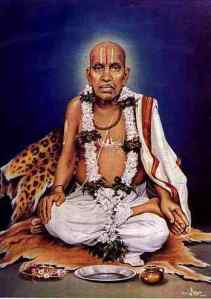
"I draw to Me, My man from far off or even across the seven Seas to Shirdi, like a sparrow with a string fastened to its feet"-Shirdi Sai Baba, Indian Spiritual Guru-God

Thanks SSS Trust, Shirdi

People from different Religious, Geographical, Economic, and Social backgrounds are brought together here. Their prayers are delivered and successfully resolved with the grace of the Indian spiritual SadGuru-God, Shirdi Sai Baba.


Tag: Persevere

Ia Perseverance develops in the face of challenge; ability to stick with a task, despite inexperience and difficulty

  • Chant God’s Name

    Realise the preciousness of the Diamond:

    Embodiments of Love!

    Only when we realise the preciousness of the diamond will we take care to safeguard it. Likewise only when we are aware of the value of chanting the Lord’s name will we make the effort to practise it and benefit from it.

    Not all realise the potency and efficacy of reciting the Lord’s name.

    The first requisite is the purity of thought, word and deed. The name that is uttered by the tongue should be meditated upon by the mind. What is uttered and dwelt upon should be hailed by clapping the hands.

    This threefold concentration on the Divine name – unity of mind, speech and action – purifies the heart and nourishes the feeling of devotion.

    Better than recounting the qualities of the Lord, singing His glories or relating His exploits and teachings, the chanting of the name is supremely edifying.

  • When one gets laya in God, all powers, all wisdom, all perfection, termed divine, shine forth from such a person’.

    When one gets laya in God, all powers, all wisdom, all perfection, termed divine, shine forth from such a person’.

    Baba said, his nights were not intended for sleep. On the other hand, he used his divine eye of supervision.

    He kept watch over all his bhaktas in all their places. He averted danger from them. Look at this vast unimaginable task of one person trying to save hundreds in hundred different places. The task is simply unimaginable. No human  being could ever succeed in it.

    It is the divine Baba that could do it  and that did it. His divine power enabled him to do it. His divine kindness made him forego sleep and all comforts for that purpose.

    The  sacrifice of physiological well-being by giving up sleep night after night, was very serious, but Baba willingly consented to do it. Baba’s  body was human, though his soul was divine; Baba had to undergo all  the physiological evils of protracted loss of sleep and loss of comforts.

    When one gets laya in God, all powers, all knowledge, all wisdom, all perfection, that are termed divine, shine forth from such a person‘.  Baba was perfect in his concentration on God.

    Therefore in the above quoted instances, as in the other innumerable instances to be found in the Gospel of Sai  Baba (i.e. BCS) or other books on Baba, the powers exercised by Baba were the result of his laya in God, that is, they were really divine powers.

    In many cases, the object of Baba was that a devotee should not merely get relief. The devotee should also develop full belief in him (Baba) as the Guru-God. This belief allows the devotee to attach himself firmly to Sai Baba and develop his life thereafter with his help. This is the great object with which siddhis were utilised by Baba.

    Temporal help was given by means of these chamatkars, but there was always a string attached to the temporal help. The man who got temporal benefit had at the same time a push in the spiritual direction.

    Patanjali Yoga Sutras in Chapter III, especially those about Pratibha and Sarva Bhava Athreshta Trithva and Sarve Jnathruthva. Patanjali  has said therein that by concentrating on the Purusha and developing Suddhasatva one attains pratibha (knowledge of everything), and one can do everything, i.e., achieve omnipotence and omniscience.

    Use of siddhis may be good or bad and both are referred to not only in Bhagavata, Skanda XI, but also in Baba’s advice and actions. Baba gave a warning to a devotee just beginning to develop powers. This is the stage when curiosity, ambition, and other worldly motives arise. These desires come from the appearance of siddhis within the grasp of the sadhaka or devotee.

    Regarding Baba’s action, anyone would note that Baba made ample use of innumerable siddhi powers. Therefore, there is nothing wrong in using siddhi powers. All great ones including Sri Krishna have used their divine powers or siddhis

  • Baba’s Methods of Teaching

    Baba’s Methods of Teaching

    Rao Bahadur bought a good Chirdi (small Sari) and presented it to the mind-servant of Kaka (Kakasaheb Dixit)

    Like a starving person getting luckily good dishes to eat, her joy knew to bounds. Next day she wore the new Sari, and out of great joy and merriment, whirled, danced round and played `Fugadi’ with other girls and excelled them all.

    The Day following, she kept the new Sari in her box at home and came with the old and torn rags, but she looked as merry as she did the previous day.

    On seeing this, Das Ganu’s pity was transferred into admiration. He thought that the girl being poor had to wear a torn rag, but now she had a new Sari which she kept in reserve and putting on the old rag, strutted herself, showing no trace of sorrow or dejection.

    Thus he realized that all our feelings of pain and pleasure depend upon the attitude of our mind.

    On thinking deeply over this incident, he realized that a man ought to enjoy whatever God has bestowed on him in the firm conviction that He besets every thing, from behind and before, and on all sides and that whatever is bestowed on him by God must be for his good.

    In this particular case, the impoverished condition of the poor girl, her torn rag and the new Sari, the donor, the dance and the acceptance were all parts of the Lord and pervaded by HIM

    Hence, Das Ganu got a practical demonstration of the lesson of the Upanishad – the lesson of contentment with one’s own lot in the belief that whatever happens, is ordained by God, and is ultimately good for us.


    Unique Method of Teaching

    In this particular case, He sent Das Ganu to Vile Parle, where he got his problem solved,through the maid-servant. To those, who say that it was not necessary to sent Das Ganu outside and that Baba could have personally taught him, we say that Baba followed the right or best course, or how else could Das Ganu would have learnt a great lesson, that the poor maid-servant and her Sari were pervaded by the Lord.

    SSSC ch-20

  • Baba’s EARLIEST life

    Baba’s EARLIEST life

    Sai Baba’s earliest period was with his original parents who had deserted him. They had given him away. His stay with them was far too short, for any noticeable development or change of personality.

    The next stage of life reached by Baba, was when he stayed with the fakir who received him. This period lasted for at least four or five years. It spanned almost from the first to the sixth year, which was the most impressionable period of Baba’s whole life.

    This fakir appears to have been a very advanced Sufi. He and his wife seem to have loved Sai Baba tenderly. They brought him up with all attention and care.

    In the case of Sai Baba, the father and mother are the earliest Gods. The fakir and his wife must have given him the idea of God. They must have responded to his love and his need for protection.

    After the fakir died, his wife took Baba to the Selu zamindar. The zamindar was Gopal Rao Deshmukh, a perfect lover of God Tirupati Venkatesa.

    Here again Baba’s destiny was that his previous line of thinking, feeling and being should be continued and not disturbed. The love which began under the fakir became still more powerful, under the care of Gopal Rao Deshmukh or Venkatesa.

    He was perpetually attending upon Venkatesa Gopal Rao Deshmukh. This was in a way which the Guru Gita aptly described. Baba was like a peon. He was ever ready at hand to carry out the Chieftain’s orders.

    There was no distraction of games or playmates or rivalry or any examination to trouble Baba. His whole heart ran on to the Master. Baba himself gives a description in BCS 175 which applies here also:

    I loved to gaze at him all the while, and even for a few seconds if he were not there to see, I would not like to have eyes at all. I did not wish to go back. I forgot all things but the Guru. My life was concentrated in my sight and my sight in him. That was the object of my meditation. In silence, I bowed‘. These words referred to a Guru of a former life probably.

    But the description of the contact with the latest Guru in BCS 178 as given below is on the same lines and as follows:

    For 12 years I waited on my Guru who is peerless and loving. How can I describe his love to Me?. When he was in Dyanastha ie. love trance, I sat and gazed at him. We were both filled with Bliss. I cared not to turn my eye upon anything else. Night and day I pored upon his face with an ardour of love that banished hunger and thirst. The Guru’s absence for a second made me restless.
    I meditated on nothing but the Guru, and had no goal, or object, other than the Guru. Unceasingly fixed upon him was my mind. Wonderful indeed, the art of my Guru! I wanted nothing but the Guru and he wanted nothing but this intense love from me. Apparently inactive, he never neglected me, but always protected me by his glance.

    That Guru never blew any mantra into my ear. By his grace, I attained to my present state. Making the Guru the sole object of one’s thoughts and aims one attains Paramartha, the Supreme Goal.

    The positive and the negative go together in this early period. This means thorough detachment from the world and thorough attachment to God or the Guru representing God. However, it might be of great importance in making up Baba’s life.

    The life of Baba was to be a life of perfection. After Mahasamadhi, this should be fully recognised as the Divine operating without limitations of time or place. It is for the benefit, not of one individual or one country but for all.

  • Vishnu Sahasranama- Importance

    Vishnu Sahasranama- Importance

    Shama was a very intimate devotee of Baba and Baba wanted to favour him in a particular way by giving him a copy of Vishnu-Sahasra-Nam as Prasad. This was done in the following way.

    Once a Ramadasi (follower of Saint Ramadas) came to Shirdi and stayed for some time. The routine he followed daily was as follows : He got up early in the morning, washed his face, bathed and then after wearing saffron-coloured clothes and besmearing himself with sacred ashes, read Vishnu-Sahasra-Nam (a book giving a thousand names in praise of Vishnu, and held second in importance to Bhagwad Geeta) and Adhyatma-Ramayana (Esoteric version of Rama’s story) with faith. He read these books often and often and then after some days Baba thought of favouring and initiating Shama with Vishnu-Sahasra-Nam.

    Baba, therefore, called the Ramadasi to Him and said to him that, He was suffering from intense stomach-pain, and unless He took Senna-pods (Sona-mukhi, a mild purgative drug) the pain would not stop; so he should please go to the bazar and bring the drug. The Ramadasi closed his reading and went to the bazar.

    Then Baba descended from His seat, came to the Ramadasi’s place of reading, took out the copy of Vishnu-Sahasra-Nam, and coming to His seat said to Shama- “Oh Shama,  this book is very valuable and efficacious, so I present it to you, you read it.

    Once I suffered intensely and My heart began to palpitate and My life was in danger. At that critical time, I hugged this book to My heart and then, Shama, what a relief it gave me! I thought that Allah Himself came down and saved Me. So I give this to you, read it slowly, little by little, read daily one name at least and it will do you good.”

    The efficacy of God’s Name is well-known. It saves us from all sins and bad tendencies, frees us from the cycle of births and deaths. There is no easier sadhana than this.

    It is the best purifier of our mind. It requires no paraphernalia and no restrictions. It is so easy and so effective. This sadhana, Baba wanted Shama to practise, though he did not crave for it. So Baba forced this on him.

    It is also reported that long ago, Eknath Maharaj, similarly, forced this Vishnu-Sahasra-Nam on a poor Brahmin neighbour, and thus saved him. The reading and study of this Vishnu-Sahasra-Nam is a broad open way of purifying the mind, and hence Baba thrust this on His Shama.

    Ramadasi on return scold and abuse Shama and remarked that if the book be not returned, he would dash his head before him. Shama calmly remonstrated with him, but in vain.

    Then Baba spoke kindly to him as follows – “Oh Ramadasi, what is the matter with you? Why are you so turbulent? Is not Shama our boy? Why do you scold him unnecessarily. How is it that you are so quarrelsome? Can you not speak soft and sweet words? You read daily these sacred books and still your mind is impure and your passions uncontrolled. What sort of a Ramadasi you are! You ought to be indifferent to all things. Is it not strange that you should covet this book so strongly? A true Ramadasi should have no ‘mamata’ (attachment) but have ‘samata’ (equality) towards all. You are now quarrelling with the boy Shama for a mere book. Go, take your seat, books can be had in plenty for money, but not men; think well and be considerate. What worth is your book?

    Shama had no concern with it. I took it up Myself and gave it to him. You know it by heart. I thought Shama might read it and profit thereby, and so I gave to it him.”

    How sweet were these words of Baba, soft, tender and nectar-like! Their effect was wonderful. The Ramadasi calmed down and said to Shama that he would take ‘Panch- ratni’ Geeta in return.the matter was ultimately compromised.

    We only say that, had this procedure been not gone through, the importance of the subject, the efficacy of God’s name and the study of Vishnu-Sahasra- Nam would not have been brought home to Shama.

    So we see that Baba’s method, of teaching and initiating was unique. In this cases Shama did gradually study the book and mastered its contents to such an extent, that he was able to explain it to Professor G.G. Narke, M.A. of the College of Engineering, Poona, the son-in-law of Shriman Booty and a devotee of Baba.

    SSSC-Ch27

  • Baba and Jesus on Fasting

    Baba and Jesus on Fasting

    Once Kaka resolved to observe fasting for the night. But as Baba did not encourage unnecessary observances, he repeatedly told Dixit to take his night meal. So Dixit gave up his idea of fasting

    This reminds us of St Mark II 18-21. In this passage, Jesus informed people that his disciples were not fasting as other devout people did. The children of the bride chamber would not fast so long as the bridegroom was with them.

    As long as Jesus watched over his disciples and kept them pure, fasts and vigils were unnecessary,

    When Baba was there to keep Kaka free from lascivious thoughts and tamasic disposition, there was no need to fast.

  • Chakra Narain, a Protestant Chirstian

    When Chakra Narain, a Christian, was appointed as Sub- Inspector at Rahata, some of his followers, who were displeased, went and told Baba, “The new Fouzdar is neither a Hindu nor a Muhammadan but a Christian’. Baba’s retort was What of that? He is my brother’. It must be remembered that Baba was called a Maharaja and looked exactly like a Maharaja in the midst of all regal paraphernalia. His powers also struck Chakra Narain as marvellous, that is, his powers of clairvoyance, and clairaudience, in popular parlance, but known to scholars as Antarjnana or Ritambhara prajna or Pratiba.

    In his statement in the book ‘Devotees’ Experiences, Volume I Page 117 in October 1936, he showed some appreciation of Sai Baba

    He admitted that he was not a believer in Baba, but he began to admire his noble qualities which he came to know when he was ordered to watch Baba. He and some of his men were watching Baba for various purposes including income tax. He conceived a great regard for Baba because he found that Baba was not moved by kuamini or kanchana (woman or wealth). Many women would come to Baba and place their bare heads on his hare feet and sit close to him. But Baba was totally unmoved. 

    This fouzdar was asked to watch Baba regarding the money he received from people Here also he had great admiration for Baba. When Baba died, the Government took possession of his cash and the amount with him was only Rs. 16. Yet he was daily giving hundreds of rupees. and Chakra Narain was wonderstruck at the fact that His riches (which they noticed) were limited, and that though there was no stock of cash with him at the beginning of the day, at the end of the day he had paid hundreds of rupees (miracle). Wherefrom did the excess come for him to disburse or pay? The Police could not make out. Therefore Chakra Narain concluded that Baba had divine powers.

  • Sai Baba’s Declaration

    Sai Baba’s Declaration

    Turning to Shama (Madhavrao Deshpande) Sai Baba said.
    “If a man utters My name with love, I shall fulfill all his wishes, increase his devotion.

    And if he sings earnestly My life and My deeds, him I shall beset in front and back and on all sides.

    Those devotees, who are attached to Me, heart and soul, will naturally feel happiness, when they hear these stories.

    Believe Me that if anybody sings My Leelas, I will give him infinite joy and everlasting contentment.

    It is My special characteristic to free any person, who surrenders completely to Me, and who does worship Me faithfully, and who remembers Me, and meditates on Me constantly.

    How can they be conscious of worldly objects and sensations, who utter My name, who worship Me, who think of My stories and My life and who thus always remember Me?

    If My stories are listened to, all the diseases will be got rid of. So, hear My stories with respect; and think and meditate on them, assimilate them. This is the way of happiness and contentment.

    The pride and egoism of My devotees will vanish, the mind of the hearers will be set at rest; and if it has wholehearted and complete faith, it will be one with Supreme Consciousness.

    The simple remembrance of My name as ‘Sai, Sai’ will do away with sins of speech and hearing”.

  • FULL LIFE JOURNEY

    FULL LIFE JOURNEY

    CHRONOLOGICAL LIST OF EVENTS (Episodes) CONCERNING SHRI SAI BABA 

    1835/38

    Sai Baba was born in very early hours of September 27 or 28, 1835 to a poor Hindu couple, Gangabhavadya and Devagiriamma. The newborn infant is left in the woods, abandoned (at Lord Siva temple*). The infant is immediately discovered and adopted by a childless Muslim fakir and his wife.

    1838

    Sai Baba lives with the Muslim couple for 4 years. Meanwhile the fakir dies. The wife is left to tend the child alone. Even as a small child Baba stirs up sentiments between the Hindu and Muslim community by worshiping Allah in Hindu temples, and Hindu gods in the mosque. In fear of increased problems by a sole widow, Baba is handed over for care with a local mendicant and story-teller, Venkusa.

    1839-51

    Sai Baba spent 12 years with his Guru. The name of his Guru was Gopal Rao Deshmukh (Venkusa, also known as Venkavadhuta) of Selu. Some say “Baba practiced penance at the tomb of His Guru in the cellar under the Neem Tree at Shirdi”. Arrival of Devidas at Shirdi (Aged 10-11 years) took place in 1846. When he enquired, BABA mentioned the name of his GURU as Venkusa implying VISHNU (Parvardigar).

    1851

    Sai Baba first appeared at Shirdi and stays in the village for two months. He is noted to reside day and night under a Neem Tree (aged about 16 Years) which he claims is growing over the tomb of his old guru. After two months Baba disappeared to an unknown place.

    1852-54

    Baba may have gone to many places including Manik Nagar to meet Manic Prabhu, who is one of the incarnation of Lord Datta*.

    1854

    sai Baba first come to Shirdi when he was 16 years old. The mother of Nana chopdar may have seen and guessed the age of Baba as 16 years. He stayed at Shirdi for 9 months and then disappeared to an unknown place.*

    1855-1857

    Sai Baba travels about from place to place and finally ends up, beneath the mango tree near/in Dhoopkheda (or Dhoop) in Aurangabad District. There he ends up attending the marriage of Chand Patil’s nephew in 1858.

    1858

    Sai Baba returns to Shirdi along with the marriage-party of Chand Patil and remained at Shirdi for ever till His Samadhi.

    After reached at Khandoba temple of Shirdi, mahalsapthi may have seen and called him as “Avo Sai”. From that day, the young fakir named as Sai Baba in public.

    A widowed Deputy Collector and Settlement Officer by name H.V. Sathe (Hari Vinayaka Sathe) comes to Shirdi on the death of his wife. Baba takes great fondness to Sathe. Sathe was the first to set up apartments at Shirdi for temporary visitors.

    Baba regarded Sathe as his right hand in regard to all matters. Because Baba was keeping Sathe close to him and relying on him for everything, the residents of Shirdi grew jealous towards him.

    1859-61*

    1. Sai Baba begin to stay in deserted Masjid.
    2. Baba liked the company of saint Devidas, who was living many years before Baba came there; He stayed with Devidas in Maruthi temple, in the chavadi and sometimes lived alone.
    3. Vaman Tatya, devotee, supplied daily two fresh pitchers for 3 years; and with Sai Baba ‘ s toilet and labour, there( now Baba’s samadhi) grew a flower garden

    29th November 1865 Wednesday *

    Saint Manik Prabhu of Humanabad in Bidar District of Karnataka passed away

    30th April 1878, Tuesday *

    H. H. Akkalkot Swami left His mortal coil at Akkalkot in Solapur District of Maharashtra. (First appeared in 1835). It is reported that three of them (Manik Prabhu, Swami Samartha and SAIBABA) met at Humanabad.

    1873.

    Saints and holy men were coming to Shirdi for darshan of Baba, like Ramanand bikar, a disciple of Shri Akkalkot Maharaj.*

    1878.

    Keshav Nayak along with his son Ramachandra came to Shirdi. Baba asked some to pluck some Neem leaves and eat. These tasted very sweet*.

    1878, 23rd February, Saturday

    Shri Gajanan Maharaj of Shegaon appeared first time as a lad under the banyan tree at Shegaon. On his mahasamadhi day ie 8\9\1910, Baba at dwarakamai said to the devotees that ‘My Gajanan has left me’.*

    1879.

    Mamaltdar, chidamber Keshav Godgil was the first Government official,who considered Sai Baba as a Jnyani.*

    1881

    Madhavrao Deshpande ( Shyama), a primary school teacher at Shirdi accepted Sai Baba as his Sadguru.*

    1885

    Saint Anandnath (aged 95 years) of Yewala Math and a disciple of Akkalkot Swami visited Shirdi and seeing Sai Baba exclaimed, “This is a precious real diamond.”

    1886, April 16

    Mahasamadhi of Shri Ramkrishna Paramahansa of Bengal 1886.

    1886, 10th December, Friday night *

    On the Datta jayanthi Day, Baba suffered of Asthma. To get rid of it, Baba decided to take his parna high up and go to samadhi. He said to Mahalsapthi ” Protect My body for three days. If I return, it will be alright; if I don’t, bury my body in that open land ( pointing to it) and fix two flags there as a mark”;. Saying this, Baba fell down at about 10PM, as if His prana left tthe body.

    All the people including Shirdi villagers came, wanted to hold enquiry and bury the body; but Mahalsapthi prevented this.

    After three days passed, Baba showed signs of life at 3 AM and returned to life again. This incident imposed the villagers of Shirdi to accept Baba as an incarnation of God, instead of common mad Fakir.

    1887

    Manthrapragada Ramalaksmhi Devi, and his husband Venkata Narasimha Rao, who were childless in spite of efforts, visited their Guru, Shirdi Sai Baba, in 1887 and prayed to him for a child. As the fruit of Shirdi Sai Baba’s grace, a girl child was born to them on August 8, 1888. Shirdi Sai Baba himself gave name, Shringeri Sharada Devi: as she was of fair complexion. Baba used to lovingly call me Gori.*

    1889

    Abdullah arrived at Shirdi from Nanded (in West Khandesh near Jalgaon and Amalner). Baba welcomed by saying ‘my crow has come’.*

    1891.

    First invitation was given by Baba to Nana Saheb Chandorkar.

    1892

    Nanasaheb Chandorkar arrived at Shirdi for the first time after being invited by BABA many a time showing his intimate relations with NANA since his four births. “You are not aware of it, but I am. That’s why I called you here”*

    1892, 20th October Thursday, Diwali*

    Baba lighted the lamps with water, when the oil shopkeepers refused to give oil for his lamps.

    This is an important miracle, local people astonished very much.

    1893*

    Das Ganu (Ganesh Dattatreya Sahasrabuddhe) accompanied with Nanasaheb Chandorkar came to Shirdi for the first time.

    1894.*

    1. Bala saheb bhate came to Shirdi for the first time.
    2. some intolerant Muslims led by kazi of sangamner wanted to create problems. But Baba dissuaded them and Mahalsapthi was allowed to worship Him.

    1895

    Damodar Savalram Rasane (Dammu Anna) first visited, to show his gratitude to Sai Baba with a prayer to get children.*

    1896

    Celebration of ‘Urus’ (fair) started at Shirdi owing to the efforts of Gopal Rao Gund, a Circle Inspector of Kopargaon.

    1898

    Sai Baba was seen sleeping on a narrow plank suspended with old rags about 7 or 8 feet above ground with lighted lamps placed on the plank. (Unknown year) About this time, the parents of Shyam came to Shirdi with the two-year old child named Mohan Shyam. A small school for children was adjoining Baba’s room. Shyam used to watch Baba at nights through the ventilator. Baba used to sleep on an eighteen-inch wide plank suspended with old rags about 7 or 8 feet above ground with lighted lamps placed on the plank. Shyam was apprehensive that Baba might fall from his lofty but narrow perch during sleep. Shyam prayed to stay near Baba and serve him for his remaining days.

    1899-1900

    Nanasaheb Chandorkar visited Shirdi with his sister-in-law’s husband, Shri Biniwale. Baba scolded Nanasaheb for dissuading Biniwale, a devotee of Shri Dattatreya from visiting Datta Temple on the bank of Godavari River to avoid delay in reaching Shirdi.

    1900-1902

    Sai Baba like a learned Pandit explained Geeta to Nanasaheb Chandorkar, who believed that BABA was not well versed with Sanskrit language of Pundits (learned people).

    1903

    Das Ganu left Govt. service and as per Baba’s instructions settled at Nanded and started performing keertan and writing life histories of recent saints.

    1903

    Das Ganu’s book ‘Sant Kathamrit’ was published. (Ch. 57 about Sai Baba’s advice to Nanasaheb Chandorkar).

    1904, April

    Rao Bahadur H. V. Sathe first arrived at Shirdi. (Aged about 49 years).

    1904-1905

    Nanasaheb Chandorkar’s pregnant daughter Mainatai at Jamner in Jalgaon District had severe pains of delivery. Sai baba sent Udi and Arati with Ramgir Gosavi from Shirdi and she had a safe delivery. Sai Baba even took the form of Tonga’s Rajput driver to make Ramgir reach Jamner safe and on time.

    1906

    Das Ganu’s book ‘Bhakta-Leelamrit’ was published. (Chapters. 31, 32 and 33 about Sai Baba).

    1906

    Nanasaheb Chandorkar was transferred as Mamlatdar from Nandurbar to Pandharpur. On
    the way, he stopped at Shird! With his family and started requesting Baba to accompany
    them to Pandharpur and stay there permanently with them. The devotees then told
    Nanasaheb about the singing of bhajan just finished in which Baba’s mood of going to
    Pandharpur and staying there forever was expressed. The text of the song was, ‘I want to go and stay at Pandharpur.

    1906

    Shivamma Thayee’s uncle meets Baba for the first time, while Baba is visiting Vellakinaru in Coimbatore. Baba told Shivamma’s uncle, ‘She is the only girl in the whole lot who will be a highly elevated soul.’ Baba then slowly chanted the Gayatri Mantra to Shivamma.

    1907

    Radhakrishna Mai (Sunderabai Kshirsagar) arrived at Shirdi. (Young good-looking widow aged 25 years). She was blessed by BABA who used to send a part of food collected as (Bhiksha) to her.

    1908

    Sathe Wada was constructed.

    1908 Ekadashi

    Kashirarn Shimpi died. (Chaitra Shuddha 11). BABA saved his life in a mysterious way when he was assaulted by Thieves in a jungle.

    1908

    Pundalikrao of Nanded met Shri Vasudevananda Saraswati. (Tembe Swami) at Rajahmundry on banks of Godavari River in Andhra Pradesh and Swami gave a coconut to be presented to Sai Baba. BABA showed cognizance of Swamiji’s gift and showed his oneness with Swami by describing him as his brother (Bhau).

    1908

    Shri Tatyasaheb Noolkar, (Aged 45 years) the Sub-judge of Pandharpur first arrived at Shirdi in 1908. Gurupournima festival was prompted by Baba for Dada Kelkar, Tatyasaheb Noolkar, Madhavrao Deshpande and others.

    1909

    Saibaba threw an ochre garment on Balasaheb Bhate, Mamlatdar of Kopargaon, and an atheist, on his very first visit and Balasaheb lost complete interest in worldly matters. He retired prematurely from service and settled down at Shirdi permanently.

    1909

    Bapusaheb (Sakharam Hari) Jog on retirement from Govt. service came to stay at Shirdi permanently accompanied by his wife.

    1909

    Bhimaji Patil of Narayangaon (Pune District) came to Shirdi for getting his chronic tuberculosis at the last stage and was cured by Baba’s blessings.

    1909, Nov 2

    Hari Sitaram alias Kakasaheb Dixit (Aged 45 years), a prominent solicitor and M.L.C. first arrived at Shirdi. Baba used to call him affectionately Langda Kaka and removed fear complex from his mind. Kaka Dixit was known for his obedience to Baba’s orders.

    1909, Dec 10

    Devotees began to offer regular worship to Baba in the Chavadi, where He slept on alternate days.

    1909, Dec 25

    Baba gave darshan in the form of Sri Rama to a doctor, devotee of Sri Rama who came with a Mamlatdar.

    1910

    Baba’s ‘Handi’ ritual, occasionally cooking food Himself in a big copper pot and distributing it to devotees and poor people without discrimination. This practice continued till this year. After wards owing to Das Ganu’s keertans (musical recitals praising Baba), Baba’s fame spread far and wide and devotees started flocking together in large numbers offering large quantities of food as ‘naivedya’ and thus there was no need of ‘Handi.

    1910

    Ramachandra Atmaram alias Babasaheb Tarkhad from Bandra (Bombay) first visited Shirdi

    1910

    Rao Bahadur Moreshwar W. Pradhan of Santa Cruz (Bombay) first visited Shirdi.

    1910

    Govind Raghunath alias Annasaheb Dabholkar (Aged 51 years), the author of Shri Sai Satcharita (Marathi), had his first darshan of Sai Baba and received significant and prophetic title of ‘Hemadpant. Baba gave him his blessings and inspired him to write SAI SATCHARITA – a religious scripture describing BABA’s life story and his divine play (leela) as monumental as GURU CHARITRA- the old monumental POTHI – a poetic religious scripture inspiring worship to GURU, NARASINHA SARASWATI.

    1910

    Balkrishna Vishwanath alias Balasaheb Dev (Dahanu Mamlatdar) first visited Shirdi prompted by Nanasaheb Chandorkar. Dev used to describe him as Baba’s child – with a full sense of surrender.

    1910

    Bhadrapad Shuddha 5H. H. Gajanan Maharaj of Shegaon (Buldhana District of Maharashtra) left His mortal coil. (First appeared in 1878). At that very time at Shirdi, Sai Baba grieved profusely and said, “Hallo! My Gajanan is gone. I must take bath again in reverence to the Great Soul.”

    1910

    Shrimant Gopalrao Mukund alias Bapu Saheb Butty of Nagpur, (a rich statesman) started staying permanently at Shirdi.

    1910

    Harishchandra Pitale’s son suffering from epilepsy was cured by Baba’s mere glance at him. Baba gave Pitale three rupees and reminded him of two rupees earlier received by him from Swami Samarth of Akkalkot and thus showed his oneness with all the other SAINTS (Vibhutis).

    1910, Ashwin Vady13

    Sai Baba pushed his arm into the brightly burning Dhuni to save a blacksmith’s child. ‘The arm was scorched and burnt. Nanasaheb came from Bombay with Dr. Parmananda but Baba did not allow the doctor to treat him. Bhagoji Shinde’s service of massaging the arm with ghee and bandaging it continued till Baba’s Samadhi. This episode is in testimony to BABA’s cosmic existence- HIS super consciousness.

    1910 Dec 5

    Hon’ble Mr. Ganesh Shrikrishna alias Dadasaheb Khaparde of Amravati (Maharashtra) first visited Shirdi. (Refused on 10 Dec. 1910) Mr. Babasaheb Khaparde was an ardent devotee of BABA and his efforts were instrumental in bringing Loka Manya Tilak- (a great national leader-Khapurde’s contemporary) to Shirdi for Baba’s darshan and blessings in his movement for India’s freedom from the British Rule.

    1910, Dec10

    Foundation-stone of Dixit Wada laid with Baba’s permission.

    1910, Christmas

    Lala Lakhamichand of Santacruz (Bombay) came to Shirdi. Baba loved him very much and affectionately accepted his petty gifts given with love.

    1910

    Megha returns to Shirdi and stays till his death. In Baba’s company he underwent mysterious experiences which transformed Megha from an atheist to an ardent devotee of Baba and spent his life in the service of Sai -Shiva. He regarded Baba as Shiva-Shankar (Lord Shiva- Shankar -the welfare Doer).

    1911

    Madrasi Sanyasi Vijayanand, while on a pilgrimage to Manas Sarovar, halted at Shirdi and breathed his last while reading ‘Bhagawat’ (a religious script written by Saint Eknath) for 3 days on Baba’s advice.

    1911, March

    Tatyasaheb Nulkar (Aged 48), the Sub-judge of Pandharpur breathed, his last at Shirdi. Baba showed HIS oneness with Tatya Nulkar and described him as a pure soul and expressed HIS grief at Nulkars demise.

    After Tatyasaheb Nulkar passed away, Megha took over the regular daily worship of Baba in the Dwarakamai. (He used to stand on one leg while performing the Arati). Tatyasaheb Nulkar relinquished everything and stayed at Shirdi in Baba’s company till his demise Baba bestowed him with the unique experiences in self-realization. Baba advised him and Mr Shyama Deshpande to perform Guru Worship (Pooja).

    1911

    Ram-Navami Festival was started at Shirdi owing to the efforts of Shri Bhishma and Kaka Mahajani.

    1911, Ram-Navami

    Construction of Dixit Wada was completed and was inhabited with due rites.

    1911

    Extension and roofing of the open space in front of the Dwarakamai was carried out by Kakasaheb Dixit. Baba got enraged and tried to shake and uproot a pole. Then removing Tatya Patil’s paghree, struck a match, set the paghree on fire and threw it in a pit along with one rupee as if an auspicious offering to avert evil. Baba never liked renovation of his dwelling place viz. Dwarakamai (the masjid) and opposed any such effort by the devotees.

    1911

    Somdav Swami Alias Hardwar Swami visited Shirdi.

    1911, June 27

    Kashinath Govind Upasani (aged 41 years) first visited Shirdi and returned again on 6 July. Baba ordered him to stay for 4 years in the Khandoba Temple.

    1911, Dec

    Kashinath Upasani composed the famous ‘Shri Sainath Mahimna Stotra (hymn) in Sanskrit. (Now being recited daily during Arati at Shirdi).

    1911, Dec

    Bubonic plague raged at Shirdi (Lasted up to March 15 next year) Baba however saved lives of plague inflicted devotees by taking upon himself i.e. On his body the malody.

    1911, Dec

    Baba’s grinding of wheat in the hand-mill. It was not wheat that was ground but plague or cholera itself was ground to pieces and cast out of village. Seeing this Annasaheb Dabholkar (Hemadpant) was inspired to write ‘Shri Sai Satcharita.’

    1911, Dec5

    Dadasaheb Khaparde of Amravati arrived at Shirdi again with family and stayed for 3 months. Shri Krishna Bhishma the author of Arati book ‘Sagunopasana’ accompanied him. Dadasaheb Khaparde wrote diary (daily record of his stay at Shirdi in Baba’s company).

    1911, Dec 11

    Waman Rao Patel (Aged 22 years) (Later Swami Sai Sharanananda) first arrived at Shirdi.

    1911, Dec 13

    Chandrabhan Shet Marwari, uncle of Khushalchand of Rahata, expired.

    1911, Dec 16

    Dr. Capt. Hate first visited Shirdi (who had just appeared at LCPS examination.) Baba sent him a message in the dream saying, ‘have you forgotten me?’.

    1911, Dec 19

    Sai Baba’s great devotee and a great saint of Nath-Panth order, Shri Rama Maruti visited Shirdi. (Stayed for 34 days.) ‘. Ram Maruti offered ‘Naivedya’ to Baba and Baba very affectionately took a part of it (SWEET SANJA).

    1911-12

    Sagun Meru Naik arrived at Shirdi at the age of 23 and on Baba’s advice settled permanently running a small restaurant for the devotees visiting Shirdi.

    1912, Jan

    Dadasaheb Khaparde’s youngest son Balwant was cured of bubonic plague by Baba by taking the disease on himself.

    1912, Jan 3

    Megha fed some Brahmins on completion of his Gayatri Punascharana (a religious ritual). Dadasaheb Khaparde attended it at Sathe Wada.

    1912, Jan 19

    Megha died at Shirdi at about 4 A.M. Baba lamented loudly and followed the funeral procession for some distance. Baba showered flowers on Megha’s body.

    1912, Jan 20

    Bapusaheb Jog started performing Baba’s Pooja and Arati after Megha’s death. He continued this till Baba’s Samadhi and even some years afterwards until he shifted to Sakori and joined Upasani Maharaj there.

    1912

    Transformation of Dwarakamai (the masjid) started. Pits were patched up and the stone slabs fixed on the floor. Baba gave up sack-cloth seat and started using cushion scat and bolster in deference to devotees’ wishes.

    1912 Jan

    Ganapatrao, father of Tatya Kote Patil passed away. Tatya Patil stopped sleeping in the Dwarakamai with Baba.

    1912, Feb 25

    Madhavrao Deshpande (Shama) left Shirdi to attend Kakasaheb Dixit’s son’s thread-ceremony at Nagpur and Nanasaheb Chandorkar’s son’s wedding at Gwalior. From there accompanied by Appa Kote, he went on a pilgrimage to Mathura, Prayag, Ayodhya, Kashi and Gaya. At Gaya Madhavrao saw Baba’s picture at the priest’s house and was reminded of Baba’s words, “After visiting Kashi and Prayag I would be reaching the religious place ahead of Shama.”

    1912, Mar 15

    Dadasaheb Khaparde returned to Amravati. Mrs. Laxmibai Khaparde stayed behind.

    1912, Ram-Navami

    Dada Maharaj Satarkar, known as ‘Modern Tukaram’, was invited to perform Ram-Navami Kirtan.When he bowed down in obeisance, Baba said, “I know this man since last 4 years”. Bala Buva had never met Sai Baba before but 4 years ago at Bombay, he had prostrated before Baba’s picture. Thus Baba proved to His devotees that seeing His picture was equivalent to seeing Him in person.

    1912, April

    First visit of Balaram Dhurandhar along with his brothers. Before they arrived Baba had expressed, “Today many of my Durbar people are coming”. Baba offered Balaram Chillim to smoke and since then his 6 year old asthma was cured forever.

    1912, Shravan 15

    Guru-Sthan padukas were installed under the Neem Tree at Shirdi.

    1913.

    First visit of Mahadev Rao Sapatnekar of Akkalkot accompanied by his younger brother Pandit Rao. When Mahadev Rao prostrated before Baba, Baba shouted ‘Chal hat’ (Get away) in the protest of absence of faith in Saptnekar’s mind and his prejudice for Baba.

    1913

    Baba gave at Dwarakamai darshan of himself as Vitthal and Rakhumai of Pandharpur to the wife and mother of R. B. Purandare of Bandra.

    1913, Ram-Navami

    BalaBuva Satarkar performed Ram-Navami Kirtan at Shirdi and Baba gave him a gift of Rs.150/- for the Kirtan. These coins were collected in a dish (Thali) after Baba’s prayer (Arati). Baba poured the whole dish in Satarkar bag (zoli)

    1913, May

    Waman Rao Patel (Aged 24 – 25 Years.) (Swami Sai Sharananandaji) visited Shirdi again and this time stayed for 11 months.

    1913

    Rao Bahadur Sathe got a son by Baba’s Grace at the age of 57 years.

    1914

    Sapatnekar of Akkalkot arrived at Shirdi again with wife and returned being blessed for begetting a son.

    1914, Feb 14

    Mr.B.V. Deo (Mamlatdar of Dahanu in Thane District) was charged and reprimanded by Baba for stealing His rag and after lot of abusing and scolding was favoured with instruction to read Gnyaneshawari regularly every day as per Deo’s desire. This episode is an example of how Baba sometimes displayed his transcendental powers to read devotees mental inclinations even without formal oral communication.

    1914, Feb 22

    A Sadhak of Yoga (Swami Ram Baba) visited Shirdi and seeing Baba eating bread with onion got suspicious and disappointed. However Baba proved His power of omniscience by reading his mind and the Sadhak returned highly satisfied and blessed.

    1914, April 2

    Before the year was over, Baba appeared to Deo in a dream and inquired if he understood Gnyaneshawari properly. Deo said ‘No’ and added that without Baba’s Grace it will not be understood. Then Baba explained to Deo how to read it slowly (and without making haste) with full concentration for knowing the subtle meaning between the lines (Bodha – Knowledge)

    1914, Ram-Navami

    Das Ganu was ordained by Baba to perform Ram-Navami Kirtan at Shirdi every year.

    1914, Shravan

    H. H. Shri Vasudevananda Saraswati (Aged 80 years) (Tembe Swami) left His mundane body at Garudeshwar on the banks of River Narmada in Gujarat.

    1914. July 15

    Kashinath Upasani left Shirdi (Total stay 3 years, 19 days) and proceeded towards Nagpur, Khadakpur etc.

    1915, Dec

    Sai Baba suffered from asthma and was very weak. Yet He climbed over Radhakrishna Mai’s roof with a ladder. Paid Rs. 2/- to the person bringing and placing the ladder. Honouring a worker for his work, Baba showed how Dignity of labour should be maintained.

    1915, Dec

    Balakram Mankar passed away at Shirdi.

    1915, Dec

    Mrs. Tarkhad (wife of Babasaheb Tarkhad of Bandra) sent a pedha (made of milk and sugar) which was already offered as naivedya and that too with Balakram’s son Govindji who was in mourning. Yet Baba swallowed it with great eagerness and love.

    1915, Dec 30

    Construction work of Butty’s Wada was in progress. Baba occasionally used to go at this place to see the progress of this work and gave instructions.

    1916

    Sai Baba made Das Ganu to do ‘Nam-Saptah and Kirtan’ at Shirdi for a week.

    1916

    Radhakrishna Mai (Aged 35 years) passed away. Baba used to bless her by sending a portion of food collected by him by way of Bhiksha.

    1916.

    Arrival of a Madrasi Bhajani Mela (Party of the Ramdasi Order). Baba gave darshan to the chief’s wife in the form of her beloved deity Shri Rama. The chief also got a dream and his attitude towards Baba was completely changed.

    1916

    Nephew of Dr. Mulky from Malegaon (District Nasik), suffering from tubercular bone-abscess, was fully cured by Sai Baba’s Udi and his loving glance. The doctor himself visited Shirdi afterwards and became a staunch devotee of Shri Sai Baba realizing that Baba’s service is to be performed not only for the sake of money or other mundane things but for the welfare of the disabled, helpless and downtrodden.

    1916

    Annasaheb Dabholkar (Hemadpant) retired from Govt. service. On Guru Purnima Day while at Shirdi, Anna Chinchanikar pleaded before Baba for getting some other appointment for Hemadpant as his pension was quite insufficient and his family was growing. Baba assured him about his source of income for livelihood after retirement.

    1916, Vijaya Dashami

    When in the evening Shirdi residents were returning from ‘Simollanghan’ ceremony (crossing of the border or limits of the kingdom village), Baba suddenly got into wild rage and taking off His head-dress, kafni and langota (loin cloth) etc., tore them into pieces and threw them in the burning Dhuni before Him. The fire in the Dhuni became brighter and Baba stood there stark naked. Later when cooled down and dressed again Baba said, “This is My Simollanghan” and thus hinted at His departure from this world soon on Dassehra Day. This Darshan provided enlightenment that Baba’s body cannot be described as Hindu or Muslim or of any cast or belonging to any religion in vogue.

    1916

    Ramchandra Dada Patil became seriously ill. One night. Appearing before him, Baba told him that he would recover soon but Tatya Patil will die on Vijaya Dashami Day in 1918. Thus by substituting Tatya’s name for HIS, Baba foretold Tatya’s passing away. However, Baba sacrificed his body to save devotees life by saying ‘instead of him another person will go?’.

    1916

    Baba averted Gopal Narayan Ambadekar’s effort of suicide by prompting him to read an appropriate incident from Akkalkot Swami’s Chaitra (religious scripture) and avoided greatest sin in his devotees life.

    1917

    Shyam, the faithful servant of Baba falls at Baba’s feet and dies, merging in Baba.

    1917

    Baba tells Shringeri Sharada Devi, “Gori, I will appear in Andhra [Pradesh] with the same name of Sai Baba but in another Avatar. Then again, you will come to me. I will keep you with me and give you joy.”

    1917

    Baba names a young girl Shivamma Taiyee and proclaims that she will be a saint.

    1917

    Haribhau Karnik of Dahanu (District Thane) wished to offer. One more rupee to Baba while leaving Shirdi, but could not do so. On the way at Nasik, in the Kala Rama Temple another saint Narasing Maharaj demanded one rupee from him. Karnik gave it willingly thinking that Baba was demanding the rupee he wanted to offer at Shirdi. Baba fulfilled in HIS many mysterious ways devotees’ desire to offer dakshina through all the media.

    1917

    Sai Baba appeared at Thane (North of Bombay) to inquire the well-being of Appa Saheb Kulkarni’s wife and children when he was away on tour. When Appa Saheb returned Baba not only fulfilled his desire of offering Rs.10 as Dakshina but also favoured him by returning nine rupees consecrated by His touch. These nine rupees are the symbol of nine bhakti services done to HIM.

    1917

    Upasani Maharaj (Aged 47 years) made Sakori (near Rahata) his permanent residence.

    1918

    Rao Bahadur Moreshwar Pradhan purchased Lendi Baug and later presented it to Shirdi Sansthan’. Baba himself planted some trees at the Lendi Baug.

    1918, April 1

    At Vile Parle (East) (now suburb of Bombay) on Hanuman Road, Narayan Mahadev Thosar’s residence (later known as Narayan Ashram) was built a Hanuman Temple. On the day it was consecrated, Baba paid Rs. 25 to a Brahmin named Waze and made him performs Shri Satya- Narayan Pooja.

    1918

    Prof. G. G. Narke, son-in-law of Butty got a permanent job by Baba’s Grace as Professor in the Engineering College at Pune. Baba always remembered him by saying ‘where has he (Narke) gone? Baba gave him a begging bag (zoli) for collecting food -an exercise in cultivating humility and eliminating ego.

    1918, August

    Baba offered Hemadpant a glass of butter-milk and said, “Drink it all, you won’t get such opportunity again suggesting that time for his Samadhi has arrived.

    1918, Sep 9

    Das Ganu wrote ‘Shri Sai Stavan Manjaril at Maheshwar (Madhya Pradesh) on the banks of River Narmada.

    1918, Sept 28

    Nath Panthi saint Rama-Maruti of Kalyan passed away.

    1918, Sept 28

    Sai Baba had a slight attack of fever which lasted for 3-4 days. Since then Baba abstained from food and day by day His weakness increased.

    1918, Oct 1

    Baba asked a Brahmin devotee by the name Waze to read ‘Ram- Vijay’ (by Sridhar Swami) and listened to it for 14 days.

    1918, Oct 8

    A tiger met its death at the feet and presence of Sai Baba and was emancipated.

    1918, Oct 15, Tuesday

    On Vijaya Dashmi, Sai Baba left his mortal coil at about 2-30 p.m. Few minutes before He gave Rs. 9/- as Prasad to Laxmi Shinde. These nine coins represent nine dimensional devotion to GOD.

    1918 Oct 16

    Wednesday Early morning Baba appeared to Das Ganu at Pandharpur, in dream and said, “The Dwarakamai has collapsed and all the oilmen and grocers have troubled Me a lot. So I am leaving the place. Go there quickly and cover my body copiously with flowers”.

    1918, Oct 16

    Wednesday in the evening Baba’s body was taken in procession through the Shirdi village and then interred in Butty Wada with due formalities.

    1918, Oct 27 On the 13th day Baba’s devotees from all over gathered and funeral rites were performed by Balasaheb Bhate with a feast (Bhandara) to Brahmins and poor. Later Upasani accompanied by Bapusaheb Jog went to Prayag (Allahabad) and performed all the remaining obsequies on the banks of River Ganges.

    Thanks: Internet peoples