

- I always say ‘Sai, Sai,’ and HE shall take me over the seven seas .
- I trust that as soon as I remember Sai Baba, my sufferings have come to an end; and I am on the pathway to happiness .
- I recognize that my cure is due to past evil karma being worked out, and Sai Baba’s intervention hastens this .
- I express grateful remembrance, keep unchanging faith, and show devotion to Sai.
- I show implicit obedience and prompt compliance with Sai Baba’s order, which is the true dharma .
- I am satisfied that Sai Baba is the Sadguru who, by His simple word and touch, relieves all maladies.
- I trust Sai Baba even when He suggests remedies, like groundnuts for diarrhea, that may not align with modern knowledge, believing His word is true.
Tag: Karma
Ob
-
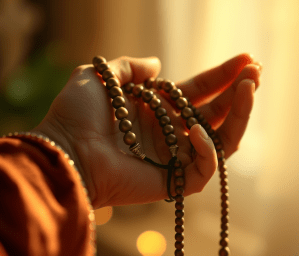
Self-Affirmation from Chapter XIII of SSSC for Sai Baba devotees
-

Self-Affirmation from Chapter II of SSSC for Sai Baba devotees
🌸 Daily Affirmation Flow
- Morning Invocation 🌞“My heart feels faith in Sai Baba’s stories and teachings, leading me to Bliss.” → Begin the day by reading or listening to Sai Baba’s leelas.
- Work & Service 🔧“I am only an outward instrument; my work is accomplished by HIS grace.” → Remind yourself that every task is service.
- Ego Surrender 🧎“I will surrender my ego completely at Sai Baba’s feet.” → Pause before decisions, offering them inwardly to Baba.
- Transformation 🤞“My thoughts are changed, past karmic force abated, and non-attachment grows upon seeing Sai Baba.” → Reflect on detachment during challenges.
- Grace Received 🧚“I have received Sai Baba’s divine presence and glance, by the merit of past births.” → Acknowledge gratitude for spiritual progress.
- Renewal 🚵“I begin a new lease of life, the moment I touch Sai Baba’s feet.” → Use this as a mantra when starting new ventures.
- Recognition of Divinity 👑“I recognize Sai Baba as omniscient and the Inner Ruler of all.” → Close the day with surrender to Baba’s universal presence.
-
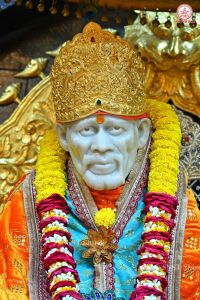
Why Shirdi Sai Baba is a Universal Spiritual Guide
A captivating exploration of the profound themes and vital truths surrounding Shirdi Sai Baba reveals a figure of immense spiritual significance.
I. The Nature and Identity of Sai Baba
Sai Baba is a divine, omniscient, and omnipresent, being whose true nature transcends conventional human and religious classifications.
- Ambiguity of Origin and Faith:
- Baba’s identity as Hindu or Muslim is deliberately obscured, highlighting his universality.
- He celebrated both Hindu festivals (Rama-Navami, Gokul Ashtami) and allowed Muslim practices (Sandal procession, Namaj in Masjid).
- His physical attributes (pierced ears like a Hindu, advocacy of circumcision, but not circumcised himself) further blurred the lines.
- No one definitely knew whether He was a Hindu or a Mahomedan.
- Divine Incarnation and Sadguru:
- Baba is depicted as a “Wonderful Incarnation,” a “precious Jewel,” and a “precious Diamond.”
- He is the “crest-jewel of the Saints, who is the home of all auspicious things, who is our Atmaram (Dear Self), and who is the able refuge of the devotees.”
- He is explicitly referred to as a “Sadguru,” a true spiritual master.
- “Lord (God) dwells in the Saints.
- In fact they are not different from Him.
- Our Sai is One of these,
- Who incarnated for the welfare of the devotees,
- Supreme in knowledge and surrounded with divine lustre.”
- Omniscience and Omnipresence: Baba has absolute knowledge of the past, present, and future.
- He knew Mr.Damu Anna’s secret thoughts about cotton speculation and his desire to offer Baba a share of profits.
- He knew Mr. Cholkar’s secret vow regarding sugar and his decision to forego sugar. Baba remarked, “Though, I am here bodily, still I know what you do; beyond the saven seas. Go wherever you will, over the wide world, I am with you. My abode is in your heart and I am within you.”
- He knew Mr.Hari Kanoba’s name, parentage, and other details about him, even though it was Hari’s first visit to Shirdi.
- He read Somadeva Swami’s critical thoughts about the flags at the Mosque, directly addressing them.
- He knew about one pleader’s slander behind His back at Bar Council, demonstrating “His omniscience and His using it for correcting people and setting them on the right path.”
- He correctly predicted and averted the death of Ramachandra Patil and foresaw Tatya Patil’s passing.
- He is described as “omnipresent, occupying land, air, country, world, light and heaven, and that He was not limited.”
- Detachment and Humility: Despite his divine powers, Baba lived a life of extreme simplicity and humility. He lived on alms, possessing nothing, and residing in a deserted Masjid. He begged for food daily, mixing all offerings together, and “His tongue knew no taste.” Dogs, cats, and crows freely ate from his earthen pot, and “Baba never drove them away.”
II. The Role and Importance of the Sadguru
The Sadguru (Guru, who realized Self) as the sole means to spiritual liberation and worldly well-being.
- Bridge to Salvation:
- The Sadguru is essential for crossing the “worldly ocean.”
- “Where Real or Sadguru is the helmsman, he is sure to carry us safely and easily beyond the worldly ocean.”
- The Vedas alone cannot achieve this; “It is only the Sad-guru, who can do so and make you, see the Lord in all creatures.”
- Destroys Egoism and Sins:
- The touch of the Guru’s hand is described as having “wonderful… power.”
- It can destroy the “subtle-body (consisting of thoughts and desires)” and cleanse “sins of many past births.”
- M. Hemadpant said, when starting writing Shri Sai SatCharitra, “Sai Baba took away my egoism and wrote Himself His stories.”
- Catalyst for Transformation:
- Baba’s darshan (sight) leads to profound inner change:
- “by His darshana our thoughts are changed,
- the force of previous actions is abated and
- gradually non-attachment of dispassion towards worldly objects grows up.”
- He transforms his devotees into “Himself (His nature).”
- Baba’s darshan (sight) leads to profound inner change:
- Teacher and Guide:
- The Sadguru Sai teaches based on the disciple’s qualifications, without unsettling their minds.
- He dispels ignorance (“Destroying ignorance is Jnana”) and
- He helps the disciple realize their true Self (“You are God, you are mighty and opulent.”).
- Unconditional Love and Service:
- A true Sadguru expects no service or profit,
- but instead wishes to serve his disciples, treating them as equals or even as Brahma.
- “Baba had great love for the disciples.”
- He “loved all beings equally.
- He was unattached. Foes and friends, kings and paupers, were the same to Him.”
III. Key Teachings and Practices Advocated by Sai Baba
Baba’s teachings, though sometimes indirect, emphasized faith, surrender, moral conduct, and devotion.
- Faith (Nishtha) and Patience (Saburi): These were presented as two coins of devotion by Baba to His Guru.
- Baba said: “This is one pice -Faith. Patience or perseverance is the other pice. I waited patiently and very long on My Guru and served him. This Saburi will ferry you across the sea of this mundane existence.” (pice=1/100 INR)
- Complete Surrender: “If any one prostrates before Sai and surrenders heart and soul to Him,
- then unsolicited, all the chief objects of life viz. Dharma (righteousness), Artha (wealth), Kama (Desire) and Moksha (Deliverance), are easily and unsolicitedly attained.”
- “The best way, therefore, to get free from the shackles of Maya is our complete and whole-hearted surrender to Baba.”
- Charity and Non-Attachment to Wealth: Baba frequently extracted “Dakshina” (offerings),
- not for personal gain, but “to teach the devotees the lesson of charity and to remove their attachment to money and thus to purify their minds.”
- He asserted that “He had to give back hundred times more of what He received.”
- He discouraged debt for spiritual purposes: “Baba never liked people to run into debt for taking His darshan, or celebrating any holiday or making any pilgrimage.”
- He considered “money as a danger or bar to spiritual progress.”
- Ethical Conduct and Self-Correction:
- He advised against discourteously turning away those who come to you, emphasizing:
- “Shri Hari (God) will be certainly pleased, if you give
- water to the thirsty,
- bread to the hungry,
- clothes to the naked, and
- your verandah of your Home to strangers for sitting and resting.”
- Baba condemned slander:
- “Let anybody speak hundreds of things against you,
- do not resent by giving any bitter reply.
- If you always tolerate such things, you will certainly be happy.”
- He used the example of a pig eating filth to correct a slanderer, stating, “Your conduct is similar. You go on reviling your own brethren to your heart’s content.”
- Baba taught the importance of offering everything to the Guru before enjoyment:
- “before the senses, mind and intellect enjoy their objects, Sai should first be remembered, and if this be done, it is in a way an offering to Him...
- all the Vrittis (thoughts) regarding Desire, Anger, Avarice etc. should first be offered and directed to the Guru.”
- He guided devotees to remain calm and composed, engage in good actions, and perform duties without attachment.
- Remembrance of God/Guru (Dhyana/Bhajan): Baba advised various forms of devotion, including
- “remembering My name,”
- “hearing His Leelas,”
- “worship of His Feet,” and
- studying sacred scriptures like Shri Sai SatCharitra, Bhagwat, Jnaneshwari, and Vishnu-Sahasra-Nam.
- He stated, “If you always say ‘Sai, Sai’ I shall take you over the seven seas.”
IV. The Human and the Divine
- Interaction with Devotees:
- Baba allowed devotees to serve him in their own way,
- demonstrating his “dependency on Bhaktas” (in the sense that he allowed their devotion to manifest).
- He engaged in normal conversation, jokes, and sometimes strong reprimands, always with a deeper purpose.
- The Guru-Disciple Relationship: The relationship is central. Disciples are encouraged to fully surrender and trust the Guru. The Guru sees beyond superficiality and acts for the disciple’s ultimate good.
- Transcending Form:
- While he had a physical form, Baba’s true nature was “unattached and indifferent” and “the state of Brahman.”
- He demonstrated “Khandayoga, i.e., separating His limbs and joining them again,”
- His visible form was merely a “mould” for the “liquid essence of Pure Self.”
V. Miraculous Powers (Leelas) and Their Purpose
Baba’s “Leelas” (divine plays or miracles) are frequently cited, serving not as ends in themselves, but as tools to deepen devotees’ faith, teach spiritual lessons, and alleviate suffering.
- Manifestation of Divine Power:Grinding Wheat: Initially misunderstood as mundane, Baba’s grinding of wheat was a symbolic act to “destroy the cholera epidemic in Shirdi” with the flour.
- Turning Water into Oil: This demonstrated his control over natural elements(fire) and taught the Banias (Oil Traders) a lesson in /
- ‘truthfulness.
- Curing Diseases: He cured various ailments, including eye problems with Beeba (marking nuts-Carpus Ana Cardium) and diarrhea with groundnuts, emphasizing that “The true medicine… was Baba’s word.”
- Saving from Calamities: He averted the snake bite for Shama and predicted/averted the death of Ramachandra Patil. He also saved Mr. Mirikar from a potential snake bite.
- Fulfilling Desires (within divine plan):
- The “Amra-Leela” story illustrates his power. Four mangoes, given by Sai resulted in four sons and four daughters for Damu Anna. This happened despite astrological predictions.
- He facilitated the return of a stolen jewel-box and a stolen sum of money.
- Disguised Blessings and Tests:Baba’s “rage” and “abuses” were often a “blessing in disguise,” as seen with Somadeva Swami, or a direct command to the poison in Shama’s case.
- Drawing Devotees and Confirming Faith:
- The numerous anecdotes of individuals being drawn to Shirdi, despite their initial reluctance (Hemadpant’s own journey, Kakaji Vaidya being directed by Goddess Sapta-Shringi, the “idolater” friend of Kaka Mahajani) highlight Baba’s magnetic spiritual pull.
- His precise knowledge of hidden thoughts or distant events served to “create faith and devotion” in his devotees.
- Guaranteeing the Welfare of His devotees:
- “There will never be any dearth or scarcity, regarding Food and clothes in My devotee’s home.”
- In a nutshell
- Baba’s teachings
- emphasize love, compassion, and faith,
- uniting all religions and
- inspiring devotion beyond boundaries.
- His miraculous acts instill hope, and
- His wisdom fosters inner peace.
- Baba’s teachings
- Ambiguity of Origin and Faith:
-
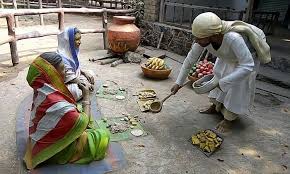
Baba’s Compassion and Love
Shirdi, Shri Sai Baba’s life is a testament to His boundless compassion, profound gentleness, and unwavering selflessness. He consistently demonstrated these qualities through His actions, teachings, and interactions with His devotees. Here are instances:
Baba’s Compassion:
- Protection from Epidemics: Baba displayed compassionate foresight by grinding wheat and having the flour thrown on the Shirdi village borders to curb a cholera epidemic.
- Villagers understood that He was not only grinding wheat.
- He was also grinding the cholera itself to pieces. This act pushed cholera, out of the village. This led to the epidemic’s subsidence.
- Encouragement of Hemadpant: When Hemadpant expressed self-doubt about writing Baba’s biography,
- Baba gently encouraged him. He blessed him with Udi (sacred ashes) and placed His boon-bestowing hand on his head.
- Baba assured,
- “I will help him.
- He is only an outward instrument.
- I should write Myself My autobiography and
- satisfy the wishes of My devotees”.
- This shows His desire for devotees’ spiritual growth and His loving support.
- Motherly Love for Disciples: Baba exhibited a unparalleled motherly love towards His disciples. He was always attending to their needs. Sadgurus like Baba have this peculiar and extraordinary love for their disciples.
- All-Embracing Love and Tolerance:
- Baba’s all-embracing love was evident in His defense of the Rohilla, who disturbed villagers with loud prayers.
- Baba took the villagers to task, explaining that the Rohilla’s prayers kept away “Durbuddhi” (bad thoughts),
- thus protecting even those perceived as troublesome.
- All-Embracing Love and Tolerance:
- Omnipresence and Constant Protection: Baba’s statement: “I am the Inner Ruler of all and seated in their hearts. I envelope all the creatures, the movable and immovable world.“
- Curing Ailments through Grace: Baba cured numerous diseases without using conventional medicine. He did so through His Grace, Words, or Udi. This demonstrated His compassion for the suffering. Examples include:
- Bhimaji Patil’s severe tuberculosis, cured by Baba’s words of hope and mercy, through two dreams.
- Bala Ganapat Shimpi’s malaria, cured by instructing him to feed a black dog, with rice mixed with curds.
- Bapusaheb Booty’s dysentery and vomiting, instantly cured by Baba’s command, “Now take care, you should not purge any more” and “The vomiting must also stop”. He also cured in another time, Booty’s cholera with a seemingly fatal remedy, effective due to Baba’s word.
- A Swami from Alandi’s ear pain, relieved by Baba saying, “Alla Accha Karega (God will do good)”.
- Madhavrao Deshpande’s piles and Gangadharpant’s stomach-pain, cured by simple words and touch, and Nanasaheb Chandorkar’s stomach-pain with a sweetmeat.
- A doctor’s nephew of tubercular bone-abscess, cured with Udi and Baba’s “loving glances”.
- Dr. Pillay’s excruciating guinea-worm pain, relieved by Baba’s command to be ‘fearless’ and allowing an accidental step on the wound, to expel the worms.
- Shama’s sister-in-law’s bubonic plague, cured overnight by sending Udi and giving instructions.
- A Harda gentleman’s bladder stone, dissolved with Udi mixed with water.
- A Bombay lady’s painless delivery, despite a stillborn issue, by her praying to Baba and consuming Udi-mixture.
- Acceptance of Sincere Offerings: Baba lovingly accepted offerings made with devotion, such as
- Mr. Cholkar’s small offering of sugar-candy, knowing his secret vow to save money for his trip by abstaining from sugar.
- He knew devotees’ sincere intentions,
- even reminding them if they
- forgot to offer something,
- demonstrating His acceptance of their inner devotion over the material value.
- Teaching Non-duality through Action: Baba profoundly taught the principle of “See God in all beings”
- when He told Mrs. Tarkhad, “Mother, you have fed Me sumptuously… The dog which you saw before meals and to which you gave the piece of bread is, one with Me, so also other creatures… I am roaming in their forms. He, who sees Me in all these creatures is My beloved.“. This practical demonstration encouraged compassion for all life.
- Drawing Devotees and Fulfilling Desires: Baba had an incredible ability to draw devotees to Shirdi, “like a sparrow, with a thread tied to its feet.” He was omniscient and knew their innermost thoughts and desires. Often, His compassion led Him to fulfill them. Examples include:
- Knowing Lakhamichand’s taking a loan for his darshan and forgetting to buy guavas, but arranging for an old woman to sell him the fruits.
- Knowing Damu Anna’s secret thoughts about speculative business and gently dissuading him, saving him from financial ruin. He blessed Damu Anna’s wife with four sons and four daughters, by gave her four mangoes as Prasad. This act overrode astrological predictions.
- Fulfilling Mrs. Tendulkar’s dream of her son passing his medical examination despite unfavorable astrological predictions, emphasizing faith. He also blessed Mr. Tendulkar with a higher pension after a dream.
- Ensuring painless death and salvation (Sadgati) for devotees like Sannyasi Vijayanand, Balaram Mankar, and Tatya Noolkar; Even showering flowers on Megha’s body and arranging his funeral rites after his passing shows, deep affection.
- Compassion for Animals: Baba displayed immense compassion for animals.
- Notably, he bought two goats for an exorbitant sum. He explained their past lives and their enmity in their previous human forms. Out of pity, he fed them.
- He also taught not to kill creatures, stating “God lives in all beings and creatures”.
- Personal Sacrifice for Devotees:
- A supreme act of compassion was when Baba
- sacrificed His own life to save Tatya Kote Patil’s life, fulfilling an earlier prophecy that Tatya would pass away, but Baba took his place.
Shirdi’s Shri Sai Baba exemplified unparalleled compassion and selflessness through numerous acts. He protected villagers from epidemics, encouraged disciples, healed ailments without medicine, and accepted sincere offerings. Baba’s teachings emphasized seeing God in all beings, fulfilling devotees’ desires, and displaying profound love for both people and animals, often embodying true sacrificial spirit.
- Protection from Epidemics: Baba displayed compassionate foresight by grinding wheat and having the flour thrown on the Shirdi village borders to curb a cholera epidemic.
-
People benefited immensely by having Baba’s Darshan.
- Some became vibrantly hale and hearty;
- wicked souls were transformed into paragons of virtue.
- Leprosy was miraculously cured in certain instances,
- countless hearts had their deepest desires fulfilled,
- without any medicine being into their eyes, some blind men get back their sight, and
- the lame were blessed with limbs.
- No one can fathom the boundless depth of His extraordinary greatness.
SSSC Ch-7
-

Last thought, man has at death-hour, determines his future
The last wish or thought that a man has at the hour of death, determines his future course.
Shri Krishna has said in Gita (VIII-5-6) that “he who remembers Me in his last moments, comes verily to Me, and he who meditates otherwise at that time, goes to what he looks for.”
We cannot be certain that we can entertain a particular good thought at our last moment, for, more often than not, we are more likely to be frightened and terrif ied by death.
Hence constant practice is necessary, for enabling us to fix our mind on any desired good thought at any moment.
All Saints, therefore, recommend us to always remember God and chant His name always, so that we may not be puzzled when the time for departure comes.
The devotees on their part surrender themselves completely to the Saints, fully believing that the all-knowing Saints (Sai Baba) would guide and help them in their last moments.
-
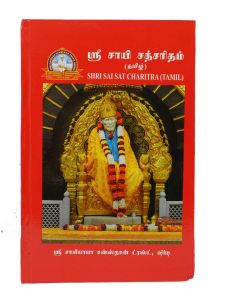
Who, When, How and Why Shri Sai SatCharitra (SSSC) created?
- When seeking facts about Sai Baba,
- the remarkable work that stands out is ‘Sai Satcharitra’ by HemadPant, known as Anna Saheb Dabolkar.
- It is written in the Marathi language.
- This wonderfully crafted poetical masterpiece spans 53 vibrant chapters and over 1000 pages, narrating incidents from Sai Baba’s inspiring life.
- Written in rich and expressive Marathi, it beautifully fulfills the purpose of Puranic study, serves daily parayana.
- It offers readers a path to deeper understanding and devotion.(LoSB p6)
- Baba conveyed his heartfelt blessing to Hemadpant in 1916, when asked permission to write Baba’s life teachings and expressions,
- by providing him with udhi and placing his Asirvada hand upon Dabolkar’s head, proclaiming,
- “Let him compile a collection of My stories and experiences,
- diligently maintaining notes and memos.
- I shall assist him in this endeavor.
- He is merely an external instrument. It is I who should document my life and fulfill the aspirations of my devotees.
- When his ego is entirely extinguished, leaving no remnants, I shall personally enter within him to narrate my life.
- Listening to my stories and teachings will instill faith in the hearts of devotees, facilitating their journey toward self-realization and eternal bliss.“
- Hemadpant diligently gathered information concerning the lilas of Baba and, as a proficient writer possessing a profound command of Marathi verse and prose, along with a solid foundation in religious literature,
- aspired to compose a comprehensive study of Baba’s lilas, thereby creating a significant chronicle of Baba’s life.
- This endeavor would align with the framework established by Saraswati Gangadhar’s Guru Charitra, offering solace and happiness to individuals burdened with sorrow and the afflictions stemming from worldly existence.
- Additionally, it would provide them with Jnana, or knowledge and wisdom, regarding both temporal and spiritual matters.
- Baba’s lilas would serve as both instructive and engaging, akin to the Vedas,
- and, upon contemplation, they would facilitate laya, or union with Brahman, as well as mastery of Yoga and Yoga Ananda.
- Consequently, he resolved to compile these narratives, considering the publication as a form of upasana, or worship, of his Guru.
- This collection would be particularly invaluable to those unable to experience Baba in person, allowing them to form an understanding of Baba through this compilation.
- Baba’s teachings and expressions were the natural outcome of his boundless self-realization; it was Dabolkar’s belief that Baba himself inspired this initiative to gather and present his life’s essence.(P376. )
Shri N.V.Gunaji adapted the above Shri Hemanpant’s “Sri Sai SatCharita” and translated into English and donated the entire proceeds to the Sai Sansthan Trust, Shirdi.
- When seeking facts about Sai Baba,
-

Quotation- BCS 309
Alms giving without discrimination
“Athiti is what ever creature is hungry and comes on to you, at that (kakabali-crow offering) time, whether it is human or a bird, beast or insect.All these seek food. The real Athiti that you get, (but) you do not regard as such. These have come to you in lakhs.
Nana! give up your rotten interpretation*. At kakabali, take plenty of boiled rice outside the house and leave it there.
Do not shout or call for any, nor drive away. Whatever the creature that comes to eat, let not that disturb your mind. You get thus the merit of feeding lakhs of guests. “
Baba in BCS para 309 to N G Chandorkar alias Nana
*The phrase “Atithi Devo Bhava” translates to “The guest is akin to God,” highlighting the reverence and care that should be given to guests.
In Hinduism, welcoming guests, especially unexpected ones, is considered a sacred duty. This practice is deeply embedded in the culture and traditions, emphasizing the hospitality that should be extended to guests. Here are a few key aspects:
Rituals and Practices for Welcoming Guests
1. Traditional Welcome:
– Guests are often greeted with a warm “Namaste,” a gesture of respect and reverence.
– In some households, a ceremonial welcome called Aarti might be performed, where a small lamp is waved in front of the guest, accompanied by singing or chanting.
– Some families may apply a small mark (often a red dot known as tilak) on the guest’s forehead as a sign of blessing and respect.
2. Offering Refreshments:
– Guests are typically offered water, tea, butter-milk or other beverages upon arrival. This practice signifies hospitality and the intention to make the guest feel comfortable and valued.
– Following this, guests may be served snacks or meals, often including traditional and home-cooked dishes.
3. Providing Comfort:
– Hosts ensure that the guests have a comfortable place to sit and rest. Clean towels, refreshments, and any other necessities are provided.
– In many cases, if the guest is staying overnight, special arrangements are made to ensure their comfort, including clean bedding and private space.
4. Treating Guests with Respect:
– Throughout the visit, guests are treated with utmost respect. Conversations are often centered around the guest’s well-being, their travel experiences, and any needs they might have.
– Hosts may also offer small gifts or tokens of appreciation when the guest departs, further signifying the importance of their visit.
These practices not only reflect the value placed on hospitality in Hindu culture, but also emphasize the spiritual aspect of serving and honoring guests as part of one’s duty (dharma). -

Sai Devotees-Do Free Service at Shirdi Temple
Sai Devotees, You can now do Free Service at Shirdi, under Sai Sevak Scheme of Shirdi-Sai-Baba-Temple-Management.
Opportunity to do seva at/near our Sai Mandir at Shirdi, and get Sai Baba’s blessings, directly.
About Sai Sevak Scheme
- Sai Sevak ‘Group’ with maximum 21 members
- Seva period will be 7 days only ie Every Tuesday to Monday
- Sai Sevak Group should reach on Monday at Sansthan’s Sai Ashram No.2 (Dharmashala) by 2.00 p.m.
- Free facilities given:
- 21 members accommodation, at Sai Dharmshala
- Meals at Prasadalaya
- Breakfast packets at accommodation
- Tea at seva
- Daily Darshan
- Aarti once in 7 days.
- Documents required are
- 2 Passport size Photos.
- Aaadhar Card Xerox.
- Medical Fitness certificate.
- Police (On Line) Verification or Character Certificate from Corporation Ward Member/ Municipal Chairman /Gram President.
- No compensation/ claim for employment, against Seva.
- Only 10 groups will be accepted for service in each week by Temple.

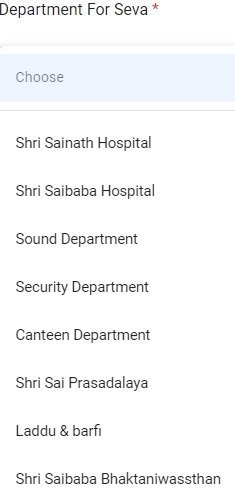
- Service Places offered at:-
- Contact:-
- Website – online.sai.org.in
- Email: labour@sai.org.in
- Call: 02423 258811/10
PS. The above details are given for information only. Contact the above, for Registration and latest updates.

Steps in registration process -
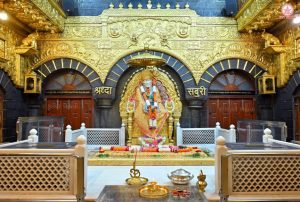
Who is Shirdi Sai Baba
Sri Krishna, Sri Rama, Sai Baba, are all divinely gifted or perfected souls and expressions of divinity. They transform everyone who comes into contact with their divine personality. This is especially true for those who are drawn through Rinanubandha (karmic Bond) by their divinity. That is the purpose or mission of their lives.
Baba’s Birth and Grown-up:
- Sai Baba (1838-1918) was an Indian spiritual Guru, Yogi, and Fakir, revered as a saint by millions of devotees, both Hindu and Muslim, across the world.
- Sai Baba stated that while still a young child, his parents entrusted him to the care of a fakir. The fakir raised him.
- From this foster father, Baba readily acquired Vairagya (detachment from worldly pleasures and pains) and developed a spiritual mindset.
- That fakir passed away within four or five years after taking charge of him.
- This fakir instructed his wife to take the young Baba and leave him in the care of the renowned saintly zaminder, Gopal Rao Deshmukh (Provincial Governor) in Selu.
- Gopal Rao was an exceedingly devout individual, deeply attached to Tirupati Lord Venkatesa. He was affluent and generous, and he supported education and piety.
- A wealth of true education was available to the young Baba, as he was consistently in attendance on this master.
- Gopal Rao, upon departing from this world peacefully, signaled to the young Baba with a wave of his hand, instructing him to leave Selu and proceed westward to his new abode. (Shirdi is situated along the banks of the Godavari river, directly west of Selu).
- After some time, Chand Bhai Patel, the Headman of Dhoop (Dhukeda) Village in Nizam’s State, arrived in Shirdi with a grand procession. He had come for the marriage of his wife’s nephew at Shirdi, around 1872. Sai Baba accompanied him for this occasion. When the marriage party arrived in Shirdi, they halted at Mhalsapati’s land near the Khandoba temple.
- Bhagat Mhalsapati noticed the young Fakir disembarking from the bullock cart and greeted him with “YA SAI” (Welcome Sai). Others began to address him as Sai, and henceforth he became known as Sai Baba.
- Baba’s final residence was Shirdi, where he lived from 1872 until the end of his life in 1918.
Baba’s Mission:
Baba has not one mission, but a hundred missions. Divine personalities have specific functions. They protect the good (virtuous). They punish or reform the wicked. They also establish Dharma (Virtue) or its hold on the people. And Baba was performing all these functions.
His mission is to help every one, that means, of course, everyone capable of benefiting, not persons who come in an unreceptive mood .
Baba’s marga-Path:
Studying Gitas, one sees that there is no meaning in asking for ‘any one marga (path)‘ expounded by the Divine Person. Saints expound all the margas. They find which marga or combination of margas would suit each approaching devotee. Then they give the same to him.
Thus Baba adopted every marga. In particular, one may note that the predominance in his methods was neither for ritual nor for Vedic study. Instead, it was for living in consonance with the Supreme manifestation of Divinity in himself.
Baba distributes:
Baba quoted occasionally his master’s or Guru’s behest. “As he had received liberally from his master, he must similarly distribute liberally amongst those that approached him.” Baba was distributing not merely wealth, worldly relief and comforts. He was also giving spiritual gifts and spiritual blessings to all and sundry capable of receiving those benefits.
Baba advises :
- ‘Love all creatures.
- Do not fight with any.
- Do not retaliate nor scandalize any.
- When any one talks ill of you, that is, against you, pass on unperturbed. His words cannot pierce into your body. Others’ acts will affect them alone and not you.’
Baba was ever active and never idle and His advice was, ‘Do not be idle. Work, Utter God’s name. Read scriptures’.
Baba is also advising:
- ‘We should not harbour envy, rivalry, or combative disposition towards others.
- If others hate us, let us simply take to Nama Japa and avoid their company.
- Hearken to the words of your parents.
- Help your mother in her tasks.
- Speak the truth and truth alone’.
Baba’s advice was always simple and capable of being accepted and acted upon by even persons of the meanest capacity.
Baba’s moral teachings:
Important thing for peace and happiness is love of all creation. Baba’s moral teachings were conveyed by his own life and activity. Baba loved all creatures. The underlying motive of every act of his was love towards all human beings and all creatures.
Baba’s Powers:
He did not even appear to be a teacher and was chiefly a granter of wishes. But all the same, he was a powerful instiller of principles and virtue. He instilled these into the hearts of those capable of receiving such impress.
Other Saints, about Sai Baba:
One Saint, from Puntambe by name Gangagir always frequented Shirdi. When he first saw Sai Baba, carrying pitchers of water in both hands, for watering the garden, he was amazed. And said openly, “Blessed is Shirdi, that it got this precious Jewel. This man is carrying water today; but He is not an ordinary fellow. As this land (Shirdi) was lucky and meritorious, it secured this Jewel.”
So also one famous Saint by name Anandnath of Yewala Math, a disciple of Akkalkot Maharaj came to Shirdi with some Shirdi people. When he saw Sai Baba, he said openly, “This is a precious Diamond in reality. Though he looks like an ordinary man, he is not a ‘gar’ (ordinary stone) but a Diamond. You will realize this in the near future.”The meaning of the name, ‘Sai Baba’:
‘Sa’ means ‘Divine’; ‘ai’ or ‘ayi’ means ‘mother’ and ‘Baba’ means father. The Name indicates Divine Mother and Father.
Your physical parents exhibit love with a dose of selfishness. But this Sai, ‘Mother and Father’, showers affection or reprimands. This is only for leading you towards victory in the struggle for self-realisation.Sai Baba/ Sai/ Baba has achieved, the supreme task of:-
- Sai has come to achieve the supreme task of uniting the entire mankind as one family, through the bond of brotherhood of affirming;
- And illumining the Atmic Reality of each. This is done in order to reveal the Divine, which is the basis on which the entire Cosmos rests.
- And also instructing all to recognise the common Divine Heritage that binds man to man. This way, man can rid himself of the animal. He can rise into the Divine, which is his goal.
The most important facts to remember about Baba is that,
- Baba was the embodiment of all virtues,
- Baba did nothing which he did not preach.
- In Himself, all the virtues were the efflorescence of the central root in Him, with which he began as a little child, namely:-
- love for the Guru,
- love that knows no bounds of time, place, or circumstance, and
- love that sacrifices anything and everything at its altar.
- Gratitude, service, equality, justice, consideration and so many other good qualities that were in him and taught by him were the direct issue of this love. These qualities could not have all been sustained without this love. This is the central point to remember about Baba.
This enables the sishya (student or Devotee) to get more and more like unto the Guru. By constant meditation on him, the sishya becomes the soul of the Guru.ie
- The sishya grows in love,
- absorbs the love from the Guru, and
- returns it with all his soul and body.
- Does not consider himself as anything except as the lover and the beloved of the Guru.
- Thus he attains –
- moral perfection,
- spiritual perfection,
- perfection of siddhis and
- perfection of every sort .
- This is the natural result of Baba’s moral teachings.
 Welcome to https://ShirdiSaiBaba.InterNational