

- 🗃️My good luck and accumulation of merits in past births enables me to seek the company of Saints .
- 💢I understood that Saints, though working in different places, are one and work in unison under the Lord’s authority .
- 🧗I realized that the spiritual path is not merely theory; I must think and carry out what I read .
- 💒I strive to attain Loving Devotion (Bhakti), as all other sadhanas (Japa, Tapa, Yoga) are useless without it .
- 🏤I cultivated the nine types of Bhakti, knowing that the Lord will be pleased and manifest Himself in my home .
- 😖I speak never ill of others, nor unnecessarily criticize or interfere in their affairs .
- 👁️🗨️I trust in Sai Baba’s omniscience, knowing that He sees or reads the hearts of all, even from a distance .
- 🧑🤝🧑I accepted that Sai Baba’s seemingly harsh actions are truly favors and advice intended to set me on the right path
Tag: Integrity
Ob Honesty and Fairness
-

Self-Affirmation from Chapter XXI of SSSC for Sai Baba devotees
-

Self-Affirmation from Chapter XX of SSSC for Sai Baba devotees
- 🚦I trust that whatever Sai Baba spoke, must come true; His word is the decree of the Brahma (Almighty) .
- 🧠I realized that all our feelings of pain and pleasure depend upon the attitude of our mind only.
- 😌I enjoyed whatever God bestows on me, He besets everything and whatever happens is for my good .
- 🥁I believed that inactivity is the canker of the soul; I spend my life performing actions in resignation to His will .
- 🤹I am content with what I have, so I am not covet another man’s property
- 💎I trust Sai Baba’s unique method of teaching, knowing that His purpose is my spiritual elevation .
- 🎁I understood that Sai Baba ensures that all spiritual teachings lead to the realization that the Lord pervades everything .
- ⚖️I accepted the lesson that all feelings of pain and pleasure depend upon the attitude of my mind .
-
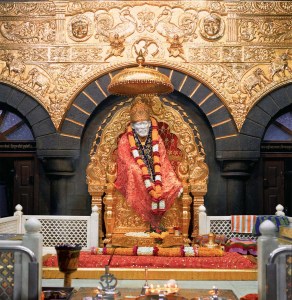
Self-Affirmation from Chapter XVI & XVII of SSSC for Sai Baba devotees
1. 🔥The Fire of Freedom
I seek freedom. I long for freedom. With unwavering resolve, I walk toward freedom.
2. 🍂Sacred Detachment
I release the world. I release its rewards. In detachment, I enter the realm of the Spirit.
3. 🧑🦯Journey Within
I turn inward. I trust my inner Self. In the quiet depths, I discover my immortality.
4. 🧬Purity and Peace
I cleanse my actions. I calm my mind. In purity and peace, knowledge awakens within me.
5. 🚶Truth and Discipline
I live in truth. I walk in discipline. Through purity and restraint, I move toward God‑realization.
6. ⚖️Choosing the Good
I choose Shreyas, the Good. I release Preyas, the merely Pleasant. I walk the path that leads me upward.
7. 🎯Mastery of Mind and Senses
My intellect guides. My mind steadies. My senses obey. I journey toward liberation with confidence.
8. 🛌Purification and Non‑Attachment
I discharge satisfactorily and disinterestedly my duties, thus purifying my mind. I release ego, desire, and the illusion of the body. I rest in the Real.
9. 💡Grace of the Guru
I honor the Guru. I welcome guidance, as no one achieves himself alone. With the Guru’s light, my path becomes clear.
10. 🌟Divine Grace
I seek the Lord’s pleasure. Wisdom descends. Detachment blossoms. By Divine Grace, the Self reveals itself to me.
-

Self-Affirmation from Chapter XI of SSSC for Sai Baba devotees
- I choose the worship of God with form, as an easy and preferable path that leads to the meditation of the Formless .
- I accept the spiritual truth that Sai Baba, though lived physically in Shirdi, is present everywhere , even now.
- I am supported by Sai Baba, who stands by me and responds whenever I call upon Him.
- I understand that approaching Sai Baba requires His grace and permission .
- I follow Sai Baba’s commands, for His control over the Five Elements proves His Godhood .
- I will attain God-vision and have all my desires fulfilled by reading the stories of Sri Sai SatCharitra’s one Chapter daily with faith and devotion .
-

Self-Affirmation from Chapter VI of SSSC for Sai Baba devotees
- ❇️I embrace the wonderful power of the Guru’s touch, which destroys the sins of my past births and cleanses my subtle body.
- 🦶I touch Sai Baba’s hand and feet, and awaken my ‘I am He (Brahman)’ consciousness, manifesting the joy of self-realization.
- 🧎I prostrate before Sai and surrender heart and soul. As a result, the four chief objects of life (Dharma -Righteousness, Artha -Wealth, Kama -Desire, Moksha -Deliverance) are easily attained.
- 🚶I walk the difficult path of Bhakti straight by relying on my Sadguru.
- 🍞I am surrounded by an abundance of food and clothing in my home.
- 🧏I fix the form of the Sai firmly in my mind, so that it doesn’t wander.
- 😌I fix my mind on remembering Sai always, so that it is calm, peaceful, and carefree.
-

🌸 Daily Self- Affirmations for Shirdi Sai Baba Devotees’ Journey into 2026.
Dear New Seeker / Sai Baba’s Devotee, by joining this sacred circle, you are stepping into 2026 Journey, guided by Shirdi Sai Baba’s timeless wisdom.
🕉️ What You Will Receive
- Affirmations inspired by Chapters of the Shri Sai Satcharitra (SSSC), carrying the fragrance of faith, surrender, and transformation
- Visual motifs and meditations to anchor your practice
🌺 Your First Companion: Download your free PDF BOOK on Shirdi SaiBaba’s spirituality: “ Glossary on the spirituality of Shirdi Sai Baba” — a spiritual BASIC guide to update your practice.
📖Example of Affirmations Rooted in Sai’s Teachings
- Chapter 2: “I recognize Sai Baba as omniscient and the Inner Ruler of all.”
- Chapter 10: “I will always remember and chant “Sai” “Sai,” and all my shackles will be removed.”
- Chapter 33: “I believe that Sai Baba’s help is most opportune, coming exactly when I need it most .”
💡 Suggestions for using these Affirmations / Chart:
- Morning practice: Read each affirmation aloud to set your intention for the day.
- Read before sleeping, at your heart, to calm your thoughts and peaceful dream.
- Meditation aid: Focus on one affirmation per session, allowing its meaning to deepen.
🙏 Let Indian Spiritual Gure-God, Sai Baba Guide You:-
- Let this be your year of transformation.
- Let each affirmation be a step toward self-realization.
- Let you visualize Sai Baba
- Let Sai Baba’s grace carry you across
The most compelling fact about adopting the first few affirmations, grounded in Chapters I, II, and III, is that “Shirdi Sai Baba physically lived during the time these chapters were written by Mr. Hemadpant”; following Sai Baba’s blessing for him to write Sai Baba’s biography.
-

Tips for daily living. (@35)
Chapter 35 of the “Shri Sai Sat Charitra” provides several important tips and teachings for daily living, conveyed through Sai Baba’s words and actions. These include:
- Overcoming the sense of differentiation: Sai Baba advised a friend of Kakasaheb Mahajani to “destroy the Teli’s (Adjacent oil store) wall (sense of difference) between us, so that we can see and meet each other face to face”. This highlights the importance of removing perceived distinctions between individuals and fostering a sense of unity in one’s interactions and outlook.
- Cultivating steady faith and avoiding a fickle mind: To a “fickle-minded gentleman” (referring to Kaka Mahajani’s master, Mr. Thakkar), Baba advised: “Now please keep your faith on any one place (point) you like, why roam like this? Stick quietly to one place”. This emphasizes the need for steadfastness and focus in one’s spiritual or daily pursuits, rather than being swayed by various anxieties or external circumstances.
- Understanding the spiritual significance of giving (Dakshina): Baba explained that His practice of asking for Dakshina was not for personal gain but to teach devotees about renunciation and purification. He stated that wealth should be used to “work out Dharma” (righteous conduct) and that if it is used only for personal enjoyment, it is wasted. He further taught that “The best way to receive is to give” and that “The giving of Dakshina advances Vairagya (Non-attachment) and thereby Bhakti and Jnana. Give one and receive tenfold“. This provides a profound insight into the spiritual benefits of charity and detachment.
- Embodying non-attachment and transcending dualities: Baba’s own conduct served as an example; He was “totally non-attached” to worldly praise or disregard, remaining unaffected by “pleasure and pain”. This illustrates the principle of living with detachment, not being excessively elated by positive experiences nor depressed by negative ones.
- The power and efficacy of Udi with faith: The story of Mrs. Newaskar, who faced a food shortage, demonstrates that when Udi (sacred ashes) is used with intense faith (“As one feels intently, so he realizes accordingly”), difficulties can be overcome, and needs can be met. This suggests that faith in Baba’s grace and His Udi can bring about practical solutions in daily life.
- Perceiving God in all beings: Balaji Patil’s response to a serpent, which he believed to be Sai Baba, exemplifies the spiritual practice of seeing God or divinity in all creatures. His fearless and devotional approach to the serpent, offering it milk, highlights that recognizing the divine in everything leads to fearlessness and compassion.
Additionally, while not directly “tips given” by Baba in this chapter, the narrative also shows:
- The effectiveness of worshipping Baba’s picture with faith and devotion for overcoming personal troubles like insomnia, as seen in the Bandra Insomnia Case.
- The value of disinterested service and complete surrender to the Guru, as exemplified by Balaji Patil Newaskar, who dedicated his efforts and possessions to Baba.
-

Promoting Love
Sai Baba actively promoted love and unity, both among his devotees and towards animals, through his teachings, actions, and the examples he set. Here’s how the sources illustrate these aspects:
- Unification and Harmony:
- Sai Baba worked towards the unification of communities, particularly Hindus and Muslims.
- He celebrated Hindu festivals like Rama-Navami with all due formalities.
- He also permitted the ‘Sandal’ procession of Mahomedans and allowed Muslims to offer prayers (Namaj) in his Masjid. This demonstrated his disregard for religious distinctions and his wish for communal harmony.
- His constant advice was that “Rama (the God of the Hindus) and Rahim (the God of the Mahomedans) were one and the same.” He emphasized that their devotees should not quarrel. Instead, they should “join hands and bring both the communities together” for national unity.
- Fostering Unity and Eradicating Duality: Baba emphasized the importance of dissolving the sense of difference between individuals and with God.
- He explicitly stated, “Demolish the wall of difference that separates you from Me; and then the road for our meeting will be clear and open. The sense of differentiation, as I and thou, is the barrier that keeps away the disciple from his Master, and unless that is destroyed the state of union or atonement is not possible“.
- This teaching directly supports universal love by promoting the realization of oneness.
- He also encouraged his devotees to love their Guru with whole-hearted affection. He advised them to surrender completely. He suggested prostrating reverentially before Him to attain this unity.
- Direct Instruction on Conduct:
- Baba provided invaluable general advice for interacting with others:
- “If any men or creatures come to you,
- do not discourteously drive them away,
- but receive them well and treat them, with due respect.
- Shri Hari (God) will be certainly pleased, if you give water to the thirsty, bread to the hungry, clothes to the naked, and your verandah to strangers for sitting and resting“.
- This emphasizes hospitality, compassion, and respectful treatment of all.
- Discouraging Slander and Gossip: Baba strongly disliked slander.
- He stated, “He who carps and cavils at others, pierces Me in the heart and injures Me, but he that suffers and endures, pleases Me most“.
- In one instance, he corrected a slanderer by pointing to a pig eating filth and comparing the slanderer’s actions to the pig’s,
- thereby teaching a powerful lesson against reviling others.
- Personal Relationships and Care: Baba demonstrated deep personal love and care for his close devotees.
- He shared his dormitory with Tatya Kote Patil and Bhagat Mhalsapati for 14 years, showing immense affection and intimacy.
- He loved Khushalchand of Rahata and “watched his welfare, day and night,” even visiting him.
- He exhibited “motherly love” towards his disciples, knowing their wants and feeling boundless joy when they were adorned.
- He ensured the proper execution of religious functions in devotees’ homes, even attending a dinner in Mr. B.V. Deo’s house through an appearance.
- His “anger” was often a disguise for blessings or tests, as seen
- when he appeared enraged with the women grinding wheat but later smiled at their devotion, or
- when he seemingly scolded Haji Sidik Falke only to then show him great favor.
- He sometimes appeared in dreams or visions to guide and comfort his devotees, like the instance of Hemadpant’s Shimga dinner.
- Importance of Guru-Disciple Relationship: Baba emphasized
- complete surrender and unwavering faith in the Guru, assuring that such
- devotion leads to spiritual progress and self-realization. This deep bond fosters profound love and trust.
- Saints, like Baba and Shri Tembye Swami, are shown to love each other with “fraternal affection,” indicating a wider spiritual family bound by love.
Promoting Love with Animals:
- Oneness with All Creatures: Sai Baba explicitly taught the principle of seeing God in all beings, including animals. When Mrs. Tarkhad fed a hungry dog, Baba told her, “The dog which you saw before meals and to which you gave the piece of bread is, one with Me, so also other creatures (cats, pigs, flies, cows etc.) are one with Me. I am roaming in their forms. He, who sees Me in all these creatures is My beloved. So abandon the sense of duality and distinction, and serve Me, as you did today“. This is a profound teaching that directly connects compassion for animals with devotion to God.
- Compassion and Non-violence: Baba’s conduct consistently demonstrated compassion for animals. He never drove away dogs, cats, or crows that ate from his food pot, indicating his acceptance and care for them. He also gave a clear opinion on the killing of serpents, stating, “God lives in all beings and creatures, whether they be serpents or scorpions… So we should take pity and love all creatures, leave off adventurous fights and killings and be patient. The Lord (God) is the Protector of all“.
- Reminiscences of Past Lives: In a remarkable instance, Baba purchased two goats for a significantly high price, explaining to his surprised devotees that these goats were formerly two human brothers who had fought bitterly and killed each other. He bought them out of pity, fed them, and then returned them. This story highlights Baba’s boundless love and compassion for all creatures, acknowledging their karmic journeys.
- Protection of Animals:
- Baba saved his devotees from potential harm from animals like snakes,
- sometimes by foretelling the danger and
- other times by direct intervention,
- but he always advised against killing them,
- emphasizing universal love and the divine presence in all creatures.
- Even a fierce tiger was drawn to his feet and found a blessed end in his presence, demonstrating Baba’s all-encompassing mercy towards even wild animals.
- Unification and Harmony:
-

Complete surrender to the Guru involves
Complete surrender to the Guru encompasses several dimensions, as elucidated in the Shri Sai Sat Charitra:
Devotion and Remembrance: This entails a total surrender of oneself while consistently recalling the Guru’s presence, with the necessity of continually chanting the Guru’s name.
Seeing the Guru in all beings: Engaging in meditation on the Guru allows one to perceive Him within every being, thereby bestowing eternal bliss. A true devotee regards every Guru as Krishna.
Lack of Egoism: This principle mandates the relinquishment of pride and ego, thereby surrendering to the Guru who resides within one’s heart. The removal of egoism and the complete trust in the Lord liberates one from worldly constraints.
Service: True surrender requires Sarvaswa Sharangati (total surrender) to the Sad-guru, where one must recognize that they are not the sovereign of their own body; rather, the body belongs to the Guru and exists solely to serve Him.
Faith and compliance: A disciple’s duty and dharma necessitate implicit and prompt adherence to the Guru’s directives.
Channeling Senses to the divine: Prior to indulging the senses, mind, and intellect in their respective pursuits, it is incumbent to remember the Guru; such remembrance serves as an offering to Him.
Experiencing Oneness: The individual who approaches the Guru achieves oneness with Him, akin to a river merging with the sea.
Desirelessness: The Guru liberates His devotees from desires, rendering them free.
Love: The Guru desires nothing but love for all sentient beings. Genuine love requires earnest affection; thus, where there is true yearning and feeling, God reveals Himself.
Mindfulness: Regularly chanting the Guru’s name and engaging in meditation fosters the ability to perceive Him in all beings, which in turn grants eternal bliss. A definitive indication of this practice is the attainment of a calm and peaceful mind. -

Can we follow other Gods?
In BG VII(7) 21-2, Sri Krishna said “In whatever from people surrender to Me, in that very form, I serve them. Every one following his own form of worship is really following My worship’.
God can be approached under any name and in any manner, and
Mahlsapathy (Baba’s closest devotee),
- though sticking to the idea that Khandoba was his God,
- derived the advantage of getting all his
- other needs safeguarded and provided as far as possible
- by Baba acting as his Providence.
Other bhaktas also
- who have their own particular forms, who however note the need or importance of food, shelter and other things for themselves and their familes, being provided by Baba
- would be thus encouraged by Mahlsapathy’s example to seek Baba and place themselves under his protection.
- Baba never interfered with
- anybody’s orthodoxy or religious worship, and
- the orthodox now in various places need not have any fears about the loss of their existing spiritual position by contacting Baba.
- All the while, they would get unconscious expansion and refinement of their idea of God and Gods, and become ready for reaching the “Ekam Sat-That which exists is One”
LoSB-P245
 Welcome to https://ShirdiSaiBaba.InterNational