"I draw to Me, My man from far off or even across the seven Seas to Shirdi, like a sparrow with a string fastened to its feet"-Shirdi Sai Baba, Indian Spiritual Guru-God
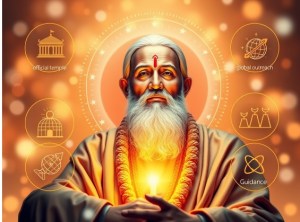
Categorized map of the top Shirdi Sai Baba related websites. You can easily navigate them depending on your purpose.
🏛 Official Temple & Trust
sai.org.in The official temple site offers ‘Live darshan, Book accommodation, donation services, offering Sai Satcharitra in PDF in many languages, e-library, and authentic updates.
🌍 Global Outreach & Philosophy
shirdisaibaba.international Dedicated to opening the heart of Sai Baba’s teachings to Western and global communities, fostering spiritual connections that resonate across cultures and ages.
saibaba.org One of the oldest online resources and newsletters for worldwide devotees.
🙏 Devotee Experiences & Miracles
mahaparayan.com This site reinforces faith through shared experiences, provides global community connection and also offers inspiration during festivals and personal challenges.
saiyugnetwork.com Community-driven site sharing miracles, prayers, and devotees’ experiences to strengthen faith.
🕉 Guidance & Resources
shirdi-sai-baba.com Interactive Q&A, teachings, and spiritual guidance for seekers looking for answers through Baba’s wisdom.
Welcome.
We kindly request information regarding authentic online resources that pertain to Sai Baba, Sai Temple and community of Sai devotees.
I declare that the following information is shared based on my personal experience; and genuine, helpful to Shirdi Sai Baba Devotees, globally.
A distinguished scholar who authored the first book-length academic study of Shirdi Sai Baba, titled “The Life and Teachings of Sai Baba of Shirdi” (1993). His work emphasizes Sai Baba’s syncretic and tolerant nature while offering an analysis of his teachings and yogic powers.
Recognized for her work, “The Afterlife of Sai Baba: Competing Visions of a Global Saint,” she critically examines the diverse interpretations of Sai Baba and the Hinduization of his figure through textual, visual, and material culture.
Additionally, her study, “Be United, Be Virtuous,” investigates the role of Sai Baba’s teachings in fostering religious harmony and their broader cultural impact within Indian society.
Investigates the devotional spaces and transnational reach of the Sai Baba movement, exploring how Sai Baba’s presence is constructed and experienced across various geographies, including Asia and Africa, as presented in her publication, “Devotional Spaces of a Global Saint: Shirdi Sai Baba’s Presence” (2022).
Makes noteworthy contributions to the comprehension of hagiographical interpretations, particularly in his work, “From Neither/Nor to Both/And: Reconfiguring the Life of Shirdi Sai Baba in Hagiography,” which explores the dynamics of defining Sai Baba’s religious identity.
Through his publication, “Miracle Cures for a Suffering Nation: Sai Baba of Shirdi,” provides valuable insights into the social and curative dimensions of Sai Baba’s miracles, with a particular emphasis on the significance of sacred ash (Udi) and its influence on the expansion of his following.
Charles White (1972)
His article “The Sai Baba Movement: Approaches to the Study of Indian Saints” was among the first to academically frame Baba’s growing popularity as a pan-Indian phenomenon. White also coined the term “Sai Baba movement,” which later scholars like Rigopoulos and McLain expanded upon. His work emphasized Baba’s role in transcending caste and religious boundaries.
Arthur Osborne (1958)
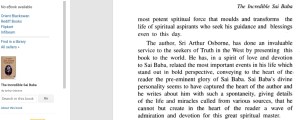
The Incredible Sai Baba is one of the earliest popular biographies written in English. Osborne, a devotee of Ramana Maharshi, approached Baba with reverence and spiritual admiration. While not academic in the modern sense, his book helped introduce Baba to Western audiences and shaped early devotional perceptions. It’s more hagiographic than critical, but still influential in its time.
A captivating exploration of the profound themes and vital truths surrounding Shirdi Sai Baba reveals a figure of immense spiritual significance.
I. The Nature and Identity of Sai Baba
Sai Baba is a divine, omniscient, and omnipresent, being whose true nature transcends conventional human and religious classifications.
Ambiguity of Origin and Faith:
Baba’s identity as Hindu or Muslim is deliberately obscured, highlighting his universality.
He celebrated both Hindu festivals (Rama-Navami, Gokul Ashtami) and allowed Muslim practices (Sandal procession, Namaj in Masjid).
His physical attributes (pierced ears like a Hindu, advocacy of circumcision, but not circumcised himself) further blurred the lines.
No one definitely knew whether He was a Hindu or a Mahomedan.
Divine Incarnation and Sadguru:
Baba is depicted as a “Wonderful Incarnation,” a “precious Jewel,” and a “precious Diamond.”
He is the “crest-jewel of the Saints, who is the home of all auspicious things, who is our Atmaram (Dear Self), and who is the able refuge of the devotees.”
He is explicitly referred to as a “Sadguru,” a true spiritual master.
“Lord (God) dwells in the Saints.
In fact they are not different from Him.
Our Sai is One of these,
Who incarnated for the welfare of the devotees,
Supreme in knowledge and surrounded with divine lustre.”
Omniscience and Omnipresence: Baba has absolute knowledge of the past, present, and future.
He knew Mr.Damu Anna’s secret thoughts about cotton speculation and his desire to offer Baba a share of profits.
He knew Mr. Cholkar’s secret vow regarding sugar and his decision to forego sugar. Baba remarked, “Though, I am here bodily, still I know what you do; beyond the saven seas. Go wherever you will, over the wide world, I am with you. My abode is in your heart and I am within you.”
He knew Mr.Hari Kanoba’s name, parentage, and other details about him, even though it was Hari’s first visit to Shirdi.
He read Somadeva Swami’s critical thoughts about the flags at the Mosque, directly addressing them.
He knew about one pleader’s slander behind His back at Bar Council, demonstrating “His omniscience and His using it for correcting people and setting them on the right path.”
He correctly predicted and averted the death of Ramachandra Patil and foresaw Tatya Patil’s passing.
He is described as “omnipresent, occupying land, air, country, world, light and heaven, and that He was not limited.”
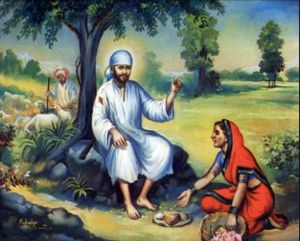
Detachment and Humility: Despite his divine powers, Baba lived a life of extreme simplicity and humility. He lived on alms, possessing nothing, and residing in a deserted Masjid. He begged for food daily, mixing all offerings together, and “His tongue knew no taste.” Dogs, cats, and crows freely ate from his earthen pot, and “Baba never drove them away.”
II. The Role and Importance of the Sadguru
The Sadguru (Guru, who realized Self) as the sole means to spiritual liberation and worldly well-being.
Bridge to Salvation:
The Sadguru is essential for crossing the “worldly ocean.”
“Where Real or Sadguru is the helmsman, he is sure to carry us safely and easily beyond the worldly ocean.”
The Vedas alone cannot achieve this; “It is only the Sad-guru, who can do so and make you, see the Lord in all creatures.”
Destroys Egoism and Sins:
The touch of the Guru’s hand is described as having “wonderful… power.”
It can destroy the “subtle-body (consisting of thoughts and desires)” and cleanse “sins of many past births.”
M. Hemadpant said, when starting writing Shri Sai SatCharitra, “Sai Baba took away my egoism and wrote Himself His stories.”
Catalyst for Transformation:
Baba’s darshan (sight) leads to profound inner change:
“by His darshana our thoughts are changed,
the force of previous actions is abated and
gradually non-attachment of dispassion towards worldly objects grows up.”
He transforms his devotees into “Himself (His nature).”
Teacher and Guide:
The Sadguru Sai teaches based on the disciple’s qualifications, without unsettling their minds.
He dispels ignorance (“Destroying ignorance is Jnana”) and
He helps the disciple realize their true Self (“You are God, you are mighty and opulent.”).
Unconditional Love and Service:
A true Sadguru expects no service or profit,
but instead wishes to serve his disciples, treating them as equals or even as Brahma.
“Baba had great love for the disciples.”
He “loved all beings equally.
He was unattached. Foes and friends, kings and paupers, were the same to Him.”
III. Key Teachings and Practices Advocated by Sai Baba
Baba’s teachings, though sometimes indirect, emphasized faith, surrender, moral conduct, and devotion.
Faith (Nishtha) and Patience (Saburi): These were presented as two coins of devotion by Baba to His Guru.
Baba said: “This is one pice -Faith. Patience or perseverance is the other pice. I waited patiently and very long on My Guru and served him. This Saburi will ferry you across the sea of this mundane existence.” (pice=1/100 INR)
Complete Surrender: “If any one prostrates before Sai and surrenders heart and soul to Him,
then unsolicited, all the chief objects of life viz. Dharma (righteousness), Artha (wealth), Kama (Desire) and Moksha (Deliverance), are easily and unsolicitedly attained.”
“The best way, therefore, to get free from the shackles of Maya is our complete and whole-hearted surrender to Baba.”
Charity and Non-Attachment to Wealth: Baba frequently extracted “Dakshina” (offerings),
not for personal gain, but “to teach the devotees the lesson of charity and to remove their attachment to money and thus to purify their minds.”
He asserted that “He had to give back hundred times more of what He received.”
He discouraged debt for spiritual purposes: “Baba never liked people to run into debt for taking His darshan, or celebrating any holiday or making any pilgrimage.”
He considered “money as a danger or bar to spiritual progress.”
Ethical Conduct and Self-Correction:
He advised against discourteously turning away those who come to you, emphasizing:
“Shri Hari (God) will be certainly pleased, if you give
water to the thirsty,
bread to the hungry,
clothes to the naked, and
your verandah of your Home to strangers for sitting and resting.”
Baba condemned slander:
“Let anybody speak hundreds of things against you,
do not resent by giving any bitter reply.
If you always tolerate such things, you will certainly be happy.”
He used the example of a pig eating filth to correct a slanderer, stating, “Your conduct is similar. You go on reviling your own brethren to your heart’s content.”
Baba taught the importance of offering everything to the Guru before enjoyment:
“before the senses, mind and intellect enjoy their objects, Sai should first be remembered, and if this be done, it is in a way an offering to Him...
all the Vrittis (thoughts) regarding Desire, Anger, Avarice etc. should first be offered and directed to the Guru.”
He guided devotees to remain calm and composed, engage in good actions, and perform duties without attachment.
Remembrance of God/Guru (Dhyana/Bhajan): Baba advised various forms of devotion, including
“remembering My name,”
“hearing His Leelas,”
“worship of His Feet,” and
studying sacred scriptures like Shri Sai SatCharitra, Bhagwat, Jnaneshwari, and Vishnu-Sahasra-Nam.
He stated, “If you always say ‘Sai, Sai’ I shall take you over the seven seas.”
IV. The Human and the Divine
Interaction with Devotees:
Baba allowed devotees to serve him in their own way,
demonstrating his “dependency on Bhaktas” (in the sense that he allowed their devotion to manifest).
He engaged in normal conversation, jokes, and sometimes strong reprimands, always with a deeper purpose.
The Guru-Disciple Relationship: The relationship is central. Disciples are encouraged to fully surrender and trust the Guru. The Guru sees beyond superficiality and acts for the disciple’s ultimate good.
Transcending Form:
While he had a physical form, Baba’s true nature was “unattached and indifferent” and “the state of Brahman.”
He demonstrated “Khandayoga, i.e., separating His limbs and joining them again,”
His visible form was merely a “mould” for the “liquid essence of Pure Self.”
V. Miraculous Powers (Leelas) and Their Purpose
Baba’s “Leelas” (divine plays or miracles) are frequently cited, serving not as ends in themselves, but as tools to deepen devotees’ faith, teach spiritual lessons, and alleviate suffering.
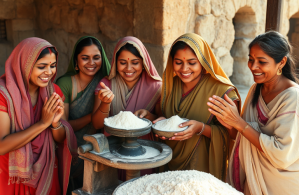
Manifestation of Divine Power:Grinding Wheat: Initially misunderstood as mundane, Baba’s grinding of wheat was a symbolic act to “destroy the cholera epidemic in Shirdi” with the flour.
Turning Water into Oil: This demonstrated his control over natural elements(fire) and taught the Banias (Oil Traders) a lesson in /
‘truthfulness.
Curing Diseases: He cured various ailments, including eye problems with Beeba (marking nuts-Carpus Ana Cardium) and diarrhea with groundnuts, emphasizing that “The true medicine… was Baba’s word.”
Saving from Calamities: He averted the snake bite for Shama and predicted/averted the death of Ramachandra Patil. He also saved Mr. Mirikar from a potential snake bite.
Fulfilling Desires (within divine plan):
The “Amra-Leela” story illustrates his power. Four mangoes, given by Sai resulted in four sons and four daughters for Damu Anna. This happened despite astrological predictions.
He facilitated the return of a stolen jewel-box and a stolen sum of money.
Disguised Blessings and Tests:Baba’s “rage” and “abuses” were often a “blessing in disguise,” as seen with Somadeva Swami, or a direct command to the poison in Shama’s case.
Drawing Devotees and Confirming Faith:
The numerous anecdotes of individuals being drawn to Shirdi, despite their initial reluctance (Hemadpant’s own journey, Kakaji Vaidya being directed by Goddess Sapta-Shringi, the “idolater” friend of Kaka Mahajani) highlight Baba’s magnetic spiritual pull.
His precise knowledge of hidden thoughts or distant events served to “create faith and devotion” in his devotees.
Guaranteeing the Welfare of His devotees:
“There will never be any dearth or scarcity, regarding Food and clothes in My devotee’s home.”
Foreign individuals seeking to understand the life, teachings, and global influence of Shirdi Sai Baba have access to a wide array of study materials.
1. Academic Works
Academic studies offer a structured, critical, and contextual understanding of Shirdi Sai Baba, often distinguishing historical facts from hagiographical embellishments.
As per (Thanks) Oxford Bibliographies:-
“Academic study of Shirdi Sai Baba has emerged within the past several decades as scholars of religion in South Asia began to engage in a wide array of studies of popular saints and gurus;
and as they observed the rapid growth in devotion to Shirdi Sai Baba in particular within the Indian subcontinent and, eventually, beyond India.
White 1972 provided the first academic analysis of Shirdi Sai Baba, noting his growing popularity in western India and attributing it to the unifying bond created between Sai Baba’s devotees, a bond that crosses distinctions of caste, class, and social status.
Antonio Rigopoulos 1993 is the first book-length academic study of Shirdi Sai Baba, which presents a biography of Sai Baba in the first half that draws upon Hindu-authored hagiographies, and presents Sai Baba’s key teachings in the second half with an emphasis on interreligious tolerance.
Warren 2004 includes a valuable translation of the diary kept by Abdul Baba, a Muslim follower of Sai Baba in Shirdi, and draws upon that to present an interpretation of Sai Baba as a Muslim fakir who traveled the Sufi path.
McLain 2016 traces Shirdi Sai Baba’s rise from small village guru to global phenomenon, using a wide range of textual, material, and visual sources to investigate the different ways that Sai Baba has been understood and the reasons behind his skyrocketing popularity among Hindus in particular.
The edited collection Srinivas, 2022 provides insight into the worship of Sai Baba beyond the village of Shirdi in the early twentieth century, with essays that examine more contemporary worship at multiple sites within India as well as in Asia and Africa.
Several articles also make valuable contributions to the study of Shirdi Sai Baba:
Hardiman 2015 analyzes the miracle healing cures associated with Sai Baba and the relationship between his spiritual power and secular science;
Rigopoulos 2012 analyzes some of Sai Baba’s miracles in connection with yoga powers;
Vicziany 2016 examines the worship of two syncretic figures, Shirdi Sai Baba and Haji Ali, in the city of Mumbai, India; and
Loar 2018 compares the hagiographies of Shirdi Sai Baba that were written by two of his Hindu followers, Dabholkar and Narasimhaswami.”- Thanks Oxford for your article at www.oxfordbibliogrsphies.com.
Cambridge University
Cambridge University have explored aspects of Sai Baba’s life and the movement he inspired.
1. Academic Research and Publications: * Cambridge Core: Cambridge University Press has published academic works that discuss Shirdi Sai Baba and the broader Sai Baba movement. * Smriti Srinivas’s article, “Sai Baba: The Double Utilization of Written and Oral Traditions in a Modern South Asian Religious Movement,” published in Diogenes, examines the origins of the Sai Baba movement rooted in Shirdi Sai Baba. * Another article in Comparative Studies in Society and History titled “Miracle Cures for a Suffering Nation: Sai Baba of Shirdi” explores his popularity and perceived ability to provide miraculous cures. * The “Cambridge Companion to New Religious Movements” features a chapter by Tulasi Srinivas on the Sathya Sai Baba movement, which originated from Shirdi Sai Baba’s legacy. * Cambridge University Library: Kevin R.D. Shepherd, a British author, conducted private research at Cambridge University Library for twelve years, focusing on the history of religions and philosophy. He has authored books such as “Sai Baba of Shirdi: A Biographical Investigation” and “Investigating the Sai Baba Movement.” 2. Perspectives on Shirdi Sai Baba: * Syncretism: Some scholars highlight Shirdi Sai Baba’s image as a unifying figure between Hindu and Muslim traditions, emphasizing the composite nature of Indian culture in the growth of his devotion. * Miracles and Faith: His devotees often attribute miraculous abilities to him, which contributed to his widespread popularity. Academic analysis has also focused on these aspects. * Historical Context: Research connects the rise of Shirdi Sai Baba’s popularity with the Indian nationalist movement and the search for unifying symbols. 3. Mentions in Other Contexts: * Sathya Sai Baba: Sathya Sai Baba of Puttaparthi, and his movement have also been subjects of academic study, including publications by Cambridge University Press. * Educational Initiatives: Cambridge University Press has collaborated with Indian educational institutions for programs like the “SAI-Cambridge Reading Quest,” although this is related to language skills development and not directly to the study of Sai Baba. While Cambridge University’s press has published scholarly articles and books that analyze his life, teachings, and the socio-religious movements associated with him. Individual researchers connected to the university have also contributed significantly to this field of study.
Teachings and Philosophy
Social and Cultural Significance
Karline McLain’s Be United, Be Virtuous: This work investigates the role of Sai Baba’s teachings in promoting religious harmony and examines the movement’s cultural impact within Indian society.
Edited Volumes (e.g., Devotional Spaces of a Global Saint): These collections often feature contributions that analyze the institutional development of the Sai Baba movement and its place in the lives of modern devotees.
Miracles and Belief Systems
Analytical Perspectives on Miracles: Academic literature explores the narrative function of miracles in constructing Sai Baba’s authority, examining their sociological and psychological dimensions and drawing comparisons with miracle traditions in other religions.
Global Spread and Contemporary Practices
Studies on Globalization: Scholars analyze how Sai Baba’s devotion has transcended geographic boundaries, highlighting the establishment of temples and devotional practices in international contexts.
Media and Technology: Contemporary research considers how digital media platforms are employed to maintain global devotional networks and disseminate teachings.
Methodological Approaches
Engagement with academic resources introduces foreign learners to various methodological frameworks—historical criticism, sociology of religion, and anthropology—that enable a comprehensive and critical study of religious figures and movements.
2. Devotional and Informational Websites
In addition to academic works, several online platforms provide accessible resources tailored to the needs of international devotees.
Curated Publications: These platforms offer English-language articles, news updates, and publications, suited for global audiences.
Translations of Key Texts: They often provide details of translated versions of significant devotional texts and biographies.
Community Engagement: Discussion forums and community pages offer a space for interpretation, Lists of Sai Baba temples in countries like the USA, UK, Canada, Singapure, Dubai…and sharing of experiences, reflecting the living tradition of Sai Baba devotion.
Authoritative Information: Offers official narratives, details of temple rituals, and historical overviews from the perspective of the temple trust.
Online Resources: Includes downloadable material, videos, and frequently asked questions, all primarily in English, facilitating introductory-level engagement.
3. Key Considerations for Foreigners
Language Accessibility
The wide availability of English-language materials—both academic and devotional—greatly enhances accessibility for non-Indian audiences.
Multiple Perspectives
A balanced approach that includes both academic and devotional materials provides a more nuanced and comprehensive understanding of Shirdi Sai Baba.
Cultural Context
Academic studies help situate Sai Baba within the broader Indian religious and cultural milieu, an essential context for foreigners unfamiliar with the subcontinent’s spiritual traditions.
Critical Engagement
By engaging with academic sources, foreigners are encouraged to critically examine the narratives surrounding Sai Baba, differentiating between historically substantiated facts and devotional interpretations.
Despite its filth, mucus, and susceptibility to decay, disease, and death, the human body’s special value lies in its capacity to acquire knowledge and attain God-vision, which is impossible in any other birth.
Love is better than intelligence-
The pure love of Shirdi women, despite their ignorance, inspired them to compose poems, implying that love is more inspiring than intelligence.
Giving food is better than other charities-
While other charities like giving away wealth, property, and clothes require some discrimination, offering food requires no such consideration.
Also, the merit of feeding lame, crippled, blind, and diseased paupers is much greater than that of feeding able-bodied persons and relations.
Butter-milk (Leelas) is better than Milk (Darshan)-
If one desires to see Sai Baba’s but they did not get any opportunity of taking His darshan, their quest for milk (darshan) will be, to a great extent, satisfied by the butter-milk (Leelas).
Remembering and chanting Hari’s and Guru’s name confers salvation is better than getting the powerful Bhakti of the Nathas-
one Madhavarao did not like Kakasaheb’s pessimistic attitude of how to get the powerful Bhakti of the Nathas, as he said, ‘has not Baba told us authoritatively that remembering and chanting Hari’s and Guru’s name confers salvation? Then where is the cause for fear and anxiety?’
The observance of the vow of silence is the best way of praising the Sad-guru-
In reality, the observance of the vow of silence is the best way of praising the Sad-guru.
Having recourse to Sai Baba’s Feet and surrendering to Him is the best luck-
The best luck is to get an opportunity to have recourse to Sai Baba’s Feet and surrender to Him, than any other
Catechectics is an Art of teaching by Question and answer (as a Part of ‘How emotional investments shape our behaviors and thoughts’). Baba is in very advanced stage in this science. This is an example:-
It was in the year 1916, a Chennai Bhajani Mela (Party of the Ramadasi Panth) started on a Pilgrimage to the holy city of Kasi/Banaras. The Party consisted of a man, his wife, daughter and sister-in-law; and they had come to Shirdi to get Gift of money from Baba. There the husband got a wonderful vision in his dream one night as follows :-
He was in a big city, the police there had arrested him, tied his hands with a rope, and put him up in lock-up. As the police were tightening the grip, he saw Sai Baba standing quiet outside, near the cage. On seeing Baba so near, he said in a plaintive tone – “Hearing Your fame, I came to Your Feet, and why should a calamity befall me, when You are standing here in person?”
Baba said – “You must suffer the consequences of your action”
He said – “I have not done anything in this life, which would bring such a misfortune on me.”
Baba said – “If not in this life, you must have committed some sin in your past life.”
He replied, “I do not know anything of my past life, but assuming that I did commit some sin; then why should it not be burnt and destroyed in Your presence, as dry grass before fire? “.
Baba – “Have you got such faith?”
He – “Yes.”
Baba then asked him to close his eyes.
No sooner did he shut them, than he heard a thumping sound of something falling down, opening his eyes,
he saw that he was free and the police had fallen down, bleeding.
Being much frightened, he began to look at Baba who said – “Now you are well caught, officers will now come and arrest you.”
Then he begged – “There is no other saviour except You, save me anyhow.”
Then Baba again asked him to close his eyes. He did so and when he opened them,
he saw that he was free, out of the cage and
that Baba was by his side.
He then fell at Baba’s Feet.
Baba then asked him –
“Is there any difference between this namaskar (Hello) and your previous ones? Think well and reply.”
He said “There is a lot of difference; my former namaskaras were offered with the object of getting money from You, but the present namaskar is one offered to You as God”
Then a desire arose in his mind, to get the darshan of his Guru Ramdas;
when Baba asked him to turn back and see. And when he turned,
lo, Ramadas was in front of him.
No sooner did, he begin to fall at His Feet, Ramadas vanished.
Then he inquisitively asked Baba,”You look old. Do You know Your age?”. Baba – “What! Do you say I am old! just run a race with Me and see.” Saying this, Baba began to run and he too followed. Baba disappeared in the dust raised by His foot-steps while running, and the man was awakened.
After awakening, he began to think seriously about the dream-vision. His mental attitude was completely changed and he realised the greatness of Baba. After this, his grabbing and doubting tendencies disappeared and true devotion to Baba’s Feet sprang in his mind.
The vision was a mere dream, but the questions and answers therein were most significant and interesting.
Next morning, when all the persons assembled in the Masjid for the Arati, Baba gave him as prasad two rupees’ worth sweetmeats and also two rupees from His pocket and blessed him.
Baba made him stay there for a few more days and gave him His blessing, saying, “Allah (God) will give you plenty and He will do you all good”. He did not get more money there, but he got far better things viz. Baba’s blessing, which stood him in good stead all along.
The party got plenty of money afterwards; and their pilgrimage was successful: as they had not to suffer any trouble or inconvenience during their journey.
They all returned home safe and sound, thinking of Baba’s words and blessings and the Anand(Bliss) they experienced by His grace.
Aerobiology – The study of the dispersion of airborne biological materials, as pollen, spores, microorganisms, or viruses in atmosphere
Let us see How Sai Baba dispersed the airborne viruses in Shirdi, here from Hemadpant Book.
“It was sometime after 1910 A.D. that I went, one fine morning, to the Masjid in Shirdi for getting a darshan of Sai Baba. I was wonder-struck to see the following phenomenon. After washing His mouth and face, Sai Baba began to make preparations for grinding wheat. He spread a sack on the floor; and thereon set a hand-mill.
He took some quantity of wheat in a winnowing fan. Then he drew up the sleeves of His Kafni (robe) and took hold of the peg of the hand-mill. He started grinding the wheat. He put a few handfuls of wheat in the upper opening of the mill and rotated it.
I thought ‘what business Baba had with the grinding of wheat? He possessed nothing and stored nothing. He lived on alms!’ Some people who had come there thought likewise, but none had the courage to ask baba what He was doing. Immediately, this news of Baba’s grinding wheat spread into the village. At once, men and women ran to the Masjid and flocked there to see Baba’s act.
Four bold women, from the crowd, forced their way up and pushing Baba aside, took forcibly the peg or handle into their hands, and, singing Baba’s Leelas, started grinding. At first Baba was enraged, but on seeing the women’s love and devotion, He was much pleased and began to smile. While they were grinding, they began to think. Baba had no house, no property, no children, none to look after. He lived on alms. He did not require any wheat-flour for making bread or roti. What will He do with this big quantity of flour? Perhaps as Baba is very kind, He will distribute the flour amongst us. Thinking in this way while singing, they finished the grinding. After putting the hand-mill aside, they divided the flour into four portions. They began to remove them one per head.
Baba, Who was calm and quiet up till now, saying, “Ladies, Now please do this. Take the flour and throw it on the village border limits.” On hearing this, the women felt abashed. Whispering amongst them, they went away to the outskirts of the village. They spread the flour as directed by Baba. I asked the Shirdi people – “What was this that Baba did?” They replied that as the Cholera Epidemic was spreading in the village. This was Baba’s remedy against the same. It was not wheat that was ground. The Cholera itself was ground to pieces and pushed out of the village. From this time onward, the Cholera Epidemic subsided and the people of the village were happy.”- Hemadpant in Shri Sai Sat Charitra.
Para Number in the Book-BCS & Baba’s Sayings on His Mission are
Saints exist to give devotees’ temporal and spiritual benefits. Dr. Pillai need not have ten more births for this. All the pain can be endured in ten days.
I have come to give such good things to the devotees.
My business is to give blessings.
A devotee objected to people going to Baba for temporal benefit e.g., employment, money, children, cure of disease. Baba: ‘Do not do that, My men first come to me on account of that only. They get their heart’s desire fulfilled and comfortably placed in life; they then follow me and progress further. I bring my men to me from long distances under many pleas. I seek them and bring them to me. They do not come (of their own accord). I bring them to me. However distance – even thousands of miles away- my people might be, I draw them to myself, just as we pull birds to us with a string tied to their foot.
This is a Brahmin, a white Brahmin, a pure Brahmin. This Brahmin will lead lakhs of people to the Subhra Marga and take them to the Goal-right up to the end. This is a Brahmin’s masjid.
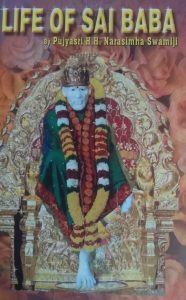
The author of this Book is Pujya Sri H.H. Nara Simha Swamiji- Founder & First President of All India Sai Samaj, Chennai , India.
A) Shirdi Sai Baba:–
Baba’s training, teachings and achievements were of widely different sorts. They were suited to the conditions of each person who approached him. They are also suited to the conditions of those who approach him now.
Baba is still a Guru, a Divine Personality. He is not a mere abstraction. He can be seized by those who are in dead earnest.
Unfortunately for mankind, very few are so earnest. Most stop with raising preliminary questions, as to the impossibility of such an experience or its undesirability and the various objections, from the standpoint of the learning that they have already acquired.
If the highest is not possible at the present moment, Baba suitably develops them. This development occurs either in this life or in the life beyond. Baba has repeatedly undertaken to guide his devotees. He promises to guide them life after life, and to be born with them for that purpose.
–By H.H. Narasimha Swamiji, Author of this Book, in his Preface
B) Parts of this Book-LoSB on Sai Baba.
The object of this book, is to help people to realise more and more the great work, that is being done by Shirdi Sai Baba and his essential greatness. This Book consists of four Volumes /Parts.
Part I- History, Personality, Nature, Functions of Sai Baba
The early history and accounts of Baba and the materials are necessary to understand Baba as a Samartha Sadguru. He will help one to attain the highest in life. At the same time, He enables one to get the other incidental benefits of contact with such a saint.
Part II -Sai’s Apostles and Mission
This second part mainly consist of Baba’s dealings with various prominent persons. It shows how they were drawn to him and influenced by him. It also illustrates what progress they made. Additionally, it details how they were helped to make it by reason of their contact with him.
Most of the Bhaktas were drawn for specific temporal gains, but they stuck on and became very good Adherents of Baba.
Part III. -Baba’s Lovers
Baba’s prominent devotees, not in Part II, must come into here. They like something unintelligible, “just like Love at first sight of a pure Girl with a pure bachelor”.
Part IV- Life and Teachings of Sai Baba
Which as the residuals and final part must include general matter not covered by the previous parts. The spiritual and mystical personalities, such as Saints like Sai, embody an adventurous and worthy life. They think intellectually in the pursuit of their lives.
The life of Sai Baba especially gives a very tough treat for the spiritual seekers. Only a few writings present so vivid a picture of the life and teachings of Sai Baba. They do so in such a descriptive form. For this reason, this volume stands out.
C) Baba provided Ankita children for this Book Project
Sri Krishna says, ‘Those who rescue my entirely devoted bhakta from his troubles, I shall rescue and help them. I will save them from all troubles and calamities. A boat rescues one in the ocean in the same way’. Baba somehow gives the feeling to the author’s helpers, that they are being looked after by him.
Baba provided his Ankita child with a stenographer who, out of modesty, wishes to conceal his light under a nom-de-plume R.R. Without the help of a stenographer, turning out any work would be impossible. This applies to work for the book, for the Sai Sudha, or for the numerous pamphlets constantly requisitioned by others from this author.
Since October 1953, the author’s health has been extremely unreliable. The work would have been impossible without the due provision of medical help. Here again Baba’s help to his Ankita child is remarkable. Baba designated a doctor in a very good position. The doctor had excellent knowledge. Baba made him repeatedly attend without receiving any recompense at all.
Baba’s grace alone made the work see the light of day. It also aided in getting the means for publication. The royal present of Rs.5,000 by His Highness The Maharaja of Mysore, enabled the All India Sai Samaj to purchase a Press and Types.
There may be numerous others (Sri Dewan Bahadur R.V. Krishna Ayyar and Miss Indira, Professor of English, etc) who have helped this author in the course of getting up this book.
Stage after stage, idea after idea, and reference after reference, the remarkable help that was suddenly forthcoming was the clearest evidence to the Author that, Baba is giving unstinted support for this publication. Fact it is not mere modesty, but love of truth that makes the author say that, “the real producer of this book is Baba himself“.
– By B.V. NARASIMHA SWAMI, Author in Preface to Part I in 1955
D) After studying “Life of Sai Baba”
A properly written life of Sai (like all saintly biography, cf. “Jo Sant, Toch Dev” i.e. Saint is himself God) would be a scripture in itself.
One should rise from that study with the feeling that they have been through scripture. They should mentally keep in touch with God. This allows them to derive all benefit necessarily flowing from such contact.
The benefits are temporal, intellectual, moral, spiritual, etc. There is no limit to the benefit one can derive from such contact.
A saint’s life is like the milk of the ocean. From it, one might extract, a few interesting bits of saintly biography. It also offers a collection of apothegms, counsels, reflections and other miscellaneous items. But the main interest is still the milk of ocean. It will yield an infinite and inexhaustible supply of divine nectar.
The essentials of the Bhagavad Gita, for instance, have always been regarded as a valuable religious mine. They have been found to embody what is contained in Sri Sai’s life. Sri Krishna and Jesus Christ are better understood, after studying Sai Baba’s life than without such study.
PS: The collection of data was made for this book project, by the great author, after 36 years of Sai Baba’s Mahasamadhi. (LoSB-Ch 1)
“It is our earnest desire and intention that, the book of “Life of Sai Baba” written by our revered Founder and First President H.H. Narasimha Swamiji, to reach the hands of numerous Sai Devotees, who are earnestly interested in attaining “Sai Bliss”. –By the Publisher, Management of All India Sai Samaj, Chennai-600004, India
“Presenting the Great Master Sri Sai Baba to the world through his intensely dedicated service, Sri Narasimha Swamiji has made himself into a living golden link between the present generation and Sri Sai Baba. Yes, Sri Swamiji is still active from His tomb. He guides millions of devotees to the feet of his Master.
This book will surely fulfill its glorious task of helping, guiding and transforming countless lives on their onward progress towards Divine Perfection. All glory to Sri B.V. Narasimha Swamiji Maharaj! Glory, Supreme glory to Samartha Sadguru Sai Baba!” – In Foreword to Part 1 by -By His Holiness Sri Swami Sivananda of Divine Life Society, Rishikesh, India.
“During the last 20 years, thanks to Swamiji’s energetic propaganda and publicity, Shri Sai Baba has attracted devotees from far and near, as also from all sects, communities and religions. They come from all sections of the society and, in particular, from its intelligentsia. In the case of the latter, one has to carry them across the fields of doubt and scepticism before they reach the other shore of spiritual enlightenment; and are safely and for ever established on the bedrock of faith in and devotion to the Divinity that Shri Sai Baba WAS and IS”. -In Foreword to Part II by Sri B N Datar, then Home Minister, Government of India
Extract from Pujyasri H.H. Nara Simha Swamiji’s ‘Life of Sai Baba’ book-LoSB
Correct knowledge of facts connected with the lives of saints is good for the individual who knows them. It is also beneficial to society. In the long run, it promotes social unity. It encourages ethical, spiritual, and religious study and endeavor. Lives of saints provide more than information, for the reader’s brain. They offer sustenance…
Earnest readers, who are anxious to study the history of Sai Baba (who realised in himself the perfection of Godhead by attaining Purnalaya) -concentrating his mind always on God with intense love from his earliest period of life; and -thereby attained Aikya (merge with God), -so that he could say Mainm Allahum, that is Aham…
“There has not been a good biography containing a fair, full and faithful description of Sai baba’s life. Other small sketches or introduction to Baba’s life have been published in English and other languages, but these also are too tiny to deserve the name of a biography, sketches of a few early incidents in Baba’s…
“5 minutes Nov 7, 2024 4:45 PM The author of this Book is Pujya Sri H.H. Nara Simha Swamiji- Founder & First President of All India Sai Samaj, Chennai , India. A) Shirdi Sai Baba:– Baba’s training, teachings and achievements were of widely different sorts. They were suited to the conditions of each person who approached…
I request the readers to leave out the various hindrances viz. indolence, sleep, wandering of mind, attachments to senses, etc. and turn their whole and undivided attention to these stories of Sai Baba. Let their love be natural, let them know the secret of devotion; let them not exhaust themselves by other Sadhanas, let them…









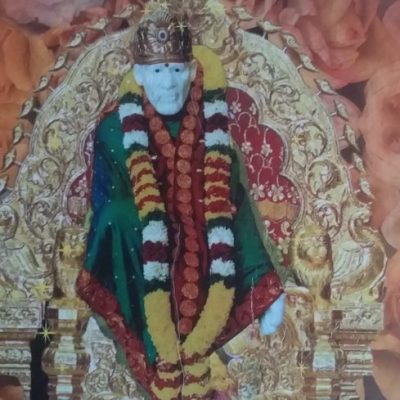
 Welcome to https://ShirdiSaiBaba.InterNational