"I draw to Me, My man from far off or even across the seven Seas to Shirdi, like a sparrow with a string fastened to its feet"-Shirdi Sai Baba, Indian Spiritual Guru-God
In the cosmic dance of cause and effect, Where actions and consequences intersect, Karma weaves its intricate thread, A tapestry of life, stitch by stitch, it’s spread.
Not a punishment, nor a reward, But a natural law, universally adored, It teaches us to act with care, For every deed reflects, in life’s fair mirror, bare.
So let us sow seeds of kindness and love, And watch as they blossom from below and above, For in the end, it’s not about fate, But the choices we make that create our state.
Even liberation (moksha) can be won through serving and promoting the progress of society.
Through the sense of unity, the willingness to sacrifice and the softness of compassion, all objects can be gained.
So, the Sathya Sai Organisation must move forward with hearty enthusiasm in the field of service to society.
The first lesson in seva must be learnt in the family circle. Father, Mother, brothers, sisters –
in this limited well-knit group, one must engage in loving service and prepare for wider seva that awaits outside home.
The character of each individual member determines the peace and prosperity of the family;
the Character of each family is the basic factor that decides the happiness and joy of a village or community.
And, the nation’s progress is based on the strength and happiness of its communities.
So, for the welfare of the country and of the entire World, the spirit of service, vital enthusiasm, constructive imagination, pure motivation, and unselfish alertness are urgently needed.
– Puttaparti Satya Sai Baba in the Divine Discourse on Nov 19, 1981
No one, whether he be father, mother, brother or any other relation, comes to our aid in attaining the goal of life (self-realization).
We have to chalk out and traverse the path of self-realization ourselves.
1. We have to discriminate between the Unreal and the Real, renounce the things and enjoyments of this world and the next, control our senses and mind, and aspire for liberation only.
2. Instead of depending upon others, we should have full faith in ourselves.
3. When we begin to practice discrimination, we come to know, that the world is transient and unreal and
4. our passion for worldly things becomes less and less, and ultimately we get dispassion or non-attachment for them.
5. Then we know that the Brahma which is no other than our Guru is the sole reality and
6. as It transcends and besets the seeming universe, we begin to worship It in all creatures. This is the unitive Bhajan or worship.
7. When we thus worship the Brahma or Guru whole-heartedly, we become one with Him and attain self-realization.
8. In short, a) always chanting the name of the Guru, and b) meditating on Him enables us to c) see Him in all beings, and 4) confers eternal bliss on us.
Believe that the Lord’s Name is the boat, which will take you across the sea of worldly life. The Name is more efficacious than the contemplation of the Form.
Draupadi did not send a chariot to bring Krishna to her rescue; she uttered the Name in agony and Krishna responded and saved her from imminent dishonour.
In the Treta yuga, in Ramayana, Nala and his monkeys were building a bridge over the sea to Lanka;
the boulders on which they inscribed the sacred name Rama, floated on the waters, but they found that the boulders floated away due to wind and waves. They did not form a continuous bridge for the army to pass over. Some ingenious person gave a suggestion to write ‘RA’ on one boulder and ‘MA’ on another and they found that the two stuck hard together.
The name will serve as a float for you too; it will keep you attached to God and bring on you His Grace!
– Puttaparti Satya Sai Baba in Divine Discourse on Oct 24, 1965
When you repeat the Name, all the sweetness of the Form and its associated glory must come to memory and, just as your mouth waters when you remember some sweet dish you relish, your mind must ‘water’ when you contemplate the Name.
Choose the Name that captivates your heart.
Why run after riches when all the pleasure and satisfaction that riches can offer – and even a hundred-fold more – can be got by dwelling on the Name?
The Lord has said that where His Name is sung, “There I am present”. He establishes Himself there! He will not move from that place.
So, the tongue is enough to win Him, when the tongue that speaks the language of the pure mind.
The Lord is a Wish-fulfilling Tree (Kalpavriksha). You must approach Him and develop attachment to Him.
You must win His grace and be ever near Him, keeping back all the forces that draw you away from Him.
– Divine Discourse by Puttaparti Sai on Apr 29, 1963.
There is a soiled and tattered currency note with you. No one is prepared to accept it from you.
But when it is tendered to the Reserve Bank, which issued it, it is bound to accept it and issue a new note in return.
Likewise, who is competent to accept one’s bad thoughts, perverse feelings and evil intentions? Only the Almighty can accept them.
God is the Spiritual Reserve Bank that will accept the soiled notes of your mind and give in return good currency (in the form of good thoughts).
Hence, offerings should be made only to those who are competent to receive them. All bad thoughts and feelings should be offered to God so that we may receive, by His grace, good thoughts and feelings in return.
Spirituality, thus, means transforming one’s life into an ideal one by offering one’s bad qualities to the Lord and receiving from Him good qualities in return.
– Divine Discourse by Puttaparti Satya Sai Baba, May 24, 1992
Baba has advised us to remember him before the senses, mind, and intellect enjoy their objects. Doing this is, in a way, an offering to Him.
The senses etc. can never remain without their objects, but if those objects are first offered to the Guru, the attachment for them will naturally vanish.
In this way, all the Vrittis (thoughts) regarding Desire, Anger, Avarice etc. should first be offered and directed to the Guru. If you follow this practice, the Lord will help you in eradicating all the Vrittis.
When, before enjoying the objects, you think that Baba is close by, a question will arise at once. Is the object fit to be enjoyed or not? Then the object that is not fit to be enjoyed will be shunned. As a result, our vicious habits or vices will disappear. Our character will improve.
Then, love for the Guru will grow and pure knowledge will sprout up. When this knowledge grows, the bondage of body – consciousness (ie we are the body) will snap and our intellect will be merged in spirit-consciousness (ie. we are the spirit). Then we shall get Bliss and contentment.
There is no difference between Guru and God. He who sees any difference in them, sees God nowhere. So leaving aside all ideas of difference, we should regard Guru and God as one,
and if we serve our Guru as stated above, Lord (God) will be certainly pleased and purifying our minds
He will give us self- realisation. To put the matter in a nut-shell, we should not enjoy any object with our senses etc. without first remembering our Guru.
Spirituality means destroying the animal nature in man and making him realise his divine consciousness.
Spirituality implies that one should not develop egoistic pride on account of the divine potencies in man but utilise them for achieving spiritual strength.
Spirituality calls for recognition of the manifold capacities manifesting in man as emanating from the Spirit and not from the mind. It means developing faith that all powers come from the Divine.
Spirituality does not mean proceeding from the human to the Divine. It seeks to unfold the divinity in man.
Spirituality does not mean passing from the mundane to the Divine. Spirituality means making man manifest the divinity in him.
People today have the wrong impression that spirituality is concerned with the journey from the mundane world to the higher realm and vice versa. Because of this mistaken view, students today are confused about spirituality and it appears meaningless to them.
Spirituality is the realisation of the role of the Spirit in daily life. It is a way of life.
– Divine Discourse by Puttaparti Satya Sai Baba, May 24, 1992
Earnest readers, who are anxious to study the history of Sai Baba (who realised in himself the perfection of Godhead by attaining Purnalaya)
–concentrating his mind always on God with intense love from his earliest period of life; and
–thereby attained Aikya (merge with God),
–so that he could say Mainm Allahum, that is Aham Brahmasm and
–could exhibit all the powers of God
Sai identified himself with Krishna and with every other form of God. As the object of everyone should be to please God in Sai form or in any other form, one may note how in point of historical fact, from this biography (LoSB), numbers of people were drawn to Sai Baba and achieved the love of Sai Baba, and thereby achieved every object of human existence.
The devout reader would like to have a further sketch of the nature and the works of devotion at this stage . So, we may refer to Sri Adi Sankaracharaya who, describes what Bhakti is as the
i) seeds of the or plant are re-grasped by the parent tree,
ii) parent magnetic block attracts needles one behind another,
iii) Chaste wife clasps her husband,
iv) tendril (creeper) clings to the adjoining tree and mounts upward and upward,
v) waters of the rivers are for ever drawn downward and downward, till they reach the ocean and get inextricably and indistinguishably lost in it,
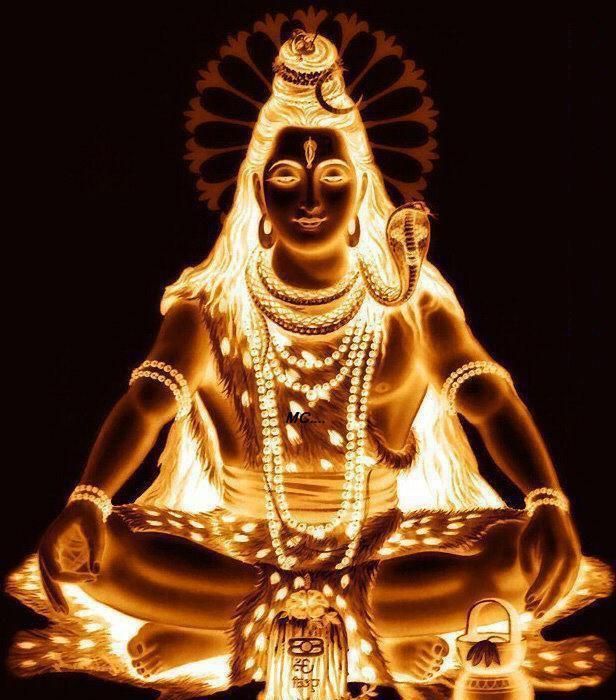
similarly the heart of the devotee longs after the Divine feet of Pasupati, God Siva to be ever there. This is called Bhakti.
Each illustration takes bhakti one stage further up.
I. Ankolam– even vegetables is to get back to the original source and get reabsorbed in it. Similarly, we are parts/ sparks from God, must reach the original source of all creation, namely, God.
II. Magnetic stone -a string of even seven needles might be found attached one behind another to a big magnet. Similarly every growing bhakta tends to attract others and impart his devotion to them; and through them to others ad infinitum.
III. Chaste wife longs for her husband, and even his slightest absence for even a short period makes her full of unrest, (EVEN now, wife calling husband frequently and asking Where are you? When are you coming? etc.). Similarly The Bhagavata treats all devotees as females, Gopis, and the only male in the Universe is Krishna.
iv) The creeper– go further and further upward and upward till the top of the tree is reached, to get more light from the Sun, more of air and more of freedom and safety from animals. Similarly, devotee tends to mount up higher and higher in his spiritual levels to achieve nobler and nobler objects; and to transform himself into more and more of the like-ness of God, till he reaches full Sarupyam, Sameepyam and Sayujyam (Bliss)
v) Rivers – The waters of the rivers were originally part of the ocean, and after being held up in the form of water vapour, cloud and rain, they take the shape of a river. Similarly Purnalaya is the end of the devotion and that is obtained by the Jivas surrendering themselves, that is, making Atma-nivedana, which is the ninth mode mentioned in the Navavidha bhakti.
That is both devotion and also absorption. After that there is nothing further to reach. Thus the various stages, attitudes, and relations of a bhakta can be very well dwelt upon and learnt by studying the above illustrations and applying them to oneself.
Loving bhaktas/ Important Devotees:
The Names of a number of loving bhaktas; so that they may ever remain in one’s heart and show how bhakti achieves its ends. The end of bhakti is not achieved by the offer of money to God or by mere learning or by age or beauty of a person, God does not want any of these. “God wants only your heart, that is, your self”,
As ,
1. For the hunter Kannappa, what Achara or religious course of conduct had he?
2. For Dhruva, what was his age? (At the age of 5, God appeared before him. Also His name is given to Pole Star)
3. For the elephant Gajendra, what education or degrees and titles had he?
4. Had Vidura (favourite of Krishna) any qualification in respect of caste? He was the son of a slave dancing girl.
5. For the king of Yadavas called Ugrasena,who was favoured by Krishna what manliness had he? He was a great coward
6. For Kubja also was favoured by Krishna, had she any great beauty? She was deformed in person.
9. For Sudhama, known as Kuchela ( favoured by Krishna), had he any wealth?
God is pleased by bhakti/Devotion alone and bhakti can capture Him. This contains the essence of the doctrine of bhakti or devotion










 Welcome to https://ShirdiSaiBaba.InterNational