

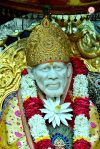





- Shirdi Sai Baba: From a Secluded Fakir to a Global Spiritual Phenomenon
- The Global Proliferation of the Shirdi Sai Baba Movement
Created with the help of AI. Any correction and updates are welcomed here.
Shirdi Sai Baba: From a Secluded Fakir to a Global Spiritual Phenomenon
The story of Shirdi Sai Baba, the revered Indian spiritual master, is a compelling narrative of humble beginnings that blossomed into a worldwide movement.
His life in the small village of Shirdi, marked by profound simplicity and miraculous happenings, laid the foundation for a spiritual legacy that continues to draw millions of devotees from across the globe.
The growth of the Shirdi Sai Baba movement can be understood through the intertwined histories of the devotee journeys to his abode, the development of the temple complex in Shirdi, and the eventual global dissemination of his teachings.
The Genesis of Devotee Journeys to Shirdi
In the mid-19th century, a young, unnamed fakir arrived in the village of Shirdi in Maharashtra, India. His enigmatic presence under a neem tree, where he sat in deep meditation, initially drew curiosity and some apprehension from the villagers. However, his profound spiritual aura and compassionate nature soon began to attract a small group of followers.
Among the earliest devotees were Mahalsapati, the priest of the local Khandoba temple, and Bayajabai Kote Patil. Mahalsapati was the first to address the fakir as “Sai,” meaning “Mother,” a name that would become eternally associated with him. Bayajabai, moved by compassion for the young ascetic, regularly provided him with food.
As tales of Sai Baba’s wisdom and miraculous abilities circulated, the number of visitors to Shirdi steadily grew. People from surrounding villages and towns undertook arduous journeys to seek his blessings, healing, and spiritual guidance.
These early pilgrims were witnesses to Baba’s unique way of life in the dilapidated Dwarkamai mosque, where he maintained a sacred fire (dhuni) from which he would give sacred ash (udi) to his devotees as a symbol of his blessings and a medium of healing.
The journeys were not just physical travels but transformative spiritual quests for those who came in search of solace and answers.
The Evolution of the Shirdi Temple Complex
The physical landscape of Shirdi has transformed in tandem with the growing number of devotees. In the beginning, the primary sites of spiritual significance were the neem tree under which Baba first appeared, known as Gurusthan, and the Dwarkamai mosque, which served as his unconventional abode.
A pivotal development in the history of the Shirdi temple was the construction of the Samadhi Mandir. Originally intended as a wada (a large private house) by a wealthy devotee from Nagpur named Gopalrao Booty, the purpose of the structure was altered by Baba himself.
Shortly before his Mahasamadhi (conscious departure from the body) in 1918, Baba expressed his wish to be interred there. Following his passing, the wada was transformed into the Samadhi Mandir, housing his sacred tomb.
Over the decades, as the influx of pilgrims swelled, the temple complex expanded significantly. Various other structures were built, modified including the Chavadi, a small building where Baba used to sleep on alternate nights, and the Lendi Baug, a garden that Baba himself lovingly tended.
Today, the Shri Saibaba Sansthan Trust manages the sprawling temple complex, which caters to the needs of millions of pilgrims annually, providing accommodation, food, and facilities for worship. The temple’s development from a humble mosque and a tree to a magnificent complex is a testament to the enduring faith of Sai Baba’s followers.
The Global Proliferation of the Shirdi Sai Baba Movement
For several decades after Sai Baba’s Mahasamadhi, his following was largely concentrated in Maharashtra and other parts of India. The dissemination of his life and teachings was primarily through oral traditions and the writings of his direct disciples.
The 20th century witnessed a significant surge in the movement’s global reach. The publication of the “Shri Sai Satcharita,” a biography and compilation of Baba’s teachings by Govind Raghunath Dabholkar (Hemadpant), played a crucial role in introducing Sai Baba to a wider audience. The book, translated into numerous languages, became a cornerstone for devotees worldwide.
The establishment of Sai Baba temples and centers across India and in various parts of the world, including the United States, the United Kingdom, Australia, and countries in Africa and Asia, marked a new phase in the globalization of the movement.
These centers serve as hubs for the growing diaspora of devotees, facilitating collective worship, community service, and the propagation of Sai Baba’s universal message of love, tolerance, and “Sabka Malik Ek” (One God governs all). The movement’s inclusive nature, which transcends religious and cultural boundaries, has been a significant factor in its global appeal, attracting people from diverse faiths who find solace and inspiration in the life and teachings of the saint of Shirdi.
Here are other significant contributors to Sai Baba’s globalization across India, Asia, America, and Europe.
The Shri Saibaba Sansthan Trust, Shirdi
While primarily focused on administering the temple complex in Shirdi, the Shri Saibaba Sansthan Trust (SSST) plays a vital, albeit often indirect, role in the movement’s global growth.
- Maintaining the Authenticity: The SSST is the custodian of the rituals and traditions established during Baba’s time. The daily schedule of aartis, pujas, and festivals in Shirdi serves as the blueprint for temples worldwide, ensuring a consistent and authentic form of worship.
- Source of Inspiration and Blessings:
- For global devotees, Shirdi remains the spiritual epicenter. The SSST facilitates the pilgrimage of millions, including a vast international diaspora. Many overseas temple founders and key devotees make regular trips to Shirdi to seek blessings and inspiration for their own community activities.
- Provider of Idols and Sacred Items:
- Many newly established temples across the world seek to install idols that have been blessed in Shirdi. The SSST often assists in providing or sanctifying these murtis (idols), along with sacred items like udi (sacred ash) and copies of the Sai Satcharita, creating a direct spiritual link back to the main shrine.
When discussing the growth and consolidation of the Shirdi Sai Baba movement, especially after Baba’s Mahasamadhi, the contributions of Sri Narasimha Swamiji and Dr. Chandra Bhanu Satpathy (Guruji) are pivotal. They represent two distinct, crucial phases in the expansion of Baba’s legacy.
Here’s what to include about each of them:
Sri Narasimha Swamiji (The Apostle from Chennai)
Sri B.V. Narasimha Swamiji (1874-1956) is widely regarded as the most significant apostle of Shirdi Sai Baba in the post-Mahasamadhi era. He is single-handedly credited with taking the fame of Sai Baba from a regional phenomenon in Maharashtra to a pan-Indian spiritual movement.
Key Contributions to Include:
- Pioneering Research and Documentation: After a successful career as a lawyer and politician, personal tragedies led him on a spiritual quest. He eventually came to know of Sai Baba and, with scholarly rigor, dedicated his life to tracing the original devotees of Baba. He traveled extensively, interviewed them, and meticulously documented their firsthand experiences. This work was crucial in preserving the oral history of Sai Baba for future generations.
- Authoring Foundational Texts: His most monumental contribution was authoring the first widely-read English biographies of Sai Baba, most notably “Life of Sai Baba.” He also wrote other key books like “Devotees’ Experiences of Sri Sai Baba” and “Glimpses of Sai Baba.” These texts, translated into many Indian languages, became the primary source of information about Baba for people outside Maharashtra.
- Founding the All India Sai Samaj: In 1940, he founded the All India Sai Samaj in Mylapore, Chennai. This was one of the first organized bodies dedicated to propagating Baba’s message. It served as a central hub for publications, organizing lectures, and coordinating Sai activities across the country, especially in South India.
- Tireless Propagation: He traveled the length and breadth of India, giving lectures, establishing Sai Bhajan Mandalis (devotional singing groups), and inspiring the construction of early temples outside of Shirdi. He effectively acted as a spiritual missionary for a saint he had never met in person.
In essence, Narasimha Swamiji was the bridge who connected the original, historical Sai Baba of Shirdi with the modern world.
Dr. Chandra Bhanu Satpathy (Guruji) (The Modern Global Architect)
Dr. C.B. Satpathy, a former high-ranking police officer and a devout follower of Sai Baba, is a contemporary spiritual figure who has been a primary catalyst for the movement’s explosive global growth in the late 20th and 21st centuries. If Narasimha Swamiji took Baba to Pan India, Dr. Satpathy has been a central force in taking Baba to the world.
Key Contributions to Include:
- Global Temple Movement: Dr. Satpathy has been the inspiration and guiding force behind the construction of over 200 Shirdi Sai temples in India and, significantly, across the globe—in countries like the USA, Canada, United Kingdom, Germany, Australia, and New Zealand. He provides guidance on everything from temple architecture to the sacred rituals of idol consecration (prana pratishtha), creating a network of vibrant spiritual centers.
- Systematizing Worship: He has helped create a more uniform pattern of rituals and worship in these new temples, based on the traditions of Shirdi, making the spiritual practices accessible and consistent for a global diaspora.
- Intellectual and Philosophical Framework: Dr. Satpathy is a prolific author and poet. His writings and discourses interpret Baba’s simple teachings for a modern, global audience. His magnum opus, “Shri Guru Bhagavat,” originally written in the Odia language, is an epic treatise on the Guru-disciple tradition, with Sai Baba as a central figure. It has been translated into numerous languages.
- Emphasis on Philanthropy and Social Service: He has strongly linked Sai devotion with charitable work. He has inspired the creation of numerous charitable trusts, such as the Shirdi Sai Global Foundation (SSGF), that run schools, healthcare facilities, and disaster relief programs, putting Baba’s message of compassion into practice.
In summary, Dr. Satpathy’s role has been that of a modern architect, providing the structural, spiritual, and organizational framework for the Sai movement to establish a firm and cohesive presence on the world stage.
The Role of Media and the Arts
Art and media have transcended geographical and linguistic barriers, introducing Sai Baba to millions who have never visited India.
- Iconic Cinema: The 1977 Hindi film “Shirdi Ke Sai Baba,” starring Sudhir Dalvi, was a monumental success. It became the primary visual reference for Sai Baba for generations and was dubbed or subtitled in numerous languages. Its heartfelt portrayal of Baba’s life and miracles was instrumental in spreading awareness across the Indian subcontinent and among the global diaspora. The actor Manoj Kumar, who was involved with the film, was even honored by the Shirdi Sansthan for his role in popularizing Baba’s story.
- Television Series: In the modern era of television and online streaming, the Hindi series “Mere Sai – Shraddha Aur Saburi” (My Sai – Faith and Patience) has had a profound international impact. Available on platforms like SonyLIV with subtitles, it has introduced Baba’s life story and teachings to a new generation of viewers globally in a detailed, episodic format.
Western Academics and Authors
The scholarly study of Shirdi Sai Baba by Western academics has been crucial in presenting his story to a non-devotional, international audience and has contributed to the understanding of his universal appeal.
- Dr. Antonio Rigopoulos: This Italian scholar from the University of Venice authored “The Life and Teachings of Sai Baba of Shirdi” (1993). It was the first comprehensive, book-length academic study of Shirdi Sai Baba, meticulously documenting his life, analyzing his teachings, and exploring his syncretic Hindu-Sufi traditions. His work is a cornerstone of Sai Baba studies in the Western world.
- Dr. Karline McLain: A professor at Bucknell University (USA), her book “The Afterlife of Sai Baba: Competing Visions of a Global Saint” (2016) traces Baba’s evolution from a village guru to a global phenomenon. She examines how different groups—from early hagiographers to Bollywood filmmakers—have interpreted and presented Baba, contributing to his ever-widening popularity.
We have to examine carefully into Sai’s history to see what he has done, how far he was successful in promoting harmony between individuals of the various groups that came to him, such as Hindus, Muslims, and Parsis, whether the solution found by him has worked well amongst his immediate followers, and whether that solution can be extended to other fields and to the entire world.
Let us now see what has been done by Baba.
He was first worshipped by a handful of Hindus who treated him as God or Gurudeva, because he showed such wonderful powers over material nature. He convened water into oil and, therefore, the villagers of Shirdi were firmly convinced that he was not an ordinary human being but one gifted with divine qualities.
Along with that, the exhibition of other chamatkars by Baba proved his possession of very vast powers though this was done only gradually. He, by a unique series of kind acts towards all, and especially the poor, the sick, the unfriended and the miserable, showed uniformly a golden heart of love towards all, treating every one, prince or peasant, pandit or ustic, Hindu or Muslim, on the same level.
There was in him practically universal love combined with a sense of equality and equanimity.
Posts on International Sai Actvities

✨ Shirdi is Coming to Your City! ✨
Om Sai Ram! 🙏The Shree Saibaba Sansthan Trust (SSST), Shirdi, is taking the divine presence of Shree Saibaba global through the Paduka Darshan Festival.Since many devotees cannot make the journey to Shirdi, the Trust has decided to bring the Sacred Padukas to various locations across India and the world! 🌍 📢 Calling all Sai Temples…
Keep reading
Navigate the Best “Shirdi Sai Baba Online Resources”
Categorized map of the top Shirdi Sai Baba related websites. You can easily navigate them depending on your purpose. 🏛 Official Temple & Trust 🌍 Global Outreach & Philosophy 🙏 Devotee Experiences & Miracles 🕉 Guidance & Resources Welcome. We kindly request information regarding authentic online resources that pertain to Sai Baba, Sai Temple and…
Keep reading
Explore Sai Baba Temples Around the World
Be anywhere in this World. You can visit a Shirdi Sai Baba Temple there. Few are here. Visit now and do Meditation. Lists given below for Your information (Only, Not Sponsoring). Check review & route in Google Map and Now start. You can help other Sai devotees! Yes now, Add, Delete or Modify any of …
Keep reading
✈️ Plan Your Journey from Dubai UAE to Shirdi (SAG)
Shirdi, the sacred site of Sri Sai Baba, invites global devotees. Travelers from the UAE can access Shirdi via Bengaluru and Hyderabad, Chennai and Kochi with airline IndiGo. There are no direct flights. Plan your pilgrimage today for divine blessings.
Keep reading

Sai Baba temples in Australia
These Sai Baba temples in Australia including prayer centers, offer important spaces for worship, spiritual practices, and community interaction. Readers are invited to share their experiences and offer any updates on the temple information. Such contributions are essential in ensuring the directory remains a reliable and beneficial tool for the broader Sai community. New South…
Keep readingSomething went wrong. Please refresh the page and/or try again.
 Welcome to https://ShirdiSaiBaba.InterNational