

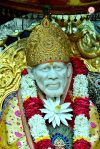





Sai Baba=Sai=Baba
Shirdi: The town where Sai Baba lived and taught, now a major pilgrimage site in India
- Agnihotri: A Brahmin who maintains a sacred fire.
- Ahamkara: Egoism; the sense of “I-ness.”
- Ajnana: Ignorance; lack of true knowledge.
- Akshata: Unbroken rice grains, often mixed with turmeric or kumkum, used in Hindu rituals.
- Allah Malik: Arabic phrase meaning “God is Lord” or “God is the sole owner,” frequently uttered by Sai Baba.
- Ambil: A traditional Indian dish, often made from boiled jowar (sorghum) flour mixed with buttermilk.
- Amra-Leela: Literally “mango miracle,” referring to an incident involving mangoes and Sai Baba’s blessing for progeny.
- Aniyat Guru: An unappointed or general Guru, who develops good qualities and purifies the heart.
- Anna-dana: The act of giving food as charity.
- Antarang: The inner self or heart.
- Arati: A Hindu religious ritual of worship, a part of Puja, in which light from wicks soaked in ghee or camphor is offered to one or more deities.
- Argha: Water or other offerings poured over an idol or deity during worship.
- Asan: A yogic posture or seat.
- Ashram: A spiritual hermitage or monastery.
- Ashwattha (Banyan) tree: A sacred fig tree, often symbolizing the universe in Hindu philosophy.
- Atithi: An uninvited guest.
- Atmanivedana: Complete surrender of the self, one of the nine forms of Bhakti.
- Atmaram: The indwelling Self, or the Dear Self.
- Aum/Om: A sacred sound and a spiritual symbol in Hinduism, representing the essence of the ultimate reality, consciousness, or Brahman.
- Avali/Avalia: A great Muslim saint.
- Ayurvedic: Related to Ayurveda, a traditional Indian system of medicine.
- Baba: A respectful term for an elderly man, often used for saints or spiritual figures.
- Bhagat: A devotee.
- Bhagavan: God or Lord.
- Bhagavad Gita: A Hindu scripture, part of the Mahabharata, presenting a dialogue between Lord Krishna and Arjuna on dharma, yoga, and liberation.
- Bhajan: Devotional singing or chanting.
- Bhakta: A devotee.
- Bhakti: Devotion, especially to a deity or Guru.
- Bhakti Yoga: The path of devotion as a means to attain spiritual liberation.
- Bhawartha Deepika (Jnaneshwari): A Marathi commentary on the Bhagavad Gita by Saint Jnaneshwar.
- Bhawartha Ramayana: A Marathi commentary on the Ramayana by Saint Ekanath.
- Brahma: The Hindu deity of creation, part of the Trimurti. Also, sometimes used interchangeably with Brahman.
- Brahma-Jnana: Knowledge of Brahman; Self-realization.
- Brahman: The ultimate reality, the supreme cosmic spirit in Hinduism.
- Brahmacharya: Celibacy or self-restraint, especially in the context of spiritual discipline.
- Brahmin: The highest of the four Hindu varnas (social classes), traditionally priests and scholars.
- Bubos: Swollen lymph nodes, characteristic of bubonic plague.
- Chandan: Sandalwood paste, used in worship.
- Chandorkar (Nanasaheb Chandorkar): A prominent devotee of Sai Baba, often used to refer to him specifically.
- Chatak: A mythical bird believed to drink only rainwater.
- Chavadi: A public place or building, often used for village meetings or as a resting place. Baba often slept there on alternate nights.
- Chillum (Chilim): A traditional clay pipe used for smoking tobacco or other substances, often shared in spiritual gatherings.
- Chiplis: A pair of small wooden clappers, used as a musical instrument in devotional singing.
- Chitamani jewel: A mythical wish-fulfilling jewel.
- Dakshina: An offering, typically monetary, given to a Guru or priest as a token of respect or gratitude.
- Dal: Lentil or split peas.
- Darbar: A court or assembly, often referring to the presence of a revered person.
- Darshan: The act of seeing or beholding a deity or a holy person, considered auspicious.
- Dasya: Service, one of the nine forms of Bhakti.
- Dattatreya: A Hindu deity, a composite of the Trimurti (Brahma, Vishnu, Shiva), often considered a Sadguru. Sai Baba is referred to as an incarnation of Dattatreya.
- Deva: God.
- Dharma: Righteous conduct, moral duty, or universal law.
- Dharana: Concentration, a stage in Yoga.
- Dhauti: A yogic cleansing practice, typically involving swallowing a long strip of cloth to cleanse the digestive tract.
- Dhotar (Dhoti): A traditional Indian garment worn by men, wrapped around the waist and legs.
- Dhuni: A sacred, ever-burning fire maintained by Sai Baba in his Masjid, from which Udi (ash) was obtained.
- Dhyana: Meditation, a stage in Yoga.
- Dwadasha-Jyotirlingas: Twelve sacred shrines of Lord Shiva.
- Dwarkamai (Masjidmai): The dilapidated mosque where Sai Baba lived, which he called his “Mother.” It is revered as a holy place.
- Dwapara Age: The third of the four Yugas (ages) in Hindu cosmology, characterized by a decline in righteousness.
- Ekanath (Saint Ekanath): A prominent Marathi saint and poet (16th century).
- Fakir: A Muslim ascetic or mendicant, often implying spiritual poverty and detachment.
- Fugadi: A traditional Maharashtrian folk dance, usually performed by women.
- Gadi: A cushion or seat of honor.
- Gajjal songs: A type of light classical Indian music, often devotional.
- Ganapati (Ganesha): The elephant-headed Hindu deity, revered as the remover of obstacles.
- Ganga: The sacred Ganges River.
- Gatkas: Short sticks or cudgels.
- Gau-hatya: Cow slaughter, considered a great sin in Hinduism.
- Geru: A red ochre substance, used for dyeing clothes saffron.
- Ghee: Clarified butter, used in cooking and religious rituals.
- Ghol: A type of musical instrument, possibly a drum.
- Gokul Ashtami: The festival celebrating the birth of Lord Krishna.
- Gopal-Kala: A ceremony involving the breaking of an earthen pot containing parched rice mixed with curds, reminiscent of Lord Krishna’s childhood games.
- Gotra: A clan or lineage, especially among Brahmins.
- Gulal: Red colored powder, used during festivals.
- Gunas: The three qualities or tendencies of nature in Hindu philosophy: Sattva (goodness, purity), Rajas (passion, activity), and Tamas (ignorance, inertia).
- Guru: A spiritual teacher or guide.
- Guru-Pournima: A Hindu festival dedicated to spiritual and academic teachers, celebrated on the full moon day of the Ashadha month.
- Guru-charitra: A biographical work on the life of Dattatreya (or other Gurus).
- Haridas: A devotional singer, performing Kirtans.
- Hari: A name for Lord Vishnu or God.
- Hath-Yoga: A branch of Yoga focused on physical postures and breathing exercises.
- Hemadpant: The pen name of Govind Raghunath Dabholkar, the author of “Shri Sai Satcharitra.”
- Hundi: A traditional financial instrument or bill of exchange. In the context of the text, sometimes used metaphorically as a “death-warrant.”
- Id festivals: Muslim religious festivals.
- Inamdar: A landlord or holder of a grant of land.
- Ishtam (Ishta Devata): A beloved or chosen deity of a devotee.
- Jain: A follower of Jainism, an ancient Indian religion.
- Jamb tree: A type of berry tree.
- Jayanti: A birth anniversary celebration.
- Jiva: An individual soul or living being.
- Jnana: Knowledge, especially spiritual knowledge leading to self-realization.
- Jnanadev (Saint Jnaneshwar): A revered Marathi saint and philosopher (13th century) and author of Jnaneshwari.
- Jnaneshwari: See Bhawartha Deepika.
- Johar: A respectful salutation, particularly among lower castes to higher authorities.
- Joss-stick: An incense stick.
- Kafni: A long, loose robe worn by Sufi fakirs and ascetics, often associated with Sai Baba’s attire.
- Kala: A mixture of various foods; hodge-podge. Also, sometimes refers to “divine play.”
- Kali Age (Kali Yuga): The current and last of the four Yugas in Hindu cosmology, characterized by spiritual decline.
- Kalma: Verses from the Holy Koran, recited by Muslims.
- Kalpataru: A mythical wish-fulfilling tree in Hindu mythology.
- Kama: Desire or lust; also, one of the four goals of human life (purusharthas), referring to pleasure.
- Kamadhenu: A mythical divine cow that grants all wishes.
- Karma: Actions, deeds, and their consequences; the law of cause and effect.
- Kartal: A small hand percussion instrument, often used in Kirtan.
- Kathada: A railing or fence.
- Kayastha Prabhu: A Hindu caste group primarily found in India, historically involved in administration and writing.
- Khanda Yoga: A yogic practice where the Yogi supposedly separates limbs of their body and rejoins them.
- Khanjiri: A small tambourine-like percussion instrument.
- Kheer: A sweet rice pudding.
- Khichadi: A dish made of rice and lentils, often with vegetables and spices.
- Kirtan: Devotional singing, often narrating stories of deities or saints.
- Kolamba: An earthen pot used by Sai Baba for collecting alms.
- Konkan: A coastal strip of land in western India.
- Koran: The holy book of Islam.
- Koupin (Kaupin): A small piece of cloth worn as a loincloth by ascetics.
- Krita Age (Satya Yuga): The first and golden age in Hindu cosmology, characterized by perfect righteousness.
- Kshatriya: The second of the four Hindu varnas, traditionally warriors and rulers.
- Kulkarni: A village accountant or record keeper.
- Kumkum: A red powder used for social and religious markings in India.
- Langota (Langot): A loincloth.
- Leelas: Divine plays, miraculous acts, or sports of God or Saints.
- Lendi (Nala): A stream or rivulet near Shirdi, where Baba often went.
- Lokamanya Tilak: A prominent Indian nationalist, teacher, and independence activist.
- Mahant: A spiritual head or chief of a monastery or religious order.
- Mahapuja: A grand worship ceremony.
- Mahasamadhi: The conscious departure of a perfected yogi or saint from the body.
- Mamlatdar: A revenue officer in charge of a taluka (administrative division).
- Mandap: An open hall or pavilion.
- Mande: A type of sweet, thin Indian bread, similar to chapati.
- Mantra: A sacred utterance, word, or phrase, believed to have spiritual and psychological powers.
- Mantrashastra: The science or knowledge of mantras.
- Maruti: Another name for Lord Hanuman, the monkey deity, known for his strength and devotion.
- Masjid: Mosque, the place of worship for Muslims. Sai Baba lived in a dilapidated mosque he called Dwarkamai.
- Maya: Illusion; the cosmic power that creates the material world and prevents individuals from seeing ultimate reality.
- Mecca and Madina: Holy cities in Islam, important pilgrimage sites.
- Mela: A fair or gathering.
- Moksha: Liberation, release from the cycle of rebirth (samsara).
- Moulana: A respectful title for a learned Muslim scholar or religious leader.
- Moulvi: A Muslim scholar or religious teacher.
- Mridang: A double-headed drum, often used in Indian classical and devotional music.
- Mujavar: A caretaker or priest of a Muslim shrine.
- Muktabai (Saint Muktabai): A female Marathi saint (13th century).
- Mukti: Deliverance or liberation.
- Muni: An ascetic or sage.
- Murlidhar: Lord Krishna, depicted holding a flute (murali).
- Naivedya: Food offerings made to a deity or Guru.
- Namah Shivaya: A sacred mantra dedicated to Lord Shiva.
- Namasaptaha: Continuous chanting of God’s name, day and night, for seven days.
- Namaskar: A respectful Indian greeting or salutation, often accompanied by folded hands.
- Narayana: A name for Lord Vishnu, often symbolizing the Supreme Being.
- Nath-panthis: A Shaivite Hindu tradition.
- Nautch-girls: Traditional female dancers, often associated with entertainment in old India.
- Nirgun (Nirguna Brahman): The unmanifested, formless aspect of God or Brahman.
- Nishtha: Firm faith or conviction.
- Niyat Guru: An appointed or fixed Guru, who dispels difference and establishes unity.
- Noumenon: In philosophy, the thing-in-itself, as opposed to its appearance (phenomenon).
- Oti: The upper fold of a sari, used to carry offerings.
- Ovi metre: A traditional Marathi poetic meter.
- Pada-tirth (Padateerth): Holy water that has touched the feet of a deity or a saint, believed to have purifying properties.
- Padasevana: Resorting to the feet, one of the nine forms of Bhakti.
- Padukas: Footprints, often revered as symbols of a Guru or deity.
- Palanquin: A covered litter, carried by poles on the shoulders of several men.
- Pan-vida: A preparation of betel leaves with various ingredients (like betel nut, catechu, lime) chewed as a stimulant and digestive.
- Panatis: Small earthen lamps.
- Panch-ratni Geeta: A short version of the Bhagavad Gita or a collection of five gems (chapters) from it.
- Pancha-soon (Panchasuna): The five actions or processes involved in daily household activities that are believed to incur sin due to unintentional harm to living beings.
- Pandharpur: A major pilgrimage site in Maharashtra, India, famous for the Vithoba temple.
- Pandharinath Vithal: The presiding deity of Pandharpur.
- Pandurang: Another name for Vithal, the deity of Pandharpur.
- Para Brahma: The Supreme Brahman, ultimate reality.
- Paramartha: The ultimate goal of human life, spiritual liberation or self-realization.
- Parayana: Reading a sacred text regularly and devoutly, often within a set period.
- Peda: A type of sweet confection made from condensed milk.
- Pheta: A traditional Indian turban.
- Phenomena: Things as they appear, as opposed to their true essence.
- Pindi: An aniconic representation of Shiva, usually a cylindrical column.
- Pir Moulana: A Sufi saint and scholar.
- Pitra-Yajna: Offerings to ancestors.
- Pooran Poli: A sweet flatbread, a popular dish in Maharashtra.
- Prana: Vital life force or breath.
- Pranipata: Prostration or bowing down completely.
- Prasad: A devotional offering made to a deity or a holy person, which is then distributed to be consumed by devotees.
- Prarthana-Samajist: A member of the Prarthana Samaj, a Hindu reform movement.
- Prayag (Allahabad): A holy confluence of rivers Ganga, Yamuna, and the mythical Saraswati.
- Preyas: That which is pleasant or desirable, especially in a worldly sense.
- Puja: Worship or devotional rituals.
- Pulava: A rice dish cooked with meat or vegetables and spices.
- Purana: Ancient Hindu scriptures, detailing myths, legends, and genealogies.
- Purees: Deep-fried, puffed bread.
- Ratha: A chariot or wheeled cart, often used in processions.
- Rinaubandh: The bond of past debts or relationships, karmic ties.
- Rishi: A sage or seer.
- Roti: A flatbread, similar to chapati.
- Rudhra: Hymns or prayers dedicated to Lord Shiva (Rudra).
- Saburi: Patience or perseverance, a key virtue in Sai Baba’s teachings.
- Sad-Vastu: The True Being or Reality (Brahman).
Sadguru: A true spiritual teacher or guide, who leads disciples to self-realization.
Leelas: Miraculous or significant events in Sai Baba’s life that demonstrate his spiritual power and compassion.
Udi: Sacred ash from Sai Baba’s dhuni (sacred fire), believed to have healing and protective properties.
Dakshina: Offering or donation made to Sai Baba, often seen as a way to purify the mind and remove attachments.
Maya: Illusion or the power of the Lord that keeps souls away from enlightenment.
Karma: The principle of cause and effect, where actions determine future experiences.
Dharma: Righteousness, moral duty, or the principles that govern cosmic order.
Bhakti: Devotion or love for God, often expressed through worship, prayer, and service.
Masjid: A mosque, where Sai Baba in Shirdi resided and welcomed people of all faiths.
Chavadi: A village/ devotees meeting place, where Sai Baba would alternate sleeping on different nights.
Allah Malik: A phrase often uttered by Sai Baba, meaning “God is the real owner.”
Shruti and Smriti: Sacred Hindu texts; Shruti refers to the Vedas, which are Heard through divine inspiration, while Smriti refers to other religious texts, composed by human like the Upanishads and Puranas.
Samadhi: A state of deep meditation or spiritual absorption.
Satka: A short stick that Sai Baba often carried.
Fakir: A Muslim holy person who has renounced worldly possessions.
Aarati: A ritual of worship in which light, from wicks soaked in (ghee) oil or camphor is offered to a deity.
Adhyatma: Pertaining to the Self or Spirit; spiritual knowledge.
Agnihotri: A devotee who maintains a sacred fire throughout his life.
Artha: Wealth or material prosperity, one of the four aims of human life.
Asan: A seat or posture, often used for meditation.
Avatar: An incarnation or manifestation of a deity in human form.
Bhagavad Gita: The most sacred Hindu text, part of the Mahabharata, containing the teachings of Lord Krishna.
Bhajan: A devotional song or hymn.
Brahman: The ultimate state of reality or supreme being in Hinduism.
Chillum: An earthen pipe used for smoking.
Choupadari: A rectangular piece of cloth.
Dakshina: A donation or offering, typically money, given to a guru or holy person.
Darshan: Seeing a deity or holy person; a blessed vision.
Dhauti: A yogic cleansing technique.
Dhuni: A sacred fire kept burning continuously.
Dhotar: A traditional Indian garment worn by men, wrapped around the waist.
Ekadashi: The eleventh day of each lunar fortnight, considered a holy day.
Gopal-Kala: A ceremony performed on Gokul Ashtami, celebrating the birth of Lord Krishna, involving mixing milk products and sweets.
Guru: A spiritual teacher or guide.
Hakim: A traditional doctor or physician.
Handi: A large cooking pot.
Id: A Muslim festival.
Jnaneshwar: A 13th-century Marathi saint, poet, philosopher and yogi , who wrote ‘Dnyaneshwari – commentary on the Bhagavad Gita.
Kama: Desire or pleasure, one of the four aims of human life.
Kafni: A long, loose robe Dress.
Karma: The principle of cause and effect; actions and their consequences.
Kirtan: A devotional performance involving singing, music, and storytelling.
Kolamba: A mud pot.
Koran: The holy book of Islam.
Koupineshwar: A temple in Thana.
Kundi: An earthen pot.
Leela: A divine play or act; a miraculous event in the life of a saint or deity.
Mahasamadhi: The final conscious departure of a saint or enlightened being from their physical body.
Mamlatdar: A revenue officer.
Mantra: A sacred word, syllable, or phrase used in prayer or meditation.
Maruti: Hanuman.
Maya: Illusion; the power that veils the true nature of reality.
Moksha: Liberation or salvation, the ultimate aim of human life.
Namaj: Muslim prayers.
Nathi: Nose-ring.
Naivedya: Food offering to a deity.
Nishtha: Faith.
Om: (=AUM) A sacred sound considered the sound of creation.
Padukas: Sandals, often those of a guru or saint, revered as sacred objects.
Panchas: Village authorities.
Parayana: Regular reading of religious texts.
Para-Brahman: The Supreme Brahman.
Pheta: A traditional Indian turban. -Head dress.
Pice: A small unit of Indian currency.(1 INR=100)
Pindi: A symbol of Shiva.
Prana: Life force or vital energy.
Prasad: A blessed offering to God, often food, distributed after worship.
Puja: Worship.
Pulava: Mutton dish.
Rama-Navami: A Hindu festival celebrating the birth of Lord Rama.
Ramayan: A Hindu epic narrating the life and adventures of Lord Rama.
Rinaubandh: Former birth’s relationship.
Saburi: Patience and perseverance.
Sadgati: Salvation of soul
Samadhi: A state of deep meditation or spiritual absorption.
Samsar: The cycle of birth, death, and rebirth.
Sandal: A procession of the Muslims.
Sattwa: One of the three gunas (qualities), representing purity, goodness, and harmony.
Tajiya/Tabut: A decorative structure carried in procession during Muharram festival.
Tamas: One of the three gunas (qualities), representing darkness, inertia, and ignorance.
Tirthas: Sacred rivers/ water
Tumrel: Tin pot.
Upanishads: A collection of philosophical texts forming the basis of Hindu Vedanta philosophy.
Vaishya: A member of the merchant or trading caste.
Veena: A stringed music instrument.
Vritti: Thought.
Yavan: A term used to refer to foreigners like Muslims, Persians, Greeks ie. those of non-Indian origin
Yoga: A spiritual discipline aimed at uniting the individual self with the divine.
Yogindra: A great Yogi.
Yogasampanna: Full of yoga.
Zoli: A cloth bag or pouch used for collecting alms
Shirdi Sai Baba: An Indian Spiritual Guru-God, known for drawing people from diverse backgrounds together and resolving their prayers.
SadGuru-God: A spiritual divine teacher, who realised Self.
Shri Sai Sat Charitra (SSSC): A significant publication about Sai Baba’s life and teachings.
Life of Sai Baba (LoSB): Another book detailing the life of Sai Baba his devotees.
Baba’s Charters and Sayings (BCS): A Book containing Baba’s orders and sayings.
Guru Bhakti: Absolute faith in a Guru.
Jnana: Knowledge, cultivated through spiritual study.
Paramartha: The highest goal, attained by making Baba the sole object of thoughts and aims.
Dwarkamayi: The mosque where Sai Baba resided, a significant place for devotees.
Chavadi: Another significant location in Shirdi associated with Sai Baba, where He meet large devotees.
Lendi Baugh: A garden in Shirdi frequented by Sai Baba.
Maha Samadhi: The final resting place of Sai Baba in Shirdi.
Hemadpant: The author of “Shri Sai Satcharita.”
Sansthan: Refers to Shri Saibaba Sansthan Trust, Shirdi; the organization managing the temple and related activities.
Moksha Marga: The pathway to heaven or liberation.
Atma Vichara: Self-inquiry, a path to spiritual knowledge.
Nama Japa: Chanting God’s name, a spiritual practice.
Law of Karma: The principle that every action has a corresponding reaction.
Salvation: The ultimate deliverance from sin and its consequences, or release from the cycle of birth and death.
Vishnu Sahasranama: A list of 1,000 names of Vishnu, mentioned as having importance.
- Ahimsa: Non-violence; the principle of not causing harm to any living being.
- Ajnana: Ignorance; the covering of truth by illusion.
- Akasha: Ether or space;
- Allah: God (Arabic term), frequently used by Sai Baba.
- Allah Malik: “God is the Master”; a common saying by Sai Baba emphasizing divine sovereignty.
- Ananda: Bliss; one of the characteristics of Brahman (Sat-Chit-Ananda).
- Antahkarana: The fourfold inner instrument of the mind: Manas (mind), Buddhi (intellect), Ahankar (ego), Chitta (consciousness/memory).
- Antarjnan (Ritambhara Prajna):ability to know thoughts, intentions, and events at a distance or in the past/future.
- Apantaratma: The inner Self
- Arati: A Hindu ritual of worship, involving the waving of lamps before an idol or revered person.
- Athiti: Guest; interpreted by Baba as any hungry creature (human, animal, insect) that comes for food.
- Atma Nivedan (Prapatti):complete dedication of oneself to God or Guru.
- Atma Vichara: Self-inquiry; the process of asking “Who am I?” to realize the true Self.
- Atmajnana: Knowledge of the Self; self-realization.
- Avatar: Incarnation of a deity on Earth.
- Avarna: The covering aspect of Maya, which conceals the true nature of reality.
- Bhakta Paradhina: Bond-slave of devotees; refers to God or Guru being bound by the love of their devotees.
- Bhakti: Devotion, worship, love for God or Guru.
- Bhagavad Gita: A Hindu scripture, part of the Mahabharata, containing the teachings of Lord Krishna.
- Brahman: The Absolute Reality; the ultimate, supreme cosmic spirit in Hinduism.
- Brahmavit: One who knows Brahman.
- Buddha: Enlightened one; often associated with knowledge and wisdom.
- Chaitanya: Pure Consciousness, Spirit, God.
- Chamatkar: Miracle; a supernatural feat.
- Charters and Sayings: Baba’s promises and moral/spiritual instructions.
- Chaturyug: The four yugas (ages) in Hinduism, a cosmic time cycle.
- Chela: Disciple.
- Chilm: A type of pipe used for smoking.
- Dakshina: A gift or offering made to a Guru or deity, often with deeper spiritual significance beyond its material value.
- Dama: Control of the external senses.
- Dana: Charity, giving.
- Darshan: Auspicious sight of a holy person or idol.
- Dasavatar: The ten principal avatars of Vishnu.
- Deha Prarabdha: The portion of past karma that manifests as one’s present physical body and life circumstances.
- Devotee (Bhaktas): A person dedicated to religious worship or service.
- Dharma: Righteous conduct, moral duty, a cosmic law.
- Dhuni: The sacred fire kept burning perpetually in Sai Baba’s mosque (Dwarakamayi).
- Dhyana: Meditation, contemplative absorption.
- Dussanga: Bad company; association with evil-minded people.
- Dwaraka Mayi (Masudi Ayi): The old mosque in Shirdi where Sai Baba resided, considered by him as a divine mother.
- Ekadasi: The eleventh day of a lunar fortnight, often observed as a fast by Hindus.
- Fakir: A Muslim ascetic or mendicant; used by Baba to refer to himself and sometimes to God.
- Ganda: Danger or peril, often to one’s life.
- Ghatakasha/Kumbhakasha: “Pot-space”; used to illustrate how unlimited space appears limited within a pot, analogous to Brahman in an individual.
- Grihasta: A householder; a person living a married life.
- Gunas: The three qualities of nature (Sattva, Rajas, Tamas) in Hindu philosophy.
- Guru: Spiritual teacher or guide.
- Guru Poornima: A festival dedicated to honoring spiritual teachers and gurus.
- Halwa: A sweet confection.
- Hamsa: A swan, often symbolizing a paramahamsa (enlightened soul).
- Hari: A name for Vishnu, often used to refer to God.
- Indriya: Senses.
- Ishta Devata: Chosen deity for worship.
- Jnana (Gnana): Knowledge, especially spiritual knowledge leading to self-realization.
- Jnaneswari: A Marathi commentary on the Bhagavad Gita by Saint Dnyaneshwar.
- Japa: Repetition of a mantra or a divine name.
- Jeeva: Individual soul or living being.
- Karma: Action, deed; the sum of a person’s actions and their consequences in this and previous lives.
- Karmic bondage: Being tied to the cycle of rebirth due to accumulated karma.
- Keertan (Kirtan): Devotional singing, often with storytelling.
- Krodha: Anger; one of the Shadripus.
- Kupni: A simple, often torn, robe worn by ascetics or fakirs.
- Laya: Absorption, dissolution (e.g., of mind into unity).
- Lila: Divine play or sport; God’s cosmic activities.
- Lobha: Greed; one of the Shadripus.
- Mahasamadhi: The conscious departure of a saint from the physical body.
- Mahima: Glory, greatness, miraculous power.
- Mamata: Attachment, possessiveness.
- Manana: Reflection; deep consideration of what has been heard.
- Mantra: A sacred utterance, word, or sound used for meditation or spiritual practice.
- Mantropadesa: Instruction or initiation into a mantra.
- Masudi Ayi: See Dwaraka Mayi.
- Matsara: Jealousy or envy; one of the Shadripus.
- Maya: The cosmic illusion or creative power that manifests the material world and conceals ultimate reality.
- Moha: Delusion, infatuation; one of the Shadripus.
- Moksha: Liberation from the cycle of birth and death; ultimate spiritual freedom.
- Moortipooja: Idol worship; worship of God in a manifest form.
- Mumukshutwa (Mumukshuta): Strong desire for liberation (Moksha).
- Murlidhar: A name for Krishna, meaning “one who holds the flute.”
- Naivedya: Food offering made to a deity or Guru.
- Nama Japa: Repetition of a divine name.
- Nama-saptha: A week-long recitation of a divine name or scripture.
- Nirakara: Formless, attributeless (referring to Brahman or God).
- Nirguna: Without qualities or attributes (referring to Brahman).
- Nishta: Firm faith or devotion.
- Nitya: Eternal, permanent.
- Nitya-Anitya Vastuviveka: Discrimination between the eternal/real and the non-eternal/unreal.
- Omka: Om or Aum; the sacred sound, representing Brahman.
- Pada Theertham: Water that has washed the feet of a holy person or deity, considered sacred.
- Paduka: Footwear, especially sacred sandals of a Guru or deity, worshipped as a symbol.
- Pagadi: Turban.
- Pagal: Mad, crazy.
- Palki: Palanquin, a covered litter for carrying people.
- Panchadasi: A classic Advaita Vedanta text.
- Pandarinath: A name for Vitthal or Vithoba, a form of Krishna worshipped in Maharashtra.
- Papa: Sin.
- Paramarthika-Satya: Ultimate truth or reality (the highest stage of truth).
- Paramatama: The Supreme Soul, God.
- Parayana: Reading or recitation of sacred texts.
- Parvardigar: Protector, Sustainer (a term for God).
- Pice: Old Indian coin, small unit of currency.
- Pitambar: A yellow silk garment.
- Pithru Shraddha: Rituals performed for the deceased ancestors.
- Pooran Poli: A sweet flatbread, a popular Indian dish.
- Poorva Karma: Past actions or deeds.
- Pothi: Sacred book or scripture.
- Pranayama: Breathing exercises in yoga.
- Prarabdha: See Deha Prarabdha.
- Prarthana Samajist: A follower of Prarthana Samaj, a Hindu reform movement focusing on rational worship.
- Prasad: A devotional offering made to a deity or holy person, and then consumed by Devotees.
- Pratibhasika-Satya: Apparent or illusory truth (the lowest stage of truth, like a dream).
- Prema: (Divine) love.
- Puja: Worship ritual.
- Punya: Merit, good deeds.
- Purdah: A practice of veiling or secluding women.
- Purusha: Cosmic being, consciousness; Man, often paired with Prakriti (nature).
- Purusha Sukta: A hymn in the Rigveda describing the cosmic man.
- Rahu/Kethu: Shadow planets in Hindu astrology, associated with eclipses.
- Ram Rama: Repetition of the name of Lord Rama.
- Ramphal: A type of fruit (custard apple family), used in a parable.
- Rinanubanda: The karmic bond or pre-existing connection between individuals, often from previous births.
- Rojas: Fasting (Urdu/Persian term, often referring to Islamic fasts).
- Saburi: Patient endurance, courageous patience.
- Sadhakas: Spiritual aspirants.
- Sadhanas: Spiritual practices or disciplines.
- Sadgati: A good state or liberation after death, salvation.
- Saguna: With attributes; referring to God in a manifest form.
- Sahasranama: A litany of a thousand names of a deity (e.g., Vishnu Sahasranama).
- Sakara: Form, with form (referring to God’s manifest form).
- Sakshatkar: Direct realization or vision of God.
- Sakshi: Witness, observer.
- Saligram: A fossilized ammonite shell, worshipped as a symbol of Vishnu.
- Samadhana: Equanimity; firmness of mind amidst pain and pleasure.
- Samadhi: A state of meditative consciousness; also, the tomb or resting place of a saint.
- Samsara: The cycle of birth, death, and rebirth; worldly existence.
- Samata: Equanimity; viewing everything with an equal eye.
- Sankaranthi Halva: A sweet dish made during the Sankranti festival.
- Sanyasi: An ascetic, renunciate, or monk.
- Saptha: A week-long religious reading or performance.
- Saranagata: One who has surrendered.
- Sastras: Holy scriptures or treatises.
- Sat: Reality, truth, existence.
- Satsanga: Good company; association with virtuous and spiritual people.
- Satyagraha: Passive resistance or civil disobedience
- Self-realization: The spiritual goal of realizing one’s true divine nature.
- Shadripus: The six enemies or vices of the mind: Kama (lust), Krodha (anger), Lobha (greed), Moha (delusion), Mada (pride), Matsara (jealousy).
- Shakti: Divine power or energy.
- Shishya: Disciple.
- Siddhi: Supernatural power or accomplishment gained through spiritual practice.
- Sira: Semolina pudding, a sweet dish.
- Skanda: A chapter or section of a Puranic text.
- Sloka: A verse or stanza, typically in Sanskrit.
- Sraddha: Faith; sincere belief.
- Sridhan: Property or wealth given to a woman at the time of her marriage, which she controls.
- Stitha Prajna: A person of steady wisdom, as described in the Bhagavad Gita.
- Subhra Marga: White or pure path (to God).
- Suddha: Pure.
- Suddha Chaitanya: Pure Consciousness, synonymous with Brahman.
- Sukshma Sarira: Subtle body.
- Summon: A formal order to appear in court.
- Sowcar: A rich person, a banker or money lender.
- Tamasic: Related to Tamas, the quality of inertia, ignorance, and darkness.
- Tapas: Austerity, penance, spiritual discipline involving self-denial.
- Tatwamasi: “Thou art That”; a Mahavakya (great utterance) from the Upanishads, affirming the identity of the individual soul with Brahman.
- Teli: Oil seller (a caste name).
- Theertham: Sacred water.
- Titiksha: Endurance; patience in bearing pain without complaint.
- Tonga: A light, horse-drawn carriage.
- Trisul: A trident, a symbol of Shiva.
- Ubiquity: The quality of being everywhere at the same time.
- Udhi: Sacred ash from Baba’s Dhuni, considered to have healing and protective powers.
- Udhyapana: A concluding ceremony performed after completing a vow or religious observance.
- Upadesa: Spiritual instruction, initiation, or teaching from a Guru.
- Upadhi: Limiting adjuncts; external conditions or qualities that appear to define the Self.
- Upasana: Worship; devotional meditation.
- Upavasa: Fasting.
- Uparati: Renunciation of worldly actions; cessation of sensory indulgence.
- Urlai: Roasted or cooked grains/nuts.
- Vairagya: Dispassion; detachment from worldly desires and possessions.
- Varkari: A pilgrim to Pandharpur, devoted to Vitthal.
- Vasanas: Latent tendencies or impressions from past actions that influence present desires and experiences.
- Vastu Sastra: An ancient Indian science of architecture and construction.
- Vata: Wind or air; also used to mean delusion or unfounded talk.
- Vedanta: A school of Hindu philosophy based on the Upanishads, Bhagavad Gita, and Brahma Sutras.
- Vichara: Inquiry, contemplation.
- Vimana: A mythical flying palace or chariot; also a celestial vehicle.
- Viveka: Discrimination, discernment; the ability to distinguish between the real and the unreal.
- Vyasa: A revered sage, traditionally credited with compiling the Vedas and writing the Mahabharata.
- Vyavaharika-Satya: Conventional or empirical truth (the truth of the phenomenal world, seen as relative).
- Wada: A large house or mansion, often with courtyards.
- Yama: Ethical restraints; moral disciplines.
- Yoga: A spiritual discipline involving physical, mental, and spiritual practices.
- Yoga Vasishta: A Hindu spiritual text, part of the Ramayana.
- Yogi: A practitioner of Yoga.
 Welcome to https://ShirdiSaiBaba.InterNational