"I draw to Me, My man from far off or even across the seven Seas to Shirdi, like a sparrow with a string fastened to its feet"-Shirdi Sai Baba, Indian Spiritual Guru-God
Nine forms or types of Devotion (Bhakti) are, viz.,
(1) Shravana (Hearing);
(2) Kirtana (Praying);
(3) Smarana (Remembering);
(4) Padasevana (resorting to the feet);
(5) Archana (Worship);
(6) Namaskara (Bowing);
(7) Dasya (Service);
(8) Sakhyatva (Friendship);
(9) Atmanivedana (surrender of the self). These are the nine types of Bhakti.
If any of these are faithfully followed, Lord Hari will be pleased and manifest Himself in the home of the devotee.
All the sadhanas, viz. Japa (vocal worship), Tapa (penance), and Yoga practice are quite useless. Studying the scriptures and expounding them are also quite useless. These activities need to be accompanied by Bhakti, i.e., devotion. Knowledge of the Vedas, or fame as a great Jnani, and mere formal Bhajan (worship) are of no avail. What is wanted is Loving Devotion.
Think of yourself as someone searching for the truth. Be anxious and eager like the seeker to collect or cultivate the nine types of devotion. Then you will attain stability and peace of mind.
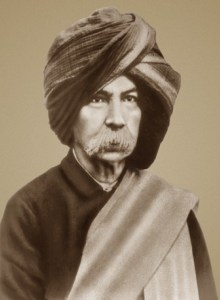
Sai Baba was neither a house-holder nor Vanaprastha. He was a celibate sannyasi, i.e., sannyasi from boyhood.
His firm conviction was that the universe was His home, He was the Lord Vasudeo – the Supporter of the universe and the Imperishable Brahman. So He had the full right to have recourse to the begging-bowl.
(2) Now from the standpoint of ‘Pancha-soon’ – five sins and their atonement. We all know that in order to prepare food- stuffs and meals, the householders have to go through five actions or processes, viz. (1) Kandani-Pounding, (2) Peshani-Grinding, (3) Udakumbhi – Washing pots, (4) Marjani – Sweeping and cleaning, (5) Chulli-Lighting hearths.
These processes involve destruction of a lot of small insects and creatures, and thus the householders incur a lot of sin. In order to atone for this sin, our Shastras prescribe six kinds of sacrifices, viz. (1) Brahma- Yajna, (2) vedadhyayan – offerings to Brahman or the study of the Vedas. (3) Pitra- Yajna-offerings to the ancestors, 4)Deva-Yajna – offerings to the Gods, (5) Bhoota- Yajna-offerings to the beings, (6) Manushya-Atithi-Yajna-offerings to men or uninvited guests. If these sacrifices, enjoined by the Shastras are duly performed, the purification of their minds is effected and this helps them to get knowledge and self-realization.
Baba, in going from house to house, reminded the inmates of their sacred duty, and fortunate were the people, who got the lesson at their homes from Baba.
Once, Mrs. Tarkhad was staying in a certain house in Shirdi. At noon, meals were ready and dishes were being served, when a hungry dog turned up there and began to cry, Mrs. Tarkhad got up at once and threw a piece of bread, which the dog gulped with great relish.
In the afternoon, when she went to the Masjid and sat at some distance, Sai Baba said to her, “Mother, you have fed Me sumptuously up to my throat, My afflicted pranas (life-forces) have been satisfied. always act like this, and this will stand you in good stead. Sitting in this Masjid I shall never, never speak untruth. Take pity on Me like this. First give bread to the hungry, and then eat yourself. Note this well.”
She could not at first understand the meaning of what Baba said. So she replied — “Baba, how could I feed You? I am myself dependent on others and take my food from them on payment.”
Then Baba replied — “Eating that lovely bread I am heartily contended and I am still belching. The dog which you saw before meals and to which you gave the piece of bread is, one with Me, so also other creatures (cats, pigs, flies, cows etc.) are one with Me. I am roaming in their forms.
He, who sees Me in all these creatures is My beloved. So abandon the sense of duality and distinction, and serve Me, as you did today.” Drinking these nectar-like words, she was moved, her eyes were filled with tears, her throat was choked and her joy knew no bounds
Moral
“See God in all beings” is the moral of this. The Upanishads, the Geeta and the Bhagwat, all exhort us to perceive God or Divinity in all the creatures. Sai Baba has practically demonstrated to us how to put the Upanishadic teachings into practice. In this way Sai Baba stands as the best Exponent or Teacher of the Upanishadic doctrines
Govind Raghunath Dabolkar, called Anna Saheb Dabolkar, was Mamlatdar and first class resident Magistrate.
His work ‘Sai Satcharitra’ in Marathi Ovi verse extends to a thousand pages. Maharashtra Sai bhaktas treat it as Sai Ramayana or modern Guru Charitra. They give it the respect due to ancient puranas. Even others respect it when they gain access through N.V. Gunjaji’s English adaptation or translations in Telugu, etc.
This work is highly meritorious and has been the instrument for many people becoming Sai bhaktas. The verses are highly sonorous. The stories about Sai Baba collected from various individuals are based on actual experiences. These stories have great charm and are always fresh.
On his first visit to Shirdi and Sai Baba in 1910, went to the mosque. He and his friend Bala Saheb Bhate prostrated before Baba. Baba pointed to Dabolkar and said, ‘What talk was going on there at the wada? And what did this Hemad Pant say (pointing his chin to Dabolkar)?’. Dabolkar’s name was not Hemad Pant at all.
Hemadpant-“I began to think why Sai Baba should call me by the name Hemadpant. This word is a corrupt form of Hemadripant.
This Hemadripant was a wellknown Minister of the kings Mahadev and Ramadev of Devgiri of the Yadav dynasty. He was very learned and good-natured. He authored good works, such as Chaturvarga Chintamani (dealing with spiritual subjects) and Rajprashasti. He invented and started new methods of accounts and was the originator of the Ovi (Marathi Shorthand) script.
But I was quite the opposite, an ignoramus, and have dull, mediocre intellect. I could not understand why the name or title was conferred upon me. However, after thinking seriously about it, I thought that the title was a dart to destroy my ego. This way, I should always remain meek and humble. It was also a compliment paid to me for the cleverness in the discussion#. (# before he started from Wada/Lodge to Sai Temple, he had some hot discussion with Bala Saheb Bhate about”Guru’s essential ” for 30 minutes)”.
Looking to the future history, we think that Baba’s word (calling Mr. Dabholkar by the name Hemadpant) was significant and prophetic, as we find that he looked after the management of Sai Sansthan very intelligently, kept nicely all the accounts and helped greatly in the publications of ‘Sai Lila Masik (Magazine)’ also as the author of such a good work “Shri Sai Satcharita (SSSC)”, which deals with such important and spiritual subjects as Jnana, Bhakti and dispassion, self-surrender and self-realization.
The premier poet-saint of Maharashtra (India), Shri Jnaneshwar Maharaj, has stated that the Lord loves those who write the lives of saints;
and the saints also have a peculiar method of their own of getting the service, which the devotees long for, successfully accomplished.
The saints inspire the work; the devotee becomes only an indirect cause or instrument to achieve the end.
For instance, in 1700 Shaka* year (AD year=78 + Shaka year) the poet Mahipati aspired to write the lives of saints. Saints inspired him, and got the work done;
So also in 1800 Shaka year, Das Ganu’s service was accepted.
The former wrote 4 works-Bhakta Vijaya, Santa Vijaya, Bhakta Leelamrit and Santa Kathamrit, while the latter wrote two – “Bhakta Leelamrit and Santa Kathamrit“, in which the lives of modern Saints were described. In chapters 31,32,33 of Bhakta Leelamrit and in chapter 57 of Santa Kathamrit, the sweet life and teachings of Sai Baba are very well depicted. These have been separately published in Sai Leela Magazine, Nos. 11 and 12, Vol. 17; the readers are advised to read these chapters.
So also Sai Baba’s wonderful Leelas are described in a small decent book named Shri Sainath Bhajana Malaby Mrs. Savitribai Raghunath Tendulkar of Bandra.
Das-Ganu Maharaj also has composed various sweet poems on Sai Baba.
A devotee named Amidas Bhavani Mehta has also published some stories of Sri Baba in Gujarathi;
some Nos. of Sainath Prabha, a magazine published by Dakshina Bhiksha Sanstha of Shirdi, are also published
Sai Samasthan itself published Rao Bahadur M.W. Pradhan’s book ‘A glimpse of Indian spirituality‘ but it ran upto about 25 to 30 pages and set out just a handful of facts about Baba.
The variety of imparting instructions followed by Baba has already been noticed in other places. In this, we shall deal with one aspect of it.
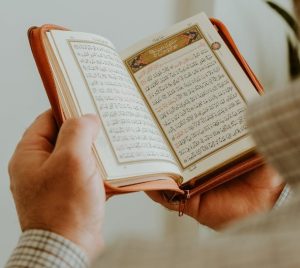
It was the habit of some devotees to take some religious books, of which they wanted to make a special study, to Baba and to receive the same back from Him, after they were touched and consecrated by Him. While reading daily such books, they felt that Baba was with them.
Once, Kaka Mahajani came to Shirdi with a copy of Ekanathi Bhagwat. Shama took that book to read and taking it with him went to the Masjid. There Baba took it from him, touched it and turning some pages here and there gave it back to Shama and asked him to keep it with him. When Shama said that it belonged to Kaka and had to be returned to him. “No, no”, said Baba. “As I have given it to you, better keep it with you for safe custody; it will be of use to you.”
Kaka Mahajani after a some days came again with another copy of the same Bhagwat and gave it in Baba’s hand. Then Baba gave it back as Prasad and asked him to preserve it well and assured him that it would stand him in good stead. Kaka accepted it with a reverence
"SO please buy a new Sai Book and take it to Baba Mandir; Place it before Baba's feet, and then Start reading and felt that Baba is with you"
“My method is quite unique. Remember well, this one story (About Mrs. Radhabai Deskmukh), and it will be very useful.
To get the knowledge (realization) of the Self, Dhyana (meditation) is necessary. If you practice it continuously, the Vrittis (subtle thoughts) will be pacified.
Being quite desireless, you should meditate on the Lord, Who is in all the creatures; When the mind is concentrated, the goal will be achieved.
Meditate always on My formless nature, which is knowledge incarnate, consciousness and bliss.
If you cannot do this, meditate on My Form from top to toe, as you see here night and day.
As you go on doing this, your Vrittis will be single-pointed and the distinction between the Dhyata (meditator), Dhyana (act of meditation), Dhyeya (this meditated upon) will be lost and the meditator will be one with the Consciousness and be merged in the Brahman.
Your sufferings for your past karma have come to an end, as soon as you put your feet on Shirdi. Persons in great trouble, sunk in their misery, rise to joy and happiness as soon as they climb the steps of this mosque (Dwarakamai)
That Fakir (God) is very kind and will eradicate your disease. He will show his love. He is kind to all. “Baba
Light houses are constructed at various places in the sea, to enable the boatmen to avoid rocks and dangers, and make them sail safely. Sai Baba’s stories serve a similar purpose in the ocean of worldly existence.
They surpass nectar in sweetness, and make our worldly path smooth and easy to traverse. Blessed are the stories of the saints.
When they enter our hearts through the ears, the body-consciousness or egoism vanishes. The sense of duality disappears. When they are stored in the heart, doubts fly out to all sides. Pride of the body will fall. Wisdom will be stored in abundance.
The description of Baba’s pure fame and hearing it with love will destroy the sins of the devotee. Therefore, this is the simple Sadhana for attaining salvation.
The Sadhana for
Krita Age was Shamadama (tranquility of mind and body); for
Treta Age, sacrifice; for
Dwapara, worship, ;and for
Kali (present) Age, it is singing of the name and glory of the Lord. This last Sadhana is open to all the people of the four varnas.
The other Sadhanas, viz. Yoga/Yagya (sacrifice), Dhyana (meditation) and Dharana (concentration) are very difficult to practice, but singing and hearing the stories and the glory of the Lord (Sai Baba) is very easy.
We have only to turn our attention towards them. The listening and singing of the (Baba’s) stories will remove the attachment to the senses and their objects, and will make the devotees dispassionate, and will ultimately lead them to self-realization.
With this end in view, Sai Baba made me or helped me[ie Hemapant] to write His stories. The devotees may now easily read and hear these stories of Sai Baba. While doing so, they can meditate on Him and His form. Thus, they attain devotion to Guru and God (Sai Baba). They also gain detachment and self-realization.
If any one prostrates before Sai and surrenders heart and soul to Him, then unsolicited, all the chief (Four) objects of life viz. Dharma (righteousness), Artha (wealth), Kama (Desire) and Moksha (Deliverance), are easily and unsolicitedly attained. SSSC Ch-6






 Welcome to https://ShirdiSaiBaba.InterNational