

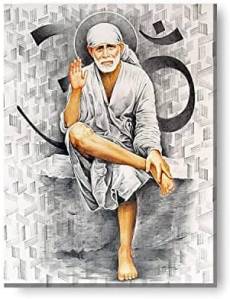
Sai Baba knew all the processes and practices of Yoga. Some of them will be described here:
- 1) DHAUTI or CLEANING PROCESS: Baba went to the well near a Banyan tree. It was at a considerable distance from the Masjid. Every third day, he washed his mouth and had a bath.
- On one occasion, He vomited out his intestines. He cleaned them inside and outside. Then, he placed them on a Jamb tree for drying. There are persons in Shirdi, who have actually seen this, and who have testified to this fact.
- Ordinary Dhauti is done by a moistened piece of linen, 3 inches broad 22 1/2ft. long. This piece is swallowed. It remains in the stomach for about half an hour to react there. Then, it is taken out. But Baba’s Dhauti was quite unique and extraordinary.
- 2.) KHANDA YOGA: In this practice, Baba extracted the various limbs from His body. He left them separately at different places in the Masjid.
- Once, a gentleman went to the Masjid, and saw the limbs of Baba lying separately at separate places. He was much terrified; and he first thought of running to the village officers, and informing them of Baba being hacked to pieces and murdered. He thought that he would be held responsible, as he was the first informant and knew something of the affair. So he kept silent. But the next day when he went to the masjid, he was surprised. Baba was hale, healthy, and sound, as before. He thought, that what he had seen the previous day, was only a dream.
- 3) Baba was an adept of all the margas. (Path) . His chief marga was Bhakti marga. The special form of it is described as Guru Marga in the ‘Guru Gita’.
- Jnana and siddhis, including yoga siddhis, came in the wake of his Guru bhakti.
Baba had no particular marga, as the yoga marga etc. But if any person came to grief in his yoga marga, he could give relief. One yoga sadhaka had bleeding piles and came to Baba and got relief at Baba’s hands.
- 4) Baba said, ‘Life is lived in vain if no yoga, yaga, tapas, or jnana be achieved’. He asked a devotee, ‘Will you sit idle merely eating your food? Have Saburi, that is patience and courage’.
- Baba set the example himself of tapas. He kept awake the whole night, lying on a small narrow plank making Namasmaran, keeping his eyes open, and holding his mind in trance.
- 5) What took place was the Baba’s conversion of water into oil. Somehow oil came into the lamp in a sufficient quantity, from Water to burn all night. Now this is not explicable to ordinary men with their notions of chemistry and physics.
- Water is not converted into oil in a straightforward manner. Castor and other plants absorb water and combine it with their ingredients. They then produce oil in the seeds of their fruits. Without any such process, Baba was able to fill his lamps with oil.
- 6) We take Baba’s first achievement at Selu of reviving the dead man with no other remedy or mantras than the throwing of his Guru’s pada duti on the corpse with a prayer for revival: or His taking water at his Shirdi Masjid and filling his lamps with that water for feeding the wicks with a prayer, we find his concentration on his Guru God is the only means.
- 7) Baba was always thinking of God. Serving God is serving man and serving creation. He had evidently no need to determine the time of his death by noting the Arishta or omens or ripeness of his karma, according to Patanjali Yoga Sutra No. 23 for all knowledge to him was an open book.
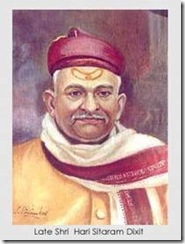
- His undertaking on behalf of his devotees to give them happy and blessed deaths, e.g., his promise to H. S. Dixit to carry him in a vimana, were fulfilled by him with remarkable accuracy of Dixit’s death, through his divine power.
- 8) G.S. Khaparde was a highly cultured Sanskrit scholar and had evidently read yoga shastra. He has referred to certain instances and experiences of his in his diary in the year 1911-12, while he stayed at Shirdi.
- In his Diary, he repeatedly mentions that Baba cast Yogic glances at certain persons. These individuals were immediately filled with a wave of bliss. This wave overpowered all their other mental activities. It kept them immersed in bliss for hours without break. Khaparde experienced such bliss after a yogic glance from Baba. This state lasted for three or four hours. He has noted this in his diary.
- 9) Baba’s yoga sampoorna state enabled him to keep several people in such happy state, as they themselves have recorded in their experiences.
- Mrs. Tarabai Sadasiva Tarkhad says that though she had physical pains in her body and mental worries, life was quite miserable. Yet when she went and sat before Baba, that very moment she felt steeped in Lethe. All her anxieties, pains, and cares, both physical and mental, vanished. Till her departure from Dwarakamayee, she was enjoying a happy state.
What is this siddhi called? Patanjali’s Yoga Sutras and Srimad Bhagavata, llth Skanda, 15th Chapter, amongst other books, give a list of siddhis attained by yoga processes. What Baba did would be called ‘Yatha Sankalpa Samsiddhih’ and ‘Apratihata Ajna.’ This means producing whatever one wants by mere will power or supreme command.
Srimad Bhagavata says ‘When one gets laya in God, all powers, all knowledge, all wisdom, all perfection, that are termed divine, shine forth from such a person’. Baba was perfect in his concentration on God. Therefore in the above quoted instances as in the other innumerable instances to be found in the Gospel of Sai Baba (i.e. BCS) or other books on Baba, the powers exercised by Baba were the result of his laya in God, that is, they were really divine powers
SSSC Ch-7

 Welcome to https://ShirdiSaiBaba.InterNational