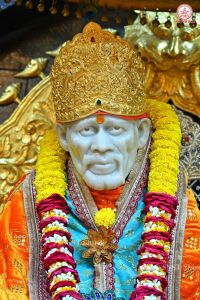
Welcome to https://ShirdiSaiBaba.InterNational

Thanks SSS Trust, Shirdi

"I draw to Me, My man from far off or even across the seven Seas to Shirdi, like a sparrow with a string fastened to its feet"-Shirdi Sai Baba, Indian Spiritual Guru-God


Category: Shirdi

  • All Festivals in Sai Baba Temple, Shirdi

    All Festivals in Sai Baba Temple, Shirdi

    I. Important Festivals

    Top vibrant festivals at Shirdi are:

    i. Shree Ram Navami

    Shri Ram Navami is celebrated as Rama’s birthday. Started in 1911, during the lifetime of Sai Baba, Shri Ram Navami at Shirdi is special. The day has been celebrated continuously every March/April, by both Muslims and Hindus with great unity.

    ii. Shree Guru Pournima

    Guru Poornima is a Hindu festival, celebrated with devotion at Shirdi. Poornima means a “full moon” and Guru means “the master.” Baba asked his devotees to celebrate it. Guru Poornima at Shirdi began in the year 1910. It is celebrated on the full moon day of the Ashadh month of the Hindu calendar every July.

    III.Vijayadasami (Shree Sai Baba Punyatithi- Anniversery )

    Vijaya Dasami is a Hindu festival. It is known by different names, such as Dasara, Dussehra, and Dussarah. It is celebrated as the festival of “Victory of Good over the Bad” during every September/October. This day holds great significance for Sai devotees; Baba passed away on this day of Vijaya Dasami on 15-10-1918 around 2:30 PM.

    II. Other Festivals

    The following festivals are also being celebrated, regularly at Shirdi Temple.

    • Mahashivarathri -At 12 Midnight RudraAbhishek at Gurusthan
    • Rang Panchami- Chariot Procession at 5 PM
    • Gudhi Padwa- Traditional Ornaments to Shree Sai Baba & Rath Yatra at 5 PM
    • Hanuman Jayanti-Starts at 4 AM; Recite Bhajans throughout Night at Hanuman Temple.
    • Ashadhi Ekadashi -Remembrance of Baba’s darshan to Dasganu Mahraj, as Lord Vittal
    • Shravani Somvar -Every Monday of Shravan month. Sai Baba in white dress with Rudraksha
    • Gokul Ashtami -Midnight Bhajans; placing Silver idol of Balakrishnan in cradle. Rath Yatra at 9.15pm
    • Narli Pournima – The Only day, Sai Baba wears Golden Ring in His index finger. Priest ties Rakhi to Him
    • Pola – Earthen Bullocks and Cow are worshipped, on Shravan Krishna Amavasaya.
    • Ganesh Charturthi – Dome shaped sweet made up of grated Coconut and jaggery offered to Baba.
    • Anant Chaturdashi- On Bhadrapad shuddha Pournima.
    • Kojagiri Pournima – Ladshmi-Indra Pooja at 11 PM & Moon, reflected in Milk is worshiped at Midnight.
    • Deepawali – Paste of Sandalwood is smeared on Baba’s idol & Lakshmi Pooja with Silver Lotus.
    • Kartiki Ekadashi – Palki Procession at 9.15 PM with photos of Sai Baba and Lord Vitthal.
    • Tulsi Vivah /Marriage – At Dwarkamai on Kartik shuddh Dwadashi.
    • Shree Datta Jayanthi – Rath Yatra at 9.15 with photos of Sai Baba and Lord Dattatraya.

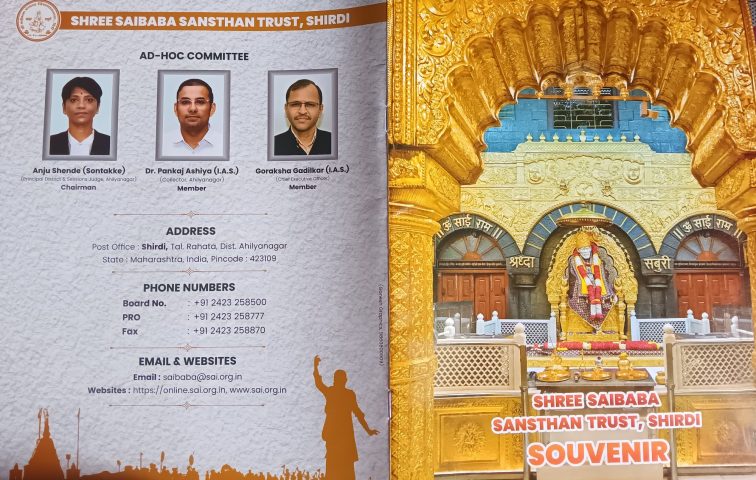
    Source: Thanks Publicity Department, SSST & Souvenir of SSST given on Sai Media Summit on 5th October 2025.

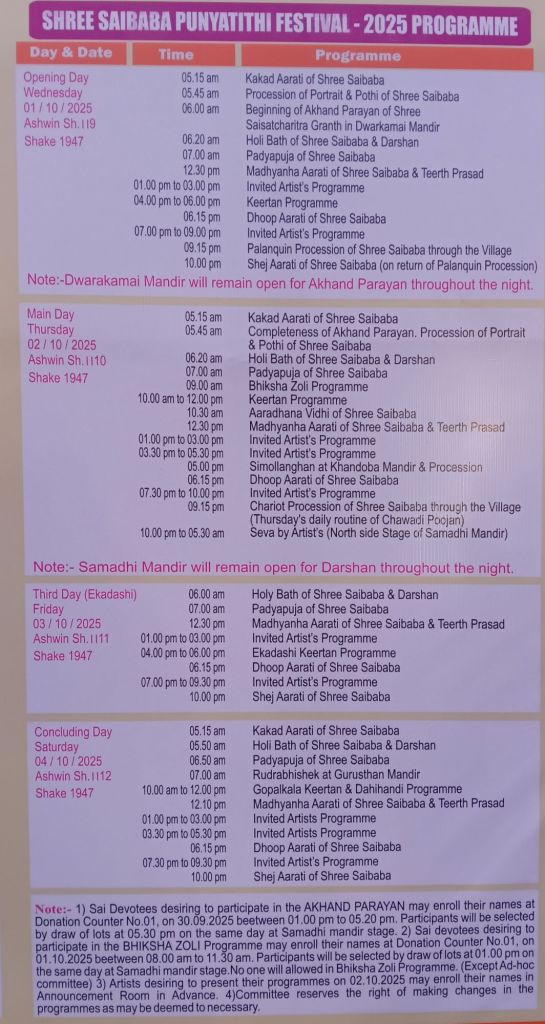
  • Akhanda Parayan during the Mahasamadhi Utsav

    Akhanda Parayan during the Mahasamadhi Utsav

    The Akhanda Shri Sai Satcharitra Parayan (continuous reading of the sacred text) is a very significant event that takes place during the annual festival in Shirdi commemorating Sai Baba’s Mahasamadhi (death anniversary).


    General information about the Akhanda Parayan during the Mahasamadhi Utsav (Festival):
    * Date of the Mahasamadhi: Shirdi Sai Baba attained Mahasamadhi on the day of Vijayadashami (Dussehra) in 1918. The date changes each year according to the Hindu calendar, but it usually falls in September or October. The Utsav is typically a three or four-day event surrounding the main Mahasamadhi day.
    * Akhanda Parayan Schedule:
       * The Akhanda Parayan usually starts on the first day of the Utsav.
       * The reading begins after the Kakad Aarti (early morning aarti) and a procession of Baba’s photo and the Pothi (holy book, Shri Sai Satcharitra) from the Samadhi Mandir to Dwarkamai.
       * The continuous, uninterrupted reading of the Shri Sai Satcharitra takes place in Dwarkamai (Baba’s Masjid) and continues all day and through the night, as Dwarkamai is kept open.
       * The Parayan is completed on the morning of the main Utsav day (Mahasamadhi day), after which the Pothi and Baba’s photo are taken back to the Samadhi Mandir in a procession.
    * Participation: Devotees wishing to participate in the Akhanda Parayan, by reading one of the 53 chapters, often have to submit their names a day before the festival begins, and chapters are allotted through a lottery system.
    To get the exact dates for the upcoming Akhanda Parayan, you would need to check the official calendar for the Mahasamadhi Utsav for the specific year, which is generally published on the Shri Sai Baba Sansthan Trust (Shirdi) official website as the date gets closer.
    For example, in 2025, Sai Baba’s Mahasamadhi Day is on October 2nd (Vijayadashami/Dussehra), and this festival took place on 1st October.

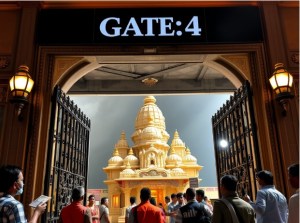
  • Entry Pass at Gate 4 of Shridi Mandir

    Entry Pass at Gate 4 of Shridi Mandir

    New special initiative for devotees and local citizens.

    An entry pass system has been implemented at Gate No. 4 of Sai Baba Mandir in Shirdi. This initiative has facilitated access to the temple premises; yet, it does not grant entry into the Main Mandir.

    • Devotees engaging in visits
      • to the Shree Shanaishwar, Shree Ganesh, and Shree Mahadev temples
      • for meditation purposes (at the Reading and Meditation Hall)
      • as visitors in the Administration Office
        • all occurring within the Samadhi Mandir premises

    (You) can use Gate No.4, avail this Entry pass and go for the above purposes

  • Baba inspires New Seekers. See How

    Baba inspires New Seekers. See How

    New seekers can find immense inspiration in the accounts of Sai Baba for several reasons, primarily stemming from His divine characteristics, accessible teachings, and the profound impact He had on His devotees:

    • Omniscience and All-pervasiveness:

      • New seekers are inspired by Sai Baba’s ability to know all events, past, present, and future, regardless of distance.
      • This quality reassures devotees that Baba is aware of their struggles and intentions, no matter where they are.
    • Curing Maladies and Fulfilling Desires:

      • Baba’s power to cure ailments and fulfill desires inspires many.
      • Stories of His miraculous healings, including serious diseases, highlight His divine capability.
      • He has helped childless devotees and resolved various life challenges, fostering hope for others.
    • Ease and Simplicity of Devotion:

      • The simplicity of devotion to Baba is appealing to newcomers.
      • He did not require complex rituals but encouraged remembering His name, listening to His stories, and meditating on Him.
      • These practices promote spiritual growth accessible to everyone.
    • Nature as a Sadguru and Divine Incarnation:

      • Baba is viewed as a true guru and a manifestation of God, aiming to uplift humanity.
      • His compassion and unconditional love exemplify his divine nature.
    • Acceptance and Unity:

      • Baba’s disregard for caste or religious distinctions inspires many.
      • He honored festivals from both Hindu and Muslim traditions, promoting unity and acceptance in devotion.
    • Grace and Spiritual Progress:

      • Seekers find inspiration in the idea that Baba’s grace leads to rapid spiritual growth.
      • He emphasized surrendering ego and having faith for self-realization and bliss.
    • Ever-living Presence:

      • The belief that Baba remains “ever alive” after His passing provides comfort to devotees.
      • His tomb is thought to still communicate with those who devote themselves to Him.
    • Being “Drawn” to Shirdi:

      • The notion that devotees are “drawn to Shirdi” suggests a divine guidance in their journey.
      • This belief brings comfort and assurance that their arrival is orchestrated by Baba.
  • Testimonials about Sai Baba, Online

    Testimonials about Sai Baba, Online

    Shirdi Sai Baba, revered as a saint and a manifestation of God by his devotees, performed countless miracles during his lifetime and continues to bless his followers even today.

    Here’s a curated collection of testimonials from various publicly available sources, reflecting the deep faith and experiences of devotees:

    1. Healing and Health Miracles:
    • Many testimonials speak of Sai Baba’s intervention in grave health conditions.
      • One devotee shared how their mother battled both a brain tumor and cancer; and through continuous prayers to Sai Baba, she survived and recovered, defying medical odds.
      • Another account describes a child who fell seriously ill and was in great distress,; but after fervent prayers and repeating Sai Baba’s name, the child miraculously recovered and started speaking normally.
      • A devotee suffering from a painful cyst behind their knee, which made daily puja difficult, found complete relief by applying Sai Baba’s Udi (sacred ash), enabling them to perform their spiritual practices without pain.
      • A particularly striking testimonial recounts a person who was stabbed multiple times, with the knife blade even entering their heart. They screamed “Baba help me” and lost consciousness. Despite two cardiac arrests and doctors believing survival was impossible, they miraculously recovered, with the medical team attributing it solely to a miracle.
    1. Guidance and Problem Solving:
    • Finding Lost Items: There are numerous stories of lost possessions being recovered through Sai Baba’s grace.
      • One devotee’s restless child misplaced a phone, and after a fervent prayer to Sai Baba, the phone was miraculously found ringing within the child’s bag.
      • Another account details a lost purse on a bus, which was later retrieved with all important documents, highlighting Baba’s help in seemingly small matters.
    • Career and Financial Blessings: Devotees have shared experiences of securing jobs against all odds, even without applying, after praying to Sai Baba.
      • One person, after facing significant financial losses and personal challenges, found their life gradually returning to normalcy with Baba’s blessings.
    • Overcoming Obstacles in Life: Testimonials often highlight how Sai Baba helps devotees navigate difficult situations, from resolving workplace tensions to facilitating smooth transitions in life.
    1. Divine Intervention and Presence:
    • Being “Called” to Shirdi: Some devotees describe a profound, unplanned urge to visit Shirdi, which inexplicably materializes into a trip, signifying Sai Baba’s direct invitation and presence in their lives.
    • Dreams and Visions: Sai Baba often appears in dreams, offering guidance, blessings, or even materializing Udi (sacred ash) when a devotee is in need, as shared by those who received Udi in dreams during illness.
    • Answers to Prayers (Big and Small): Devotees recount how Sai Baba answers both profound and seemingly trivial prayers, demonstrating his constant attentiveness to their needs. This includes a father’s blood pressure normalizing during a health scare after chanting “Om Sai Rakshak Sharanam.”
    1. Transformation and Spiritual Growth:
    • Instilling Faith and Patience: Many testimonials emphasize Sai Baba’s teachings of “Shraddha” (faith) and “Saburi” (patience) as cornerstones for experiencing his grace. Devotees often express how their unwavering faith in Baba helped them overcome immense suffering and transform their lives.
    • Experiencing Inner Peace: Beyond material benefits, many devotees share how connecting with Sai Baba brings a profound sense of inner peace, contentment, and spiritual fulfillment, even amidst life’s challenges
    • These testimonials, sourced from Online devotional blogs like Rgyan and Shirdi Sai Baba Experiences, temple websites such as Shirdi Sai Baba Kripa and Shirdi Sai Baba Devotees, and open forums like Sai Vichaar and Quora, [Thanks to each Websites /Blogs] through AI,
      • collectively paint a picture of Shirdi Sai Baba as a compassionate and powerful divine presence who continues to touch the lives of his devotees in miraculous ways.
  • Sai Baba was there, truly!

    Sai Baba was there, truly!

    Dr Antonio Rigopoulos, Italy in his ‘Oral Testimonies on Sai Baba As Gathered During a Field Research in Shirdi and Other Locales in October-November 1985′ (Venice Ca’ F Editions Oscar – Digital Publishing 2021) explained his own Experience that:-

    I went to the cāvaḍī and while I was casually sitting at the cāvaḍī’s entrance, looking at the raṅgolīs, the auspicious signs that some young women were skilfully drawing on the ground, a stray dog caught my attention. He was full of pustules and eczemas, of fleas, and was in a really bad shape. Then it suddenly flashed on me that that dog was Sai Baba. It was something stronger than a simple thought, like an insight or a sudden flash of awareness that I find hard to put into words. I really felt that he was that dog and that he was standing in front of me in that very form: it had the force of an incontrovertible truth. It was a strange and startling experience indeed. Sai Baba was that dog: the lowest, the despised, the most neglected creature. The dog had sweet and penetrating eyes, which called for sympathy and attention.

    I felt I finally understood something: not intellectually, i.e. with the head, but emotionally, i.e. with the heart. There was Sai Baba, truly and fully. It came like a revelation and I shed a few tears; couldn’t help it. It was just so overwhelming

    -On 21 Oct 1985 at 7.30 am

    Thanks / Reference:

    Rigopoulos, Antonio. ‘7 Shirdi-Kopargaon-Shirdi. Monday, October 21, 1985’. Masters, Texts and Sources of the East (2020): n. pag. Crossref. Web.

  • Why Shirdi Sai Baba is a Universal Spiritual Guide

    Why Shirdi Sai Baba is a Universal Spiritual Guide

    A captivating exploration of the profound themes and vital truths surrounding Shirdi Sai Baba reveals a figure of immense spiritual significance.

    I. The Nature and Identity of Sai Baba

    Sai Baba is a divine, omniscient, and omnipresent, being whose true nature transcends conventional human and religious classifications.

    • Ambiguity of Origin and Faith:
      • Baba’s identity as Hindu or Muslim is deliberately obscured, highlighting his universality.
      • He celebrated both Hindu festivals (Rama-Navami, Gokul Ashtami) and allowed Muslim practices (Sandal procession, Namaj in Masjid).
      • His physical attributes (pierced ears like a Hindu, advocacy of circumcision, but not circumcised himself) further blurred the lines.
      • No one definitely knew whether He was a Hindu or a Mahomedan.
    • Divine Incarnation and Sadguru:
      • Baba is depicted as a “Wonderful Incarnation,” a “precious Jewel,” and a “precious Diamond.”
      • He is the “crest-jewel of the Saints, who is the home of all auspicious things, who is our Atmaram (Dear Self), and who is the able refuge of the devotees.”
      • He is explicitly referred to as a “Sadguru,” a true spiritual master.
      • “Lord (God) dwells in the Saints.
        • In fact they are not different from Him.
        • Our Sai is One of these,
          • Who incarnated for the welfare of the devotees,
          • Supreme in knowledge and surrounded with divine lustre.”
    • Omniscience and Omnipresence: Baba has absolute knowledge of the past, present, and future.
      • He knew Mr.Damu Anna’s secret thoughts about cotton speculation and his desire to offer Baba a share of profits.
      • He knew Mr. Cholkar’s secret vow regarding sugar and his decision to forego sugar. Baba remarked, “Though, I am here bodily, still I know what you do; beyond the saven seas. Go wherever you will, over the wide world, I am with you. My abode is in your heart and I am within you.”
      • He knew Mr.Hari Kanoba’s name, parentage, and other details about him, even though it was Hari’s first visit to Shirdi.
      • He read Somadeva Swami’s critical thoughts about the flags at the Mosque, directly addressing them.
      • He knew about one pleader’s slander behind His back at Bar Council, demonstrating “His omniscience and His using it for correcting people and setting them on the right path.”
      • He correctly predicted and averted the death of Ramachandra Patil and foresaw Tatya Patil’s passing.
    • He is described as “omnipresent, occupying land, air, country, world, light and heaven, and that He was not limited.”
    • Detachment and Humility: Despite his divine powers, Baba lived a life of extreme simplicity and humility. He lived on alms, possessing nothing, and residing in a deserted Masjid. He begged for food daily, mixing all offerings together, and “His tongue knew no taste.” Dogs, cats, and crows freely ate from his earthen pot, and “Baba never drove them away.”

    II. The Role and Importance of the Sadguru

    The Sadguru (Guru, who realized Self) as the sole means to spiritual liberation and worldly well-being.

    • Bridge to Salvation:
      • The Sadguru is essential for crossing the “worldly ocean.”
      • “Where Real or Sadguru is the helmsman, he is sure to carry us safely and easily beyond the worldly ocean.”
      • The Vedas alone cannot achieve this; “It is only the Sad-guru, who can do so and make you, see the Lord in all creatures.”
    • Destroys Egoism and Sins:
      • The touch of the Guru’s hand is described as having “wonderful… power.”
      • It can destroy the “subtle-body (consisting of thoughts and desires)” and cleanse “sins of many past births.”
      • M. Hemadpant said, when starting writing Shri Sai SatCharitra, “Sai Baba took away my egoism and wrote Himself His stories.”
    • Catalyst for Transformation:
      • Baba’s darshan (sight) leads to profound inner change:
        • “by His darshana our thoughts are changed,
        • the force of previous actions is abated and
        • gradually non-attachment of dispassion towards worldly objects grows up.”
      • He transforms his devotees into “Himself (His nature).”
    • Teacher and Guide:
      • The Sadguru Sai teaches based on the disciple’s qualifications, without unsettling their minds.
      • He dispels ignorance (“Destroying ignorance is Jnana”) and
      • He helps the disciple realize their true Self (“You are God, you are mighty and opulent.”).
    • Unconditional Love and Service:
      • A true Sadguru expects no service or profit,
      • but instead wishes to serve his disciples, treating them as equals or even as Brahma.
      • “Baba had great love for the disciples.”
        • He “loved all beings equally.
        • He was unattached. Foes and friends, kings and paupers, were the same to Him.”

    III. Key Teachings and Practices Advocated by Sai Baba

    Baba’s teachings, though sometimes indirect, emphasized faith, surrender, moral conduct, and devotion.

    • Faith (Nishtha) and Patience (Saburi): These were presented as two coins of devotion by Baba to His Guru.
      • Baba said: “This is one pice -Faith. Patience or perseverance is the other pice. I waited patiently and very long on My Guru and served him. This Saburi will ferry you across the sea of this mundane existence.” (pice=1/100 INR)
    • Complete Surrender: “If any one prostrates before Sai and surrenders heart and soul to Him,
      • then unsolicited, all the chief objects of life viz. Dharma (righteousness), Artha (wealth), Kama (Desire) and Moksha (Deliverance), are easily and unsolicitedly attained.”
      • “The best way, therefore, to get free from the shackles of Maya is our complete and whole-hearted surrender to Baba.”
    • Charity and Non-Attachment to Wealth: Baba frequently extracted “Dakshina” (offerings),
      • not for personal gain, but “to teach the devotees the lesson of charity and to remove their attachment to money and thus to purify their minds.”
      • He asserted that “He had to give back hundred times more of what He received.”
      • He discouraged debt for spiritual purposes: “Baba never liked people to run into debt for taking His darshan, or celebrating any holiday or making any pilgrimage.”
      • He considered “money as a danger or bar to spiritual progress.”
    • Ethical Conduct and Self-Correction:
      • He advised against discourteously turning away those who come to you, emphasizing:
      • “Shri Hari (God) will be certainly pleased, if you give
        • water to the thirsty,
        • bread to the hungry,
        • clothes to the naked, and
        • your verandah of your Home to strangers for sitting and resting.”
    • Baba condemned slander:
      • “Let anybody speak hundreds of things against you,
      • do not resent by giving any bitter reply.
      • If you always tolerate such things, you will certainly be happy.”
      • He used the example of a pig eating filth to correct a slanderer, stating, “Your conduct is similar. You go on reviling your own brethren to your heart’s content.”
    • Baba taught the importance of offering everything to the Guru before enjoyment:
      • before the senses, mind and intellect enjoy their objects, Sai should first be remembered, and if this be done, it is in a way an offering to Him...
      • all the Vrittis (thoughts) regarding Desire, Anger, Avarice etc. should first be offered and directed to the Guru.”
    • He guided devotees to remain calm and composed, engage in good actions, and perform duties without attachment.
    • Remembrance of God/Guru (Dhyana/Bhajan): Baba advised various forms of devotion, including
      • “remembering My name,”
      • “hearing His Leelas,”
      • “worship of His Feet,” and
      • studying sacred scriptures like Shri Sai SatCharitra, Bhagwat, Jnaneshwari, and Vishnu-Sahasra-Nam.
      • He stated, “If you always say ‘Sai, Sai’ I shall take you over the seven seas.”

    IV. The Human and the Divine

    • Interaction with Devotees:
      • Baba allowed devotees to serve him in their own way,
      • demonstrating his “dependency on Bhaktas” (in the sense that he allowed their devotion to manifest).
      • He engaged in normal conversation, jokes, and sometimes strong reprimands, always with a deeper purpose.
    • The Guru-Disciple Relationship: The relationship is central. Disciples are encouraged to fully surrender and trust the Guru. The Guru sees beyond superficiality and acts for the disciple’s ultimate good.
    • Transcending Form:
      • While he had a physical form, Baba’s true nature was “unattached and indifferent” and “the state of Brahman.”
      • He demonstrated “Khandayoga, i.e., separating His limbs and joining them again,”
      • His visible form was merely a “mould” for the “liquid essence of Pure Self.”

    V. Miraculous Powers (Leelas) and Their Purpose

    Baba’s “Leelas” (divine plays or miracles) are frequently cited, serving not as ends in themselves, but as tools to deepen devotees’ faith, teach spiritual lessons, and alleviate suffering.

    • Manifestation of Divine Power:Grinding Wheat: Initially misunderstood as mundane, Baba’s grinding of wheat was a symbolic act to “destroy the cholera epidemic in Shirdi” with the flour.
    • Turning Water into Oil: This demonstrated his control over natural elements(fire) and taught the Banias (Oil Traders) a lesson in /
    • ‘truthfulness.
    • Curing Diseases: He cured various ailments, including eye problems with Beeba (marking nuts-Carpus Ana Cardium) and diarrhea with groundnuts, emphasizing that “The true medicine… was Baba’s word.”
    • Saving from Calamities: He averted the snake bite for Shama and predicted/averted the death of Ramachandra Patil. He also saved Mr. Mirikar from a potential snake bite.
    • Fulfilling Desires (within divine plan):
      • The “Amra-Leela” story illustrates his power. Four mangoes, given by Sai resulted in four sons and four daughters for Damu Anna. This happened despite astrological predictions.
      • He facilitated the return of a stolen jewel-box and a stolen sum of money.
    • Disguised Blessings and Tests:Baba’s “rage” and “abuses” were often a “blessing in disguise,” as seen with Somadeva Swami, or a direct command to the poison in Shama’s case.
    • Drawing Devotees and Confirming Faith:
      • The numerous anecdotes of individuals being drawn to Shirdi, despite their initial reluctance (Hemadpant’s own journey, Kakaji Vaidya being directed by Goddess Sapta-Shringi, the “idolater” friend of Kaka Mahajani) highlight Baba’s magnetic spiritual pull.
      • His precise knowledge of hidden thoughts or distant events served to “create faith and devotion” in his devotees.
    • Guaranteeing the Welfare of His devotees:
      • “There will never be any dearth or scarcity, regarding Food and clothes in My devotee’s home.”
    • In a nutshell
      • Baba’s teachings
        • emphasize love, compassion, and faith,
        • uniting all religions and
        • inspiring devotion beyond boundaries.
      • His miraculous acts instill hope, and
      • His wisdom fosters inner peace.
  • Can we follow other Gods?

    Can we follow other Gods?

    In BG VII(7) 21-2, Sri Krishna said “In whatever from people surrender to Me, in that very form, I serve them. Every one following his own form of worship is really following My worship’.

    God can be approached under any name and in any manner, and

    Mahlsapathy (Baba’s closest devotee),

    • though sticking to the idea that Khandoba was his God,
    • derived the advantage of getting all his
    • other needs safeguarded and provided as far as possible
    • by Baba acting as his Providence.

    Other bhaktas also

    • who have their own particular forms, who however note the need or importance of food, shelter and other things for themselves and their familes, being provided by Baba
    • would be thus encouraged by Mahlsapathy’s example to seek Baba and place themselves under his protection.
    • Baba never interfered with
      • anybody’s orthodoxy or religious worship, and
      • the orthodox now in various places need not have any fears about the loss of their existing spiritual position by contacting Baba.
      • All the while, they would get unconscious expansion and refinement of their idea of God and Gods, and become ready for reaching the “Ekam Sat-That which exists is One”

    LoSB-P245

  • Study materials available to Foreigners, interested in Shirdi Sai Baba.

    Study materials available to Foreigners, interested in Shirdi Sai Baba.


    Foreign individuals seeking to understand the life, teachings, and global influence of Shirdi Sai Baba have access to a wide array of study materials.

    1. Academic Works

    Academic studies offer a structured, critical, and contextual understanding of Shirdi Sai Baba, often distinguishing historical facts from hagiographical embellishments.

    As per (Thanks) Oxford Bibliographies:-

    Academic study of Shirdi Sai Baba has emerged within the past several decades as scholars of religion in South Asia began to engage in a wide array of studies of popular saints and gurus;

    and as they observed the rapid growth in devotion to Shirdi Sai Baba in particular within the Indian subcontinent and, eventually, beyond India.

    White 1972 provided the first academic analysis of Shirdi Sai Baba, noting his growing popularity in western India and attributing it to the unifying bond created between Sai Baba’s devotees, a bond that crosses distinctions of caste, class, and social status.

    Antonio Rigopoulos 1993 is the first book-length academic study of Shirdi Sai Baba, which presents a biography of Sai Baba in the first half that draws upon Hindu-authored hagiographies, and presents Sai Baba’s key teachings in the second half with an emphasis on interreligious tolerance.

    Warren 2004 includes a valuable translation of the diary kept by Abdul Baba, a Muslim follower of Sai Baba in Shirdi, and draws upon that to present an interpretation of Sai Baba as a Muslim fakir who traveled the Sufi path.

    McLain 2016 traces Shirdi Sai Baba’s rise from small village guru to global phenomenon, using a wide range of textual, material, and visual sources to investigate the different ways that Sai Baba has been understood and the reasons behind his skyrocketing popularity among Hindus in particular.

    The edited collection Srinivas, 2022 provides insight into the worship of Sai Baba beyond the village of Shirdi in the early twentieth century, with essays that examine more contemporary worship at multiple sites within India as well as in Asia and Africa.

    Several articles also make valuable contributions to the study of Shirdi Sai Baba:

    Hardiman 2015 analyzes the miracle healing cures associated with Sai Baba and the relationship between his spiritual power and secular science;

    Rigopoulos 2012 analyzes some of Sai Baba’s miracles in connection with yoga powers;

    Vicziany 2016 examines the worship of two syncretic figures, Shirdi Sai Baba and Haji Ali, in the city of Mumbai, India; and

    Loar 2018 compares the hagiographies of Shirdi Sai Baba that were written by two of his Hindu followers, Dabholkar and Narasimhaswami.”- Thanks Oxford for your article at www.oxfordbibliogrsphies.com.


    Cambridge University

    Cambridge University have explored aspects of Sai Baba’s life and the movement he inspired.

    1. Academic Research and Publications:
    * Cambridge Core: Cambridge University Press has published academic works that discuss Shirdi Sai Baba and the broader Sai Baba movement.
       * Smriti Srinivas’s article, “Sai Baba: The Double Utilization of Written and Oral Traditions in a Modern South Asian Religious Movement,” published in Diogenes, examines the origins of the Sai Baba movement rooted in Shirdi Sai Baba.
       * Another article in Comparative Studies in Society and History titled “Miracle Cures for a Suffering Nation: Sai Baba of Shirdi” explores his popularity and perceived ability to provide miraculous cures.
       * The “Cambridge Companion to New Religious Movements” features a chapter by Tulasi Srinivas on the Sathya Sai Baba movement, which originated from Shirdi Sai Baba’s legacy.
    * Cambridge University Library: Kevin R.D. Shepherd, a British author, conducted private research at Cambridge University Library for twelve years, focusing on the history of religions and philosophy. He has authored books such as “Sai Baba of Shirdi: A Biographical Investigation” and “Investigating the Sai Baba Movement.”
    2. Perspectives on Shirdi Sai Baba:
    * Syncretism: Some scholars highlight Shirdi Sai Baba’s image as a unifying figure between Hindu and Muslim traditions, emphasizing the composite nature of Indian culture in the growth of his devotion.
    * Miracles and Faith: His devotees often attribute miraculous abilities to him, which contributed to his widespread popularity. Academic analysis has also focused on these aspects.
    * Historical Context: Research connects the rise of Shirdi Sai Baba’s popularity with the Indian nationalist movement and the search for unifying symbols.
    3. Mentions in Other Contexts:
    * Sathya Sai Baba: Sathya Sai Baba of Puttaparthi, and his movement have also been subjects of academic study, including publications by Cambridge University Press.
    * Educational Initiatives: Cambridge University Press has collaborated with Indian educational institutions for programs like the “SAI-Cambridge Reading Quest,” although this is related to language skills development and not directly to the study of Sai Baba.
    While Cambridge University’s press has published scholarly articles and books that analyze his life, teachings, and the socio-religious movements associated with him. Individual researchers connected to the university have also contributed significantly to this field of study.


    Teachings and Philosophy

    Social and Cultural Significance

    • Karline McLain’s Be United, Be Virtuous: This work investigates the role of Sai Baba’s teachings in promoting religious harmony and examines the movement’s cultural impact within Indian society.
    • Edited Volumes (e.g., Devotional Spaces of a Global Saint): These collections often feature contributions that analyze the institutional development of the Sai Baba movement and its place in the lives of modern devotees.

    Miracles and Belief Systems

    • Analytical Perspectives on Miracles: Academic literature explores the narrative function of miracles in constructing Sai Baba’s authority, examining their sociological and psychological dimensions and drawing comparisons with miracle traditions in other religions.

    Global Spread and Contemporary Practices

    • Studies on Globalization: Scholars analyze how Sai Baba’s devotion has transcended geographic boundaries, highlighting the establishment of temples and devotional practices in international contexts.
    • Media and Technology: Contemporary research considers how digital media platforms are employed to maintain global devotional networks and disseminate teachings.

    Methodological Approaches

    Engagement with academic resources introduces foreign learners to various methodological frameworks—historical criticism, sociology of religion, and anthropology—that enable a comprehensive and critical study of religious figures and movements.

    2. Devotional and Informational Websites

    In addition to academic works, several online platforms provide accessible resources tailored to the needs of international devotees.

    Websites for International Devotees (e.g., shirdisaibaba.international)

    • Curated Publications: These platforms offer English-language articles, news updates, and publications, suited for global audiences.
    • Translations of Key Texts: They often provide details of translated versions of significant devotional texts and biographies.
    • Community Engagement: Discussion forums and community pages offer a space for interpretation, Lists of Sai Baba temples in countries like the USA, UK, Canada, Singapure, Dubai…and sharing of experiences, reflecting the living tradition of Sai Baba devotion.

    Official Temple Trust Website (sai.org.in)

    • Authoritative Information: Offers official narratives, details of temple rituals, and historical overviews from the perspective of the temple trust.
    • Online Resources: Includes downloadable material, videos, and frequently asked questions, all primarily in English, facilitating introductory-level engagement.

    3. Key Considerations for Foreigners

    Language Accessibility

    The wide availability of English-language materials—both academic and devotional—greatly enhances accessibility for non-Indian audiences.

    Multiple Perspectives

    A balanced approach that includes both academic and devotional materials provides a more nuanced and comprehensive understanding of Shirdi Sai Baba.

    Cultural Context

    Academic studies help situate Sai Baba within the broader Indian religious and cultural milieu, an essential context for foreigners unfamiliar with the subcontinent’s spiritual traditions.

    Critical Engagement

    By engaging with academic sources, foreigners are encouraged to critically examine the narratives surrounding Sai Baba, differentiating between historically substantiated facts and devotional interpretations.