

Complete surrender to the Guru encompasses several dimensions, as elucidated in the Shri Sai Sat Charitra:
Devotion and Remembrance: This entails a total surrender of oneself while consistently recalling the Guru’s presence, with the necessity of continually chanting the Guru’s name.
Seeing the Guru in all beings: Engaging in meditation on the Guru allows one to perceive Him within every being, thereby bestowing eternal bliss. A true devotee regards every Guru as Krishna.
Lack of Egoism: This principle mandates the relinquishment of pride and ego, thereby surrendering to the Guru who resides within one’s heart. The removal of egoism and the complete trust in the Lord liberates one from worldly constraints.
Service: True surrender requires Sarvaswa Sharangati (total surrender) to the Sad-guru, where one must recognize that they are not the sovereign of their own body; rather, the body belongs to the Guru and exists solely to serve Him.
Faith and compliance: A disciple’s duty and dharma necessitate implicit and prompt adherence to the Guru’s directives.
Channeling Senses to the divine: Prior to indulging the senses, mind, and intellect in their respective pursuits, it is incumbent to remember the Guru; such remembrance serves as an offering to Him.
Experiencing Oneness: The individual who approaches the Guru achieves oneness with Him, akin to a river merging with the sea.
Desirelessness: The Guru liberates His devotees from desires, rendering them free.
Love: The Guru desires nothing but love for all sentient beings. Genuine love requires earnest affection; thus, where there is true yearning and feeling, God reveals Himself.
Mindfulness: Regularly chanting the Guru’s name and engaging in meditation fosters the ability to perceive Him in all beings, which in turn grants eternal bliss. A definitive indication of this practice is the attainment of a calm and peaceful mind.
Category: Shri Sai SatCharita
Book
-

Complete surrender to the Guru involves
-
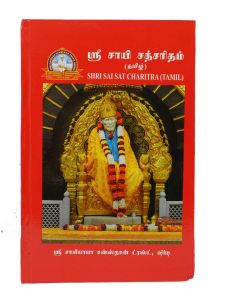
Who, When, How and Why Shri Sai SatCharitra (SSSC) created?
- When seeking facts about Sai Baba,
- the remarkable work that stands out is ‘Sai Satcharitra’ by HemadPant, known as Anna Saheb Dabolkar.
- It is written in the Marathi language.
- This wonderfully crafted poetical masterpiece spans 53 vibrant chapters and over 1000 pages, narrating incidents from Sai Baba’s inspiring life.
- Written in rich and expressive Marathi, it beautifully fulfills the purpose of Puranic study, serves daily parayana.
- It offers readers a path to deeper understanding and devotion.(LoSB p6)
- Baba conveyed his heartfelt blessing to Hemadpant in 1916, when asked permission to write Baba’s life teachings and expressions,
- by providing him with udhi and placing his Asirvada hand upon Dabolkar’s head, proclaiming,
- “Let him compile a collection of My stories and experiences,
- diligently maintaining notes and memos.
- I shall assist him in this endeavor.
- He is merely an external instrument. It is I who should document my life and fulfill the aspirations of my devotees.
- When his ego is entirely extinguished, leaving no remnants, I shall personally enter within him to narrate my life.
- Listening to my stories and teachings will instill faith in the hearts of devotees, facilitating their journey toward self-realization and eternal bliss.“
- Hemadpant diligently gathered information concerning the lilas of Baba and, as a proficient writer possessing a profound command of Marathi verse and prose, along with a solid foundation in religious literature,
- aspired to compose a comprehensive study of Baba’s lilas, thereby creating a significant chronicle of Baba’s life.
- This endeavor would align with the framework established by Saraswati Gangadhar’s Guru Charitra, offering solace and happiness to individuals burdened with sorrow and the afflictions stemming from worldly existence.
- Additionally, it would provide them with Jnana, or knowledge and wisdom, regarding both temporal and spiritual matters.
- Baba’s lilas would serve as both instructive and engaging, akin to the Vedas,
- and, upon contemplation, they would facilitate laya, or union with Brahman, as well as mastery of Yoga and Yoga Ananda.
- Consequently, he resolved to compile these narratives, considering the publication as a form of upasana, or worship, of his Guru.
- This collection would be particularly invaluable to those unable to experience Baba in person, allowing them to form an understanding of Baba through this compilation.
- Baba’s teachings and expressions were the natural outcome of his boundless self-realization; it was Dabolkar’s belief that Baba himself inspired this initiative to gather and present his life’s essence.(P376. )
Shri N.V.Gunaji adapted the above Shri Hemanpant’s “Sri Sai SatCharita” and translated into English and donated the entire proceeds to the Sai Sansthan Trust, Shirdi.
- When seeking facts about Sai Baba,
-
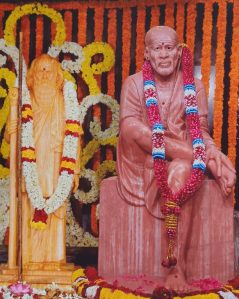
WHEN, WHY AND HOW ‘The Life of Sai Baba’ book was started by H H Narasimhaswami Ji
“There has not been a good biography containing a fair, full and faithful description of Sai baba’s life.
- In Marathi, the work that can be thought of when facts about Sai Baba are wanted is Hemad Pant’s alias Anna Saheb Dabolkar’s “Sai Satcharitra. ”
- This is a brilliantly written poetical work extending to 53 chapters and over 1000 pages narrating incidents connected with Sai Baba’s life, and written in highly florid and resonant Marathi, serving excellently the purpose of Puranic study and daily parayana.
- There is a good adaptation of this Marathi work in an English garb by Sri Gunaji. -ie. Shri Sai Satcharitra.
- This is a brilliantly written poetical work extending to 53 chapters and over 1000 pages narrating incidents connected with Sai Baba’s life, and written in highly florid and resonant Marathi, serving excellently the purpose of Puranic study and daily parayana.
Other small sketches or introduction to Baba’s life have been published in English and other languages, but these also are too tiny to deserve the name of a biography, sketches of a few early incidents in Baba’s life were issued as :
- Poetic pieces by Das Ganu Maharaj of Nanded, during the life time of Baba in about 1906. He wrote 6 or 7 chapters on the whole about Sai Baba, and he published them as part of big books namely, Bhakta Leelamrutha, Santha Kathamrutha and Bakthi Saramrutha. These 7 chapters are printed in Marathi.
- H.S. Dixit wrote a short biographical preface to Mrs. & Mr. Tendulkar’s Sai Bhajan Mala in 1917.
- A very short sketch of Sai Baba’s life was issued in Gujarati by Amidoss Mehta. This was also before Baba’s Mahasamadhi in 1918.
- A slightly more ambitious work was the Life of Baba in Tamil written by the present author. Actually only Part I of it appeared, but even that was not a full account.
Subsequent to Baba’ mahasamadhi, there have appeared a few statements or sketches about Sai Baba, but they are scattered and do not deserve the name of a regular biography.
Sai Samasthan itself published Rao Bahadur M.W. Pradhan’s book ‘A glimpse of Indian spirituality’, but it ran upto only about 25 to 30 pages and set out just a handful of facts about Baba.
This list practically exhausts all attempts made hitherto to publish a biography of Sai Baba. A faithful and full account of Sai Baba’s life based on a careful and critical study of the available material regarding his life and the incidents and anecdotes narrated about him by those who contacted him before and after 1918 is therefore urgently called for and will it is hoped be appreciated by his innumerable devotees.
The author has undertaken this work in a spirit of humility and as a true service of Sai Baba and in the sincere belief that Sai himself has directed him to undertake it. ” -Author Pujyasri H.H. Narasimhaswamiji.
To create faith and evoke confidence, God or a God-man Guru has to confer wished for benefits on the disciple or devotee and the conferring of such benefits is the instrument with which God works. The less care a devotee has about his bodily or material comforts, the more perfectly he can carry out His will and programme.
This book proves beyond doubt how Sai Baba took upon his shoulders the responsibility of looking after the maintenance, health and prosperity of his disciples and devotees (Author’s).
The advent of Sai Baba was for the uplift of man-kind and a study of this work describing it will, shower upon the readers incalculable benefits both spiritual and temporal in this world and beyond.
- In Marathi, the work that can be thought of when facts about Sai Baba are wanted is Hemad Pant’s alias Anna Saheb Dabolkar’s “Sai Satcharitra. ”
-
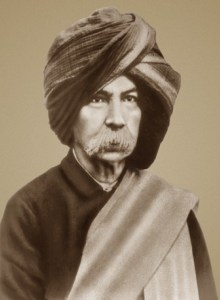
Hemadpant, The Author of “Shri Sai Satcharita”
Govind Raghunath Dabolkar, called Anna Saheb Dabolkar, was Mamlatdar and first class resident Magistrate.
His work ‘Sai Satcharitra’ in Marathi Ovi verse extends to a thousand pages. Maharashtra Sai bhaktas treat it as Sai Ramayana or modern Guru Charitra. They give it the respect due to ancient puranas. Even others respect it when they gain access through N.V. Gunjaji’s English adaptation or translations in Telugu, etc.
This work is highly meritorious and has been the instrument for many people becoming Sai bhaktas. The verses are highly sonorous. The stories about Sai Baba collected from various individuals are based on actual experiences. These stories have great charm and are always fresh.
On his first visit to Shirdi and Sai Baba in 1910, went to the mosque. He and his friend Bala Saheb Bhate prostrated before Baba. Baba pointed to Dabolkar and said, ‘What talk was going on there at the wada? And what did this Hemad Pant say (pointing his chin to Dabolkar)?’. Dabolkar’s name was not Hemad Pant at all.
Hemadpant-“I began to think why Sai Baba should call me by the name Hemadpant. This word is a corrupt form of Hemadripant.
This Hemadripant was a wellknown Minister of the kings Mahadev and Ramadev of Devgiri of the Yadav dynasty. He was very learned and good-natured. He authored good works, such as Chaturvarga Chintamani (dealing with spiritual subjects) and Rajprashasti. He invented and started new methods of accounts and was the originator of the Ovi (Marathi Shorthand) script.
But I was quite the opposite, an ignoramus, and have dull, mediocre intellect. I could not understand why the name or title was conferred upon me. However, after thinking seriously about it, I thought that the title was a dart to destroy my ego. This way, I should always remain meek and humble. It was also a compliment paid to me for the cleverness in the discussion#. (# before he started from Wada/Lodge to Sai Temple, he had some hot discussion with Bala Saheb Bhate about”Guru’s essential ” for 30 minutes)”.
Looking to the future history, we think that Baba’s word (calling Mr. Dabholkar by the name Hemadpant) was significant and prophetic, as we find that he looked after the management of Sai Sansthan very intelligently, kept nicely all the accounts and helped greatly in the publications of ‘Sai Lila Masik (Magazine)’ also as the author of such a good work “Shri Sai Satcharita (SSSC)”, which deals with such important and spiritual subjects as Jnana, Bhakti and dispassion, self-surrender and self-realization.

-
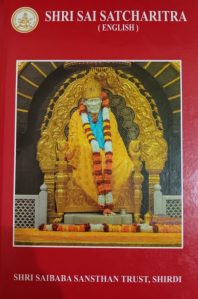
Baba’s permission to write Shri Sai Sat Charitra
Hemadpani- “I requested Mr. Madhavrao Deshpande alias Shama, Baba’s most intimate devotee, to speak to Him for me to write the Book.
He pleaded for my cause and said to Sai Baba, “This Annasaheb wishes to write Your biography, don’t say that You are a poor begging Fakir, and there is no necessity to write it, but if You agree and help him, he will write or rather, Your feet (grace) will accomplish the work. Without Your consent and blessing, nothing can be done successfully.”
When Sai Baba heard this request, He was moved and blessed me by giving me His Udi (sacred ashes) and placing His boon-bestowing hand on my head said :-
“Let him make a collection of stories and experiences, keep notes and memos; I will help him. He is only an outward instrument. I should write Myself My autobiography and satisfy the wishes of My devotees. He should get rid of his ego, place (or surrender) it at My feet. He who acts like this in life, him I help the most. What of My life-stories?
I serve him in his house in all possible ways. When his ego is completely annihilated and there is left no trace of it, I Myself shall enter into him and shall Myself write My own life.
Hearing my stories and teachings will create faith in devotees’ hearts and they will easily get self – realization and Bliss.
SSSC-Ch 2
-

Praying the God- The Order under Hindu System
1–2 minutesAccording to the ancient and revered custom of Hindus, Pray deities in this order
- First, make obeisance to the God Ganesha to remove all obstacles and make the work a success
- Then, the Goddess Saraswati to inspire to write out or Do our work
- Then, the Gods ; Brahma, Vishnu and Siva – the Creating, Preserving and Destroying Deities respectively.
- Then, ones tutelary Deity- Family God
- Then, the Rishis , into whose gotra (clan) one was born & then other Rishis
- Then, one`s grandfather, father, mother
- Finally, Our Guru Sai Baba,
-Various Modes of devotion, prescribed by according to Parashara, Vyasa and Shandilya etc
SSSC -Ch 1
-

Four Sadhana for Four Ages
Baba’s Stories as Beacon- Light:
- Light houses are constructed at various places in the sea, to enable the boatmen to avoid rocks and dangers, and make them sail safely. Sai Baba’s stories serve a similar purpose in the ocean of worldly existence.
- They surpass nectar in sweetness, and make our worldly path smooth and easy to traverse. Blessed are the stories of the saints.
- When they enter our hearts through the ears, the body-consciousness or egoism vanishes. The sense of duality disappears. When they are stored in the heart, doubts fly out to all sides. Pride of the body will fall. Wisdom will be stored in abundance.
- The description of Baba’s pure fame and hearing it with love will destroy the sins of the devotee. Therefore, this is the simple Sadhana for attaining salvation.
- The Sadhana for
- Krita Age was Shamadama (tranquility of mind and body); for
- Treta Age, sacrifice; for
- Dwapara, worship, ;and for
- Kali (present) Age, it is singing of the name and glory of the Lord. This last Sadhana is open to all the people of the four varnas.
- The other Sadhanas, viz. Yoga/Yagya (sacrifice), Dhyana (meditation) and Dharana (concentration) are very difficult to practice, but singing and hearing the stories and the glory of the Lord (Sai Baba) is very easy.
- We have only to turn our attention towards them. The listening and singing of the (Baba’s) stories will remove the attachment to the senses and their objects, and will make the devotees dispassionate, and will ultimately lead them to self-realization.
- With this end in view, Sai Baba made me or helped me[ie Hemapant] to write His stories. The devotees may now easily read and hear these stories of Sai Baba. While doing so, they can meditate on Him and His form. Thus, they attain devotion to Guru and God (Sai Baba). They also gain detachment and self-realization.
If any one prostrates before Sai and surrenders heart and soul to Him, then unsolicited, all the chief (Four) objects of life viz. Dharma (righteousness), Artha (wealth), Kama (Desire) and Moksha (Deliverance), are easily and unsolicitedly attained. SSSC Ch-6
-
SIX
Lord or Bhagwan (GOD) is said to have six qualities, viz. (1) Fame, (2) Wealth, (3) Non-attachment, (4) Knowledge, (5) Grandeur, and (6) Generosity. Baba had all these in Him. He incarnated in flesh for the sake of the Bhaktas. Wonderful was His grace and kindness!
-LoSB: Ch X
BABA said that “My Guru never expected any other thing from Me. He never neglected Me, but protected Me at all times. I lived with him, and was sometimes away from him; still I never felt the want or absence of his love. He always protected Me by his glance, just as the tortoise feeds her young ones, whether they are near her or away from her on the other side of the river bank, by her loving looks. Oh mother,
My Guru never taught Me any Mantra, then how shall I blow any Mantra in your ears? Just remember that Guru’s tortoise-like loving glance gives us happiness. Do not try to get Mantra or Upadesh from anybody.
Make Me the sole object of your thoughts and actions; and you will, no doubt, attain Paramartha (the spiritual goal of life) . Look at Me whole-heartedly, and I in turn look at you similarly. Sitting in this Masjid, I speak the truth, nothing but the truth.
No Sadhanas, nor proficiency in the Six Shastras, are necessary. Have faith and confidence in your Guru. Believe fully, that Guru is the sole Actor or Doer. Blessed is he who knows the greatness of his Guru and thinks him to be Hari, Hara and Brahma (Trimurti) Incarnate.”
-LoSB: Ch XVII
-
Seven
There was a gentleman named Mr. Sathe, who had attained some publicity many year ago during Crowford Regime, which was put down by Lord Reay, the then Governor of Bombay.
He suffered servere losses in trade. Other adverse circumstances gave him much trouble, and made him sad and dejected. Being restless, he thought of leaving home; and going out to a distant place.
Man does not generally think of God, but when difficulties and calamities overtake him, he turns to Him and prays for relief. If his evil actions have come to an end, God arranges his meeting with a Saint, who gives him proper directions regarding his welfare.
Mr. Sathe had similar experience. His friends advised him to go to Shirdi, where so many people were flocking to get Sai Baba’s darshan, for getting peace of mind and the satisfaction of their wants. He liked the idea, and at once came to Shirdi in 1917.
Seeing Baba’s Form, which was like Eternal Brahma, Self-luminous, Spotless and Pure, his mind lost its restlessness and became calm and composed. He thought, that it was the accumulation of merits in his former births, that brought him to the Holy Feet of Baba.
He was a man of strong will. He at once started to make a parayana (study) of Guru-charitra. When the reading was finished in the saptaha (seven days), Baba gave him a vision that night. It was to this effect: Baba with Guru- charitra in His hand was explaining its contents to Mr. Sathe, who was sitting in front and listening carefully. When he woke up, he remembered the dream and felt very happy.
He thought that it was extremely kind of Baba. Who awakens souls like his that are snoring in ignorance, and makes them taste the nectar of Guru-charitra.
Next day, he informed Kakasaheb Dixit of this vision, and requested him to consult Sai Baba regarding its meaning or significance — whether one saptah (seven days) reading was sufficient or whether he should begin again. Kakasaheb Dixit, when got a suitable opportunity, asked Baba –
“Deva (Oh God), what did you suggest to Mr. Sathe by this vision? Whether he should stop or continue the saptaha? He is a simple devotee, his desire should be fulfilled and the vision explained to him, and he should be blessed.”
Then Baba replied – “He should make one more saptah(seven days) of the book; if the work be studied carefully, the devotee will become pure and will be benefited, the Lord will be pleased and will rescue him from the bondage of the mundane existence.”
-
One simple remedy
I request the readers to leave out the various hindrances viz. indolence, sleep, wandering of mind, attachments to senses, etc. and turn their whole and undivided attention to these stories of Sai Baba.
Let their love be natural, let them know the secret of devotion;
let them not exhaust themselves by other Sadhanas, let them stick to this one simple remedy, i.e. listening to Sai Baba’s stories. This will destroy their ignorance and will secure for them Salvation.
A miser may stay at various places; but he always thinks of his buried treasure. So let Sai Baba be enthroned in the hearts of all.
SSSC Ch-III
 Welcome to https://ShirdiSaiBaba.InterNational
