

- I always say ‘Sai, Sai,’ and HE shall take me over the seven seas .
- I trust that as soon as I remember Sai Baba, my sufferings have come to an end; and I am on the pathway to happiness .
- I recognize that my cure is due to past evil karma being worked out, and Sai Baba’s intervention hastens this .
- I express grateful remembrance, keep unchanging faith, and show devotion to Sai.
- I show implicit obedience and prompt compliance with Sai Baba’s order, which is the true dharma .
- I am satisfied that Sai Baba is the Sadguru who, by His simple word and touch, relieves all maladies.
- I trust Sai Baba even when He suggests remedies, like groundnuts for diarrhea, that may not align with modern knowledge, believing His word is true.
Category: Nama Japa
-
Self-Affirmation from Chapter XIII of SSSC for Sai Baba devotees
-

Self-Affirmation from Chapter VI of SSSC for Sai Baba devotees
- ❇️I embrace the wonderful power of the Guru’s touch, which destroys the sins of my past births and cleanses my subtle body.
- 🦶I touch Sai Baba’s hand and feet, and awaken my ‘I am He (Brahman)’ consciousness, manifesting the joy of self-realization.
- 🧎I prostrate before Sai and surrender heart and soul. As a result, the four chief objects of life (Dharma -Righteousness, Artha -Wealth, Kama -Desire, Moksha -Deliverance) are easily attained.
- 🚶I walk the difficult path of Bhakti straight by relying on my Sadguru.
- 🍞I am surrounded by an abundance of food and clothing in my home.
- 🧏I fix the form of the Sai firmly in my mind, so that it doesn’t wander.
- 😌I fix my mind on remembering Sai always, so that it is calm, peaceful, and carefree.
-
Self-Affirmation from Chapter III of SSSC for Sai Baba devotees
- 🌌As I listen attentively and devoutly to Sai Baba’s stories,My ignorance vanish, and the consciousness of worldly existence abate.
- 💋I utter Sai Baba’s name with love, HE shall fulfill all my wishes and increase my devotion.
- 💫If I sing earnestly His life and deeds, Sai Baba shall beset me in front and back and on all sides.
- 💆I am confident that Sai Baba will draw me out from the jaws of Death.
- 👂All my diseases will be got rid of by hearing Sai Baba’s stories with respect.
- 💌The simple remembrance of Sai Baba’s name as ‘Sai, Sai’ destroys my sins of speech and hearing.
- 🎯Reading of the Sai Baba stories secure me salvation; let me not exhaust myself by other sadhanas.
-

Baba inspires New Seekers. See How
New seekers can find immense inspiration in the accounts of Sai Baba for several reasons, primarily stemming from His divine characteristics, accessible teachings, and the profound impact He had on His devotees:
- Omniscience and All-pervasiveness:
- New seekers are inspired by Sai Baba’s ability to know all events, past, present, and future, regardless of distance.
- This quality reassures devotees that Baba is aware of their struggles and intentions, no matter where they are.
- Curing Maladies and Fulfilling Desires:
- Baba’s power to cure ailments and fulfill desires inspires many.
- Stories of His miraculous healings, including serious diseases, highlight His divine capability.
- He has helped childless devotees and resolved various life challenges, fostering hope for others.
- Ease and Simplicity of Devotion:
- The simplicity of devotion to Baba is appealing to newcomers.
- He did not require complex rituals but encouraged remembering His name, listening to His stories, and meditating on Him.
- These practices promote spiritual growth accessible to everyone.
- Nature as a Sadguru and Divine Incarnation:
- Baba is viewed as a true guru and a manifestation of God, aiming to uplift humanity.
- His compassion and unconditional love exemplify his divine nature.
- Acceptance and Unity:
- Baba’s disregard for caste or religious distinctions inspires many.
- He honored festivals from both Hindu and Muslim traditions, promoting unity and acceptance in devotion.
- Grace and Spiritual Progress:
- Seekers find inspiration in the idea that Baba’s grace leads to rapid spiritual growth.
- He emphasized surrendering ego and having faith for self-realization and bliss.
- Ever-living Presence:
- The belief that Baba remains “ever alive” after His passing provides comfort to devotees.
- His tomb is thought to still communicate with those who devote themselves to Him.
- Being “Drawn” to Shirdi:
- The notion that devotees are “drawn to Shirdi” suggests a divine guidance in their journey.
- This belief brings comfort and assurance that their arrival is orchestrated by Baba.
- Omniscience and All-pervasiveness:
-

Complete surrender to the Guru involves
Complete surrender to the Guru encompasses several dimensions, as elucidated in the Shri Sai Sat Charitra:
Devotion and Remembrance: This entails a total surrender of oneself while consistently recalling the Guru’s presence, with the necessity of continually chanting the Guru’s name.
Seeing the Guru in all beings: Engaging in meditation on the Guru allows one to perceive Him within every being, thereby bestowing eternal bliss. A true devotee regards every Guru as Krishna.
Lack of Egoism: This principle mandates the relinquishment of pride and ego, thereby surrendering to the Guru who resides within one’s heart. The removal of egoism and the complete trust in the Lord liberates one from worldly constraints.
Service: True surrender requires Sarvaswa Sharangati (total surrender) to the Sad-guru, where one must recognize that they are not the sovereign of their own body; rather, the body belongs to the Guru and exists solely to serve Him.
Faith and compliance: A disciple’s duty and dharma necessitate implicit and prompt adherence to the Guru’s directives.
Channeling Senses to the divine: Prior to indulging the senses, mind, and intellect in their respective pursuits, it is incumbent to remember the Guru; such remembrance serves as an offering to Him.
Experiencing Oneness: The individual who approaches the Guru achieves oneness with Him, akin to a river merging with the sea.
Desirelessness: The Guru liberates His devotees from desires, rendering them free.
Love: The Guru desires nothing but love for all sentient beings. Genuine love requires earnest affection; thus, where there is true yearning and feeling, God reveals Himself.
Mindfulness: Regularly chanting the Guru’s name and engaging in meditation fosters the ability to perceive Him in all beings, which in turn grants eternal bliss. A definitive indication of this practice is the attainment of a calm and peaceful mind. -

Where certain actions or entities are considered better than others
- A human body is better than other bodies–
- Despite its filth, mucus, and susceptibility to decay, disease, and death, the human body’s special value lies in its capacity to acquire knowledge and attain God-vision, which is impossible in any other birth.
- Love is better than intelligence-
- The pure love of Shirdi women, despite their ignorance, inspired them to compose poems, implying that love is more inspiring than intelligence.
- Giving food is better than other charities-
- While other charities like giving away wealth, property, and clothes require some discrimination, offering food requires no such consideration.
- Also, the merit of feeding lame, crippled, blind, and diseased paupers is much greater than that of feeding able-bodied persons and relations.
- Butter-milk (Leelas) is better than Milk (Darshan)-
- If one desires to see Sai Baba’s but they did not get any opportunity of taking His darshan, their quest for milk (darshan) will be, to a great extent, satisfied by the butter-milk (Leelas).
- Remembering and chanting Hari’s and Guru’s name confers salvation is better than getting the powerful Bhakti of the Nathas-
- one Madhavarao did not like Kakasaheb’s pessimistic attitude of how to get the powerful Bhakti of the Nathas, as he said, ‘has not Baba told us authoritatively that remembering and chanting Hari’s and Guru’s name confers salvation? Then where is the cause for fear and anxiety?’
- The observance of the vow of silence is the best way of praising the Sad-guru-
- In reality, the observance of the vow of silence is the best way of praising the Sad-guru.
- Having recourse to Sai Baba’s Feet and surrendering to Him is the best luck-
- The best luck is to get an opportunity to have recourse to Sai Baba’s Feet and surrender to Him, than any other
- A human body is better than other bodies–
-
Complete surrender to Guru=Our mind gets calm and peaceful
- Baba, although we cannot see Your form now,
- those who believe in You, still have real experiences with You.
- Through an unseen thread, You bring devotees from near and far.
- You welcome them to Your Feet and embrace them like a loving mother.
The devotees may not know, where You are. You cleverly guide them. You help them realize that, You are there to support them.
- The intelligent, wise and learned folk fall into the pit of the samsar (worldly) due to their egoism.
- However, You save the poor, simple, and devout persons by Your power.
- The best way for us is to offer our
- body,
- speech, and
- mind to You and
- consistently chant Your name to remove our sins.
- You grant the
- wishes of those, who seek and
- provide ultimate bliss to those, who desire nothing.
Chanting your sweet name is the simplest practice for devotees. Through this practice, our sins and negative qualities will fade away, while goodness and righteousness will grow stronger. This will also lead to better judgment, detachment, and understanding.
- Then we shall abide in our Self and our Guru (Sai,who are one and the same).
- This is what is called complete surrender to the Guru.
- The only sure sign of this is that, our mind gets calm and peaceful
SSSC -Ch 46
-

Last thought, man has at death-hour, determines his future
The last wish or thought that a man has at the hour of death, determines his future course.
Shri Krishna has said in Gita (VIII-5-6) that “he who remembers Me in his last moments, comes verily to Me, and he who meditates otherwise at that time, goes to what he looks for.”
We cannot be certain that we can entertain a particular good thought at our last moment, for, more often than not, we are more likely to be frightened and terrif ied by death.
Hence constant practice is necessary, for enabling us to fix our mind on any desired good thought at any moment.
All Saints, therefore, recommend us to always remember God and chant His name always, so that we may not be puzzled when the time for departure comes.
The devotees on their part surrender themselves completely to the Saints, fully believing that the all-knowing Saints (Sai Baba) would guide and help them in their last moments.
-
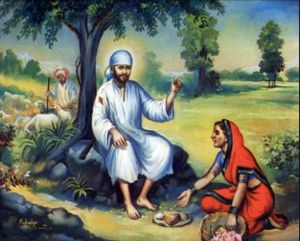
Various teachings and practices, prescribed by Baba
- Baba lovingly urged many to remember His name and to surrender to Him,
- Yet for those seeking to understand ‘who they truly were’ (the ‘Who am I’ enquiry), He gently recommended Shravanam (study) and Mananam (meditation).
- To some, He lovingly guided
- the remembrance of God’s name,
- to others, the joy of hearing HIS Leelas /Plays,
- to some, the sacred worship of His Feet,
- and to others, the reading and studying of the Adhyatma Ramayan, Jnaneshwari, and more sacred scriptures.
- Some He tenderly invited to sit near His Feet,
- while others He lovingly sent to Khandoba’s temple,
- He advised some
- to repetition the thousands of names of Vishnu,
- and others to engage in the study of the Chhandogya Upanishad and Geeta.
- To some, He offered His guidance directly in person, and to others, through the precious visions in their dreams.
- He lovingly explained certain Mantras, such as ‘Guru Brahma’, “Raja Ram’ in their dreams.
- To one devotee,
- who was earnestly practicing Hath-Yoga,
- HE conveyed a gentle message to leave those practices aside,
- to sit in quiet and embrace patience (Saburi).
- Truly, it is an immense task to describe all of His ways and methods, each filled with love and compassion.
-
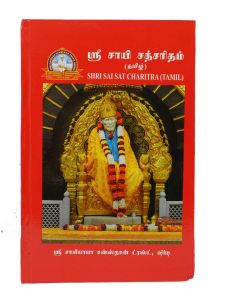
Who, When, How and Why Shri Sai SatCharitra (SSSC) created?
- When seeking facts about Sai Baba,
- the remarkable work that stands out is ‘Sai Satcharitra’ by HemadPant, known as Anna Saheb Dabolkar.
- It is written in the Marathi language.
- This wonderfully crafted poetical masterpiece spans 53 vibrant chapters and over 1000 pages, narrating incidents from Sai Baba’s inspiring life.
- Written in rich and expressive Marathi, it beautifully fulfills the purpose of Puranic study, serves daily parayana.
- It offers readers a path to deeper understanding and devotion.(LoSB p6)
- Baba conveyed his heartfelt blessing to Hemadpant in 1916, when asked permission to write Baba’s life teachings and expressions,
- by providing him with udhi and placing his Asirvada hand upon Dabolkar’s head, proclaiming,
- “Let him compile a collection of My stories and experiences,
- diligently maintaining notes and memos.
- I shall assist him in this endeavor.
- He is merely an external instrument. It is I who should document my life and fulfill the aspirations of my devotees.
- When his ego is entirely extinguished, leaving no remnants, I shall personally enter within him to narrate my life.
- Listening to my stories and teachings will instill faith in the hearts of devotees, facilitating their journey toward self-realization and eternal bliss.“
- Hemadpant diligently gathered information concerning the lilas of Baba and, as a proficient writer possessing a profound command of Marathi verse and prose, along with a solid foundation in religious literature,
- aspired to compose a comprehensive study of Baba’s lilas, thereby creating a significant chronicle of Baba’s life.
- This endeavor would align with the framework established by Saraswati Gangadhar’s Guru Charitra, offering solace and happiness to individuals burdened with sorrow and the afflictions stemming from worldly existence.
- Additionally, it would provide them with Jnana, or knowledge and wisdom, regarding both temporal and spiritual matters.
- Baba’s lilas would serve as both instructive and engaging, akin to the Vedas,
- and, upon contemplation, they would facilitate laya, or union with Brahman, as well as mastery of Yoga and Yoga Ananda.
- Consequently, he resolved to compile these narratives, considering the publication as a form of upasana, or worship, of his Guru.
- This collection would be particularly invaluable to those unable to experience Baba in person, allowing them to form an understanding of Baba through this compilation.
- Baba’s teachings and expressions were the natural outcome of his boundless self-realization; it was Dabolkar’s belief that Baba himself inspired this initiative to gather and present his life’s essence.(P376. )
Shri N.V.Gunaji adapted the above Shri Hemanpant’s “Sri Sai SatCharita” and translated into English and donated the entire proceeds to the Sai Sansthan Trust, Shirdi.
- When seeking facts about Sai Baba,
 Welcome to https://ShirdiSaiBaba.InterNational