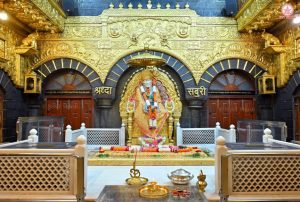
"I draw to Me, My man from far off or even across the seven Seas to Shirdi, like a sparrow with a string fastened to its feet"-Shirdi Sai Baba, Indian Spiritual Guru-God
Thanks SSS Trust, Shirdi
People from different Religious, Geographical, Economic, and Social backgrounds are brought together here. Their prayers are delivered and successfully resolved with the grace of the Indian spiritual SadGuru-God, Shirdi Sai Baba.
Category: Art of living
Ia Good standard of Living in this Materialistic World
Once God’s grace is secured, all else will be got with ease. For this, man must get rid of attachment, fear and hatred.
He must perform all actions as an offering to God, who is omnipresent.
The vigil and fasting observed on Shivaratri night have become a farce. True vigil and fasting consist of concentrating one’s thoughts on God during the whole night.
God’s grace is a direct sequel to one’s actions. Each one must examine and see in what spirit one is performing one’s worship. The Divine can be realised only through Shraddha and Vishvasa (steadfastness and faith).
The Divine is within everyone. Once man recognises this fact, he will give no room for bad qualities. Embodiments of Divine Love! Dedicate yourselves to the performance of your duties.
Do not waste your time or that of others in idle talk. Starting with the duties of the individual, man should aim at achieving oneness with the Divine as the ultimate goal.
Shivaratri is an auspicious occasion for concentrating the mind on God. Devote at least this one night entirely to the contemplation of God, to the exclusion of all other thoughts and worries.
– Divine Discourse, by Puttaparti Satya Sai Baba, Feb 19, 1993
‘So’ when you take in, and ‘ham’ when you exhale. ‘So’ means ‘He’: and ‘ham’ means ‘I’ ;and when you complete the inhalation and exhalations;
Feel that ‘So’ namely the Lord, and ‘ham’ namely, ‘I (you)’ are One! Later, after long practice, the idea of He and I as two separate entities will disappear and there will be no more So and ham.
Those sounds will be reduced to O and M, it will be Om or Pranava. Repeat that sound afterwards with every breath and that will save you from bondage to birth and death, for it is the Pranavopasana (contemplation on Pranava) recommended in Vedas.
This Soham recitation is a good means of restraining the mind from running away. Let the mind be ever attached to the Lord; then, it will not flee towards all directions.
That is the meaning of Krishna’s exhortation: Sarva dharman parityajya mam ekam sharanam vraja – Giving up all other activities, surrender fully to Me.
In the cosmic dance of cause and effect, Where actions and consequences intersect, Karma weaves its intricate thread, A tapestry of life, stitch by stitch, it’s spread.
Not a punishment, nor a reward, But a natural law, universally adored, It teaches us to act with care, For every deed reflects, in life’s fair mirror, bare.
So let us sow seeds of kindness and love, And watch as they blossom from below and above, For in the end, it’s not about fate, But the choices we make that create our state.
No one, whether he be father, mother, brother or any other relation, comes to our aid in attaining the goal of life (self-realization).
We have to chalk out and traverse the path of self-realization ourselves.
1. We have to discriminate between the Unreal and the Real, renounce the things and enjoyments of this world and the next, control our senses and mind, and aspire for liberation only.
2. Instead of depending upon others, we should have full faith in ourselves.
3. When we begin to practice discrimination, we come to know, that the world is transient and unreal and
4. our passion for worldly things becomes less and less, and ultimately we get dispassion or non-attachment for them.
5. Then we know that the Brahma which is no other than our Guru is the sole reality and
6. as It transcends and besets the seeming universe, we begin to worship It in all creatures. This is the unitive Bhajan or worship.
7. When we thus worship the Brahma or Guru whole-heartedly, we become one with Him and attain self-realization.
8. In short, a) always chanting the name of the Guru, and b) meditating on Him enables us to c) see Him in all beings, and 4) confers eternal bliss on us.
Baba has advised us to remember him before the senses, mind, and intellect enjoy their objects. Doing this is, in a way, an offering to Him.
The senses etc. can never remain without their objects, but if those objects are first offered to the Guru, the attachment for them will naturally vanish.
In this way, all the Vrittis (thoughts) regarding Desire, Anger, Avarice etc. should first be offered and directed to the Guru. If you follow this practice, the Lord will help you in eradicating all the Vrittis.
When, before enjoying the objects, you think that Baba is close by, a question will arise at once. Is the object fit to be enjoyed or not? Then the object that is not fit to be enjoyed will be shunned. As a result, our vicious habits or vices will disappear. Our character will improve.
Then, love for the Guru will grow and pure knowledge will sprout up. When this knowledge grows, the bondage of body – consciousness (ie we are the body) will snap and our intellect will be merged in spirit-consciousness (ie. we are the spirit). Then we shall get Bliss and contentment.
There is no difference between Guru and God. He who sees any difference in them, sees God nowhere. So leaving aside all ideas of difference, we should regard Guru and God as one,
and if we serve our Guru as stated above, Lord (God) will be certainly pleased and purifying our minds
He will give us self- realisation. To put the matter in a nut-shell, we should not enjoy any object with our senses etc. without first remembering our Guru.
The devout reader would like to have a further sketch of the nature and the works of devotion at this stage . So, we may refer to Sri Adi Sankaracharaya who, describes what Bhakti is as the
i) seeds of the or plant are re-grasped by the parent tree,
ii) parent magnetic block attracts needles one behind another,
iii) Chaste wife clasps her husband,
iv) tendril (creeper) clings to the adjoining tree and mounts upward and upward,
v) waters of the rivers are for ever drawn downward and downward, till they reach the ocean and get inextricably and indistinguishably lost in it,
similarly the heart of the devotee longs after the Divine feet of Pasupati, God Siva to be ever there. This is called Bhakti.
Each illustration takes bhakti one stage further up.
I. Ankolam– even vegetables is to get back to the original source and get reabsorbed in it. Similarly, we are parts/ sparks from God, must reach the original source of all creation, namely, God.
II. Magnetic stone -a string of even seven needles might be found attached one behind another to a big magnet. Similarly every growing bhakta tends to attract others and impart his devotion to them; and through them to others ad infinitum.
III. Chaste wife longs for her husband, and even his slightest absence for even a short period makes her full of unrest, (EVEN now, wife calling husband frequently and asking Where are you? When are you coming? etc.). Similarly The Bhagavata treats all devotees as females, Gopis, and the only male in the Universe is Krishna.
iv) The creeper– go further and further upward and upward till the top of the tree is reached, to get more light from the Sun, more of air and more of freedom and safety from animals. Similarly, devotee tends to mount up higher and higher in his spiritual levels to achieve nobler and nobler objects; and to transform himself into more and more of the like-ness of God, till he reaches full Sarupyam, Sameepyam and Sayujyam (Bliss)
v) Rivers – The waters of the rivers were originally part of the ocean, and after being held up in the form of water vapour, cloud and rain, they take the shape of a river. Similarly Purnalaya is the end of the devotion and that is obtained by the Jivas surrendering themselves, that is, making Atma-nivedana, which is the ninth mode mentioned in the Navavidha bhakti.
That is both devotion and also absorption. After that there is nothing further to reach. Thus the various stages, attitudes, and relations of a bhakta can be very well dwelt upon and learnt by studying the above illustrations and applying them to oneself.
Loving bhaktas/ Important Devotees:
The Names of a number of loving bhaktas; so that they may ever remain in one’s heart and show how bhakti achieves its ends. The end of bhakti is not achieved by the offer of money to God or by mere learning or by age or beauty of a person, God does not want any of these. “God wants only your heart, that is, your self”,
As ,
1. For the hunter Kannappa, what Achara or religious course of conduct had he?
2. For Dhruva, what was his age? (At the age of 5, God appeared before him. Also His name is given to Pole Star)
3. For the elephant Gajendra, what education or degrees and titles had he?
4. Had Vidura (favourite of Krishna) any qualification in respect of caste? He was the son of a slave dancing girl.
5. For the king of Yadavas called Ugrasena,who was favoured by Krishna what manliness had he? He was a great coward
6. For Kubja also was favoured by Krishna, had she any great beauty? She was deformed in person.
9. For Sudhama, known as Kuchela ( favoured by Krishna), had he any wealth?
God is pleased by bhakti/Devotion alone and bhakti can capture Him. This contains the essence of the doctrine of bhakti or devotion
Especially the nine modes of worship mentioned in the Bhagavata and stressed by Sri Sai Baba often have to be attended to and followed.
In setting out those nine forms, one can see how the external and internal are inextricably interwoven and combined and how one gradually progresses with lower and external forms till his inner kernel of devotion attains maturity and perfection.
The nine modes of Devotion are,
1) Sravana– Listening to accounts of the deeds of God, his Avataras and Saints.
2) Kirtana– reciting these or repeating God’s names and praise,
3) Smarana– constantly recalling these, especially uttering God’s names
4) Padasevanam– falling at the feet of God and Saints
5) Archana– formal worship, for example with flowers, water, food, scents and all the 16 upacharas etc
6) Vadana– prostration before God and the saints.
7) Dasya– Eg. service, doing every work for God or Saint.
8) Sakhya– remaining in the company of God or Saint and
9) Atma Nivedana-surrender of the self that is forgetting oneself entirely in the contemplation of God, after formally offering the self as a gift to God.
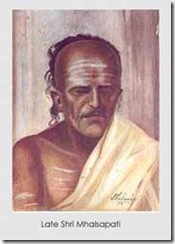
Very late in his life, Baba revealed to Mahlsapathy an interesting fact. He disclosed that his parents were from Patri in the Nizam’s State, India. Patri is part of Parvani taluk, near Manwath. Sai Baba added that when he was still a tender child, his parents handed him over to a fakir. The fakir brought him up. Sai Baba occasionally showed his interest in Patri and Parvani when people from those parts came to him, by questioning them about the residents of those places. This is practically all that, we have about the birth and parentage of Sri Sai Baba.
Stage -2
But who ever his parents were, it is quite important to remember that from his earliest infancy, he experienced a true vairagi or jnani detachment. He had all the associations or dissociation needed for this. Having no parents or kinsmen, and being brought up by a fakir, he easily picked up his foster-father’s vairagya and spiritual turn of mind.
Even that fakir passed away within four or five years after taking charge of him. The fakir directed his wife to take the young Baba, and leave him in charge of a noted saintly zamindar, Gopal Rao Deshmukh at Selu.
Stage -3
Young Baba was left under the care of Gopal Rao Deshmukh. He spent the best and most impressionable part of his life at Selu. Selu had a fort and castle, where the Deshmukh resided.
The young boy was very greatly attached to his master, and the master in turn was deeply interested in the boy. The boy stayed with the master at all times. He was present, whether the master was in the field or at puja, and whether he was in the garden or in the Court.
Education:
Baba seems to have had no formal education given to him at any time. He had no book study. There were no masters, either in the regional language (which must have been Marathi or Telugu) or in any other language.
But real education of the highest sort, he had in plenty. This Deshmukh, was an extremely pious devotee greatly attached to Tirupati Venkatesa, whose image he worshipped daily in his own castle. He was rich, liberal, and patronised learning and piety. Hence an abundance of real education could be picked up by the young child Baba, when attending on his master.
Perfect chastity and thorough self-control were the leading characteristics of his Guru. Invariable rectitude and perfect truthfulness also defined him. Generosity and serviceability to all became transplanted and took deep root in the disciple, Sai Baba.
Stage- 4
Sai was very young, when he first came Shirdi. In the beginning he left Shirdi off and on, and returned to it. The date of his first arrival at Shirdi cannot be fixed.
On one of his later visit to Shirdi, possibly the final one, Baba arrived on the momentous occasion of Chand Bhai Patel’s advent to Shirdi.
Chand Bhai Patel was a rich and influential village Patel or Headman, of Dhupkeda village in the Nizam’s State, not far from Shirdi. His wife’s nephew was to be married to a bride at Shirdi. In 1872, he arrived with a huge marriage procession. Sai Baba accompanied Patel on that occasion from Dhupkeda to Shirdi. Sai Baba stayed there until Mahasamathi.
After that time, except for two months when he was under Jawar Ali Maulana, Sai Baba never left Shirdi but only made a few occasional visits off and on to the neighbouring villages of Rahata or Nimgam, from which he immediately returned to Shirdi.
So His final residence was Shirdi, from about 1872 till the end of his life in 1918.
To make the congregational worship more advanced and attractive, there was an enthusiastic set gathering at Shirdi.
One Ramakrishna Ayi, a young widow, being highly accomplished, was intent upon using all her gifts and cleverness for developing Sai Baba’s worship. She drew a large number of people to herself and made them more enthusiastic in the cause of Sai Worship
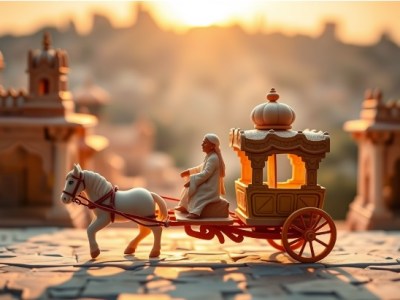
Ramakrishna Ayi introduced silver whisks, silver maces, silver umbrellas, silver candelabras, moons, and artificial gardens to deck the chavadi, where Baba was worshipped on alternate nights. A (ratha) car, a palanquin with silver appurtenances, a horse, and other regal paraphernalia were furnished on her insistence and the insistence of other devotees to make Baba worship run exactly like Vittal worship or the worship of great Acharyas in their mutts.