

- A human body is better than other bodies–
- Despite its filth, mucus, and susceptibility to decay, disease, and death, the human body’s special value lies in its capacity to acquire knowledge and attain God-vision, which is impossible in any other birth.
- Love is better than intelligence-
- The pure love of Shirdi women, despite their ignorance, inspired them to compose poems, implying that love is more inspiring than intelligence.
- Giving food is better than other charities-
- While other charities like giving away wealth, property, and clothes require some discrimination, offering food requires no such consideration.
- Also, the merit of feeding lame, crippled, blind, and diseased paupers is much greater than that of feeding able-bodied persons and relations.
- Butter-milk (Leelas) is better than Milk (Darshan)-
- If one desires to see Sai Baba’s but they did not get any opportunity of taking His darshan, their quest for milk (darshan) will be, to a great extent, satisfied by the butter-milk (Leelas).
- Remembering and chanting Hari’s and Guru’s name confers salvation is better than getting the powerful Bhakti of the Nathas-
- one Madhavarao did not like Kakasaheb’s pessimistic attitude of how to get the powerful Bhakti of the Nathas, as he said, ‘has not Baba told us authoritatively that remembering and chanting Hari’s and Guru’s name confers salvation? Then where is the cause for fear and anxiety?’
- The observance of the vow of silence is the best way of praising the Sad-guru-
- In reality, the observance of the vow of silence is the best way of praising the Sad-guru.
- Having recourse to Sai Baba’s Feet and surrendering to Him is the best luck-
- The best luck is to get an opportunity to have recourse to Sai Baba’s Feet and surrender to Him, than any other
Category: Art of living
Ia Good standard of Living in this Materialistic World
-

Where certain actions or entities are considered better than others
-
Don’t entertain the sense of doership
Once Shri Vasudevanand Saraswati, known as Shri Tembye Swami, camped at Rajamahendri (Andhra State) by the river Godavari. He was a devoted Jnani and Yogi Bhakta of God Dattatreya.
Mr. Pundalikrao, a pleader from Nanded, visited him with friends, during which they mentioned Shirdi and Sai Baba.
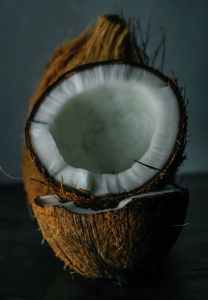
The Swami bowed when Baba’s name was spoken. He gave Pundalikrao a coconut. The Swami asked him, to offer it to Baba, with his regards. He also wanted Pundalikrao, to remind Baba to remember him.
The Swami noted that he usually does not bow to others, but made an exception here. Pundalikrao agreed to take the fruit and message to Baba.
A month later, Pundalikrao and his friends traveled to Shirdi with the coconut. They stopped at a rivulet for water. Feeling hungry, they broke the coconut. They mixed it with their Chivda, making it tastier. Unfortunately, this was the coconut, meant for Baba.
When Pundalikrao reached Shirdi, he remembered the coconut and felt guilty. He saw Baba, Who already knew about the coconut and asked Pundalikrao, to give the items from his brother -swami.
Pundalikrao confessed his negligence. He sought forgiveness and offered to replace the coconut.
Baba declined his offer, saying its value was far greater than an ordinary one.
Baba also added- “
- Now you need not worry yourself any more about the matter.
- It was on account of my wish that the coconut was entrusted to you.
- Ultimately it was broken on the way.
- Why should you take the responsibility of the actions on you?
- Do not entertain the sense of doership in doing good, as well as for bad deeds; be entirely prideless and egoless in all things and
- thus your spiritual progress will be rapid
-

Qualities That Define a True Sadguru
who is Guru:
- He who teaches us Veda and Vedanta or the six Shastras (systems),
- He, who controls the breath, or
- brands his body with Mudras (metallic marks of Vishnu’s weapons) or
- gives pleasing discourses regarding Brahma.
- he who gives mantras (sacred syllables) to the disciples and
- orders them to chant the same a certain number of times,
- but does not assure them any result in a definite time.
- He who by his spacious wordy knowledge, explains beautifully the Ultimate Principle,
- but has himself got no experience or self-realization is not a Sad-guru.
- How can he, who is himself devoid of self-realization, give it to the disciples?
Who is SadGuru:
- But He, who by his discourse creates in us,
- a distaste for the enjoyments of this world and
- the next, and gives us a taste of self-realization.
- who is well-versed in both the theoretical and practical knowledge (self-realization) deserves to be called a Sad-guru.
- He is never restless nor ruffled.
- He has no pride of his learning.
- The poor and the rich, the small and the great are the same to him.
- A Sad-guru does not, even in his dream, expect any service or profit from his disciples.
- On the contrary, he wishes to serve them.
- He does not think that he is great and the disciple small.
- Not only he loves him, as his son but regards him, as equal to himself or as Brahma.
- The main characteristic of a Sad-guru is that he is the abode of peace.
-

When failure is nobler than success
Man still believes that Ananda (Happy) can be obtained from the external world.
- Man hoards
- wealth,
- authority,
- fame and
- learning, to acquire happiness.
- But he finds that they are fraught with
- fear,
- anxiety and
- pain.
- The millionaire is beset
- by the tax-gatherer,
- the cheat,
- the donation hunter, and
- the house-breaker.
- His sons and
- kinsmen also clamor for their share.
- The happiness of material origin is short-lived and has misery as its obverse.
‘Struggle to realise the Atma and to visualize God’. Even failure in this struggle is nobler than success in other worldly attempts.
- The buffalo has horns; the elephant has tusks. But what a difference.
- To live in the body, with the body, for the body is the life of a worm.
- To live in the body, with God, for God is the life of man.
The dull, activity-hating tamasik persons cling to the ego and to kith and kin; their love is limited to these.
The rajasik (active, passionate) persons seek to earn power and prestige, and love only those who will contribute to these.
But the satwik (the pure, the good, the equanimity-filled) love all as embodiments of God. They engage themselves in humble service.
– Puttaparti Satya Sai Baba in the Divine Discourse, May 24, 1967 - Man hoards
-

Mastering Dispassion: A Guide to Spiritual Liberation with Baba
Baba’s physical or finite form has undoubtedly vanished from our sight; however, the infinite or spiritual essence (Spirit of Baba) endures eternally.
Baba’s plays continue:
- The divine Leelas (play) that transpired during His earthly existence have been extensively discussed till now.
- Since His departure, new Leelas (play) have emerged and continue to unfold even now.
- This clearly illustrates that Baba remains ever-living and extends His assistance to His devotees as before.
About Those contacted physically Baba:
- Those who were blessed to have contact with Baba during His lifetime were indeed fortunate;
- nevertheless, if any of them failed to cultivate dispassion for worldly possessions and pleasures, or did not turn their minds toward the Lord,
- it is purely a matter of their misfortune.
Now what is necessary:
- What was necessary then, as it is Now, is a wholehearted devotion to Baba.
- All our
- senses,
- organs-faculties, and
- minds should collaborate in worshiping and serving Baba:
- to engage only certain faculties in worship, while neglecting others is of no use.
- Should one partake in worship or meditation, it ought to be undertaken with one’s full mind and soul.
- All our
Can anyone assist us in achieving?
- The love that a devoted wife holds for her husband is frequently, likened to the devotion a disciple offers to his master (Guru).
- Yet, the latter is unparalleled and far surpasses the former.
- No individual, be it a father, mother, brother, or any other relative, can assist us in achieving the ultimate purpose of life (self-realization).
- We must delineate and navigate the path of self-realization independently.
- We are tasked with
- discerning the Unreal from the Real,
- renouncing the desires and pleasures of this world and
- the next, mastering our senses and minds, and
- aspiring solely for liberation.
- Rather than depending on others, we ought to place total faith in ourselves.
Practice What? and How?
- As we begin to practice discernment,
- we come to realize the transitory and illusory nature of the world, and
- our passions for worldly matters gradually diminish,
- ultimately leading to dispassion or non-attachment.
- We then acknowledge that the Brahma,
- which is none other than our Guru, is the sole reality;
- as it transcends and pervades the apparent universe,
- we begin to worship it in all beings.
- By wholeheartedly worshiping the Brahma or Guru, we become one with Him and attain self-realization.
- In summary:
- consistently chanting the name of the Guru and
- meditating on Him, enables us to
- perceive Him in all beings.
- It bestows upon us eternal bliss.
-
Baba is a Scientist in Teaching Education
Pedagogics is the art and science of teaching and education. It involves not only conveying information, but also understanding how people learn. It requires creating environments, that foster growth and development.
Sai Baba is also not only delivering information, but create environment for learning and growing of His devotees. viz:
- One,
- totally devoid of any book study, but
- possessed of
- perfect self-surrender,
- humility,
- trust, and
- love towards the Guru Baba,
- was and is the person who could derive
- the fullest benefits from Baba.
- The idea that
- one has understood all about Jiva and Paramatma and
- the methods by which Paramatma could be reached by a Jiva,
- forms the greatest obstacle to one’s progress.
- It is
- not the intellect, the keenness of intellect, that is
- wanted from a person approaching Baba.
- It is
- humility,
- receptivity, and
- a readiness to receive all that Baba gives, that counts.
- As Baba pointed out to the Valambi Station Master,
- persons (evidently with much conceit of learning etc.) came to him
- like vessels the mouth of which was kept inverted; and were therefore
- incapable of receiving any benefits from him.
- In the case of Nana (Devotee),
- his very high learning and
- great ability in official and other matters were naturally accompanied
- by a high degree to self-assertion and egotism;
- which make for success in
- literary study,
- official matters, and to a certain extent even in
- spiritual matters.
- But for the highest results in spiritual matters, it is just the opposite, namely,
- utter reduction of egotism,
- the power to relax the Ego and
- keep it relaxed for long periods, that is essential.
- This is why
- the consumption of water, that was used to washing of the feet of the Guru, and
- the acceptance of his Uchchishta tirtha (the remnants of food that have been contaminated by the Guru’s saliva) are emphasized in the
- “Guru Gita” for a pupil’s advancement,
- as these practices foster a profound annihilation of Ahamkara, or Ego,
- through deep reverence for the Guru, culminating in Love.
- In Baba’s system,
- the Guru-Teacher imparts virtue after virtue to the sishya-Student.
- HE trains him step by step to secure these virtues and the knowledge, he wishes to equip the pupil with.
- This process is just as the cat carries its kittens to safe and good places.
- The first essential preparatory step in Baba’s course is thus,
- not book learning, but the
- development of
- humility and
- receptivity.
- These would result from
- perfect faith, absolute faith,
- unlimited and powerful faith in the Guru.
- The Guru must be everything to the sishya,
- the giver of bread,
- the giver of life and light and
- the giver of all that life is worth living for, and
- at one stroke.
- He must not regard anything else. This alone is the tyaga of Tan, Man, Dhan – body, mind and possessions.
LoSB-Vol II’ Ch 2
- Baba’s company was the highest education one could get. As a Mahratta saying goes, ‘Let us stay with saints. If they do not give us Upadesa, let us note what they do and say. That is the best Upadesa‘.
- One,
-
Summary of Soul Science
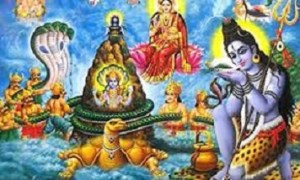
- The heart, full of purity and poise (Satwa) is the Ocean of milk.
- Steady contemplation of the Divine, either as i) your own reality or ii) as ideal to be reached, is Mandara mountain,
- placed in it as a churning rod Vasuki, the serpent wound round the churning rod as a rope,
- is the group of senses,
- emitting poisonous fumes
- during the process of churning and
- nearly frightening the asuras (demons) who held the head.
- The rope is
- held by good and bad impulses and
- both struggle with the churning process,
- eager for the results, which each has set the heart on!
- Grace of God is the
- Tortoise incarnation,
- for the Lord Himself comes to the rescue
- once
- HE knows that you are earnestly seeking the secret of Immortality!
- He comes,
- silently and
- unobserved,
- as the tortoise did,
- holding the reflection (manana) process
- unimpaired and
- serving as the steady base of all spiritual practices!
- Many things emerge from the mind, when churned,
- but the wise wait patiently
- for the appearance of the guarantor of immortality, and
- seize upon it with avidity!
- That is the lesson of the legend. It is a summary of Atma-vidya!
– Puttaparti Satya Sai Baba in the Divine Discourse on Jan 13, 1965
-
You are God, you are mighty and opulent
Shishya (disciple) like the Sad-guru is really embodiment of Jnana.
The difference between the two lies in the attitude, high realization, marvellous super-human Sattva (beingness) and unrivalled capacity and Aishwarya Yoga (divine powers).
The Sad-guru is Nirguna, Sat-Chit-Ananda. He has indeed taken human form to elevate mankind and raise the world. But his real Nirguna nature is not destroyed thereby, even a bit. His beingness (or reality), divine power and widsom remain undiminished.
The disciple also is in fact of the same swarupa. But, it is overlaid by the effect of the samaskaras of innumerable births in the shape of ignorance, which hides from his view that he is Shuddha Chaitanya (see B.G. Ch. V-15). As stated therein, he gets the impressions – “Iam Jiva, a creature, humble and poor.”
The Guru has to root out these offshoots of ignorance and has to give upadesh or instruction.
To the disciple, held spell- bound for endless generations by the ideas of his being a creature, humble and poor, the Guru imparts in hundreds of births the teaching – “You are God, you are mighty and opulent.” Then, he realizes a bit that he is God really.
The perpetual delusion under which the disciple is labouring, that he is the body, that he is a creature (jiva) or ego, that God (Paramatma) and the world are different from him, is an error inherited from innumerable past births. From actions based on it, he has derived his joy, sorrows and mixtures of both.
To remove this delusion, this error, this root ignorance, he must start the inquiry.
How did the ignorance arise? Where is it? And to show him this, is called the Guru’s upadesh.
SSSC-Ch 29
-
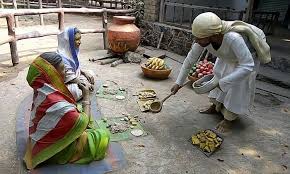
How Baba prepared food and distributed
Let us see how Baba prepared food and distributed it.
Baba required very little food for Himself and what little He wanted, was obtained by begging from a few houses.
But when He took it into His mind to distribute food to all, He made all preparations from beginning to end, Himself.He depended on nobody and troubled none in this matter. First He went to the bazar and bought all the things, corn, flour, spices etc., for cash. He did also the grinding.
In the open courtyard of the Masjid, He arranged a big hearth and after lighting a fire underneath kept a Handi over it with a proper measure of water…Sometimes He cooked ‘Mitthe Chaval’ (sweet rice), and at other times ‘pulava’ with meat. At times in the boiling varan (soup), He let in small balls of thick or flat breads of wheat flour. He pounded the spices on a stone-slab, and put the thin pulverized spices into the cooking-pot. He took all the pains to make the dishes very palatable.
He prepared ‘Ambil’ by boiling jawari-flour in water and mixing it with butter-milk. With the food He distributed this Ambil to all alike.To see whether the food was properly cooked or not, Baba rolled up the sleeve of His Kafni. He put His bare arm in the boiling cauldron without the least fear. He churned (moved) the whole mass from side to side and up and down. There was no mark of burn on His arm, nor fear on His face.
When the cooking was over, Baba got the pots in the Majid, and had them duly consecrated by the moulvi.First He sent part of the food as prasad to Mhalasapati and Tatya Patil. Then, He served the remaining contents with His own hand to all the poor and helpless people. They ate to their hearts’ content.
Really blessed and fortunate must be those people who got food prepared by Baba and served by Him.
-
During 72 generations that you were with me.
A woman from Sholapur tried for 27 years to have a child, making prayers to various gods in vain. In her final effort, she and her stepson went to Shirdi and stayed for two months, serving Baba.
Whenever she visited the Masjid, it was crowded, and Baba was always surrounded by people. She wanted to express her feelings, but couldn’t find the right moment to pray to Him for a child. In the end, she asked Shama to speak to Baba for her when He was alone.
Shama told her Baba’s Darbar was open, still he would try for her, hoping the Lord would bless her. ‘She should be ready with a coconut and joss sticks when Baba had His meals. She should also come to Him, when he called’.
One day, after dinner, Shama was wiping Baba’s wet hands with cloth, when Baba playfully pinched his cheek. Pretending to be upset, Shama said, “Deva, is it right to pinch me? We don’t want a mischievous God. Are we Your dependents; is this fruit of intimacy?”
Baba replied, “Oh Shama, during 72 generations that you were with me, I never pinched you until now. Now you resent my touch.”
Shama: “We want a God who always love us and give food; we don’t want reward or heaven. Let our faith unto your feet be awake.” Baba: “Yes, I have come for that. I care for you and love you.”
Then Baba sat down, and Shama signaled to a lady who offered a coconut and joss sticks. Baba shook the dry coconut, and the kernel made noise. He said, “Shama, look how it’s rolling, what does it mean?” Shama replied, “The woman hopes to have a child that rolls and grows in her womb. Please bless her.”
Baba questioned, “Will the coconut give her a child? People are foolish to believe such things!” Shama insisted, “Your blessing will bring her children. You are just wrangling and not giving a real blessing.” They continued to discuss.
Baba wanted to break the coconut, but Shama suggested gifting it to the lady instead. Then Baba agreed, saying, “She will have a child in 12 months.” The coconut was split in two. One half was eaten by Baba and Shama. The other half was given to the lady.
Shama alias Madhav looked at the woman and said, “You will be my witness. If you don’t have a child in a year, I will break a coconut on Deva’s head. If I fail, I won’t call myself Madhav anymore.”
A year later, she had a son, taken to Baba at five months. The grateful father, Mr. Aurangabadkar, donated Rs.500, which was spent to build a shed for Baba’s home, “Shyamakarna.”
 Welcome to https://ShirdiSaiBaba.InterNational