

“Make me the sole object of your thoughts and actions. You will, no doubt, attain Paramartha (the spiritual goal of life).
Look at me whole-heartly; and I, in turn, look at you.
Sitting in this Masjid, I speak the truth, nothing but truth.
No sadhana or proficiency in the six Shastras, is necessary. Have faith and confidence in your Guru. Believe that, Guru is the sole Actor or Doer.
Blessed is he, who knows the greatness of his Guru and thinks him to be Hari, Hara and Brahma (Trimurti -Gods) Incarnate.”
Sai Baba in SSSC-Chapter 18 & 19.
Category: Guru Must
-

Blessed knows the greatness of his Guru
-
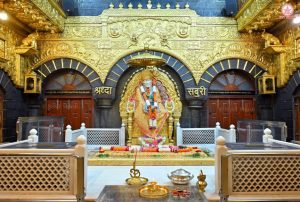
Who is Shirdi Sai Baba
Sri Krishna, Sri Rama, Sai Baba, are all divinely gifted or perfected souls and expressions of divinity. They transform everyone who comes into contact with their divine personality. This is especially true for those who are drawn through Rinanubandha (karmic Bond) by their divinity. That is the purpose or mission of their lives.
Baba’s Birth and Grown-up:
- Sai Baba (1838-1918) was an Indian spiritual Guru, Yogi, and Fakir, revered as a saint by millions of devotees, both Hindu and Muslim, across the world.
- Sai Baba stated that while still a young child, his parents entrusted him to the care of a fakir. The fakir raised him.
- From this foster father, Baba readily acquired Vairagya (detachment from worldly pleasures and pains) and developed a spiritual mindset.
- That fakir passed away within four or five years after taking charge of him.
- This fakir instructed his wife to take the young Baba and leave him in the care of the renowned saintly zaminder, Gopal Rao Deshmukh (Provincial Governor) in Selu.
- Gopal Rao was an exceedingly devout individual, deeply attached to Tirupati Lord Venkatesa. He was affluent and generous, and he supported education and piety.
- A wealth of true education was available to the young Baba, as he was consistently in attendance on this master.
- Gopal Rao, upon departing from this world peacefully, signaled to the young Baba with a wave of his hand, instructing him to leave Selu and proceed westward to his new abode. (Shirdi is situated along the banks of the Godavari river, directly west of Selu).
- After some time, Chand Bhai Patel, the Headman of Dhoop (Dhukeda) Village in Nizam’s State, arrived in Shirdi with a grand procession. He had come for the marriage of his wife’s nephew at Shirdi, around 1872. Sai Baba accompanied him for this occasion. When the marriage party arrived in Shirdi, they halted at Mhalsapati’s land near the Khandoba temple.
- Bhagat Mhalsapati noticed the young Fakir disembarking from the bullock cart and greeted him with “YA SAI” (Welcome Sai). Others began to address him as Sai, and henceforth he became known as Sai Baba.
- Baba’s final residence was Shirdi, where he lived from 1872 until the end of his life in 1918.
Baba’s Mission:
Baba has not one mission, but a hundred missions. Divine personalities have specific functions. They protect the good (virtuous). They punish or reform the wicked. They also establish Dharma (Virtue) or its hold on the people. And Baba was performing all these functions.
His mission is to help every one, that means, of course, everyone capable of benefiting, not persons who come in an unreceptive mood .
Baba’s marga-Path:
Studying Gitas, one sees that there is no meaning in asking for ‘any one marga (path)‘ expounded by the Divine Person. Saints expound all the margas. They find which marga or combination of margas would suit each approaching devotee. Then they give the same to him.
Thus Baba adopted every marga. In particular, one may note that the predominance in his methods was neither for ritual nor for Vedic study. Instead, it was for living in consonance with the Supreme manifestation of Divinity in himself.
Baba distributes:
Baba quoted occasionally his master’s or Guru’s behest. “As he had received liberally from his master, he must similarly distribute liberally amongst those that approached him.” Baba was distributing not merely wealth, worldly relief and comforts. He was also giving spiritual gifts and spiritual blessings to all and sundry capable of receiving those benefits.
Baba advises :
- ‘Love all creatures.
- Do not fight with any.
- Do not retaliate nor scandalize any.
- When any one talks ill of you, that is, against you, pass on unperturbed. His words cannot pierce into your body. Others’ acts will affect them alone and not you.’
Baba was ever active and never idle and His advice was, ‘Do not be idle. Work, Utter God’s name. Read scriptures’.
Baba is also advising:
- ‘We should not harbour envy, rivalry, or combative disposition towards others.
- If others hate us, let us simply take to Nama Japa and avoid their company.
- Hearken to the words of your parents.
- Help your mother in her tasks.
- Speak the truth and truth alone’.
Baba’s advice was always simple and capable of being accepted and acted upon by even persons of the meanest capacity.
Baba’s moral teachings:
Important thing for peace and happiness is love of all creation. Baba’s moral teachings were conveyed by his own life and activity. Baba loved all creatures. The underlying motive of every act of his was love towards all human beings and all creatures.
Baba’s Powers:
He did not even appear to be a teacher and was chiefly a granter of wishes. But all the same, he was a powerful instiller of principles and virtue. He instilled these into the hearts of those capable of receiving such impress.
Other Saints, about Sai Baba:
One Saint, from Puntambe by name Gangagir always frequented Shirdi. When he first saw Sai Baba, carrying pitchers of water in both hands, for watering the garden, he was amazed. And said openly, “Blessed is Shirdi, that it got this precious Jewel. This man is carrying water today; but He is not an ordinary fellow. As this land (Shirdi) was lucky and meritorious, it secured this Jewel.”
So also one famous Saint by name Anandnath of Yewala Math, a disciple of Akkalkot Maharaj came to Shirdi with some Shirdi people. When he saw Sai Baba, he said openly, “This is a precious Diamond in reality. Though he looks like an ordinary man, he is not a ‘gar’ (ordinary stone) but a Diamond. You will realize this in the near future.”The meaning of the name, ‘Sai Baba’:
‘Sa’ means ‘Divine’; ‘ai’ or ‘ayi’ means ‘mother’ and ‘Baba’ means father. The Name indicates Divine Mother and Father.
Your physical parents exhibit love with a dose of selfishness. But this Sai, ‘Mother and Father’, showers affection or reprimands. This is only for leading you towards victory in the struggle for self-realisation.Sai Baba/ Sai/ Baba has achieved, the supreme task of:-
- Sai has come to achieve the supreme task of uniting the entire mankind as one family, through the bond of brotherhood of affirming;
- And illumining the Atmic Reality of each. This is done in order to reveal the Divine, which is the basis on which the entire Cosmos rests.
- And also instructing all to recognise the common Divine Heritage that binds man to man. This way, man can rid himself of the animal. He can rise into the Divine, which is his goal.
The most important facts to remember about Baba is that,
- Baba was the embodiment of all virtues,
- Baba did nothing which he did not preach.
- In Himself, all the virtues were the efflorescence of the central root in Him, with which he began as a little child, namely:-
- love for the Guru,
- love that knows no bounds of time, place, or circumstance, and
- love that sacrifices anything and everything at its altar.
- Gratitude, service, equality, justice, consideration and so many other good qualities that were in him and taught by him were the direct issue of this love. These qualities could not have all been sustained without this love. This is the central point to remember about Baba.
This enables the sishya (student or Devotee) to get more and more like unto the Guru. By constant meditation on him, the sishya becomes the soul of the Guru.ie
- The sishya grows in love,
- absorbs the love from the Guru, and
- returns it with all his soul and body.
- Does not consider himself as anything except as the lover and the beloved of the Guru.
- Thus he attains –
- moral perfection,
- spiritual perfection,
- perfection of siddhis and
- perfection of every sort .
- This is the natural result of Baba’s moral teachings.
-
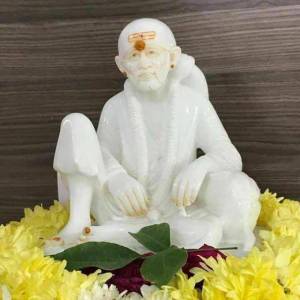
Baba’s Earlier Period
3–4 minutesBirth to Shirti:-
Stage -1
Very late in his life, Baba revealed to Mahlsapathy an interesting fact. He disclosed that his parents were from Patri in the Nizam’s State, India. Patri is part of Parvani taluk, near Manwath. Sai Baba added that when he was still a tender child, his parents handed him over to a fakir. The fakir brought him up. Sai Baba occasionally showed his interest in Patri and Parvani when people from those parts came to him, by questioning them about the residents of those places. This is practically all that, we have about the birth and parentage of Sri Sai Baba.
Stage -2
But who ever his parents were, it is quite important to remember that from his earliest infancy, he experienced a true vairagi or jnani detachment. He had all the associations or dissociation needed for this. Having no parents or kinsmen, and being brought up by a fakir, he easily picked up his foster-father’s vairagya and spiritual turn of mind.
Even that fakir passed away within four or five years after taking charge of him. The fakir directed his wife to take the young Baba, and leave him in charge of a noted saintly zamindar, Gopal Rao Deshmukh at Selu.
Stage -3
Young Baba was left under the care of Gopal Rao Deshmukh. He spent the best and most impressionable part of his life at Selu. Selu had a fort and castle, where the Deshmukh resided.
The young boy was very greatly attached to his master, and the master in turn was deeply interested in the boy. The boy stayed with the master at all times. He was present, whether the master was in the field or at puja, and whether he was in the garden or in the Court.
Education:
Baba seems to have had no formal education given to him at any time. He had no book study. There were no masters, either in the regional language (which must have been Marathi or Telugu) or in any other language.
But real education of the highest sort, he had in plenty. This Deshmukh, was an extremely pious devotee greatly attached to Tirupati Venkatesa, whose image he worshipped daily in his own castle. He was rich, liberal, and patronised learning and piety. Hence an abundance of real education could be picked up by the young child Baba, when attending on his master.
Perfect chastity and thorough self-control were the leading characteristics of his Guru. Invariable rectitude and perfect truthfulness also defined him. Generosity and serviceability to all became transplanted and took deep root in the disciple, Sai Baba.
Stage- 4
Sai was very young, when he first came Shirdi. In the beginning he left Shirdi off and on, and returned to it. The date of his first arrival at Shirdi cannot be fixed.
On one of his later visit to Shirdi, possibly the final one, Baba arrived on the momentous occasion of Chand Bhai Patel’s advent to Shirdi.
Chand Bhai Patel was a rich and influential village Patel or Headman, of Dhupkeda village in the Nizam’s State, not far from Shirdi. His wife’s nephew was to be married to a bride at Shirdi. In 1872, he arrived with a huge marriage procession. Sai Baba accompanied Patel on that occasion from Dhupkeda to Shirdi. Sai Baba stayed there until Mahasamathi.
After that time, except for two months when he was under Jawar Ali Maulana, Sai Baba never left Shirdi but only made a few occasional visits off and on to the neighbouring villages of Rahata or Nimgam, from which he immediately returned to Shirdi.
So His final residence was Shirdi, from about 1872 till the end of his life in 1918.
-
WORSHIP V-Baba worship, Stages
Baba worship had and has all stages in it, and all sorts of worshippers.
Baba who first objected to his worship, did by his own Antarjnana or prophetic vision foreseeing what was to follow, namely, not only individual benefits to millions, but also national benefit and ultimately benefit to the cause of religion itself for the sake of humanity.
That is why HE gradually promoted and then developed HIS worship:-
- Individual worship of Baba attracted larger and larger numbers from the immediate neighbourhood and
- from distant places and this developed into congregational worship;
- and that again from simple congregational worship to the highly complicated forms, which are seen in famous places of worship like Pandharpur.
- Worship like Pandarpur and Tirupati were developed for Baba worship at Shirdi, including ritual, hymnology, music, processions, cars, palanquin horse and pujaris.
-

Baba’s promises in His own name
Para Number in the Book ‘BCS’ & Baba’s Sayings on his Own-Name, the followings
- My eye (of vigilant supervision) is ever on those who love me.
Whatever you do, wherever you may be, ever bear this in mind that I am always aware of everything you do. - If one ever meditates on me, repeats my name, signs my deeds, and is thus transformed into me, one’s Karma is destroyed. I stay by his side always.
- You should have truth always with you. then I shall be always with you, wherever you are, and at all times.
- I will be with you, whenever and wherever you think of me. Do not fear.
- If one perpetually thinks of me, and makes me his sole refuge, I am his debtor and will give my head to save him.
- If, one ever dwells on me in his mind and will not even taste food before offering it to me, I am his slave. So also if he hungers and thirsts after me, and treats all else as unimportant.
- I am (Bhaktaparadeena) the bond slave of my devotees, I love devotion.
- He who withdraws his heart from wife, child and parents and loves me is my real lover and he merges in me like a river in the sea.
- Saibaba: The key of my treasury is now placed in your hands. Ask for anything you want, Rs. 5 to 100 a month or what you will and, I will give it to you.
Devotee (M B Rage) declines to ask.
Baba: Ask something, I am anxious to give you.
Devotee: Is it agreed that you will grant anything I ask for?
Baba: Yes
Devotee: Then, Baba, I want this. In this and in any future birth that may befall me, you should never part from me. You should always be with me.
Baba: Yes, I shall be with you, inside and outside you, whatever you may be or do. - My devotee feels me in you, in himself and in all creatures and sees all as his Guru. He will become like me.
- If you make me the sole object of your thoughts and aims, you will gain Paramartha. (supreme Goal)
Look to me; I will look to you.
Trust the Guru fully. That is the only sadhana. Guru is all the Gods. - If one devotes his entire mind to me and rests in me, he need fear nothing for body and soul. If one sees me and me alone and listens to talk about me and is devoted to me alone, he will reach God (Chaitanya). He who worships me as Nitya, Suddha and Buddha comes to me.
- Those who perpetually repeat my name reach their goal.
- Simply say “Sai” “Sai” with heart overflowing. I care not for show of respect and forms, I rest in such devotees.
- Repeat my name. Seek refuge in me. But to know ‘who I am” have Sravana and Manana.
- I am formless and everywhere.
- If anyone casts his burden on me and thinks of me, I look after all his concerns.
- Yes; you can place your burdens on me.
- In the abode of my devotees, there will be no dearth of food and clothing.
- You devotees are my children. I am your father. You have to get everything from me. So you should not talk like that (say Sai is not God).
- Why are you anxious? I take all care of you.
- Sit quiet, Uge Muge. I will do the needful. I will take you to the end.
- Go Everything will be provided, Babugir.
I will provide for you, Ganu
I will provide for Manker’s son. - Why do you fear? Am I not here (where you go to ease yourself?)
- Stay here, treat it as your house
Governor came with a lance to pierce Dada (G.S.K). I had a tussle with him and drove him out. Finally I conciliated him.
Why should any fear, when I am here? - When this baby sleeps we have to stand by, keep awake and watch or take trouble.
- I will not allow my devotees to come to harm. I have to take thought for my devotees. And if a devotee is about to fall, I stretch out my hands, and thus with four, four (i.e. a number of), outstretched hands at time to support him. I will not let him fall.
- I am its (frog’s) Father, and am here. Will I let the snake eat it? See how I effect its release…….. “Hallo Veerabadrappa, be ashamed of your hatred. Give up hatred. (The snake dropped the frog). I have kept my word and saved Basappa (the frog from Viradadrappa, the snake). God has saved him by sending me.
- See I have to suffer for your sake, to remove your sufferings.
I Will not let you die. I will die first ere I let you die (Nandram) (Nandram lived long after 1918)
Nana is about to die. But will I let him die? (535-A)
Fakir (God) wishes to kill Dada Saheb (i.e., G.S.Khaparde), but I will not permit him.
O Annah! if I had delayed a minute, this man (S.B.Nachen) would have indeed perished. The madman had seized him with his hands, even his throat. But I extricated him. What is to be done? If I do not save my own son, who else will. - He is mine, and mine alone.
I alone have to shoulder the responsibility for carrying him across.
Whom has he got except me? - (After Cholera goddess was driven away) You are now safe, Go.
- Night and day, I think and think of my people, I con/recite their names over and over again.
Baba to.Dhumal: “Bhav, the whole of last night, I had no sleep. I lay thinking and thinking of you.
At every step, I have to take care of you, Else, what will happen to you, God knows.” - I shall never forget him; I shall remember him, even if he is 2000 miles away. I will eat nothing without him.
- I get angry with none. Will a mother get angry with her kiddies? Will the ocean send back the waters to the several rivers? I love devotion. I am the slave of my devotees, Bhakta Paradhina.
- How can I allow my children to fast or starve?
- Come, Sirs, carry away bags of udhi. Come, cart away the treasures of your mother.
Look here, People come and say Baba, give. I tell them to take. No one takes. - My master told me to give bounteously to all that ask. No one listens to me or wisdom. My treasury is open. None brings carts to take from it. I say dig; none will take any pains. I said dig out the treasure and cart it away. Be the real and true sons of the mother and fully stock your magazine. What is to become of us i.e. this bodily life? Earth will return to the earth; and the air (breath) will return to the air. This opportunity will not return.
- Place your entire faith in my words. Your object will be accomplished.
- Baba To Lakshman on 15-10-1918 : Jog thinks I am dead. I am living. Come and perform morning Arati
- (Give me) my 1¼ Rupee (Majya Savva Rupya)
- My tomb will speak and move with those who make me their refuge.
- I shall be active and vigorous from my tomb also.
- Even after my Mahasamadhi, I will be with you, the moment you think of me, at any place.
- As soon as a devotee calls unto me with love, I will appear. I require no train to travel.
- My eye (of vigilant supervision) is ever on those who love me.
-
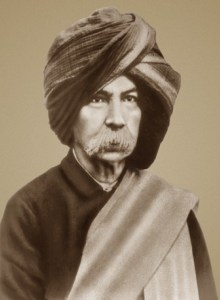
Hemadpant, The Author of “Shri Sai Satcharita”
Govind Raghunath Dabolkar, called Anna Saheb Dabolkar, was Mamlatdar and first class resident Magistrate.
His work ‘Sai Satcharitra’ in Marathi Ovi verse extends to a thousand pages. Maharashtra Sai bhaktas treat it as Sai Ramayana or modern Guru Charitra. They give it the respect due to ancient puranas. Even others respect it when they gain access through N.V. Gunjaji’s English adaptation or translations in Telugu, etc.
This work is highly meritorious and has been the instrument for many people becoming Sai bhaktas. The verses are highly sonorous. The stories about Sai Baba collected from various individuals are based on actual experiences. These stories have great charm and are always fresh.
On his first visit to Shirdi and Sai Baba in 1910, went to the mosque. He and his friend Bala Saheb Bhate prostrated before Baba. Baba pointed to Dabolkar and said, ‘What talk was going on there at the wada? And what did this Hemad Pant say (pointing his chin to Dabolkar)?’. Dabolkar’s name was not Hemad Pant at all.
Hemadpant-“I began to think why Sai Baba should call me by the name Hemadpant. This word is a corrupt form of Hemadripant.
This Hemadripant was a wellknown Minister of the kings Mahadev and Ramadev of Devgiri of the Yadav dynasty. He was very learned and good-natured. He authored good works, such as Chaturvarga Chintamani (dealing with spiritual subjects) and Rajprashasti. He invented and started new methods of accounts and was the originator of the Ovi (Marathi Shorthand) script.
But I was quite the opposite, an ignoramus, and have dull, mediocre intellect. I could not understand why the name or title was conferred upon me. However, after thinking seriously about it, I thought that the title was a dart to destroy my ego. This way, I should always remain meek and humble. It was also a compliment paid to me for the cleverness in the discussion#. (# before he started from Wada/Lodge to Sai Temple, he had some hot discussion with Bala Saheb Bhate about”Guru’s essential ” for 30 minutes)”.
Looking to the future history, we think that Baba’s word (calling Mr. Dabholkar by the name Hemadpant) was significant and prophetic, as we find that he looked after the management of Sai Sansthan very intelligently, kept nicely all the accounts and helped greatly in the publications of ‘Sai Lila Masik (Magazine)’ also as the author of such a good work “Shri Sai Satcharita (SSSC)”, which deals with such important and spiritual subjects as Jnana, Bhakti and dispassion, self-surrender and self-realization.

-
Baba’s another type of Guiding
When devotees came to Baba and asked Him certain questions. He sometimes answered them in part, and asked them to go and listen to the readings of the following* works, which are the main treatises of Bhagwat Dharma. When the devotes went and listened, they got full and satisfactory replies to their questions
- * well known Marathi book named ‘Nath-Bhagwat.’ This is a commentary by the Saint Ekanath, on the eleventh Skandha (chapter) of the bigger Sanskrit work, the Bhagwat.
- At the suggestion or recommendation of Sai Baba, Messrs. Bapusaheb Jog and Kakasaheb Dixit read daily in Shirdi,
- BhagwadGeeta with its Marathi commentary named Bhawartha-Deepika or
- Jnaneshwari (A dialogue between Krishna and His friend devotee Arjuna) and
- Nath Bhagwat (A dialogue between Krishna and His servant devotee Uddhava) and also
- Ekanath’s other big work, viz. Bhawartha Ramayana
-

Four Sadhana for Four Ages
Baba’s Stories as Beacon- Light:
- Light houses are constructed at various places in the sea, to enable the boatmen to avoid rocks and dangers, and make them sail safely. Sai Baba’s stories serve a similar purpose in the ocean of worldly existence.
- They surpass nectar in sweetness, and make our worldly path smooth and easy to traverse. Blessed are the stories of the saints.
- When they enter our hearts through the ears, the body-consciousness or egoism vanishes. The sense of duality disappears. When they are stored in the heart, doubts fly out to all sides. Pride of the body will fall. Wisdom will be stored in abundance.
- The description of Baba’s pure fame and hearing it with love will destroy the sins of the devotee. Therefore, this is the simple Sadhana for attaining salvation.
- The Sadhana for
- Krita Age was Shamadama (tranquility of mind and body); for
- Treta Age, sacrifice; for
- Dwapara, worship, ;and for
- Kali (present) Age, it is singing of the name and glory of the Lord. This last Sadhana is open to all the people of the four varnas.
- The other Sadhanas, viz. Yoga/Yagya (sacrifice), Dhyana (meditation) and Dharana (concentration) are very difficult to practice, but singing and hearing the stories and the glory of the Lord (Sai Baba) is very easy.
- We have only to turn our attention towards them. The listening and singing of the (Baba’s) stories will remove the attachment to the senses and their objects, and will make the devotees dispassionate, and will ultimately lead them to self-realization.
- With this end in view, Sai Baba made me or helped me[ie Hemapant] to write His stories. The devotees may now easily read and hear these stories of Sai Baba. While doing so, they can meditate on Him and His form. Thus, they attain devotion to Guru and God (Sai Baba). They also gain detachment and self-realization.
If any one prostrates before Sai and surrenders heart and soul to Him, then unsolicited, all the chief (Four) objects of life viz. Dharma (righteousness), Artha (wealth), Kama (Desire) and Moksha (Deliverance), are easily and unsolicitedly attained. SSSC Ch-6
-
Institution of Saints -Gurus
There have been institutions of Saints in this world, from time immemorial.
Various Saints appear (incarnate) themselves in various places to carry out the missions allotted to them, but though they work in different places, they are, as it were, one.
They work in unison under the common authority of the Almighty Lord and know full well what each of them is doing in his place, and supplement his work where necessary.
SSSC Ch-21
 Welcome to https://ShirdiSaiBaba.InterNational