Welcome to https://ShirdiSaiBaba.InterNational

Thanks SSS Trust, Shirdi

"I draw to Me, My man from far off or even across the seven Seas to Shirdi, like a sparrow with a string fastened to its feet"-Shirdi Sai Baba, Indian Spiritual Guru-God


Blog

  • Explore Sai Baba Temples Around the World

    Explore Sai Baba Temples Around the World

    United Kingdom!

    Sai Baba Temples in UK, including Prayer Centers for your Spiritual Experience .

    Sai Baba Temples in Singapore and Malaysia for your Spiritual Experience .

    CANADA!

    Sai Baba Temples in Canada including Prayer Centers for your Spiritual Experience .

    Sai Baba Temples in Germany for your Spiritual Experience .

    Hong kong !

    Sai Baba Temples in Hong Kong including Prayer Center for your Spiritual Experience .

  • All Festivals in Sai Baba Temple, Shirdi

    All Festivals in Sai Baba Temple, Shirdi

    I. Important Festivals

    Top vibrant festivals at Shirdi are:

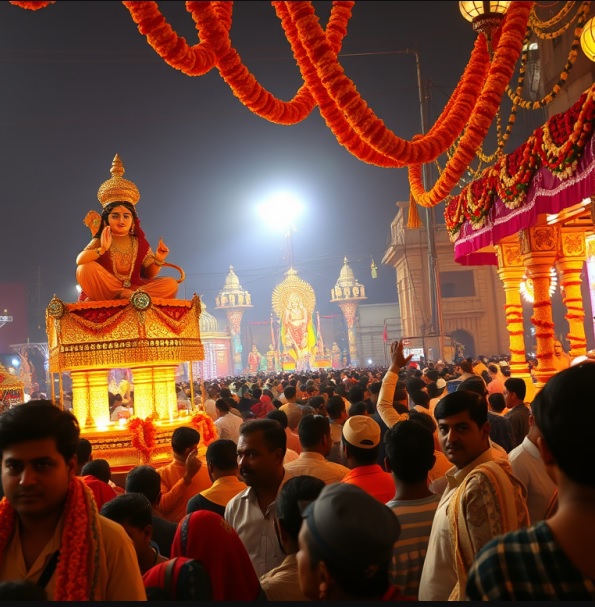
    i. Shree Ram Navami

    Shri Ram Navami is celebrated as Rama’s birthday. Started in 1911, during the lifetime of Sai Baba, Shri Ram Navami at Shirdi is special. The day has been celebrated continuously every March/April, by both Muslims and Hindus with great unity.

    ii. Shree Guru Pournima

    Guru Poornima is a Hindu festival, celebrated with devotion at Shirdi. Poornima means a “full moon” and Guru means “the master.” Baba asked his devotees to celebrate it. Guru Poornima at Shirdi began in the year 1910. It is celebrated on the full moon day of the Ashadh month of the Hindu calendar every July.

    III.Vijayadasami (Shree Sai Baba Punyatithi- Anniversery )

    Vijaya Dasami is a Hindu festival. It is known by different names, such as Dasara, Dussehra, and Dussarah. It is celebrated as the festival of “Victory of Good over the Bad” during every September/October. This day holds great significance for Sai devotees; Baba passed away on this day of Vijaya Dasami on 15-10-1918 around 2:30 PM.

    II. Other Festivals

    The following festivals are also being celebrated, regularly at Shirdi Temple.

    • Mahashivarathri -At 12 Midnight RudraAbhishek at Gurusthan
    • Rang Panchami- Chariot Procession at 5 PM
    • Gudhi Padwa- Traditional Ornaments to Shree Sai Baba & Rath Yatra at 5 PM
    • Hanuman Jayanti-Starts at 4 AM; Recite Bhajans throughout Night at Hanuman Temple.
    • Ashadhi Ekadashi -Remembrance of Baba’s darshan to Dasganu Mahraj, as Lord Vittal
    • Shravani Somvar -Every Monday of Shravan month. Sai Baba in white dress with Rudraksha
    • Gokul Ashtami -Midnight Bhajans; placing Silver idol of Balakrishnan in cradle. Rath Yatra at 9.15pm
    • Narli Pournima – The Only day, Sai Baba wears Golden Ring in His index finger. Priest ties Rakhi to Him
    • Pola – Earthen Bullocks and Cow are worshipped, on Shravan Krishna Amavasaya.
    • Ganesh Charturthi – Dome shaped sweet made up of grated Coconut and jaggery offered to Baba.
    • Anant Chaturdashi- On Bhadrapad shuddha Pournima.
    • Kojagiri Pournima – Ladshmi-Indra Pooja at 11 PM & Moon, reflected in Milk is worshiped at Midnight.
    • Deepawali – Paste of Sandalwood is smeared on Baba’s idol & Lakshmi Pooja with Silver Lotus.
    • Kartiki Ekadashi – Palki Procession at 9.15 PM with photos of Sai Baba and Lord Vitthal.
    • Tulsi Vivah /Marriage – At Dwarkamai on Kartik shuddh Dwadashi.
    • Shree Datta Jayanthi – Rath Yatra at 9.15 with photos of Sai Baba and Lord Dattatraya.

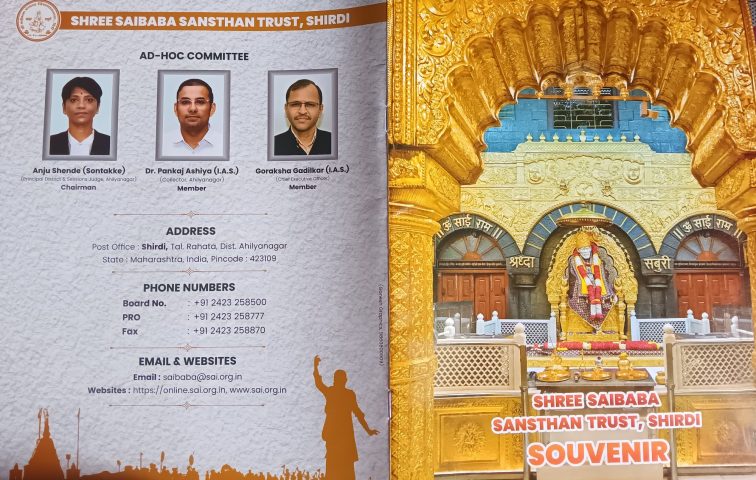
    Source: Thanks Publicity Department, SSST & Souvenir of SSST given on Sai Media Summit on 5th October 2025.

  • Why Shirdi Sai Baba is a Universal Spiritual Guide

    Why Shirdi Sai Baba is a Universal Spiritual Guide

    A captivating exploration of the profound themes and vital truths surrounding Shirdi Sai Baba reveals a figure of immense spiritual significance.

    I. The Nature and Identity of Sai Baba

    Sai Baba is a divine, omniscient, and omnipresent, being whose true nature transcends conventional human and religious classifications.

    • Ambiguity of Origin and Faith:
      • Baba’s identity as Hindu or Muslim is deliberately obscured, highlighting his universality.
      • He celebrated both Hindu festivals (Rama-Navami, Gokul Ashtami) and allowed Muslim practices (Sandal procession, Namaj in Masjid).
      • His physical attributes (pierced ears like a Hindu, advocacy of circumcision, but not circumcised himself) further blurred the lines.
      • No one definitely knew whether He was a Hindu or a Mahomedan.
    • Divine Incarnation and Sadguru:
      • Baba is depicted as a “Wonderful Incarnation,” a “precious Jewel,” and a “precious Diamond.”
      • He is the “crest-jewel of the Saints, who is the home of all auspicious things, who is our Atmaram (Dear Self), and who is the able refuge of the devotees.”
      • He is explicitly referred to as a “Sadguru,” a true spiritual master.
      • “Lord (God) dwells in the Saints.
        • In fact they are not different from Him.
        • Our Sai is One of these,
          • Who incarnated for the welfare of the devotees,
          • Supreme in knowledge and surrounded with divine lustre.”
    • Omniscience and Omnipresence: Baba has absolute knowledge of the past, present, and future.
      • He knew Mr.Damu Anna’s secret thoughts about cotton speculation and his desire to offer Baba a share of profits.
      • He knew Mr. Cholkar’s secret vow regarding sugar and his decision to forego sugar. Baba remarked, “Though, I am here bodily, still I know what you do; beyond the saven seas. Go wherever you will, over the wide world, I am with you. My abode is in your heart and I am within you.”
      • He knew Mr.Hari Kanoba’s name, parentage, and other details about him, even though it was Hari’s first visit to Shirdi.
      • He read Somadeva Swami’s critical thoughts about the flags at the Mosque, directly addressing them.
      • He knew about one pleader’s slander behind His back at Bar Council, demonstrating “His omniscience and His using it for correcting people and setting them on the right path.”
      • He correctly predicted and averted the death of Ramachandra Patil and foresaw Tatya Patil’s passing.
    • He is described as “omnipresent, occupying land, air, country, world, light and heaven, and that He was not limited.”
    • Detachment and Humility: Despite his divine powers, Baba lived a life of extreme simplicity and humility. He lived on alms, possessing nothing, and residing in a deserted Masjid. He begged for food daily, mixing all offerings together, and “His tongue knew no taste.” Dogs, cats, and crows freely ate from his earthen pot, and “Baba never drove them away.”

    II. The Role and Importance of the Sadguru

    The Sadguru (Guru, who realized Self) as the sole means to spiritual liberation and worldly well-being.

    • Bridge to Salvation:
      • The Sadguru is essential for crossing the “worldly ocean.”
      • “Where Real or Sadguru is the helmsman, he is sure to carry us safely and easily beyond the worldly ocean.”
      • The Vedas alone cannot achieve this; “It is only the Sad-guru, who can do so and make you, see the Lord in all creatures.”
    • Destroys Egoism and Sins:
      • The touch of the Guru’s hand is described as having “wonderful… power.”
      • It can destroy the “subtle-body (consisting of thoughts and desires)” and cleanse “sins of many past births.”
      • M. Hemadpant said, when starting writing Shri Sai SatCharitra, “Sai Baba took away my egoism and wrote Himself His stories.”
    • Catalyst for Transformation:
      • Baba’s darshan (sight) leads to profound inner change:
        • “by His darshana our thoughts are changed,
        • the force of previous actions is abated and
        • gradually non-attachment of dispassion towards worldly objects grows up.”
      • He transforms his devotees into “Himself (His nature).”
    • Teacher and Guide:
      • The Sadguru Sai teaches based on the disciple’s qualifications, without unsettling their minds.
      • He dispels ignorance (“Destroying ignorance is Jnana”) and
      • He helps the disciple realize their true Self (“You are God, you are mighty and opulent.”).
    • Unconditional Love and Service:
      • A true Sadguru expects no service or profit,
      • but instead wishes to serve his disciples, treating them as equals or even as Brahma.
      • “Baba had great love for the disciples.”
        • He “loved all beings equally.
        • He was unattached. Foes and friends, kings and paupers, were the same to Him.”

    III. Key Teachings and Practices Advocated by Sai Baba

    Baba’s teachings, though sometimes indirect, emphasized faith, surrender, moral conduct, and devotion.

    • Faith (Nishtha) and Patience (Saburi): These were presented as two coins of devotion by Baba to His Guru.
      • Baba said: “This is one pice -Faith. Patience or perseverance is the other pice. I waited patiently and very long on My Guru and served him. This Saburi will ferry you across the sea of this mundane existence.” (pice=1/100 INR)
    • Complete Surrender: “If any one prostrates before Sai and surrenders heart and soul to Him,
      • then unsolicited, all the chief objects of life viz. Dharma (righteousness), Artha (wealth), Kama (Desire) and Moksha (Deliverance), are easily and unsolicitedly attained.”
      • “The best way, therefore, to get free from the shackles of Maya is our complete and whole-hearted surrender to Baba.”
    • Charity and Non-Attachment to Wealth: Baba frequently extracted “Dakshina” (offerings),
      • not for personal gain, but “to teach the devotees the lesson of charity and to remove their attachment to money and thus to purify their minds.”
      • He asserted that “He had to give back hundred times more of what He received.”
      • He discouraged debt for spiritual purposes: “Baba never liked people to run into debt for taking His darshan, or celebrating any holiday or making any pilgrimage.”
      • He considered “money as a danger or bar to spiritual progress.”
    • Ethical Conduct and Self-Correction:
      • He advised against discourteously turning away those who come to you, emphasizing:
      • “Shri Hari (God) will be certainly pleased, if you give
        • water to the thirsty,
        • bread to the hungry,
        • clothes to the naked, and
        • your verandah of your Home to strangers for sitting and resting.”
    • Baba condemned slander:
      • “Let anybody speak hundreds of things against you,
      • do not resent by giving any bitter reply.
      • If you always tolerate such things, you will certainly be happy.”
      • He used the example of a pig eating filth to correct a slanderer, stating, “Your conduct is similar. You go on reviling your own brethren to your heart’s content.”
    • Baba taught the importance of offering everything to the Guru before enjoyment:
      • before the senses, mind and intellect enjoy their objects, Sai should first be remembered, and if this be done, it is in a way an offering to Him...
      • all the Vrittis (thoughts) regarding Desire, Anger, Avarice etc. should first be offered and directed to the Guru.”
    • He guided devotees to remain calm and composed, engage in good actions, and perform duties without attachment.
    • Remembrance of God/Guru (Dhyana/Bhajan): Baba advised various forms of devotion, including
      • “remembering My name,”
      • “hearing His Leelas,”
      • “worship of His Feet,” and
      • studying sacred scriptures like Shri Sai SatCharitra, Bhagwat, Jnaneshwari, and Vishnu-Sahasra-Nam.
      • He stated, “If you always say ‘Sai, Sai’ I shall take you over the seven seas.”

    IV. The Human and the Divine

    • Interaction with Devotees:
      • Baba allowed devotees to serve him in their own way,
      • demonstrating his “dependency on Bhaktas” (in the sense that he allowed their devotion to manifest).
      • He engaged in normal conversation, jokes, and sometimes strong reprimands, always with a deeper purpose.
    • The Guru-Disciple Relationship: The relationship is central. Disciples are encouraged to fully surrender and trust the Guru. The Guru sees beyond superficiality and acts for the disciple’s ultimate good.
    • Transcending Form:
      • While he had a physical form, Baba’s true nature was “unattached and indifferent” and “the state of Brahman.”
      • He demonstrated “Khandayoga, i.e., separating His limbs and joining them again,”
      • His visible form was merely a “mould” for the “liquid essence of Pure Self.”

    V. Miraculous Powers (Leelas) and Their Purpose

    Baba’s “Leelas” (divine plays or miracles) are frequently cited, serving not as ends in themselves, but as tools to deepen devotees’ faith, teach spiritual lessons, and alleviate suffering.

    • Manifestation of Divine Power:Grinding Wheat: Initially misunderstood as mundane, Baba’s grinding of wheat was a symbolic act to “destroy the cholera epidemic in Shirdi” with the flour.
    • Turning Water into Oil: This demonstrated his control over natural elements(fire) and taught the Banias (Oil Traders) a lesson in /
    • ‘truthfulness.
    • Curing Diseases: He cured various ailments, including eye problems with Beeba (marking nuts-Carpus Ana Cardium) and diarrhea with groundnuts, emphasizing that “The true medicine… was Baba’s word.”
    • Saving from Calamities: He averted the snake bite for Shama and predicted/averted the death of Ramachandra Patil. He also saved Mr. Mirikar from a potential snake bite.
    • Fulfilling Desires (within divine plan):
      • The “Amra-Leela” story illustrates his power. Four mangoes, given by Sai resulted in four sons and four daughters for Damu Anna. This happened despite astrological predictions.
      • He facilitated the return of a stolen jewel-box and a stolen sum of money.
    • Disguised Blessings and Tests:Baba’s “rage” and “abuses” were often a “blessing in disguise,” as seen with Somadeva Swami, or a direct command to the poison in Shama’s case.
    • Drawing Devotees and Confirming Faith:
      • The numerous anecdotes of individuals being drawn to Shirdi, despite their initial reluctance (Hemadpant’s own journey, Kakaji Vaidya being directed by Goddess Sapta-Shringi, the “idolater” friend of Kaka Mahajani) highlight Baba’s magnetic spiritual pull.
      • His precise knowledge of hidden thoughts or distant events served to “create faith and devotion” in his devotees.
    • Guaranteeing the Welfare of His devotees:
      • “There will never be any dearth or scarcity, regarding Food and clothes in My devotee’s home.”
    • In a nutshell
      • Baba’s teachings
        • emphasize love, compassion, and faith,
        • uniting all religions and
        • inspiring devotion beyond boundaries.
      • His miraculous acts instill hope, and
      • His wisdom fosters inner peace.
  • Study materials available to Foreigners, interested in Shirdi Sai Baba.

    Study materials available to Foreigners, interested in Shirdi Sai Baba.


    Foreign individuals seeking to understand the life, teachings, and global influence of Shirdi Sai Baba have access to a wide array of study materials.

    1. Academic Works

    Academic studies offer a structured, critical, and contextual understanding of Shirdi Sai Baba, often distinguishing historical facts from hagiographical embellishments.

    As per (Thanks) Oxford Bibliographies:-

    Academic study of Shirdi Sai Baba has emerged within the past several decades as scholars of religion in South Asia began to engage in a wide array of studies of popular saints and gurus;

    and as they observed the rapid growth in devotion to Shirdi Sai Baba in particular within the Indian subcontinent and, eventually, beyond India.

    White 1972 provided the first academic analysis of Shirdi Sai Baba, noting his growing popularity in western India and attributing it to the unifying bond created between Sai Baba’s devotees, a bond that crosses distinctions of caste, class, and social status.

    Antonio Rigopoulos 1993 is the first book-length academic study of Shirdi Sai Baba, which presents a biography of Sai Baba in the first half that draws upon Hindu-authored hagiographies, and presents Sai Baba’s key teachings in the second half with an emphasis on interreligious tolerance.

    Warren 2004 includes a valuable translation of the diary kept by Abdul Baba, a Muslim follower of Sai Baba in Shirdi, and draws upon that to present an interpretation of Sai Baba as a Muslim fakir who traveled the Sufi path.

    McLain 2016 traces Shirdi Sai Baba’s rise from small village guru to global phenomenon, using a wide range of textual, material, and visual sources to investigate the different ways that Sai Baba has been understood and the reasons behind his skyrocketing popularity among Hindus in particular.

    The edited collection Srinivas, 2022 provides insight into the worship of Sai Baba beyond the village of Shirdi in the early twentieth century, with essays that examine more contemporary worship at multiple sites within India as well as in Asia and Africa.

    Several articles also make valuable contributions to the study of Shirdi Sai Baba:

    Hardiman 2015 analyzes the miracle healing cures associated with Sai Baba and the relationship between his spiritual power and secular science;

    Rigopoulos 2012 analyzes some of Sai Baba’s miracles in connection with yoga powers;

    Vicziany 2016 examines the worship of two syncretic figures, Shirdi Sai Baba and Haji Ali, in the city of Mumbai, India; and

    Loar 2018 compares the hagiographies of Shirdi Sai Baba that were written by two of his Hindu followers, Dabholkar and Narasimhaswami.”- Thanks Oxford for your article at www.oxfordbibliogrsphies.com.


    Cambridge University

    Cambridge University have explored aspects of Sai Baba’s life and the movement he inspired.

    1. Academic Research and Publications:
    * Cambridge Core: Cambridge University Press has published academic works that discuss Shirdi Sai Baba and the broader Sai Baba movement.
       * Smriti Srinivas’s article, “Sai Baba: The Double Utilization of Written and Oral Traditions in a Modern South Asian Religious Movement,” published in Diogenes, examines the origins of the Sai Baba movement rooted in Shirdi Sai Baba.
       * Another article in Comparative Studies in Society and History titled “Miracle Cures for a Suffering Nation: Sai Baba of Shirdi” explores his popularity and perceived ability to provide miraculous cures.
       * The “Cambridge Companion to New Religious Movements” features a chapter by Tulasi Srinivas on the Sathya Sai Baba movement, which originated from Shirdi Sai Baba’s legacy.
    * Cambridge University Library: Kevin R.D. Shepherd, a British author, conducted private research at Cambridge University Library for twelve years, focusing on the history of religions and philosophy. He has authored books such as “Sai Baba of Shirdi: A Biographical Investigation” and “Investigating the Sai Baba Movement.”
    2. Perspectives on Shirdi Sai Baba:
    * Syncretism: Some scholars highlight Shirdi Sai Baba’s image as a unifying figure between Hindu and Muslim traditions, emphasizing the composite nature of Indian culture in the growth of his devotion.
    * Miracles and Faith: His devotees often attribute miraculous abilities to him, which contributed to his widespread popularity. Academic analysis has also focused on these aspects.
    * Historical Context: Research connects the rise of Shirdi Sai Baba’s popularity with the Indian nationalist movement and the search for unifying symbols.
    3. Mentions in Other Contexts:
    * Sathya Sai Baba: Sathya Sai Baba of Puttaparthi, and his movement have also been subjects of academic study, including publications by Cambridge University Press.
    * Educational Initiatives: Cambridge University Press has collaborated with Indian educational institutions for programs like the “SAI-Cambridge Reading Quest,” although this is related to language skills development and not directly to the study of Sai Baba.
    While Cambridge University’s press has published scholarly articles and books that analyze his life, teachings, and the socio-religious movements associated with him. Individual researchers connected to the university have also contributed significantly to this field of study.


    Teachings and Philosophy

    Social and Cultural Significance

    • Karline McLain’s Be United, Be Virtuous: This work investigates the role of Sai Baba’s teachings in promoting religious harmony and examines the movement’s cultural impact within Indian society.
    • Edited Volumes (e.g., Devotional Spaces of a Global Saint): These collections often feature contributions that analyze the institutional development of the Sai Baba movement and its place in the lives of modern devotees.

    Miracles and Belief Systems

    • Analytical Perspectives on Miracles: Academic literature explores the narrative function of miracles in constructing Sai Baba’s authority, examining their sociological and psychological dimensions and drawing comparisons with miracle traditions in other religions.

    Global Spread and Contemporary Practices

    • Studies on Globalization: Scholars analyze how Sai Baba’s devotion has transcended geographic boundaries, highlighting the establishment of temples and devotional practices in international contexts.
    • Media and Technology: Contemporary research considers how digital media platforms are employed to maintain global devotional networks and disseminate teachings.

    Methodological Approaches

    Engagement with academic resources introduces foreign learners to various methodological frameworks—historical criticism, sociology of religion, and anthropology—that enable a comprehensive and critical study of religious figures and movements.

    2. Devotional and Informational Websites

    In addition to academic works, several online platforms provide accessible resources tailored to the needs of international devotees.

    Websites for International Devotees (e.g., shirdisaibaba.international)

    • Curated Publications: These platforms offer English-language articles, news updates, and publications, suited for global audiences.
    • Translations of Key Texts: They often provide details of translated versions of significant devotional texts and biographies.
    • Community Engagement: Discussion forums and community pages offer a space for interpretation, Lists of Sai Baba temples in countries like the USA, UK, Canada, Singapure, Dubai…and sharing of experiences, reflecting the living tradition of Sai Baba devotion.

    Official Temple Trust Website (sai.org.in)

    • Authoritative Information: Offers official narratives, details of temple rituals, and historical overviews from the perspective of the temple trust.
    • Online Resources: Includes downloadable material, videos, and frequently asked questions, all primarily in English, facilitating introductory-level engagement.

    3. Key Considerations for Foreigners

    Language Accessibility

    The wide availability of English-language materials—both academic and devotional—greatly enhances accessibility for non-Indian audiences.

    Multiple Perspectives

    A balanced approach that includes both academic and devotional materials provides a more nuanced and comprehensive understanding of Shirdi Sai Baba.

    Cultural Context

    Academic studies help situate Sai Baba within the broader Indian religious and cultural milieu, an essential context for foreigners unfamiliar with the subcontinent’s spiritual traditions.

    Critical Engagement

    By engaging with academic sources, foreigners are encouraged to critically examine the narratives surrounding Sai Baba, differentiating between historically substantiated facts and devotional interpretations.


  • Various teachings and practices, prescribed by Baba

    Various teachings and practices, prescribed by Baba

    • Baba lovingly urged many to remember His name and to surrender to Him,
    • Yet for those seeking to understand ‘who they truly were’ (the ‘Who am I’ enquiry), He gently recommended Shravanam (study) and Mananam (meditation).
    • To some, He lovingly guided
      • the remembrance of God’s name,
      • to others, the joy of hearing HIS Leelas /Plays,
      • to some, the sacred worship of His Feet,
      • and to others, the reading and studying of the Adhyatma Ramayan, Jnaneshwari, and more sacred scriptures.
    • Some He tenderly invited to sit near His Feet,
    • while others He lovingly sent to Khandoba’s temple,
    • He advised some
      • to repetition the thousands of names of Vishnu,
      • and others to engage in the study of the Chhandogya Upanishad and Geeta.
    • To some, He offered His guidance directly in person, and to others, through the precious visions in their dreams.
    • He lovingly explained certain Mantras, such as ‘Guru Brahma’, “Raja Ram’ in their dreams.
    • To one devotee,
      • who was earnestly practicing Hath-Yoga,
      • HE conveyed a gentle message to leave those practices aside,
      • to sit in quiet and embrace patience (Saburi).
    • Truly, it is an immense task to describe all of His ways and methods, each filled with love and compassion.
  • Now, How to visualize Baba

    Now, How to visualize Baba

    • Let us remember and visualize Shri Sai, now.
    • Let us go to Shirdi, and see carefully the programmes, after the noon-Arati. After the Arati ceremony was over, Sai used to
      • come out of the Masjid, and
      • standing on its edge,
      • distribute udi to the devotees with
      • very kind and loving looks.
    • The Bhaktas also got up with equal fervour,
      • clasped His Feet, and
      • standing and staring at Him,
      • enjoyed the shower of Udi.
    • Baba
      • passed handfuls of Udi into the palms of the devotees and
      • marked their foreheads with Udi with His fingers.
    • The love He bore for them in His heart was boundless. Then He addressed the Bhaktas as follows:-
      • “Oh Bhau, go to take your lunch;
      • you Anna, go to your lodgings;
      • you Bapu, enjoy your dishes”.
    • In this way He accosted each and every devotee and sent them home.
    • Even now, you can enjoy these sights if you bring into play your imagination. You can visualize and enjoy them.
    • Now bringing Sai before our mental vision, let us meditate on Him, from His Feet upwards to His face, and prostrating before Him humbly, lovingly and respectfully

    Baba in SSSC-Ch20

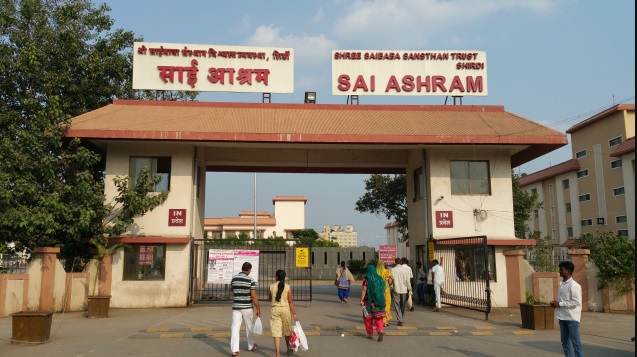
  • Sai Devotees-Do Free Service at Shirdi Temple

    Sai Devotees-Do Free Service at Shirdi Temple

    Sai Devotees, You can now do Free Service at Shirdi, under Sai Sevak Scheme of Shirdi-Sai-Baba-Temple-Management.

    Opportunity to do seva at/near our Sai Mandir at Shirdi, and get Sai Baba’s blessings, directly.

    About Sai Sevak Scheme

    • Sai Sevak ‘Group’ with maximum 21 members
    • Seva period will be 7 days only ie Every Tuesday to Monday
    • Sai Sevak Group should reach on Monday at Sansthan’s  Sai Ashram No.2 (Dharmashala) by 2.00 p.m.
    • Free facilities given:
      • 21 members accommodation, at Sai Dharmshala
      • Meals at Prasadalaya
      • Breakfast packets at accommodation
      • Tea at seva
      • Daily Darshan
      • Aarti once in 7 days.
    • Documents  required are 
      • 2 Passport size Photos.
      • Aaadhar Card Xerox.
      • Medical Fitness certificate.
      • Police (On Line) Verification or Character Certificate from Corporation Ward Member/ Municipal Chairman /Gram President.
    • No compensation/ claim for employment, against Seva.
    • Only 10 groups will be accepted for service in each week by Temple.
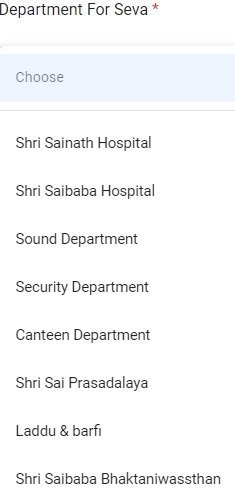
    • Service Places offered at:-
    • Contact:-
    • Website – online.sai.org.in
    • Email: labour@sai.org.in
    • Call: 02423 258811/10

    PS. The above details are given for information only. Contact the above, for Registration and latest updates.

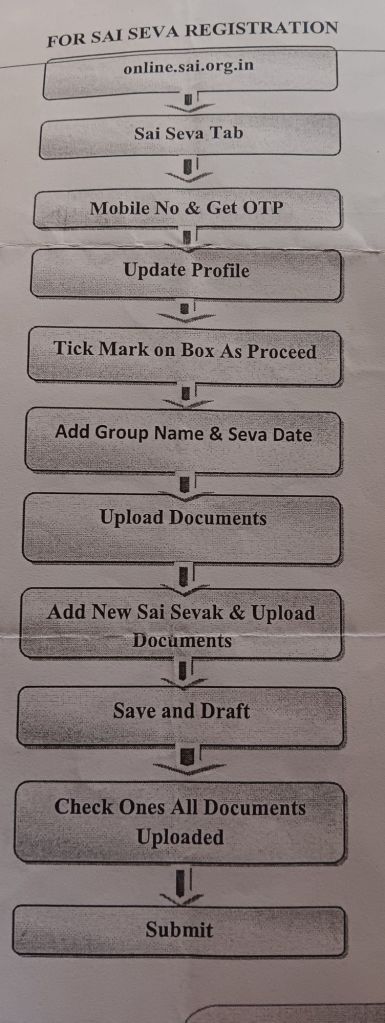
    Steps in registration process
  • Baba’s help in travel

    Baba’s help in travel

    Baba helped his devotees in travel

    Para Number in the Book ‘BCS” , About His Help in Travelling

    564. Baba to Nana (with Haridas): “Take food and go to the train.”

    [Haridas having no faith in Baba started without meal and …Nana Chandorkar started only after taking his meal and again taking leave of Baba, yet he reached in time, as the train was some hours late,]

    564A. Trip to Kopergaon by Ganesh Vishnu Bere (alias Nana Saheb Bere)

    Agricultural Inspector was about to start to Kopergaon in a tonga, with Sri Das Ganu, to catch a train and went to Baba for leave taking.

    Baba:     Hurry up. Do not delay or stop your tonga till you  reach the station”. 

    Accordingly the two started in their tonga  from  Shirdi.  As there was plenty of time for the arrival of the train, other tongawallas requested Bere’s tonga to wait. But heedless of the requests, Bere came to Kopergaon safe, though long before the train arrived. 

    The other tongas from Shirdi arrived in time, for the train later on. But enroute, they had been attacked by high way men (robbers) . Why Baba hurried up Bere was then clear.

    565. Baba to Purandhare: “Stay two days at Nasik and then leave.” R.B.P. was forced by illness of his children to stay at Nasik for two days.

    566. Baba to B.V. Vaidya (going to Nasik): “There is plague in Nasik. Go back home, with your children.”

    1. Baba to Tatya, who had got a summon from court: “Do not go to court today.”(The court was suddenly closed that day).
    2. Baba to Tatya: ” Do not go to the market or at least take Shama with you. (Tatya went without Shama, and one of his horses became uncontrollable with pain in the waist).
    3. Baba “Englishman, do not go to Kopergoan”. The Englishman went and on the way was thrown off the carriage and had to be an in-patient at the Hospital.
    4. Baba (to Kaka Mahajani on his arrival): “When do you go back?”

    Kaka:  When you order. Baba:   “Go to-morrow morning.”

    Kaka Mahajani started next morning and found that he was badly needed at his office.

    1. Baba (to Mr S. Tarkhad soon after his arrival at Shirdi-with the hope of getting  Baba’s blessings for employment): “Go back, to your place (Poona) via Ahmadnagar.    Start now with Tatya Patel”.

    Mr. S.T. thought it was hard lines to go back at once and that without employment. But, when he reached Poona, the directors of a mill were eagerly waiting for him, on account of a strike among millhands and they made him their manager.

    1. Baba to N.G.C.: “Do not go to-day, but go tomorrow to meet the collector at Kopergaon.”

    The collector had cancelled that day’s engagement by wire and came to Kopergaon only on the following day, facts unknown to N.G.C. but known to Baba by his Antarjnana.

    1. Baba to Pandharpur Vakil: “Do not start to -day. Start to-morrow for your Pandharpur case.”

    The vakil later found that the Govt. Vakil on the opposite side had obtained a day’s adjournment without notice to him.

    1. H.S.D. to Baba: On 6-2-1916 the Will case is to come up for hearing. So the Bombay party wants me to start now to give evidence. B.: “No.no, let us wait and see.”

    H.S.D. later. The case, it seems, has been posted to the 9th.

    Baba: “Let us wait and see.”

    (Again ) H.S.D.: The case has been posted to the 13th.

    Baba: “Let us wait and see.”

    Baba permitted H.S.D. to start only on the 14th and the case was actually taken up on the 15th at Bombay. The detention seemed to be risky, as the party summoning Dixit was considering whether to issue a warrant. But Baba sending him on the 14th averted its issue.

    574A. Baba asked Chandrabai Borker to go to pandhrpur. That was the place where Mr.Borkar had his official work. She went there and found he had gone away on transfer, and sat dejected at a dharmasala. A fakir appeared, told her of the transfer to Dhond, gave her tickets to Dhond and a male escort to take her there.

  • Baba’s promises in His own name

    Baba’s promises in His own name

    Para Number in the Book ‘BCS’ & Baba’s Sayings on his Own-Name, the followings

    1. My eye (of vigilant supervision) is ever on those who love me.
      Whatever you do, wherever you may be, ever bear this in mind that I am always aware of everything you do.
    2. If one ever meditates on me, repeats my name, signs my deeds, and is thus transformed into me, one’s Karma is destroyed. I stay by his side always.
    3. You should have truth always with you. then I shall be always with you, wherever you are, and at all times.
    4. I will be with you, whenever and wherever you think of me. Do not fear.
    5. If one perpetually thinks of me, and makes me his sole refuge, I am his debtor and will give my head to save him.
    6. If, one ever dwells on me in his mind and will not even taste food before offering it to me, I am his slave. So also if he hungers and thirsts after me, and treats all else as unimportant.
    7. I am (Bhaktaparadeena) the bond slave of my devotees, I love devotion.
    8. He who withdraws his heart from wife, child and parents and loves me is my real lover and he merges in me like a river in the sea.
    9. Saibaba: The key of my treasury is now placed in your hands. Ask for anything you want, Rs. 5 to 100 a month or what you will and, I will give it to you.
      Devotee (M B Rage) declines to ask.
      Baba: Ask something, I am anxious to give you.
      Devotee: Is it agreed that you will grant anything I ask for?
      Baba: Yes
      Devotee: Then, Baba, I want this. In this and in any future birth that may befall me, you should never part from me. You should always be with me.
      Baba: Yes, I shall be with you, inside and outside you, whatever you may be or do.
    10. My devotee feels me in you, in himself and in all creatures and sees all as his Guru. He will become like me.
    11. If you make me the sole object of your thoughts and aims, you will gain Paramartha. (supreme Goal)
      Look to me; I will look to you.
      Trust the Guru fully. That is the only sadhana. Guru is all the Gods.
    12. If one devotes his entire mind to me and rests in me, he need fear nothing for body and soul. If one sees me and me alone and listens to talk about me and is devoted to me alone, he will reach God (Chaitanya). He who worships me as Nitya, Suddha and Buddha comes to me.
    13. Those who perpetually repeat my name reach their goal.
    14. Simply say “Sai” “Sai” with heart overflowing. I care not for show of respect and forms, I rest in such devotees.
    15. Repeat my name. Seek refuge in me. But to know ‘who I am” have Sravana and Manana.
    16. I am formless and everywhere.
    17. If anyone casts his burden on me and thinks of me, I look after all his concerns.
    18. Yes; you can place your burdens on me.
    19. In the abode of my devotees, there will be no dearth of food and clothing.
    20. You devotees are my children. I am your father. You have to get everything from me. So you should not talk like that (say Sai is not God).
    21. Why are you anxious? I take all care of you.
    22. Sit quiet, Uge Muge. I will do the needful. I will take you to the end.
    23. Go Everything will be provided, Babugir.
      I will provide for you, Ganu
      I will provide for Manker’s son.
    24. Why do you fear? Am I not here (where you go to ease yourself?)
    25. Stay here, treat it as your house
      Governor came with a lance to pierce Dada (G.S.K). I had a tussle with him and drove him out. Finally I conciliated him.
      Why should any fear, when I am here?
    26. When this baby sleeps we have to stand by, keep awake and watch or take trouble.
    27. I will not allow my devotees to come to harm. I have to take thought for my devotees. And if a devotee is about to fall, I stretch out my hands, and thus with four, four (i.e. a number of), outstretched hands at time to support him. I will not let him fall.
    28. I am its (frog’s) Father, and am here. Will I let the snake eat it? See how I effect its release…….. “Hallo Veerabadrappa, be ashamed of your hatred. Give up hatred. (The snake dropped the frog). I have kept my word and saved Basappa (the frog from Viradadrappa, the snake). God has saved him by sending me.
    29. See I have to suffer for your sake, to remove your sufferings.
      I Will not let you die. I will die first ere I let you die (Nandram) (Nandram lived long after 1918)
      Nana is about to die. But will I let him die? (535-A)
      Fakir (God) wishes to kill Dada Saheb (i.e., G.S.Khaparde), but I will not permit him.
      O Annah! if I had delayed a minute, this man (S.B.Nachen) would have indeed perished. The madman had seized him with his hands, even his throat. But I extricated him. What is to be done? If I do not save my own son, who else will.
    30. He is mine, and mine alone.
      I alone have to shoulder the responsibility for carrying him across.
      Whom has he got except me?
    31. (After Cholera goddess was driven away) You are now safe, Go.
    32. Night and day, I think and think of my people, I con/recite their names over and over again.
      Baba to.Dhumal: “Bhav, the whole of last night, I had no sleep. I lay thinking and thinking of you.
      At every step, I have to take care of you, Else, what will happen to you, God knows.”
    33. I shall never forget him; I shall remember him, even if he is 2000 miles away. I will eat nothing without him.
    34. I get angry with none. Will a mother get angry with her kiddies? Will the ocean send back the waters to the several rivers? I love devotion. I am the slave of my devotees, Bhakta Paradhina.
    35. How can I allow my children to fast or starve?
    36. Come, Sirs, carry away bags of udhi. Come, cart away the treasures of your mother.
      Look here, People come and say Baba, give. I tell them to take. No one takes.
    37. My master told me to give bounteously to all that ask. No one listens to me or wisdom. My treasury is open. None brings carts to take from it. I say dig; none will take any pains. I said dig out the treasure and cart it away. Be the real and true sons of the mother and fully stock your magazine. What is to become of us i.e. this bodily life? Earth will return to the earth; and the air (breath) will return to the air. This opportunity will not return.
    38. Place your entire faith in my words. Your object will be accomplished.
    39. Baba To Lakshman on 15-10-1918 : Jog thinks I am dead. I am living. Come and perform morning Arati
    40. (Give me) my 1¼ Rupee (Majya Savva Rupya)
    41. My tomb will speak and move with those who make me their refuge.
    42. I shall be active and vigorous from my tomb also.
    43. Even after my Mahasamadhi, I will be with you, the moment you think of me, at any place.
    44. As soon as a devotee calls unto me with love, I will appear. I require no train to travel.
  • Sai Baba Temples in Dubai, UAE

    Sai Baba Temples in Dubai, UAE

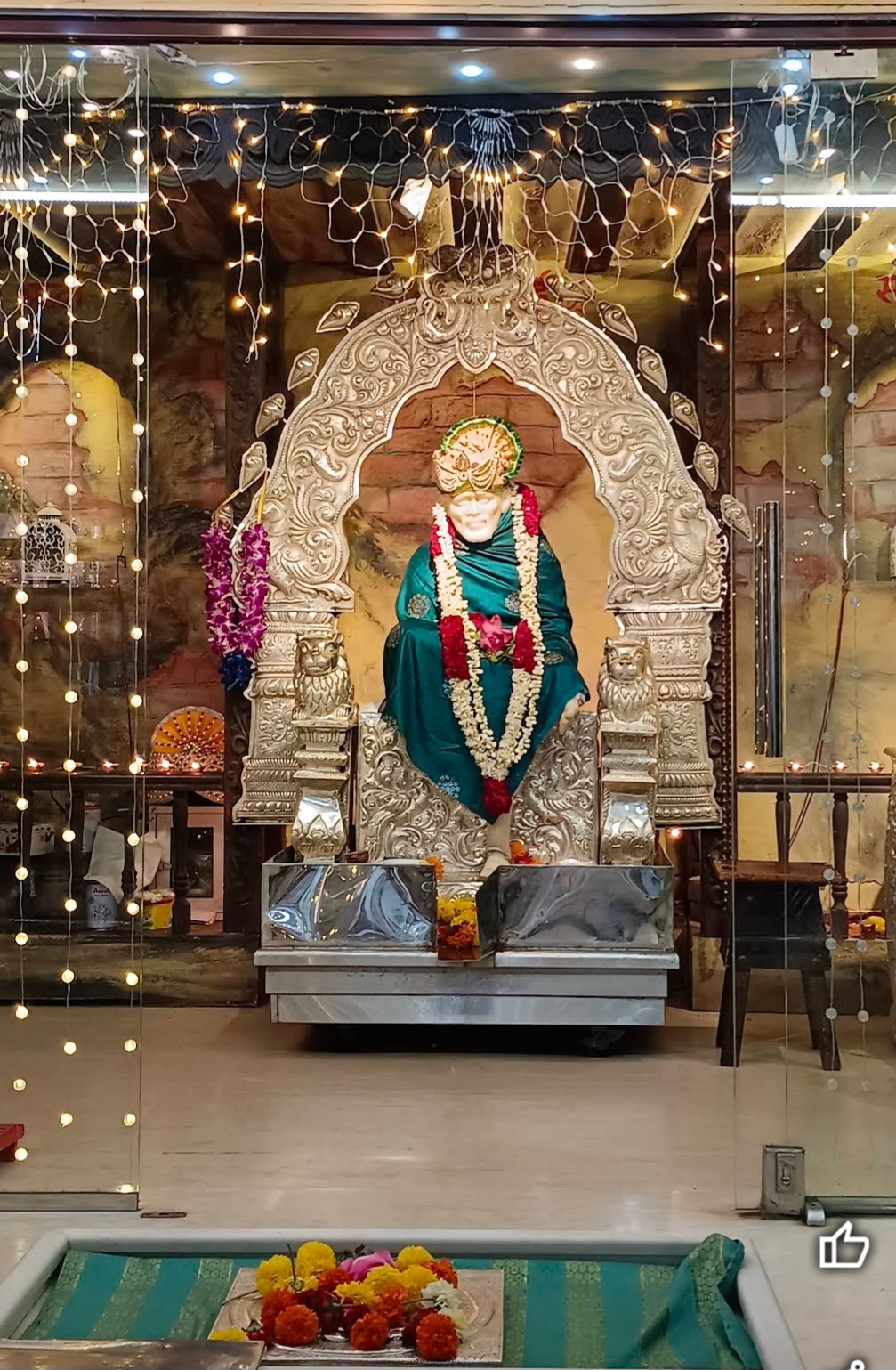
    First One is the New Hindu Dubai Temple at Jebel Ali Village, Dubai. There are 15 sannathis including Ganesh, Siva, Vishnu, Durga, Laxmi, Murugan, Shirdi Sai Baba and Hanuman; which are Divine Treat. The location link

    Sai Baba at Hindu Dubai Temple

    Second SAI BABA Mandir was* within Shiva Temple, Next to Krishna Temple, Near Dubai Museum . The Location Link

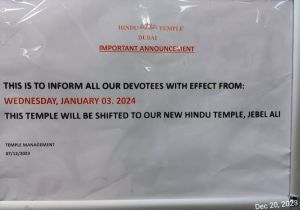
    Sai Baba Statue and Notice Board at Siva Temple, Dubai

    * This whole temple was shifted from here, to the first mentioned Dubai Hindu Temple, on 3rd January 2024. Hence, no dharsan here from 03.01.2024, as per the notification on the Notice Board of this Sivan Temple

    Another one Sai Baba Temple is at Jumeirah, Dubai. But Entry-fee (around 30 AED) is there for Non-Member, as this is a Private Property. Location Link.

    Check these if you think that Shirdi Sai Baba calls you

    Interested in Going to ShirdiClick me
    Interested to know the A-ZAvailable here
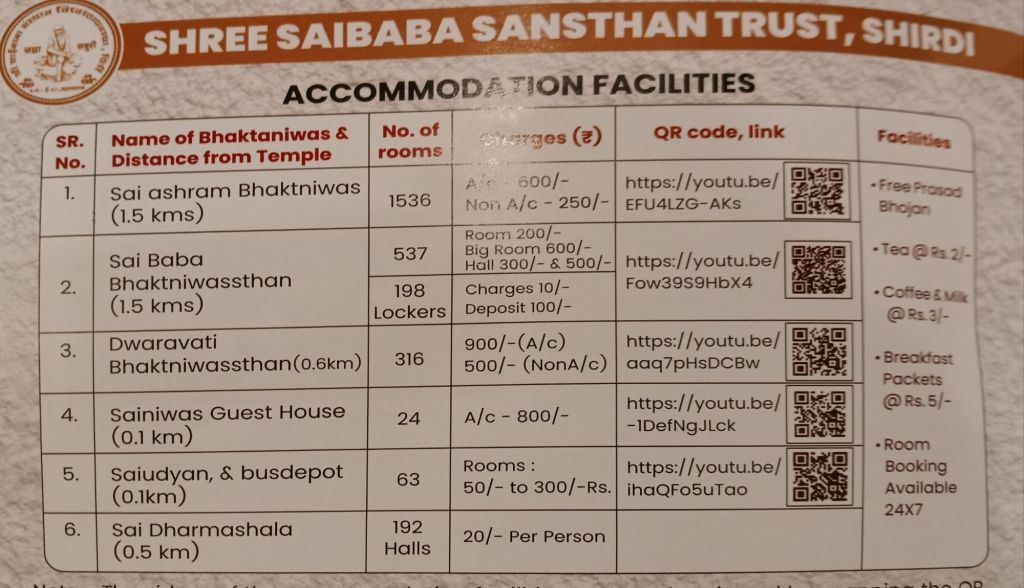
    Interested to know where to stay in ShirdiGet it
    Interested to reserve Shirdi Temple On line servicesContinue to Book
    Interesting Spot in and around ShirdiSee here

  • Nine types of Devotion

    Nine types of Devotion

    Nine forms or types of Devotion (Bhakti) are, viz.,

    • (1) Shravana (Hearing);
    • (2) Kirtana (Praying);
    • (3) Smarana (Remembering);
    • (4) Padasevana (resorting to the feet);
    • (5) Archana (Worship);
    • (6) Namaskara (Bowing);
    • (7) Dasya (Service);
    • (8) Sakhyatva (Friendship);
    • (9) Atmanivedana (surrender of the self). These are the nine types of Bhakti.

    If any of these are faithfully followed, Lord Hari will be pleased and manifest Himself in the home of the devotee.

    All the sadhanas, viz. Japa (vocal worship), Tapa (penance), and Yoga practice are quite useless. Studying the scriptures and expounding them are also quite useless. These activities need to be accompanied by Bhakti, i.e., devotion. Knowledge of the Vedas, or fame as a great Jnani, and mere formal Bhajan (worship) are of no avail. What is wanted is Loving Devotion.

    Think of yourself as someone searching for the truth. Be anxious and eager like the seeker to collect or cultivate the nine types of devotion. Then you will attain stability and peace of mind.

    SSSC Ch 21

  • Baba’s Yoga Practices

    Baba’s Yoga Practices

    Sai Baba knew all the processes and practices of Yoga. Some of them will be described here:

    • 1) DHAUTI or CLEANING PROCESS: Baba went to the well near a Banyan tree. It was at a considerable distance from the Masjid. Every third day, he washed his mouth and had a bath.
    • On one occasion, He vomited out his intestines. He cleaned them inside and outside. Then, he placed them on a Jamb tree for drying. There are persons in Shirdi, who have actually seen this, and who have testified to this fact.
    • Ordinary Dhauti is done by a moistened piece of linen, 3 inches broad 22 1/2ft. long. This piece is swallowed. It remains in the stomach for about half an hour to react there. Then, it is taken out. But Baba’s Dhauti was quite unique and extraordinary.
    • 2.) KHANDA YOGA: In this practice, Baba extracted the various limbs from His body. He left them separately at different places in the Masjid.
    • Once, a gentleman went to the Masjid, and saw the limbs of Baba lying separately at separate places. He was much terrified; and he first thought of running to the village officers, and informing them of Baba being hacked to pieces and murdered. He thought that he would be held responsible, as he was the first informant and knew something of the affair. So he kept silent. But the next day when he went to the masjid, he was surprised. Baba was hale, healthy, and sound, as before. He thought, that what he had seen the previous day, was only a dream.
    • 3) Baba was an adept of all the margas. (Path) . His chief marga was Bhakti marga. The special form of it is described as Guru Marga in the ‘Guru Gita’.
    • Jnana and siddhis, including yoga siddhis, came in the wake of his Guru bhakti.

    Baba had no particular marga, as the yoga marga etc. But if any person came to grief in his yoga marga, he could give relief. One yoga sadhaka had bleeding piles and came to Baba and got relief at Baba’s hands.

    • 4) Baba said, ‘Life is lived in vain if no yoga, yaga, tapas, or jnana be achieved’. He asked a devotee, ‘Will you sit idle merely eating your food? Have Saburi, that is patience and courage’.
    • Baba set the example himself of tapas. He kept awake the whole night, lying on a small narrow plank making Namasmaran, keeping his eyes open, and holding his mind in trance.
    • 5) What took place was the Baba’s conversion of water into oil. Somehow oil came into the lamp in a sufficient quantity, from Water to burn all night. Now this is not explicable to ordinary men with their notions of chemistry and physics.
    • Water is not converted into oil in a straightforward manner. Castor and other plants absorb water and combine it with their ingredients. They then produce oil in the seeds of their fruits. Without any such process, Baba was able to fill his lamps with oil.
    • 6) We take Baba’s first achievement at Selu of reviving the dead man with no other remedy or mantras than the throwing of his Guru’s pada duti on the corpse with a prayer for revival: or His taking water at his Shirdi Masjid and filling his lamps with that water for feeding the wicks with a prayer, we find his concentration on his Guru God is the only means.
    • 7) Baba was always thinking of God. Serving God is serving man and serving creation. He had evidently no need to determine the time of his death by noting the Arishta or omens or ripeness of his karma, according to Patanjali Yoga Sutra No. 23 for all knowledge to him was an open book.
    • His undertaking on behalf of his devotees to give them happy and blessed deaths, e.g., his promise to H. S. Dixit to carry him in a vimana, were fulfilled by him with remarkable accuracy of Dixit’s death, through his divine power.
    • 8) G.S. Khaparde was a highly cultured Sanskrit scholar and had evidently read yoga shastra. He has referred to certain instances and experiences of his in his diary in the year 1911-12, while he stayed at Shirdi.
    • In his Diary, he repeatedly mentions that Baba cast Yogic glances at certain persons. These individuals were immediately filled with a wave of bliss. This wave overpowered all their other mental activities. It kept them immersed in bliss for hours without break. Khaparde experienced such bliss after a yogic glance from Baba. This state lasted for three or four hours. He has noted this in his diary.
    • 9) Baba’s yoga sampoorna state enabled him to keep several people in such happy state, as they themselves have recorded in their experiences.
    • Mrs. Tarabai Sadasiva Tarkhad says that though she had physical pains in her body and mental worries, life was quite miserable. Yet when she went and sat before Baba, that very moment she felt steeped in Lethe. All her anxieties, pains, and cares, both physical and mental, vanished. Till her departure from Dwarakamayee, she was enjoying a happy state.

    What is this siddhi called? Patanjali’s Yoga Sutras and Srimad Bhagavata, llth Skanda, 15th Chapter, amongst other books, give a list of siddhis attained by yoga processes. What Baba did would be called ‘Yatha Sankalpa Samsiddhih’ and ‘Apratihata Ajna.’ This means producing whatever one wants by mere will power or supreme command.

    Srimad Bhagavata says ‘When one gets laya in God, all powers, all knowledge, all wisdom, all perfection, that are termed divine, shine forth from such a person’. Baba was perfect in his concentration on God. Therefore in the above quoted instances as in the other innumerable instances to be found in the Gospel of Sai Baba (i.e. BCS) or other books on Baba, the powers exercised by Baba were the result of his laya in God, that is, they were really divine powers

    SSSC Ch-7

  • Hemadpant, The Author of “Shri Sai Satcharita”

    Hemadpant, The Author of “Shri Sai Satcharita”

    Govind Raghunath Dabolkar, called Anna Saheb Dabolkar, was Mamlatdar and first class resident Magistrate.

    His work ‘Sai Satcharitra’ in Marathi Ovi verse extends to a thousand pages. Maharashtra Sai bhaktas treat it as Sai Ramayana or modern Guru Charitra. They give it the respect due to ancient puranas. Even others respect it when they gain access through N.V. Gunjaji’s English adaptation or translations in Telugu, etc.

    This work is highly meritorious and has been the instrument for many people becoming Sai bhaktas. The verses are highly sonorous. The stories about Sai Baba collected from various individuals are based on actual experiences. These stories have great charm and are always fresh.

    On his first visit to Shirdi and Sai Baba in 1910, went to the mosque. He and his friend Bala Saheb Bhate prostrated before Baba. Baba pointed to Dabolkar and said, ‘What talk was going on there at the wada? And what did this Hemad Pant say (pointing his chin to Dabolkar)?’. Dabolkar’s name was not Hemad Pant at all.

    Hemadpant-“I began to think why Sai Baba should call me by the name Hemadpant. This word is a corrupt form of Hemadripant.

    This Hemadripant was a wellknown Minister of the kings Mahadev and Ramadev of Devgiri of the Yadav dynasty. He was very learned and good-natured. He authored good works, such as Chaturvarga Chintamani (dealing with spiritual subjects) and Rajprashasti. He invented and started new methods of accounts  and was the originator of the Ovi (Marathi Shorthand) script.

    But I was quite the opposite, an ignoramus, and have dull, mediocre intellect. I could not understand why the name or title was conferred upon me. However, after thinking seriously about it, I thought that the title was a dart to destroy my ego. This way, I should always remain meek and humble. It was also a compliment paid to me for the cleverness in the discussion#. (# before he started from Wada/Lodge to Sai Temple, he had some hot discussion with Bala Saheb Bhate about”Guru’s essential ” for 30 minutes)”.

    Looking to the future history, we think that Baba’s word (calling Mr. Dabholkar by the name Hemadpant) was significant and prophetic, as we find that he looked after the management of Sai Sansthan very intelligently, kept nicely all the accounts and helped greatly in the publications of ‘Sai Lila Masik (Magazine)’ also as the author of such a good work “Shri Sai Satcharita (SSSC)”, which deals with such important and spiritual subjects as Jnana, Bhakti and dispassion, self-surrender and self-realization.

  • My method is quite unique

    My method is quite unique

    “My method is quite unique. Remember well, this one story (About Mrs. Radhabai Deskmukh), and it will be very useful.

    To get the knowledge (realization) of the Self, Dhyana (meditation) is necessary. If you practice it continuously, the Vrittis (subtle thoughts) will be pacified.

    Being quite desireless, you should meditate on the Lord, Who is in all the creatures; When the mind is concentrated, the goal will be achieved.

    Meditate always on My formless nature, which is knowledge incarnate, consciousness and bliss.

    If you cannot do this, meditate on My Form from top to toe, as you see here night and day.

    As you go on doing this, your Vrittis will be single-pointed and the distinction between the Dhyata (meditator), Dhyana (act of meditation), Dhyeya (this meditated upon) will be lost and the meditator will be one with the Consciousness and be merged in the Brahman.

  • TIPS relate to Shirdi and Mandir Visits

    TIPS relate to Shirdi and Mandir Visits

    Day and Time:

    Mondays, Tuesdays and Wednesdays are least crowded, normally.

    Fridays from 12 Noon-8 p.m. & Daily from 3 to 4 p.m. are also less crowded.

    The best day to visit is on Thursday; many people visit the temple and fast for nine consecutive Thursdays (referred to as the Sai Vrat Pooja). You do visit on Thursdays, but be prepared for the crowd.

    Other busy times are on weekends and celebration like Holi, Guru Purnima, Dussehra, Ram Navami festivals. The temple is kept open overnight during these festivals.

    Months

    Best period to visit Shirdi is October to March.

    But crowd is more, during the festive months ie September to December; and maximum during Dussehra and Diwali

    Others

    • There’s a procession of Sai Baba’s chariot around 9.15 p.m on Thursdays.
    • The main temple (Samadhi Mandir) is open from 5am to 10.30pm,
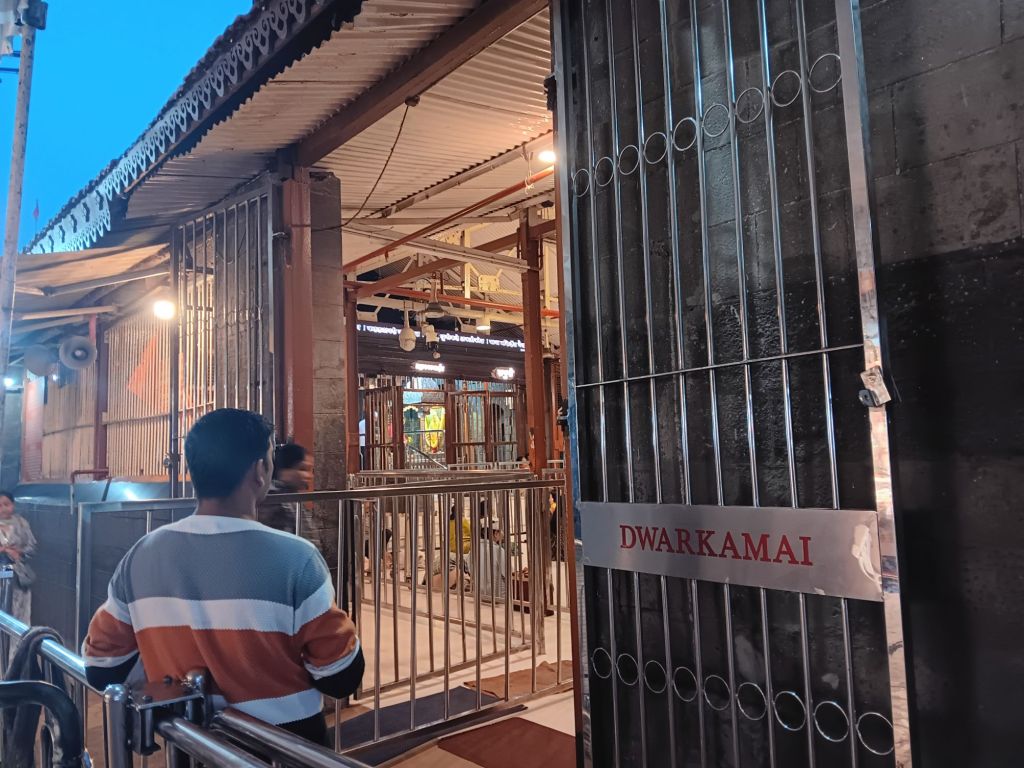
    • where as Dwarkamayi Masjid, Chavadi, Gurusthan are closed around 8.30pm.
    • But first ‘darshan’ of the day starts, after the morning program of worship (Morning aarti and others ), at around 7am.
    • There is no restriction on darshan during the day in Dwarkamayi Masjid, Chavadi, Gurusthan, and Nanda deep.
    • However, there are a few minutes of restriction during Dhuni Pooja or while offering food to Shri Sai.

    PLACE:

    • Free Bus is also available from Sai Nivas and Mandir to here.
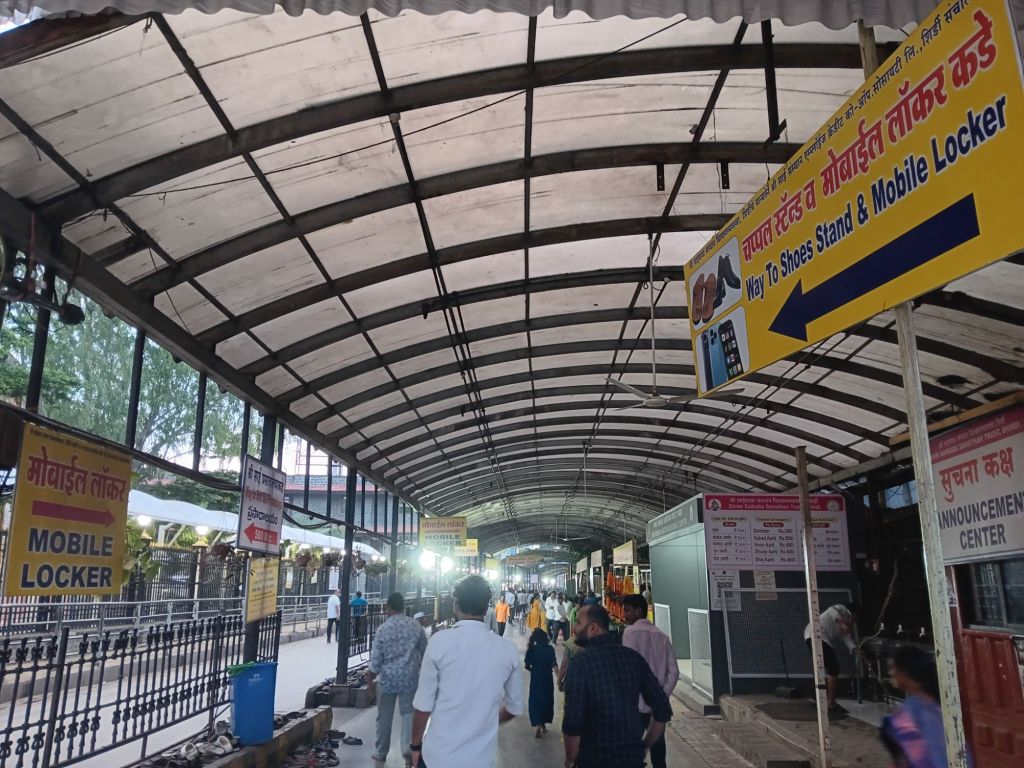
    • Mobile phones, cameras and other electronic devices aren’t permitted inside the temple area.
    • Have “Mukh darshan” of  Baba Face, adjoins Dwarkamayi . DO mediation here, while leaving Shirdi pilgrimage, by sitting few minutes. (Quick one, as small queue, but some distance darshan)
    • The Museum displays articles used by Sai Baba. Do not forget to visit it, near Gurusthan.
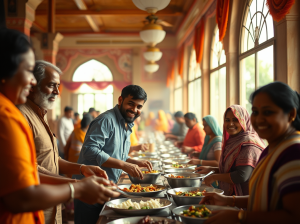
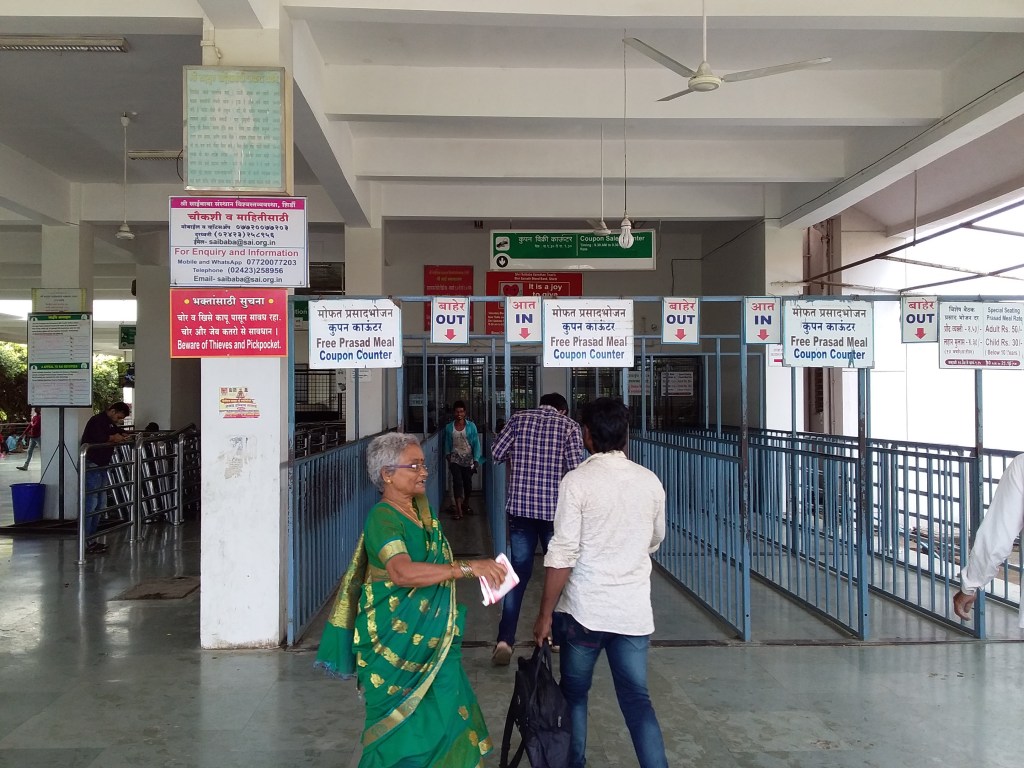
    • FREE food provided at Prasadalaya. Devotees and visitors can take unlimited food (rice, vegetables, dal with Sweet). The capacity of Prasadalaya is huge and 1000s of people come every day. It is open from 10 a.m. to 10 p.m.
    Free Food Token Counter
    • In Chavadi, ladies are not allowed to enter the section where Baba used to sleep.

    Accommodation:

    Accommodation Booking Counter
    • Avoid the touts for getting any accommodation.
    • It is advisable to approach any hotel/lodge directly, ONLY if not available accommodation i)through https://online.sai.org.in/ OR ii)directly at Mandir Accommodation Offices.
    • There is a wide choice of hotels/lodges in Shirdi, suiting the budget of all.

    Don’t go to any shop for keeping Mobile, Free Slippers and Luggage, BUT USE Trust’s counters, very near to Gate No. 2 to keep all these.

    Be cautious about the prices while taking the garland, coconut etc particularly as a package from the nearby shops and avoid being overcharged by them.

    Prasadam and Books:

    • BUY Prasadam at SAI SANSTHAN EMPLOYEES CREDIT CO-OPERATIVE SOCIETY LTD, SHIRDI” stall, near Sai Commercial Complex and

    Donation:

    Each gift item must be registered in the Donation Office of the temple. Devotees can donate at SRI SAIBABA SANSTHAN TRUST Office

    • cash either in the Donation Office, with due receipt or
    • put into directly any of the donation boxes, placed at all important places of temple complex or
    • Crossed and A/C payee Cheques, Demand Drafts, Indian Postal Orders, Foreign Postal Order, Travelers  Cheques or Money Orders are accepted. Transactions are handled only at the Official address of Sansthan.
    • Andhra bank is authorized to collect the donations for Nitya Prasadalaya Annadan (Free Food Scheme) through their network of branches. But then, official receipt is issued by Sansthan itself.

    Prior registration is mandatory before you make any offering at the temple.

    Communication:

    Devotees are requested to call, ONLY 02423-258500 for any information regarding Saibaba Sansthan. 2] For all Online Services please do contact on 02423-258956/63 & WhatsApp-07720077203

  • Baba is living in the flesh, doing the same even after His passing away.

    Baba is living in the flesh, doing the same even after His passing away.

    Baba’s speech established its efficacy or greatness while He was living in the flesh, but wonder of wonders! It did the same even after His passing away.

    • Baba said –
    • Believe Me, though I pass away, My bones in My tomb will give you hope and confidence.
    • Not only Myself but My tomb would be speaking, moving and communicating with those who would surrender themselves whole-heartedly to Me.
    • Do not be anxious that I would be absent from you.
    • You will hear My bones speaking and discussing your welfare.
    • But remember Me always, believe in Me heart and soul and then you will be most benefited.”
  • Interesting Spot in and around Shirdi Mandir

    Interesting Spot in and around Shirdi Mandir

    INTERESTING PLACEs MUST VISIT IN AND NEAR SHIRDI

    • WITHIN/CLOSE TO SHIRDI MANDIR
      • Samadhi Mandir
      • Gurusthan [Neem Tree]
      • Lendi Baug
      • Dwarkamai
      • Chavadi
      • Dixit Wada Museum
      • Meditation Hall
      • Nanda Lamp
      • Ganapthy, Siva_Parvathy & Sani Temples
      • Maruti Mandir
      • Abdul Baba cottage
      • Thursday Palki procession

    • AROUND SHIRDI
    • 1 Upasani Maharaj Ashram – A serene place for reflection and spiritual growth.
    • 2 Shani Shingnapur, (70 kms. Nevasa Taluk, Ahmednagar Dt.) – This temple is dedicated to Lord Shani, related Plant Saturn. Its unique feature is that the houses and shops in the village have no doors or locks. Visitors can perform puja and seek blessings from Lord
    • 3 Nevasa, (Nevasa Taluk, Ahmednagar Dt.) – A peaceful area rich in cultural heritage and ancient Mohiniraj (Vishnu) temple.
    • 4 Muktidham (Nashik) – A place where the essence of devotion and tranquility beautifully converge. Marble temple. Replicas of 12 Jyotirlingas which have built as per dimension of original
    • 5 Kalaram Temple, (Panchavati – Nashik) – An important pilgrimage site for Lord Ram, built in 1782.
    • 6 Pandavleni Caves, (Nashik) – These are ancient caves. Buddhist monks built them in these serene surroundings. They date back to the 2nd century.
    • 7 Ramkund, (Panchavati – Nashik) – A sacred water spot that invites introspection and calm.
    • 8 Manmad Thumbs Up Mountain Trek – A thrilling adventure surrounded by breathtaking nature.
    • 9 Ellora Caves, (Aurangabad) – A remarkable UNESCO World Heritage site, showcasing the grandeur of ancient art and architecture.
    • 10 Daulatabad, (Aurangabad) – A historic fort that stands as a testament to the strategic brilliance of the past.
    • 11 Coin Museum, (Anjaneri Village – Nashik) – A fascinating place that takes you on a journey through history via rare coins.
    • 12 Trimbakeshwar, (Nashik) – A sacred temple that holds deep significance in the hearts of devotees.
    • 13 Alandi, (Khed Taluk– Pune) – A tranquil town that offers peace and spiritual solace such as Dnyaneshwar samadhi
    • 14 Bhimashankar, (75 kms. Khed – Pune) – a scenic hill station that offers picturesque views of mountains, valleys, and waterfalls. It is a perfect place for nature lovers and adventure enthusiasts.
    • 15 Nashik: (90 km) A city on the banks of the Godavari River, famous for its historical and religious ancient temples, like Trimbakeshwar Temple, one of the twelve Jyotirlingas in India
    • 15 Ellora Caves: (100 km) An UNESCO World Heritage site, showcase a blend of Hindu, Buddhist, and Jain architecture; intricate carvings and sculptures that depict the ancient Indian culture
    • 16 Ajanta Caves: (110 km) An UNESCO World Heritage site and showcase exquisite rock-cut Buddhist cave monuments and frescoes that date back to the 2nd century BC
  • PUBLICATION DEPARTMENT, SHRI SAIBABA SANSTHAN TRUST

    PUBLICATION DEPARTMENT, SHRI SAIBABA SANSTHAN TRUST

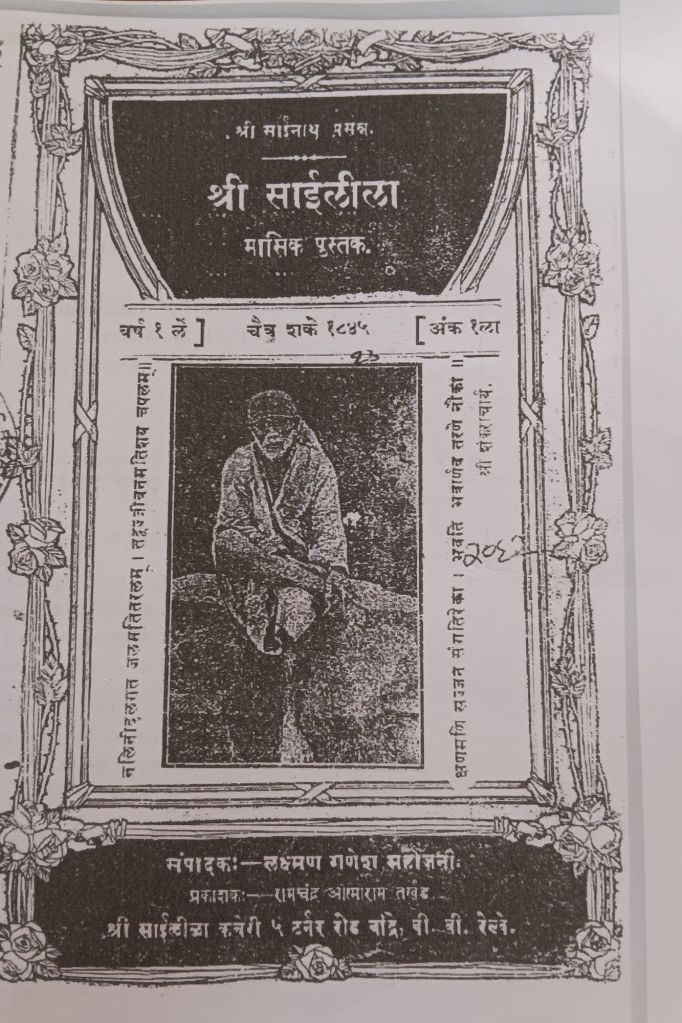
    PUBLICATION DEPARTMENT OF SHRI SAIBABA SANSTHAN TRUST SHIRDI is selling monthly magazine and many books They are offered officially at a very low price.

    First Issue of Shri Sai Leela, monthly magazine, More than 100 years Old. Saga year 1845. (1922)

    These books are available in many languages, including English and German.

    You can see the list of books published by them in the following Website.

    Browse the list and buy your books online itself, directly Only from Shirdi Mandir, with the blessings of Sadguru Sai Baba, Shirdi

    Browse list at https://www.sai.org.in/en/publication-list

    Login at https://online.sai.org.in/#/Publications

  • What to do at least at the fag end of one’s life, to get Salvation?

    What to do at least at the fag end of one’s life, to get Salvation?

    SSSC Ch:31 says-

     Baba said to Vijanand “He who surrenders himself to the Feet of Hari (Lord) will get free from all troubles and attain bliss. The Lord runs and helps him who remembers and meditates on Him with love and affection.

    Your store of past merits is considerable, so you have come here. Now attend to what I say and realise the end of your life.

    Being desireless, begin from tomorrow the study of Bhagwat. Do three ‘saptahas’ i.e. three reading during three weeks, conscientiously. The Lord will be pleased with you and destroy your sorrows, your illusions will vanish and you will get peace.”

    Seeing that his end was approaching, Baba prescribed that remedy and made him read ‘Ramavijaya’ which pleases the God of death.

    Next morning after bathing and other purifying rites he commenced to read Bhagwat in a secluded part in the Lendi garden. He completed two readings and thereafter felt much exhausted.

    He returned to the Wada and stayed in his lodging for two days and on the third day he breathed his last on Fakir (Bade) Baba’s lap.  In this way Baba helped the Sannyasi and ensured him Sadgati (salvation)

  • Movies On Life History Of Shirdi Sai Baba

    Movies On Life History Of Shirdi Sai Baba

    There are many movies on the Life of Shirdi Sai Baba.

    YearFilmLanguage
    1955Shirdi Che Sai BabaMarathi
    1977Shirdi Ke Sai BabaHindi
    1986Sri Shirdi Saibaba MahathyamTelugu
    1989Bhagavan Shri Sai BabaKannada
    1993Sai BabaMarathi
    1999Maya /   Guru Poornima /  JayasuryaTamil
    Telugu
    Kannada
    2000Sri Sai MahimaTelugu
    2001Shirdi Sai BabaHindi
    2005Ishwarya Avatar Sai BabaHindi
    2010Malik EkHindi
    2011Bhagwan Sri Shirdi Sai BabaKannada
    2012Shirdi SaiTelugu
    2017Mere SaiHindi
    “Bhagwan Sri Sai Baba”, released in 1993 is also available with English Title in YouTube

    ✅ Direct Links to Authorized Sai Baba Full Movies

    You can safely use a direct link to any of these videos available in YouTube:

    Note : WE acknowledge the movie is hosted by the above distributors on YouTube, and that our site is only providing a link; We are not hosting or distributing the film.

    Enjoy watching these heartfelt films and other beautiful depictions of Shirdi Sai Baba at cinema theaters, on YouTube, and on TV, surrounded by your loved ones; may you all receive Baba’s blessings together.


    Do you know other Cinema etc ? Please help other Devotees to see. Both get blessings of Shirdi Sai Baba; Give the following details:-

    ← Back

    Thank you for your response. ✨

    Choose one option

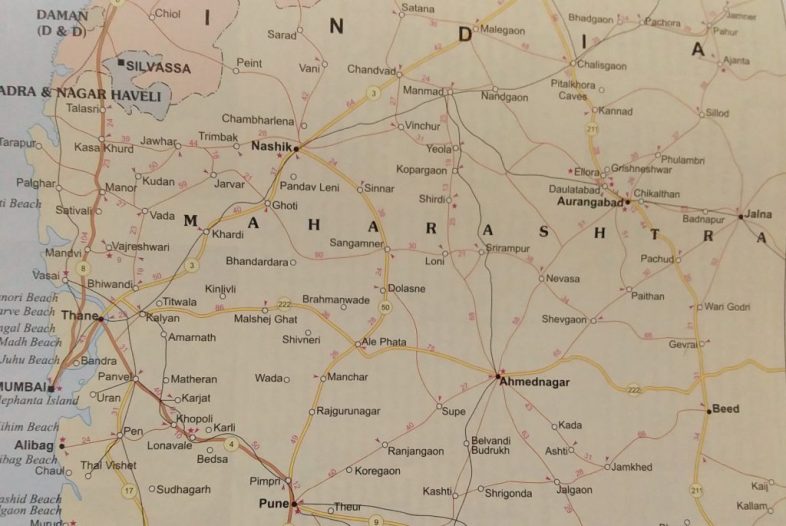
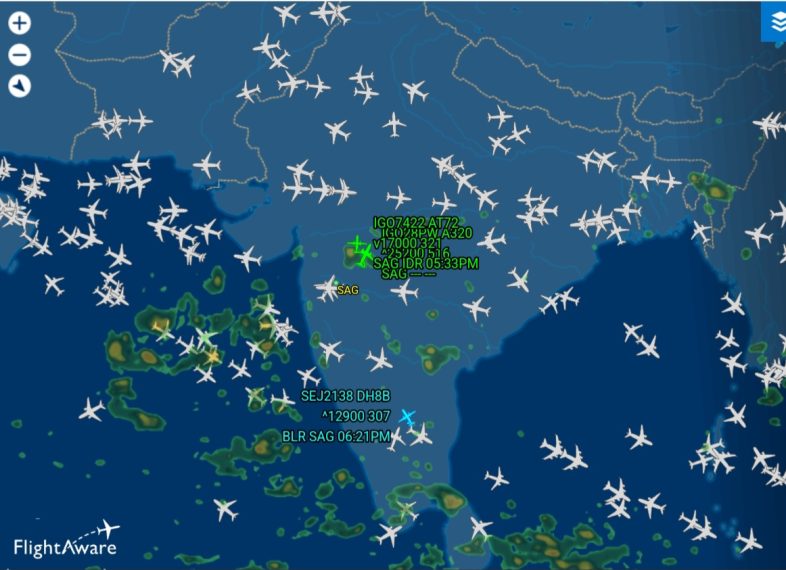
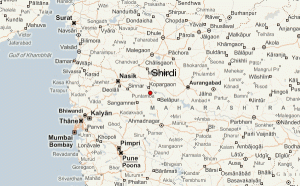
  • Transportation to Shirdi, India

    Transportation to Shirdi, India

  • Sri Saibaba Sansthan Trust

    Sri Saibaba Sansthan Trust

    The Sri Saibaba Sansthan Trust is the organization that manages the Sai Baba Samadhi Mandir and other related temples in Shirdi, India.

    • Since the death of Sai Baba in 1918, His devotees started to worship His resting place. The number of pilgrims belonging to various religions constantly increased, and they came with offerings of money, gold, ornaments, and other valuables as gifts for their beloved Baba.
    • In 1922, the villagers formed a trust to manage the fund and to continue the daily aratis (oil lamp ritual) of Sai Baba.
    • After some time, it was registered as ‘Shirdi Sansthan of Shree Saibaba’ under Bombay Public Trusts Act 1950.
    • In 1960, Government asked Ahmednagar city civil court to appoint a Court Receiver for the management of the Sai Baba Sansthan.
    • In 1982 Government of Maharashtra, the charity commissioner and the court decided to appoint members of public as Trustees to look after Sansthan, so that the Sansthan could provide better accommodation and other facilities to the pilgrims.
    • The Trust is now functioning under the Ministry of Law and Justice of the Government of Maharashtra. It operates under a special Act “Sri Sai Baba Sansthan Trust Act, 2004”.

    Address:

    The Chief Executive Officer,
    Shri Saibaba Sansthan Trust, Shirdi.

    Post Office: Shirdi, Taluk: Rahata, District: Ahmednagar, State: Maharashtra, India Pin: 423109.

    PHONE: (02423)-258500  P.R.O, (02423)-258777‌ 

    FAX: Office (02423)-258870; P.R.O Office (02423)- 258770

    Email: saibaba@sai.org.in,  saibaba@shrisaibabasansthan.org

    Official Websites:

    http://www.sai.org.in [General];

    https://online.sai.org.in [Online portal for availing Darshan, Aarti, Donation, Accommodation, Pooja and Publications services.]

    For Online Services please do contact: 02423-258965, 02423-258966,
    Help Line No.- +91 7588375204 / 7588371245 /7588373189 / 7588374469

    P.R.O & Office: (02423)-258770

    Twitter- @ssstshirdi Whatsapp-07720077203

    PS: Kindly note the above matters are given here for information purposes only. These matters are subject to modification by SSST . Please check the https://sai.org.in/en/faq for more information.

  • Shirdi Room reservation

    Shirdi Room reservation

    2–3 minutes

    Go to https://online.sai.org.in for Online Advance Booking* for Rooms and Halls. You can have a decent and safe stay at a reasonable rate. This is managed by the Temple Management of Sai Sanasthan Trust.

    Terms and conditions:-

    1)Register yourself, for Regular use [else Mobile and OTP is enough for bookings, now]

      a. Valid Email Id (To get confirmation letter etc)

      b. Personal details, such as Name, Contact Address and

    c. Contact Mobile Number(to get OTP, Acknowledgment etc)

    d. One photo (Max 256 KB). Valid file formats – Jpeg, Bmp, Png, Gif, Tiff or Jpg.

     e. One of the following Identification: – National Identity Card or Unique Identification Card (UID)

         – Passport /Voter ID / Pan Card /Ration Card / Driver’s License or Other Identification.

    2) Then, Sign in with your Login details

    3) Select needed facilities- Room for FAMILY/ Friends

    For online booking, Rooms will be booked before three hours prior to selected check-in time, only on availability basis. (1 or 2 day)

    Devotee can check- in any time before-two-hours of specified-check-out time.

    Check in time needs to specified when booking accommodation online. But Check out time for Devotee is 24 Hour.

    Online booking will be open from Next day to 60 day.

    Room will not be allotted for single person (Male or female). For Singles, Hall/ Dormitory/Locker facility are available at Sai Bhakta Niwas and Sai Dharmshala, Sai Udyan and Shirdi Bus-stand, Accommodations.

    In case of new couple, room will only be allotted, after verifying their marital status on valid documentation basis

    Sanitation charges and extra charges per person changes according to type of room.

    Devotee needs to follow steps as mentioned below when availing facility at Shirdi.

     i. Report to the specified accommodation center at the specified check in time.

    ii.  Produce Booking acknowledgment and photo identity proof – Aadhaar card for verification to clerk. Room will not be allocated to Devotee in case he fails to produce the necessary documents.

    Extension of stay may be permitted depending upon room availability for the day.

    It is mandatory for Devotees to follow rules and regulations of Shri Saibaba Sansthan Trust, Shirdi. The trust reserves the right to cancel or modify Devotee bookings.

    Due to water shortage, Hot water in room will be available from 3:00 am, subject to availability

    No Amount will be refunded to devotees after cancellation of Room Reservation facility.

    *Direct Off line booking is also available subject to availability

    Since, Shri Saibaba Sansthan Trust reserves rights to change any of the terms and conditions mentioned above without prior notice, please recheck the above information’s before booking.

    Devotee can call Help desk for On Line Services-02423-258956,258963; Voice support will be available from 10 am to 06 pm (IST).

    Other than this time slot, mail to support@sai.org.in .

  • FULL LIFE JOURNEY

    FULL LIFE JOURNEY

    CHRONOLOGICAL LIST OF EVENTS (Episodes) CONCERNING SHRI SAI BABA 

    1835/38

    Sai Baba was born in very early hours of September 27 or 28, 1835 to a poor Hindu couple, Gangabhavadya and Devagiriamma. The newborn infant is left in the woods, abandoned (at Lord Siva temple*). The infant is immediately discovered and adopted by a childless Muslim fakir and his wife.

    1838

    Sai Baba lives with the Muslim couple for 4 years. Meanwhile the fakir dies. The wife is left to tend the child alone. Even as a small child Baba stirs up sentiments between the Hindu and Muslim community by worshiping Allah in Hindu temples, and Hindu gods in the mosque. In fear of increased problems by a sole widow, Baba is handed over for care with a local mendicant and story-teller, Venkusa.

    1839-51

    Sai Baba spent 12 years with his Guru. The name of his Guru was Gopal Rao Deshmukh (Venkusa, also known as Venkavadhuta) of Selu. Some say “Baba practiced penance at the tomb of His Guru in the cellar under the Neem Tree at Shirdi”. Arrival of Devidas at Shirdi (Aged 10-11 years) took place in 1846. When he enquired, BABA mentioned the name of his GURU as Venkusa implying VISHNU (Parvardigar).

    1851

    Sai Baba first appeared at Shirdi and stays in the village for two months. He is noted to reside day and night under a Neem Tree (aged about 16 Years) which he claims is growing over the tomb of his old guru. After two months Baba disappeared to an unknown place.

    1852-54

    Baba may have gone to many places including Manik Nagar to meet Manic Prabhu, who is one of the incarnation of Lord Datta*.

    1854

    sai Baba first come to Shirdi when he was 16 years old. The mother of Nana chopdar may have seen and guessed the age of Baba as 16 years. He stayed at Shirdi for 9 months and then disappeared to an unknown place.*

    1855-1857

    Sai Baba travels about from place to place and finally ends up, beneath the mango tree near/in Dhoopkheda (or Dhoop) in Aurangabad District. There he ends up attending the marriage of Chand Patil’s nephew in 1858.

    1858

    Sai Baba returns to Shirdi along with the marriage-party of Chand Patil and remained at Shirdi for ever till His Samadhi.

    After reached at Khandoba temple of Shirdi, mahalsapthi may have seen and called him as “Avo Sai”. From that day, the young fakir named as Sai Baba in public.

    A widowed Deputy Collector and Settlement Officer by name H.V. Sathe (Hari Vinayaka Sathe) comes to Shirdi on the death of his wife. Baba takes great fondness to Sathe. Sathe was the first to set up apartments at Shirdi for temporary visitors.

    Baba regarded Sathe as his right hand in regard to all matters. Because Baba was keeping Sathe close to him and relying on him for everything, the residents of Shirdi grew jealous towards him.

    1859-61*

    1. Sai Baba begin to stay in deserted Masjid.
    2. Baba liked the company of saint Devidas, who was living many years before Baba came there; He stayed with Devidas in Maruthi temple, in the chavadi and sometimes lived alone.
    3. Vaman Tatya, devotee, supplied daily two fresh pitchers for 3 years; and with Sai Baba ‘ s toilet and labour, there( now Baba’s samadhi) grew a flower garden

    29th November 1865 Wednesday *

    Saint Manik Prabhu of Humanabad in Bidar District of Karnataka passed away

    30th April 1878, Tuesday *

    H. H. Akkalkot Swami left His mortal coil at Akkalkot in Solapur District of Maharashtra. (First appeared in 1835). It is reported that three of them (Manik Prabhu, Swami Samartha and SAIBABA) met at Humanabad.

    1873.

    Saints and holy men were coming to Shirdi for darshan of Baba, like Ramanand bikar, a disciple of Shri Akkalkot Maharaj.*

    1878.

    Keshav Nayak along with his son Ramachandra came to Shirdi. Baba asked some to pluck some Neem leaves and eat. These tasted very sweet*.

    1878, 23rd February, Saturday

    Shri Gajanan Maharaj of Shegaon appeared first time as a lad under the banyan tree at Shegaon. On his mahasamadhi day ie 8\9\1910, Baba at dwarakamai said to the devotees that ‘My Gajanan has left me’.*

    1879.

    Mamaltdar, chidamber Keshav Godgil was the first Government official,who considered Sai Baba as a Jnyani.*

    1881

    Madhavrao Deshpande ( Shyama), a primary school teacher at Shirdi accepted Sai Baba as his Sadguru.*

    1885

    Saint Anandnath (aged 95 years) of Yewala Math and a disciple of Akkalkot Swami visited Shirdi and seeing Sai Baba exclaimed, “This is a precious real diamond.”

    1886, April 16

    Mahasamadhi of Shri Ramkrishna Paramahansa of Bengal 1886.

    1886, 10th December, Friday night *

    On the Datta jayanthi Day, Baba suffered of Asthma. To get rid of it, Baba decided to take his parna high up and go to samadhi. He said to Mahalsapthi ” Protect My body for three days. If I return, it will be alright; if I don’t, bury my body in that open land ( pointing to it) and fix two flags there as a mark”;. Saying this, Baba fell down at about 10PM, as if His prana left tthe body.

    All the people including Shirdi villagers came, wanted to hold enquiry and bury the body; but Mahalsapthi prevented this.

    After three days passed, Baba showed signs of life at 3 AM and returned to life again. This incident imposed the villagers of Shirdi to accept Baba as an incarnation of God, instead of common mad Fakir.

    1887

    Manthrapragada Ramalaksmhi Devi, and his husband Venkata Narasimha Rao, who were childless in spite of efforts, visited their Guru, Shirdi Sai Baba, in 1887 and prayed to him for a child. As the fruit of Shirdi Sai Baba’s grace, a girl child was born to them on August 8, 1888. Shirdi Sai Baba himself gave name, Shringeri Sharada Devi: as she was of fair complexion. Baba used to lovingly call me Gori.*

    1889

    Abdullah arrived at Shirdi from Nanded (in West Khandesh near Jalgaon and Amalner). Baba welcomed by saying ‘my crow has come’.*

    1891.

    First invitation was given by Baba to Nana Saheb Chandorkar.

    1892

    Nanasaheb Chandorkar arrived at Shirdi for the first time after being invited by BABA many a time showing his intimate relations with NANA since his four births. “You are not aware of it, but I am. That’s why I called you here”*

    1892, 20th October Thursday, Diwali*

    Baba lighted the lamps with water, when the oil shopkeepers refused to give oil for his lamps.

    This is an important miracle, local people astonished very much.

    1893*

    Das Ganu (Ganesh Dattatreya Sahasrabuddhe) accompanied with Nanasaheb Chandorkar came to Shirdi for the first time.

    1894.*

    1. Bala saheb bhate came to Shirdi for the first time.
    2. some intolerant Muslims led by kazi of sangamner wanted to create problems. But Baba dissuaded them and Mahalsapthi was allowed to worship Him.

    1895

    Damodar Savalram Rasane (Dammu Anna) first visited, to show his gratitude to Sai Baba with a prayer to get children.*

    1896

    Celebration of ‘Urus’ (fair) started at Shirdi owing to the efforts of Gopal Rao Gund, a Circle Inspector of Kopargaon.

    1898

    Sai Baba was seen sleeping on a narrow plank suspended with old rags about 7 or 8 feet above ground with lighted lamps placed on the plank. (Unknown year) About this time, the parents of Shyam came to Shirdi with the two-year old child named Mohan Shyam. A small school for children was adjoining Baba’s room. Shyam used to watch Baba at nights through the ventilator. Baba used to sleep on an eighteen-inch wide plank suspended with old rags about 7 or 8 feet above ground with lighted lamps placed on the plank. Shyam was apprehensive that Baba might fall from his lofty but narrow perch during sleep. Shyam prayed to stay near Baba and serve him for his remaining days.

    1899-1900

    Nanasaheb Chandorkar visited Shirdi with his sister-in-law’s husband, Shri Biniwale. Baba scolded Nanasaheb for dissuading Biniwale, a devotee of Shri Dattatreya from visiting Datta Temple on the bank of Godavari River to avoid delay in reaching Shirdi.

    1900-1902

    Sai Baba like a learned Pandit explained Geeta to Nanasaheb Chandorkar, who believed that BABA was not well versed with Sanskrit language of Pundits (learned people).

    1903

    Das Ganu left Govt. service and as per Baba’s instructions settled at Nanded and started performing keertan and writing life histories of recent saints.

    1903

    Das Ganu’s book ‘Sant Kathamrit’ was published. (Ch. 57 about Sai Baba’s advice to Nanasaheb Chandorkar).

    1904, April

    Rao Bahadur H. V. Sathe first arrived at Shirdi. (Aged about 49 years).

    1904-1905

    Nanasaheb Chandorkar’s pregnant daughter Mainatai at Jamner in Jalgaon District had severe pains of delivery. Sai baba sent Udi and Arati with Ramgir Gosavi from Shirdi and she had a safe delivery. Sai Baba even took the form of Tonga’s Rajput driver to make Ramgir reach Jamner safe and on time.

    1906

    Das Ganu’s book ‘Bhakta-Leelamrit’ was published. (Chapters. 31, 32 and 33 about Sai Baba).

    1906

    Nanasaheb Chandorkar was transferred as Mamlatdar from Nandurbar to Pandharpur. On
    the way, he stopped at Shird! With his family and started requesting Baba to accompany
    them to Pandharpur and stay there permanently with them. The devotees then told
    Nanasaheb about the singing of bhajan just finished in which Baba’s mood of going to
    Pandharpur and staying there forever was expressed. The text of the song was, ‘I want to go and stay at Pandharpur.

    1906

    Shivamma Thayee’s uncle meets Baba for the first time, while Baba is visiting Vellakinaru in Coimbatore. Baba told Shivamma’s uncle, ‘She is the only girl in the whole lot who will be a highly elevated soul.’ Baba then slowly chanted the Gayatri Mantra to Shivamma.

    1907

    Radhakrishna Mai (Sunderabai Kshirsagar) arrived at Shirdi. (Young good-looking widow aged 25 years). She was blessed by BABA who used to send a part of food collected as (Bhiksha) to her.

    1908

    Sathe Wada was constructed.

    1908 Ekadashi

    Kashirarn Shimpi died. (Chaitra Shuddha 11). BABA saved his life in a mysterious way when he was assaulted by Thieves in a jungle.

    1908

    Pundalikrao of Nanded met Shri Vasudevananda Saraswati. (Tembe Swami) at Rajahmundry on banks of Godavari River in Andhra Pradesh and Swami gave a coconut to be presented to Sai Baba. BABA showed cognizance of Swamiji’s gift and showed his oneness with Swami by describing him as his brother (Bhau).

    1908

    Shri Tatyasaheb Noolkar, (Aged 45 years) the Sub-judge of Pandharpur first arrived at Shirdi in 1908. Gurupournima festival was prompted by Baba for Dada Kelkar, Tatyasaheb Noolkar, Madhavrao Deshpande and others.

    1909

    Saibaba threw an ochre garment on Balasaheb Bhate, Mamlatdar of Kopargaon, and an atheist, on his very first visit and Balasaheb lost complete interest in worldly matters. He retired prematurely from service and settled down at Shirdi permanently.

    1909

    Bapusaheb (Sakharam Hari) Jog on retirement from Govt. service came to stay at Shirdi permanently accompanied by his wife.

    1909

    Bhimaji Patil of Narayangaon (Pune District) came to Shirdi for getting his chronic tuberculosis at the last stage and was cured by Baba’s blessings.

    1909, Nov 2

    Hari Sitaram alias Kakasaheb Dixit (Aged 45 years), a prominent solicitor and M.L.C. first arrived at Shirdi. Baba used to call him affectionately Langda Kaka and removed fear complex from his mind. Kaka Dixit was known for his obedience to Baba’s orders.

    1909, Dec 10

    Devotees began to offer regular worship to Baba in the Chavadi, where He slept on alternate days.

    1909, Dec 25

    Baba gave darshan in the form of Sri Rama to a doctor, devotee of Sri Rama who came with a Mamlatdar.

    1910

    Baba’s ‘Handi’ ritual, occasionally cooking food Himself in a big copper pot and distributing it to devotees and poor people without discrimination. This practice continued till this year. After wards owing to Das Ganu’s keertans (musical recitals praising Baba), Baba’s fame spread far and wide and devotees started flocking together in large numbers offering large quantities of food as ‘naivedya’ and thus there was no need of ‘Handi.

    1910

    Ramachandra Atmaram alias Babasaheb Tarkhad from Bandra (Bombay) first visited Shirdi

    1910

    Rao Bahadur Moreshwar W. Pradhan of Santa Cruz (Bombay) first visited Shirdi.

    1910

    Govind Raghunath alias Annasaheb Dabholkar (Aged 51 years), the author of Shri Sai Satcharita (Marathi), had his first darshan of Sai Baba and received significant and prophetic title of ‘Hemadpant. Baba gave him his blessings and inspired him to write SAI SATCHARITA – a religious scripture describing BABA’s life story and his divine play (leela) as monumental as GURU CHARITRA- the old monumental POTHI – a poetic religious scripture inspiring worship to GURU, NARASINHA SARASWATI.

    1910

    Balkrishna Vishwanath alias Balasaheb Dev (Dahanu Mamlatdar) first visited Shirdi prompted by Nanasaheb Chandorkar. Dev used to describe him as Baba’s child – with a full sense of surrender.

    1910

    Bhadrapad Shuddha 5H. H. Gajanan Maharaj of Shegaon (Buldhana District of Maharashtra) left His mortal coil. (First appeared in 1878). At that very time at Shirdi, Sai Baba grieved profusely and said, “Hallo! My Gajanan is gone. I must take bath again in reverence to the Great Soul.”

    1910

    Shrimant Gopalrao Mukund alias Bapu Saheb Butty of Nagpur, (a rich statesman) started staying permanently at Shirdi.

    1910

    Harishchandra Pitale’s son suffering from epilepsy was cured by Baba’s mere glance at him. Baba gave Pitale three rupees and reminded him of two rupees earlier received by him from Swami Samarth of Akkalkot and thus showed his oneness with all the other SAINTS (Vibhutis).

    1910, Ashwin Vady13

    Sai Baba pushed his arm into the brightly burning Dhuni to save a blacksmith’s child. ‘The arm was scorched and burnt. Nanasaheb came from Bombay with Dr. Parmananda but Baba did not allow the doctor to treat him. Bhagoji Shinde’s service of massaging the arm with ghee and bandaging it continued till Baba’s Samadhi. This episode is in testimony to BABA’s cosmic existence- HIS super consciousness.

    1910 Dec 5

    Hon’ble Mr. Ganesh Shrikrishna alias Dadasaheb Khaparde of Amravati (Maharashtra) first visited Shirdi. (Refused on 10 Dec. 1910) Mr. Babasaheb Khaparde was an ardent devotee of BABA and his efforts were instrumental in bringing Loka Manya Tilak- (a great national leader-Khapurde’s contemporary) to Shirdi for Baba’s darshan and blessings in his movement for India’s freedom from the British Rule.

    1910, Dec10

    Foundation-stone of Dixit Wada laid with Baba’s permission.

    1910, Christmas

    Lala Lakhamichand of Santacruz (Bombay) came to Shirdi. Baba loved him very much and affectionately accepted his petty gifts given with love.

    1910

    Megha returns to Shirdi and stays till his death. In Baba’s company he underwent mysterious experiences which transformed Megha from an atheist to an ardent devotee of Baba and spent his life in the service of Sai -Shiva. He regarded Baba as Shiva-Shankar (Lord Shiva- Shankar -the welfare Doer).

    1911

    Madrasi Sanyasi Vijayanand, while on a pilgrimage to Manas Sarovar, halted at Shirdi and breathed his last while reading ‘Bhagawat’ (a religious script written by Saint Eknath) for 3 days on Baba’s advice.

    1911, March

    Tatyasaheb Nulkar (Aged 48), the Sub-judge of Pandharpur breathed, his last at Shirdi. Baba showed HIS oneness with Tatya Nulkar and described him as a pure soul and expressed HIS grief at Nulkars demise.

    After Tatyasaheb Nulkar passed away, Megha took over the regular daily worship of Baba in the Dwarakamai. (He used to stand on one leg while performing the Arati). Tatyasaheb Nulkar relinquished everything and stayed at Shirdi in Baba’s company till his demise Baba bestowed him with the unique experiences in self-realization. Baba advised him and Mr Shyama Deshpande to perform Guru Worship (Pooja).

    1911

    Ram-Navami Festival was started at Shirdi owing to the efforts of Shri Bhishma and Kaka Mahajani.

    1911, Ram-Navami

    Construction of Dixit Wada was completed and was inhabited with due rites.

    1911

    Extension and roofing of the open space in front of the Dwarakamai was carried out by Kakasaheb Dixit. Baba got enraged and tried to shake and uproot a pole. Then removing Tatya Patil’s paghree, struck a match, set the paghree on fire and threw it in a pit along with one rupee as if an auspicious offering to avert evil. Baba never liked renovation of his dwelling place viz. Dwarakamai (the masjid) and opposed any such effort by the devotees.

    1911

    Somdav Swami Alias Hardwar Swami visited Shirdi.

    1911, June 27

    Kashinath Govind Upasani (aged 41 years) first visited Shirdi and returned again on 6 July. Baba ordered him to stay for 4 years in the Khandoba Temple.

    1911, Dec

    Kashinath Upasani composed the famous ‘Shri Sainath Mahimna Stotra (hymn) in Sanskrit. (Now being recited daily during Arati at Shirdi).

    1911, Dec

    Bubonic plague raged at Shirdi (Lasted up to March 15 next year) Baba however saved lives of plague inflicted devotees by taking upon himself i.e. On his body the malody.

    1911, Dec

    Baba’s grinding of wheat in the hand-mill. It was not wheat that was ground but plague or cholera itself was ground to pieces and cast out of village. Seeing this Annasaheb Dabholkar (Hemadpant) was inspired to write ‘Shri Sai Satcharita.’

    1911, Dec5

    Dadasaheb Khaparde of Amravati arrived at Shirdi again with family and stayed for 3 months. Shri Krishna Bhishma the author of Arati book ‘Sagunopasana’ accompanied him. Dadasaheb Khaparde wrote diary (daily record of his stay at Shirdi in Baba’s company).

    1911, Dec 11

    Waman Rao Patel (Aged 22 years) (Later Swami Sai Sharanananda) first arrived at Shirdi.

    1911, Dec 13

    Chandrabhan Shet Marwari, uncle of Khushalchand of Rahata, expired.

    1911, Dec 16

    Dr. Capt. Hate first visited Shirdi (who had just appeared at LCPS examination.) Baba sent him a message in the dream saying, ‘have you forgotten me?’.

    1911, Dec 19

    Sai Baba’s great devotee and a great saint of Nath-Panth order, Shri Rama Maruti visited Shirdi. (Stayed for 34 days.) ‘. Ram Maruti offered ‘Naivedya’ to Baba and Baba very affectionately took a part of it (SWEET SANJA).

    1911-12

    Sagun Meru Naik arrived at Shirdi at the age of 23 and on Baba’s advice settled permanently running a small restaurant for the devotees visiting Shirdi.

    1912, Jan

    Dadasaheb Khaparde’s youngest son Balwant was cured of bubonic plague by Baba by taking the disease on himself.

    1912, Jan 3

    Megha fed some Brahmins on completion of his Gayatri Punascharana (a religious ritual). Dadasaheb Khaparde attended it at Sathe Wada.

    1912, Jan 19

    Megha died at Shirdi at about 4 A.M. Baba lamented loudly and followed the funeral procession for some distance. Baba showered flowers on Megha’s body.

    1912, Jan 20

    Bapusaheb Jog started performing Baba’s Pooja and Arati after Megha’s death. He continued this till Baba’s Samadhi and even some years afterwards until he shifted to Sakori and joined Upasani Maharaj there.

    1912

    Transformation of Dwarakamai (the masjid) started. Pits were patched up and the stone slabs fixed on the floor. Baba gave up sack-cloth seat and started using cushion scat and bolster in deference to devotees’ wishes.

    1912 Jan

    Ganapatrao, father of Tatya Kote Patil passed away. Tatya Patil stopped sleeping in the Dwarakamai with Baba.

    1912, Feb 25

    Madhavrao Deshpande (Shama) left Shirdi to attend Kakasaheb Dixit’s son’s thread-ceremony at Nagpur and Nanasaheb Chandorkar’s son’s wedding at Gwalior. From there accompanied by Appa Kote, he went on a pilgrimage to Mathura, Prayag, Ayodhya, Kashi and Gaya. At Gaya Madhavrao saw Baba’s picture at the priest’s house and was reminded of Baba’s words, “After visiting Kashi and Prayag I would be reaching the religious place ahead of Shama.”

    1912, Mar 15

    Dadasaheb Khaparde returned to Amravati. Mrs. Laxmibai Khaparde stayed behind.

    1912, Ram-Navami

    Dada Maharaj Satarkar, known as ‘Modern Tukaram’, was invited to perform Ram-Navami Kirtan.When he bowed down in obeisance, Baba said, “I know this man since last 4 years”. Bala Buva had never met Sai Baba before but 4 years ago at Bombay, he had prostrated before Baba’s picture. Thus Baba proved to His devotees that seeing His picture was equivalent to seeing Him in person.

    1912, April

    First visit of Balaram Dhurandhar along with his brothers. Before they arrived Baba had expressed, “Today many of my Durbar people are coming”. Baba offered Balaram Chillim to smoke and since then his 6 year old asthma was cured forever.

    1912, Shravan 15

    Guru-Sthan padukas were installed under the Neem Tree at Shirdi.

    1913.

    First visit of Mahadev Rao Sapatnekar of Akkalkot accompanied by his younger brother Pandit Rao. When Mahadev Rao prostrated before Baba, Baba shouted ‘Chal hat’ (Get away) in the protest of absence of faith in Saptnekar’s mind and his prejudice for Baba.

    1913

    Baba gave at Dwarakamai darshan of himself as Vitthal and Rakhumai of Pandharpur to the wife and mother of R. B. Purandare of Bandra.

    1913, Ram-Navami

    BalaBuva Satarkar performed Ram-Navami Kirtan at Shirdi and Baba gave him a gift of Rs.150/- for the Kirtan. These coins were collected in a dish (Thali) after Baba’s prayer (Arati). Baba poured the whole dish in Satarkar bag (zoli)

    1913, May

    Waman Rao Patel (Aged 24 – 25 Years.) (Swami Sai Sharananandaji) visited Shirdi again and this time stayed for 11 months.

    1913

    Rao Bahadur Sathe got a son by Baba’s Grace at the age of 57 years.

    1914

    Sapatnekar of Akkalkot arrived at Shirdi again with wife and returned being blessed for begetting a son.

    1914, Feb 14

    Mr.B.V. Deo (Mamlatdar of Dahanu in Thane District) was charged and reprimanded by Baba for stealing His rag and after lot of abusing and scolding was favoured with instruction to read Gnyaneshawari regularly every day as per Deo’s desire. This episode is an example of how Baba sometimes displayed his transcendental powers to read devotees mental inclinations even without formal oral communication.

    1914, Feb 22

    A Sadhak of Yoga (Swami Ram Baba) visited Shirdi and seeing Baba eating bread with onion got suspicious and disappointed. However Baba proved His power of omniscience by reading his mind and the Sadhak returned highly satisfied and blessed.

    1914, April 2

    Before the year was over, Baba appeared to Deo in a dream and inquired if he understood Gnyaneshawari properly. Deo said ‘No’ and added that without Baba’s Grace it will not be understood. Then Baba explained to Deo how to read it slowly (and without making haste) with full concentration for knowing the subtle meaning between the lines (Bodha – Knowledge)

    1914, Ram-Navami

    Das Ganu was ordained by Baba to perform Ram-Navami Kirtan at Shirdi every year.

    1914, Shravan

    H. H. Shri Vasudevananda Saraswati (Aged 80 years) (Tembe Swami) left His mundane body at Garudeshwar on the banks of River Narmada in Gujarat.

    1914. July 15

    Kashinath Upasani left Shirdi (Total stay 3 years, 19 days) and proceeded towards Nagpur, Khadakpur etc.

    1915, Dec

    Sai Baba suffered from asthma and was very weak. Yet He climbed over Radhakrishna Mai’s roof with a ladder. Paid Rs. 2/- to the person bringing and placing the ladder. Honouring a worker for his work, Baba showed how Dignity of labour should be maintained.

    1915, Dec

    Balakram Mankar passed away at Shirdi.

    1915, Dec

    Mrs. Tarkhad (wife of Babasaheb Tarkhad of Bandra) sent a pedha (made of milk and sugar) which was already offered as naivedya and that too with Balakram’s son Govindji who was in mourning. Yet Baba swallowed it with great eagerness and love.

    1915, Dec 30

    Construction work of Butty’s Wada was in progress. Baba occasionally used to go at this place to see the progress of this work and gave instructions.

    1916

    Sai Baba made Das Ganu to do ‘Nam-Saptah and Kirtan’ at Shirdi for a week.

    1916

    Radhakrishna Mai (Aged 35 years) passed away. Baba used to bless her by sending a portion of food collected by him by way of Bhiksha.

    1916.

    Arrival of a Madrasi Bhajani Mela (Party of the Ramdasi Order). Baba gave darshan to the chief’s wife in the form of her beloved deity Shri Rama. The chief also got a dream and his attitude towards Baba was completely changed.

    1916

    Nephew of Dr. Mulky from Malegaon (District Nasik), suffering from tubercular bone-abscess, was fully cured by Sai Baba’s Udi and his loving glance. The doctor himself visited Shirdi afterwards and became a staunch devotee of Shri Sai Baba realizing that Baba’s service is to be performed not only for the sake of money or other mundane things but for the welfare of the disabled, helpless and downtrodden.

    1916

    Annasaheb Dabholkar (Hemadpant) retired from Govt. service. On Guru Purnima Day while at Shirdi, Anna Chinchanikar pleaded before Baba for getting some other appointment for Hemadpant as his pension was quite insufficient and his family was growing. Baba assured him about his source of income for livelihood after retirement.

    1916, Vijaya Dashami

    When in the evening Shirdi residents were returning from ‘Simollanghan’ ceremony (crossing of the border or limits of the kingdom village), Baba suddenly got into wild rage and taking off His head-dress, kafni and langota (loin cloth) etc., tore them into pieces and threw them in the burning Dhuni before Him. The fire in the Dhuni became brighter and Baba stood there stark naked. Later when cooled down and dressed again Baba said, “This is My Simollanghan” and thus hinted at His departure from this world soon on Dassehra Day. This Darshan provided enlightenment that Baba’s body cannot be described as Hindu or Muslim or of any cast or belonging to any religion in vogue.

    1916

    Ramchandra Dada Patil became seriously ill. One night. Appearing before him, Baba told him that he would recover soon but Tatya Patil will die on Vijaya Dashami Day in 1918. Thus by substituting Tatya’s name for HIS, Baba foretold Tatya’s passing away. However, Baba sacrificed his body to save devotees life by saying ‘instead of him another person will go?’.

    1916

    Baba averted Gopal Narayan Ambadekar’s effort of suicide by prompting him to read an appropriate incident from Akkalkot Swami’s Chaitra (religious scripture) and avoided greatest sin in his devotees life.

    1917

    Shyam, the faithful servant of Baba falls at Baba’s feet and dies, merging in Baba.

    1917

    Baba tells Shringeri Sharada Devi, “Gori, I will appear in Andhra [Pradesh] with the same name of Sai Baba but in another Avatar. Then again, you will come to me. I will keep you with me and give you joy.”

    1917

    Baba names a young girl Shivamma Taiyee and proclaims that she will be a saint.

    1917

    Haribhau Karnik of Dahanu (District Thane) wished to offer. One more rupee to Baba while leaving Shirdi, but could not do so. On the way at Nasik, in the Kala Rama Temple another saint Narasing Maharaj demanded one rupee from him. Karnik gave it willingly thinking that Baba was demanding the rupee he wanted to offer at Shirdi. Baba fulfilled in HIS many mysterious ways devotees’ desire to offer dakshina through all the media.

    1917

    Sai Baba appeared at Thane (North of Bombay) to inquire the well-being of Appa Saheb Kulkarni’s wife and children when he was away on tour. When Appa Saheb returned Baba not only fulfilled his desire of offering Rs.10 as Dakshina but also favoured him by returning nine rupees consecrated by His touch. These nine rupees are the symbol of nine bhakti services done to HIM.

    1917

    Upasani Maharaj (Aged 47 years) made Sakori (near Rahata) his permanent residence.

    1918

    Rao Bahadur Moreshwar Pradhan purchased Lendi Baug and later presented it to Shirdi Sansthan’. Baba himself planted some trees at the Lendi Baug.

    1918, April 1

    At Vile Parle (East) (now suburb of Bombay) on Hanuman Road, Narayan Mahadev Thosar’s residence (later known as Narayan Ashram) was built a Hanuman Temple. On the day it was consecrated, Baba paid Rs. 25 to a Brahmin named Waze and made him performs Shri Satya- Narayan Pooja.

    1918

    Prof. G. G. Narke, son-in-law of Butty got a permanent job by Baba’s Grace as Professor in the Engineering College at Pune. Baba always remembered him by saying ‘where has he (Narke) gone? Baba gave him a begging bag (zoli) for collecting food -an exercise in cultivating humility and eliminating ego.

    1918, August

    Baba offered Hemadpant a glass of butter-milk and said, “Drink it all, you won’t get such opportunity again suggesting that time for his Samadhi has arrived.

    1918, Sep 9

    Das Ganu wrote ‘Shri Sai Stavan Manjaril at Maheshwar (Madhya Pradesh) on the banks of River Narmada.

    1918, Sept 28

    Nath Panthi saint Rama-Maruti of Kalyan passed away.

    1918, Sept 28

    Sai Baba had a slight attack of fever which lasted for 3-4 days. Since then Baba abstained from food and day by day His weakness increased.

    1918, Oct 1

    Baba asked a Brahmin devotee by the name Waze to read ‘Ram- Vijay’ (by Sridhar Swami) and listened to it for 14 days.

    1918, Oct 8

    A tiger met its death at the feet and presence of Sai Baba and was emancipated.

    1918, Oct 15, Tuesday

    On Vijaya Dashmi, Sai Baba left his mortal coil at about 2-30 p.m. Few minutes before He gave Rs. 9/- as Prasad to Laxmi Shinde. These nine coins represent nine dimensional devotion to GOD.

    1918 Oct 16

    Wednesday Early morning Baba appeared to Das Ganu at Pandharpur, in dream and said, “The Dwarakamai has collapsed and all the oilmen and grocers have troubled Me a lot. So I am leaving the place. Go there quickly and cover my body copiously with flowers”.

    1918, Oct 16

    Wednesday in the evening Baba’s body was taken in procession through the Shirdi village and then interred in Butty Wada with due formalities.

    1918, Oct 27 On the 13th day Baba’s devotees from all over gathered and funeral rites were performed by Balasaheb Bhate with a feast (Bhandara) to Brahmins and poor. Later Upasani accompanied by Bapusaheb Jog went to Prayag (Allahabad) and performed all the remaining obsequies on the banks of River Ganges.

    Thanks: Internet peoples

  • Devotees need one? then SSST is providing

    Devotees need one? then SSST is providing

    Yes, Shirdi Sai Sansthan Trust is providing all services and amenities needed for every devotees, viz: –

    Free Darshan

    • General Free Darshan: Visitors can enjoy free darshan at Shirdi Sai Baba Temple.
    • Senior Citizen Free Darshan: Senior citizens are entitled to free darshan along with one accompanying person.
    • Free Darshan for Parents of Infants: Parents visiting with infants can avail of free darshan.
    • Free Darshan for Pregnant Women: Pregnant women are also granted access to free darshan.
    • Special Free queue for Differently abled persons.
    • Quick darshan pass for all at Rs.200, including foreigners with other country passports. Buy it Even at Airport.
    • DIY kiosks for Online Paid pass at Rs.200

    Prasadalaya and Refreshments

    • Free Food at Prasadalaya: A complimentary meal service is available to all visitors. 4000 seats. Between 10AM to 10PM
    • Free Tea/Coffee in Darshan Complex: Refreshments in the form of tea and coffee are offered free of charge.
    • Free Bundhi Prasadam: Visitors can receive free Bundhi prasadam along with Udhi/ Holy Ash.

    Facilities

    • Free Bus for transit between temple, accommodations, and Prasadalaya.
    • Reading Hall: A dedicated reading hall is available with multi-language books for visitors to enjoy a peaceful reading experience.
    • Free Meditation Hall: The meditation hall is open for visitors seeking tranquility and spiritual connection.
    • Free Shoe Stand: Shoe stand service are provided at no cost for the convenience of visitors.
    • Mobile stands to keep phone at Rs. 5 only
    • Luggage Lockers.

    Affordable Refreshments and Shops

    • Less Cost Tea, Coffee, Water Bottles, Cool Drinks, Ice Cream: Refreshments are available at reasonable prices.
    • Flower Shop: A flower shop is near Gate No.1, for those wishing to purchase offerings.
    • Prasadam Shop: Visitors can also buy prasadam from the Staffs co-operative store.

    Accommodation and Health Services

    • Moderate Rental Rooms for Families: Comfortable and safe rooms are available for families at moderate rates.
    • Dormitory for Individuals: There is a dormitory facility for individual visitors seeking budget-friendly accommodation.
    • Baby feeding Cubicles for Mother feeding.
    • Free Hospital Services: A hospital is available for visitors in need of medical attention; in addition to First Aid.

    These services aim to enhance the spiritual experience and comfort of all visitors to avoid private, at Shirdi by SSST.

    In addition to the above, SSST is also supporting many community service Schemes.

    Thanks SSST Souvenir
  • Studying this work will provide

    Studying this work will provide

    Correct knowledge of facts connected with the lives of saints is good for the individual who knows them. It is also beneficial to society. In the long run, it promotes social unity. It encourages ethical, spiritual, and religious study and endeavor.


    Lives of saints provide more than information, for the reader’s brain. They offer sustenance and strength for the heart. They also support the overall advancement of mankind’s temporal and spiritual interests.


    By the study of such lives, basic ignorance and illusions are dispelled. Rajasic and Tamasic qualities such as egotism, pride, and hatred are reduced. Cruelty is suppressed.
    Noble virtues like humility and earnestness grow. Love to all, service of saints, Guru Bhakti, and Jnana are cultivated. These in due course lead to the goal of God-realisation.


    God-realisation is a personal experience and can’t be obtained or explained through the written word.

    Those who understand Hindu thought can realise the importance of a Guru. Absolute faith in a Guru is essential for quickening spiritual growth.
    “All things are possible to him that believeth”. But faith is founded on experience and confidence is increased by tangible proofs. To create such faith, God or a God-man Guru must confer wished for benefits on the disciple or devotee. This act of conferring benefits is the tool God uses.
    The less a devotee cares about his bodily or material comforts, the more perfectly he can carry out God’s will. He executes God’s programme more perfectly.

    This book /Work proves beyond doubt. Sai Baba took responsibility for the maintenance of his disciples and devotees. He looked after their health and prosperity.
    The advent of Sai Baba was for the uplift of mankind. Studying this work will provide readers with incalculable benefits. These benefits are both spiritual and temporal, in this world and beyond.

  • Protected: 🌐 Strategy to Enhance Global Temple Registration

    Protected: 🌐 Strategy to Enhance Global Temple Registration

    This content is password-protected. To view it, please enter the password below.

  • ✨ Shirdi is Coming to Your City! ✨

    ✨ Shirdi is Coming to Your City! ✨


    Om Sai Ram! 🙏
    The Shree Saibaba Sansthan Trust (SSST), Shirdi, is taking the divine presence of Shree Saibaba global through the Paduka Darshan Festival.
    Since many devotees cannot make the journey to Shirdi, the Trust has decided to bring the Sacred Padukas to various locations across India and the world! 🌍


    📢 Calling all Sai Temples & Organizations:


    Are you interested in hosting this divine festival at your local Sai venue?
    📩 How to Apply: 1. Fill out the official form (available from SSST).
    2. Email it to: shatabdi@sai.org.in
    📞 For Details: Call +91 02423-258759


    Let’s unite to spread the message of SSST. Please share this with your local temple committees! 🧡

    Message from CEO, SSST Shirdi (Thanks SSST Trust)
  • Hence, you are omnipresent!

    Hence, you are omnipresent!

    In a dream, you see and experience many things, but everything disappears when you are awake. All this is a night dream. Similarly, during the day, you see everybody and everything, and have so many experiences. But all this becomes invisible when you go to sleep. This is a day dream.

    You are present both in the night dream as well as in the day dream. There is no existence of day dream in night dream and night dream in day dream. But you are present in both states. Hence, you are omnipresent.

    Therefore, consider yourself as the fundamental divine entity. You are God; God is not different from you.

    Your inner voice also teaches you this truth through the sound of Soham, Soham, Soham (That, I am). Your inner voice keeps reminding you of your divine reality but you are not paying attention to it!

    You follow what others tell you, but do not believe yourself. In whom else can you have faith when you don’t have faith in yourself?

    Therefore, first develop self-confidence. Then you will have self-satisfaction, which will lead you to the path of self-sacrifice and ultimately to self-realisation. First and foremost, have faith in yourself. God is present within you only.

    – Puttaparti Satya Sai Baba in the Divine Discourse, Jun 24, 1996

  • Self-Affirmation from Chapter XXIV of SSSC for Sai Baba devotees

    Self-Affirmation from Chapter XXIV of SSSC for Sai Baba devotees

    1. 💃By worshipping Sai Baba, I attract both worldly and spiritual blessings, and I experience peace and happiness in my life.
    2. 👂I respectfully hear and meditate on Sai Baba’s Leelas (stories) to easily attain Bliss.
    3. 🕉️Before enjoying any object, I first remember Sai Baba.
    4. 🛐Remembering Sai Baba before enjoyment helps me shun vicious habits and improves my character.
    5. 🥴I regard Guru and God as one, knowing that he who sees any difference sees God nowhere .
    6. 🧿I focus my mind on the Sagun Form of Baba before my mental vision, so devotion and salvation will be mine .
    7. 🫂I understand the lesson of not eating alone, but of sharing and remembering God before consuming anything .
    8. 🤞I appreciate the beauty of the world but curb the senses rightly and properly, maintaining control over the body .
    9. 😷I allow others to serve Baba as they choose, as He is capable of gauging the merits and worth of the service rendered to Him.
  • Self-Affirmation from Chapter XXIII of SSSC for Sai Baba devotees

    Self-Affirmation from Chapter XXIII of SSSC for Sai Baba devotees

    1. 🧘I embrace my nature as ‘Pure Consciousness-knowledge-bliss’, recognizing that I am not merely the doer and enjoyer, but beyond miseries, aware of the path to deliverance.
    2. 🧞I am an obedient servant of God, setting an example of proper conduct, as Baba himself did.
    3. 🧅I am able to digest the ‘onion’ (transcend worldly attachment) to gain knowledge .
    4. 🙏I surrendered completely and get the solution to my difficulties, knowing that Sai Baba’s words are efficacious .
    5. 💆I trust the Merciful Fakir will save me; I believe in Him, remain fearless, and have no anxiety .
    6. 🦶I remember Sai Baba’s feet in my heart as the only way to cross the ocean of Maya .
    7. 🧍I strive to possess firm faith, intelligence, and patience, which are necessary for my spiritual goal .
    8. 🕺I adhere to implicit and prompt compliance with the Guru’s orders, recognizing this as my highest dharma .
    9. 🤼I am always ready for further instructions from Baba and Baba appears and lead me on, in my spiritual path to perfection
  • Self-Affirmation from Chapter XXII of SSSC for Sai Baba devotees

    Self-Affirmation from Chapter XXII of SSSC for Sai Baba devotees

    1. 🛐I meditate on Sai Baba’s Holy Feet, as they are the only means of my happiness and attaining the supreme goal of life .
    2. 🪔I am egoless and humble and meditate on Sai Baba Light (His toe & spread of index and middle figures on it) to attain devotion .
    3. 🏥I trust that the Dwarakamayi (Mosque) wards off all dangers and anxieties from those who sit on her lap and gets Bliss.
    4. 💆I trust Sai Baba prophecy, knowing that He anticipates my calamities and wards them off in time .
    5. 💃I believed that Sai Baba’s words are promises of fearlessness .
    6. 🐍I accepted the spiritual truth that God lives in all beings and creatures, even serpents or scorpions .
    7. 🥰I love and take pity on all creatures, leave off adventurous fights and killings, and be patient .
    8. 🤡I trust that unless God wills it, nobody can do any harm to others .
    9. ⛽I realized that Sai Baba, by His actions, shows Himself to be the Controller and All-pervading .
    10. 🚪I hold fast to Sai Baba, knowing that He has the capacity to save me from any danger .
  • Self-Affirmation from Chapter XXI of SSSC for Sai Baba devotees

    Self-Affirmation from Chapter XXI of SSSC for Sai Baba devotees

    1. 🗃️My good luck and accumulation of merits in past births enables me to seek the company of Saints .
    2. 💢I understood that Saints, though working in different places, are one and work in unison under the Lord’s authority .
    3. 🧗I realized that the spiritual path is not merely theory; I must think and carry out what I read .
    4. 💒I strive to attain Loving Devotion (Bhakti), as all other sadhanas (Japa, Tapa, Yoga) are useless without it .
    5. 🏤I cultivated the nine types of Bhakti, knowing that the Lord will be pleased and manifest Himself in my home .
    6. 😖I speak never ill of others, nor unnecessarily criticize or interfere in their affairs .
    7. 👁️‍🗨️I trust in Sai Baba’s omniscience, knowing that He sees or reads the hearts of all, even from a distance .
    8. 🧑‍🤝‍🧑I accepted that Sai Baba’s seemingly harsh actions are truly favors and advice intended to set me on the right path
  • Self-Affirmation from Chapter XX of SSSC for Sai Baba devotees

    Self-Affirmation from Chapter XX of SSSC for Sai Baba devotees

    1. 🚦I trust that whatever Sai Baba spoke, must come true; His word is the decree of the Brahma (Almighty) .
    2. 🧠I realized that all our feelings of pain and pleasure depend upon the attitude of our mind only.
    3. 😌I enjoyed whatever God bestows on me, He besets everything and whatever happens is for my good .
    4. 🥁I believed that inactivity is the canker of the soul; I spend my life performing actions in resignation to His will .
    5. 🤹I am content with what I have, so I am not covet another man’s property
    6. 💎I trust Sai Baba’s unique method of teaching, knowing that His purpose is my spiritual elevation .
    7. 🎁I understood that Sai Baba ensures that all spiritual teachings lead to the realization that the Lord pervades everything .
    8. ⚖️I accepted the lesson that all feelings of pain and pleasure depend upon the attitude of my mind .