
Happy World PODCAST DAY -2026
Pip: ShirdiSaiBaba.InterNational — where the sacred and the practical sit together, is pleased to release this Podcast on this World Podcast Day.
Mara: Today we’re looking at one post from Shirdi Sai Baba’s International Devotees — a deep dive into Udi, the holy ash from Baba’s dhuni, covering what it is, how it was prepared, and the remarkable accounts of what it has done.
Pip: Let’s start with the ash itself — what it is and why it matters.
Nature, Uses, and Preparation of Udi- Holy Ash
Mara: The central question here is what Udi actually is — not just materially, but in terms of what it represents and what it’s understood to do for the people who receive it.
Pip: The post draws directly from Chapter 33 of the Sree Sai Samartha Satcharita, and it frames Udi as something that operates on two levels at once — physical and spiritual. The setup is this: Baba kept a fire burning day and night in the Masjid, feeding it with wood purchased from devotees’ dakshina offerings, and the resulting ash became “a healing touch in the afflictions of life.”
Mara: So the upshot is that the ash isn’t incidental — it’s the direct product of a deliberate, sustained ritual act, which is part of why devotees treat it as carrying Baba’s grace rather than just being a byproduct of fire.
Pip: And the post is careful to separate the material uses from the spiritual ones. On the material side, there are what the text calls “innumerable stories” of Udi curing physical and mental ailments. On the spiritual side, it functions as a reminder that the body will ultimately be reduced to ash — a prompt toward the eternal rather than the temporary.
Mara: That dual framing matters because it explains why the same substance shows up in such different contexts. Applying it is described as a way to destroy sins and help seekers cross the “ocean of existence” — that’s the spiritual register — while also being handed to a laboring woman in a medical emergency.
Pip: Which brings us to the two specific miracles the post recounts. The Jamner miracle involves Nana Chandorkar’s daughter in severe labor. Baba, sensing her distress from Shirdi, sent Udi with a messenger named Gosavi Ramgir. Nana administered it with water, and the delivery was immediate and safe.
Mara: The second account is even more striking because there’s no Udi in it at all. A girl is suffering from plague, her father asks Nana for help, and Nana is at Thane railway station with nothing on him. He picks up road dust, invokes Baba’s name, and applies it to his own wife’s forehead as a proxy. At that exact moment, the girl’s fever breaks.
Pip: The post is essentially making the case that the ash is a vehicle, not the source — that what’s operating is Baba’s omnipresence, and the Udi is the form it takes when it’s available.
Mara: That reframe holds the whole piece together. The preparation, the dual uses, the miracles — they all point back to the same claim about where the power actually resides.
Pip: Fire, ash, and the question of what carries grace when the physical object isn’t there — that’s a lot to sit with.
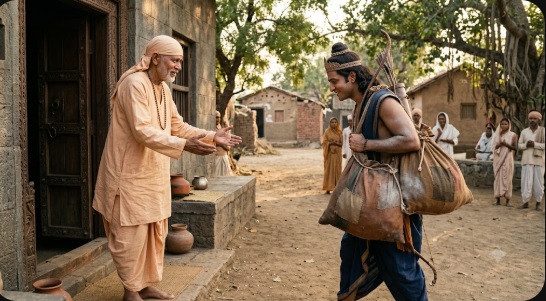
Mara: It is. When Baba was in a cheerful mood, He used to sing merrily. One such song was about Udi,”Oh, playful Rama, come, come, and bring with you sacks of Udi.”



Get involved!
Comments