

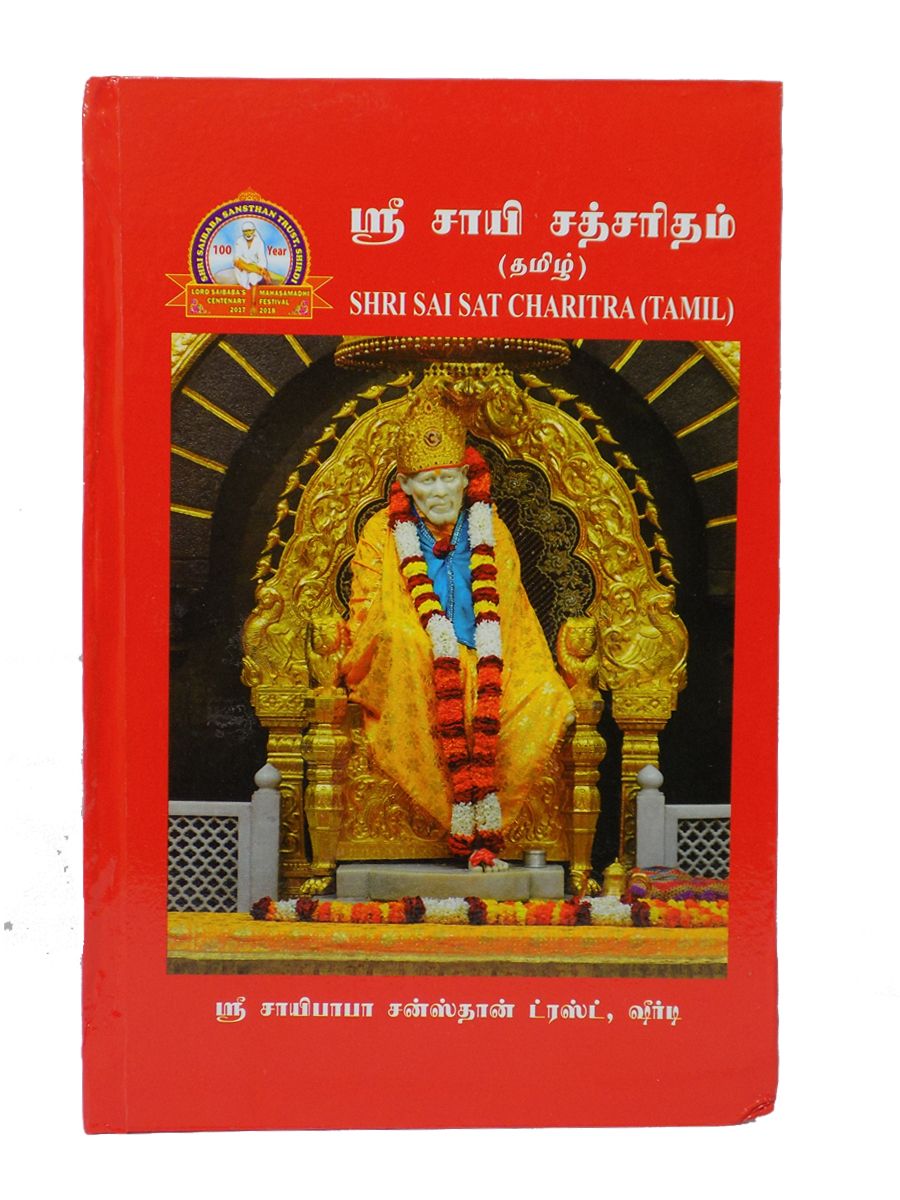
- When seeking facts about Sai Baba,
- the remarkable work that stands out is ‘Sai Satcharitra’ by HemadPant, known as Anna Saheb Dabolkar.
- It is written in the Marathi language.
- This wonderfully crafted poetical masterpiece spans 53 vibrant chapters and over 1000 pages, narrating incidents from Sai Baba’s inspiring life.
- Written in rich and expressive Marathi, it beautifully fulfills the purpose of Puranic study, serves daily parayana.
- It offers readers a path to deeper understanding and devotion.(LoSB p6)
- Baba conveyed his heartfelt blessing to Hemadpant in 1916, when asked permission to write Baba’s life teachings and expressions,
- by providing him with udhi and placing his Asirvada hand upon Dabolkar’s head, proclaiming,
- “Let him compile a collection of My stories and experiences,
- diligently maintaining notes and memos.
- I shall assist him in this endeavor.
- He is merely an external instrument. It is I who should document my life and fulfill the aspirations of my devotees.
- When his ego is entirely extinguished, leaving no remnants, I shall personally enter within him to narrate my life.
- Listening to my stories and teachings will instill faith in the hearts of devotees, facilitating their journey toward self-realization and eternal bliss.“
- Hemadpant diligently gathered information concerning the lilas of Baba and, as a proficient writer possessing a profound command of Marathi verse and prose, along with a solid foundation in religious literature,
- aspired to compose a comprehensive study of Baba’s lilas, thereby creating a significant chronicle of Baba’s life.
- This endeavor would align with the framework established by Saraswati Gangadhar’s Guru Charitra, offering solace and happiness to individuals burdened with sorrow and the afflictions stemming from worldly existence.
- Additionally, it would provide them with Jnana, or knowledge and wisdom, regarding both temporal and spiritual matters.
- Baba’s lilas would serve as both instructive and engaging, akin to the Vedas,
- and, upon contemplation, they would facilitate laya, or union with Brahman, as well as mastery of Yoga and Yoga Ananda.
- Consequently, he resolved to compile these narratives, considering the publication as a form of upasana, or worship, of his Guru.
- This collection would be particularly invaluable to those unable to experience Baba in person, allowing them to form an understanding of Baba through this compilation.
- Baba’s teachings and expressions were the natural outcome of his boundless self-realization; it was Dabolkar’s belief that Baba himself inspired this initiative to gather and present his life’s essence.(P376. )
Shri N.V.Gunaji adapted the above Shri Hemanpant’s “Sri Sai SatCharita” and translated into English and donated the entire proceeds to the Sai Sansthan Trust, Shirdi.

 Welcome to https://ShirdiSaiBaba.InterNational