Category: Company of saints

Satsang — the company of holy ones — is one of Baba’s most emphasised practices. Explore the lives of saints who walked alongside Baba, and the transformative power of holy association.

  • Today, Special Day

    Today, Special Day

    Guru Pourima July 10, 25.

    Thanks Jai_MahaPurana

  • Sai Baba was there, truly!

    Sai Baba was there, truly!

    Dr Antonio Rigopoulos, Italy in his ‘Oral Testimonies on Sai Baba As Gathered During a Field Research in Shirdi and Other Locales in October-November 1985′ (Venice Ca’ F Editions Oscar – Digital Publishing 2021) explained his own Experience that:-

    I went to the cāvaḍī and while I was casually sitting at the cāvaḍī’s entrance, looking at the raṅgolīs, the auspicious signs that some young women were skilfully drawing on the ground, a stray dog caught my attention. He was full of pustules and eczemas, of fleas, and was in a really bad shape. Then it suddenly flashed on me that that dog was Sai Baba. It was something stronger than a simple thought, like an insight or a sudden flash of awareness that I find hard to put into words. I really felt that he was that dog and that he was standing in front of me in that very form: it had the force of an incontrovertible truth. It was a strange and startling experience indeed. Sai Baba was that dog: the lowest, the despised, the most neglected creature. The dog had sweet and penetrating eyes, which called for sympathy and attention.

    I felt I finally understood something: not intellectually, i.e. with the head, but emotionally, i.e. with the heart. There was Sai Baba, truly and fully. It came like a revelation and I shed a few tears; couldn’t help it. It was just so overwhelming

    -On 21 Oct 1985 at 7.30 am

    Thanks / Reference:

    Rigopoulos, Antonio. ‘7 Shirdi-Kopargaon-Shirdi. Monday, October 21, 1985’. Masters, Texts and Sources of the East (2020): n. pag. Crossref. Web.

  • Sai Baba Temples in Canada

    Sai Baba Temples in Canada

    These Sai Baba temples in Canada including prayer centers, offer important spaces for worship, spiritual practices, and community interaction.

    Readers are invited to share their experiences and offer any updates on the temple information. Such contributions are essential in ensuring the directory remains a reliable and beneficial tool for the broader Sai community.

    1. The Shirdi Sai Mandir and Cultural Centre – Located at 2721 Markham Road Unit 8, Toronto, Ontario (ON) M1X 1L5. It’s a well-loved spiritual hub in Scarborough. Map

    2. Jai Shirdi Sai Baba Samasthanam Canada – at 2605 Eglinton Ave E #1, Scarborough, Ontario. Phone & WhatsApp-14163578884 Map

    3. Sai Illam Spiritual Centre – Located at 67 Commander Blvd, Toronto, ON. Established in 1996, this temple has been a spiritual home for devotees in Scarborough. Map

    4. Sai Bhakti Dham, located at 52 McIntyre Pl Unit A, Kitchener, ON N2R 1G3. Map

    5. Sai Dham Canada, located at 7140,Goreway Dr, Mississauga, ON L4T 2T6. Map

    6. Satchidananda Sadguru Shirdi Sainath Maharaj Mandir – located at 173 Advance Blvd, Unit 26, Brampton, ON. Map

    7. Shirdi Sai Baba Temple of Edmonton – Located at 5706 127 St SW, Edmonton, AB. A serene place for devotees in Alberta. Map

    8. Aanantha Shirdi Sai Baba Temple of Montreal – A newer temple established in 2024, offering a tranquil space for worship at 7905 Av. Stuart, Montréal, QC H3N 2R9 Quebec. Map

    9. Shri Shirdi Sai Baba Temple Brampton. Located at 23 George St N, Brampton, Ontario L6X 1R3 Phone: 289-505-4446. Map

    10. Shirdi Saibaba Dwarkamai Dham, located at 36-3100 Ridgeway Dr, Mississauga ON L5L 5M5. Map

    II. You can also click the following link. It provides a list of around 10 SAI BABA temples or Prayer Centers in Canada.

    https://maps.app.goo.gl/x1gBivvkNU5R3UoQA

    Please click the link, check the reviews, ensure the correct route, and cross-check the timing without fail.

    III. Decide the suitable Sai Temple and

    Go there, sit and do meditation; and feel the eternal bliss.

    IV. OM SAI BABA, GUIDE AND BLESS YOUR CHILDREN, please.

    PS: 1. This list is for informational purposes only. We are not sponsoring. Check before proceeding.

    2. If this above List/link hasn’t included any Sai Baba Temple or Prayer Place you know in Canada, please add it to Google Maps. Then send that Google Map link with Temple’s Name, Address and other details to us.

    3. For any such addition, correction or deletion in the above list, inform us here.

  • Promoting Love

    Promoting Love

    Sai Baba actively promoted love and unity, both among his devotees and towards animals, through his teachings, actions, and the examples he set. Here’s how the sources illustrate these aspects:

    • Unification and Harmony:
      • Sai Baba worked towards the unification of communities, particularly Hindus and Muslims.
      • He celebrated Hindu festivals like Rama-Navami with all due formalities.
      • He also permitted the ‘Sandal’ procession of Mahomedans and allowed Muslims to offer prayers (Namaj) in his Masjid. This demonstrated his disregard for religious distinctions and his wish for communal harmony.
      • His constant advice was that “Rama (the God of the Hindus) and Rahim (the God of the Mahomedans) were one and the same.” He emphasized that their devotees should not quarrel. Instead, they should “join hands and bring both the communities together” for national unity.
    • Fostering Unity and Eradicating Duality: Baba emphasized the importance of dissolving the sense of difference between individuals and with God.
      • He explicitly stated, “Demolish the wall of difference that separates you from Me; and then the road for our meeting will be clear and open. The sense of differentiation, as I and thou, is the barrier that keeps away the disciple from his Master, and unless that is destroyed the state of union or atonement is not possible“.
      • This teaching directly supports universal love by promoting the realization of oneness.
    • He also encouraged his devotees to love their Guru with whole-hearted affection. He advised them to surrender completely. He suggested prostrating reverentially before Him to attain this unity.
    • Direct Instruction on Conduct:
      • Baba provided invaluable general advice for interacting with others:
      • If any men or creatures come to you,
        • do not discourteously drive them away,
        • but receive them well and treat them, with due respect.
      • Shri Hari (God) will be certainly pleased, if you give water to the thirsty, bread to the hungry, clothes to the naked, and your verandah to strangers for sitting and resting“.
      • This emphasizes hospitality, compassion, and respectful treatment of all.
    • Discouraging Slander and Gossip: Baba strongly disliked slander.
      • He stated, “He who carps and cavils at others, pierces Me in the heart and injures Me, but he that suffers and endures, pleases Me most“.
      • In one instance, he corrected a slanderer by pointing to a pig eating filth and comparing the slanderer’s actions to the pig’s,
      • thereby teaching a powerful lesson against reviling others.
    • Personal Relationships and Care: Baba demonstrated deep personal love and care for his close devotees.
      • He shared his dormitory with Tatya Kote Patil and Bhagat Mhalsapati for 14 years, showing immense affection and intimacy.
      • He loved Khushalchand of Rahata and “watched his welfare, day and night,” even visiting him.
      • He exhibited “motherly love” towards his disciples, knowing their wants and feeling boundless joy when they were adorned.
      • He ensured the proper execution of religious functions in devotees’ homes, even attending a dinner in Mr. B.V. Deo’s house through an appearance.
      • His “anger” was often a disguise for blessings or tests, as seen
        • when he appeared enraged with the women grinding wheat but later smiled at their devotion, or
        • when he seemingly scolded Haji Sidik Falke only to then show him great favor.
    • He sometimes appeared in dreams or visions to guide and comfort his devotees, like the instance of Hemadpant’s Shimga dinner.
    • Importance of Guru-Disciple Relationship: Baba emphasized
      • complete surrender and unwavering faith in the Guru, assuring that such
      • devotion leads to spiritual progress and self-realization. This deep bond fosters profound love and trust.
    • Saints, like Baba and Shri Tembye Swami, are shown to love each other with “fraternal affection,” indicating a wider spiritual family bound by love.

    Promoting Love with Animals:

    • Oneness with All Creatures: Sai Baba explicitly taught the principle of seeing God in all beings, including animals. When Mrs. Tarkhad fed a hungry dog, Baba told her, “The dog which you saw before meals and to which you gave the piece of bread is, one with Me, so also other creatures (cats, pigs, flies, cows etc.) are one with Me. I am roaming in their forms. He, who sees Me in all these creatures is My beloved. So abandon the sense of duality and distinction, and serve Me, as you did today“. This is a profound teaching that directly connects compassion for animals with devotion to God.
    • Compassion and Non-violence: Baba’s conduct consistently demonstrated compassion for animals. He never drove away dogs, cats, or crows that ate from his food pot, indicating his acceptance and care for them. He also gave a clear opinion on the killing of serpents, stating, “God lives in all beings and creatures, whether they be serpents or scorpions… So we should take pity and love all creatures, leave off adventurous fights and killings and be patient. The Lord (God) is the Protector of all“.
    • Reminiscences of Past Lives: In a remarkable instance, Baba purchased two goats for a significantly high price, explaining to his surprised devotees that these goats were formerly two human brothers who had fought bitterly and killed each other. He bought them out of pity, fed them, and then returned them. This story highlights Baba’s boundless love and compassion for all creatures, acknowledging their karmic journeys.
    • Protection of Animals:
      • Baba saved his devotees from potential harm from animals like snakes,
      • sometimes by foretelling the danger and
      • other times by direct intervention,
      • but he always advised against killing them,
        • emphasizing universal love and the divine presence in all creatures.
      • Even a fierce tiger was drawn to his feet and found a blessed end in his presence, demonstrating Baba’s all-encompassing mercy towards even wild animals.
  • Shirdi Sai Baba temples  in UK

    Shirdi Sai Baba temples  in UK

    These Sai Baba Temples in UK, including Prayer Centers, offer important spaces for worship, spiritual practices and community interaction.

    Readers are invited to share their experiences and offering any updates the temple information. Such contributions are essential in ensuring the directory remains a reliable and beneficial tool for the broader Sai community.

    🛕 Shirdi Sai Baba Temple Association of London (SHITAL) Website

    Temples (with daily aarti & services):
    1. Wembley, London:
    Union Hall, Union Road, Wembley, Middlesex, HA0 4AU.1 Map
    Phone: 020 8902 2311

    2. Leicester:
    18 Melton Street, Leicester, LE1 3NB. Map
    Phone: 0116 367 1833

    3. Reading:
    44 West Street (next to Primark), Reading, RG1 1TZ_ Map
    Phone: 0118 959 1084

    🛕 Additional Shirdi Sai Baba Temples & Organizations

    1. Shirdi Sai Baba Temple Milton Keynes, 12 Winchester Cir, Kingston, Milton Keynes MK10 0BA Map
    2. Shirdi Sai Temple, 122 Ley Street, Ilford IG1 4BX. Map
    3. Sai Dham, Nottingham, Situated at 75–79 Egypt Road, Nottingham. Map
    4. Sree Sai Baba Shrine, Dudley Rd E, Tividale, Oldbury B69 3DU. Map
    5. Granite Shirdi Baba, 65 Downham Rd, London N1 5AH. Map


      World Shirdi Sai Baba Organisation (UK):
    6. Shirdi Sai Baba Temple – London, East Ham, 298 High St N, London E12 6SA. Map
    7. Shirdi Sai Baba Temple – London, Forest Gate: 370A Romford Road, E7 8BS .Map

    II. You can also click the following link to get a Map list of around 10 SAI BABA temples or Prayer Centers in United Kingdom.

    https://maps.app.goo.gl/N3h4LQA66jTDrqWw7

    Please click the link, check the reviews, ensure the correct route, and cross-check the timing without fail.

    III. Decide the suitable Sai Temple and

    Go there, sit and do meditation; and feel the eternal bliss.

    IV. OM SAI BABA, GUIDE AND BLESS YOUR CHILDREN, please.

    PS: 1. This list is for informational purposes only. We are not sponsoring. Check before proceeding.

    2. If this above List/link hasn’t included any Sai Baba Temple or Prayer Place you know in UK, please add it to Google Maps. Then send that Google Map link with Temple’s Name, Address and other details to us.

    3. For any such addition, correction or deletion in the above list, inform us here.
  • Complete surrender to the Guru involves

    Complete surrender to the Guru involves

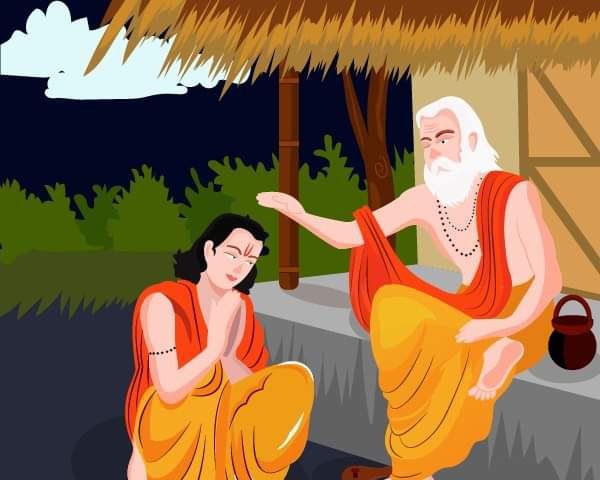
    Complete surrender to the Guru encompasses several dimensions, as elucidated in the Shri Sai Sat Charitra:
    Devotion and Remembrance: This entails a total surrender of oneself while consistently recalling the Guru’s presence, with the necessity of continually chanting the Guru’s name.
    Seeing the Guru in all beings: Engaging in meditation on the Guru allows one to perceive Him within every being, thereby bestowing eternal bliss. A true devotee regards every Guru as Krishna.
    Lack of Egoism: This principle mandates the relinquishment of pride and ego, thereby surrendering to the Guru who resides within one’s heart. The removal of egoism and the complete trust in the Lord liberates one from worldly constraints.
    Service: True surrender requires Sarvaswa Sharangati (total surrender) to the Sad-guru, where one must recognize that they are not the sovereign of their own body; rather, the body belongs to the Guru and exists solely to serve Him.
    Faith and compliance: A disciple’s duty and dharma necessitate implicit and prompt adherence to the Guru’s directives.
    Channeling Senses to the divine: Prior to indulging the senses, mind, and intellect in their respective pursuits, it is incumbent to remember the Guru; such remembrance serves as an offering to Him.
    Experiencing Oneness: The individual who approaches the Guru achieves oneness with Him, akin to a river merging with the sea.
    Desirelessness: The Guru liberates His devotees from desires, rendering them free.
    Love: The Guru desires nothing but love for all sentient beings. Genuine love requires earnest affection; thus, where there is true yearning and feeling, God reveals Himself.
    Mindfulness: Regularly chanting the Guru’s name and engaging in meditation fosters the ability to perceive Him in all beings, which in turn grants eternal bliss. A definitive indication of this practice is the attainment of a calm and peaceful mind.
  • Can we follow other Gods?

    Can we follow other Gods?

    In BG VII(7) 21-2, Sri Krishna said “In whatever from people surrender to Me, in that very form, I serve them. Every one following his own form of worship is really following My worship’.

    God can be approached under any name and in any manner, and

    Mahlsapathy (Baba’s closest devotee),

    • though sticking to the idea that Khandoba was his God,
    • derived the advantage of getting all his
    • other needs safeguarded and provided as far as possible
    • by Baba acting as his Providence.

    Other bhaktas also

    • who have their own particular forms, who however note the need or importance of food, shelter and other things for themselves and their familes, being provided by Baba
    • would be thus encouraged by Mahlsapathy’s example to seek Baba and place themselves under his protection.
    • Baba never interfered with
      • anybody’s orthodoxy or religious worship, and
      • the orthodox now in various places need not have any fears about the loss of their existing spiritual position by contacting Baba.
      • All the while, they would get unconscious expansion and refinement of their idea of God and Gods, and become ready for reaching the “Ekam Sat-That which exists is One”

    LoSB-P245

  • Qualities That Define a True Sadguru

    Qualities That Define a True Sadguru

    who is Guru:

    • He who teaches us Veda and Vedanta or the six Shastras (systems),
    • He, who controls the breath, or
    • brands his body with Mudras (metallic marks of Vishnu’s weapons) or
    • gives pleasing discourses regarding Brahma.
    • he who gives mantras (sacred syllables) to the disciples and
    • orders them to chant the same a certain number of times,
    • but does not assure them any result in a definite time.
    • He who by his spacious wordy knowledge, explains beautifully the Ultimate Principle,
    • but has himself got no experience or self-realization is not a Sad-guru.
    • How can he, who is himself devoid of self-realization, give it to the disciples?

    Who is SadGuru:

    • But He, who by his discourse creates in us,
    • a distaste for the enjoyments of this world and
    • the next, and gives us a taste of self-realization.
    • who is well-versed in both the theoretical and practical knowledge (self-realization) deserves to be called a Sad-guru.

    • He is never restless nor ruffled.
    • He has no pride of his learning.
    • The poor and the rich, the small and the great are the same to him.

    • A Sad-guru does not, even in his dream, expect any service or profit from his disciples.
    • On the contrary, he wishes to serve them.
    • He does not think that he is great and the disciple small.
    • Not only he loves him, as his son but regards him, as equal to himself or as Brahma.
    • The main characteristic of a Sad-guru is that he is the abode of peace.
  • Mastering Dispassion: A Guide to Spiritual Liberation with Baba

    Mastering Dispassion: A Guide to Spiritual Liberation with Baba

    Baba’s physical or finite form has undoubtedly vanished from our sight; however, the infinite or spiritual essence (Spirit of Baba) endures eternally.

    Baba’s plays continue:

    • The divine Leelas (play) that transpired during His earthly existence have been extensively discussed till now.
    • Since His departure, new Leelas (play) have emerged and continue to unfold even now.
    • This clearly illustrates that Baba remains ever-living and extends His assistance to His devotees as before.

    About Those contacted physically Baba:

    • Those who were blessed to have contact with Baba during His lifetime were indeed fortunate;
    • nevertheless, if any of them failed to cultivate dispassion for worldly possessions and pleasures, or did not turn their minds toward the Lord,
    • it is purely a matter of their misfortune.

    Now what is necessary:

    • What was necessary then, as it is Now, is a wholehearted devotion to Baba.
      • All our
        • senses,
        • organs-faculties, and
        • minds should collaborate in worshiping and serving Baba:
      • to engage only certain faculties in worship, while neglecting others is of no use.
      • Should one partake in worship or meditation, it ought to be undertaken with one’s full mind and soul.

    Can anyone assist us in achieving?

    • The love that a devoted wife holds for her husband is frequently, likened to the devotion a disciple offers to his master (Guru).
    • Yet, the latter is unparalleled and far surpasses the former.
    • No individual, be it a father, mother, brother, or any other relative, can assist us in achieving the ultimate purpose of life (self-realization).
    • We must delineate and navigate the path of self-realization independently.
    • We are tasked with
      • discerning the Unreal from the Real,
      • renouncing the desires and pleasures of this world and
      • the next, mastering our senses and minds, and
      • aspiring solely for liberation.
    • Rather than depending on others, we ought to place total faith in ourselves.

    Practice What? and How?

    • As we begin to practice discernment,
    • we come to realize the transitory and illusory nature of the world, and
    • our passions for worldly matters gradually diminish,
    • ultimately leading to dispassion or non-attachment.
    • We then acknowledge that the Brahma,
      • which is none other than our Guru, is the sole reality;
      • as it transcends and pervades the apparent universe,
      • we begin to worship it in all beings.
    • By wholeheartedly worshiping the Brahma or Guru, we become one with Him and attain self-realization.
    • In summary:
      • consistently chanting the name of the Guru and
      • meditating on Him, enables us to
      • perceive Him in all beings.
      • It bestows upon us eternal bliss.
  • Baba is a Scientist in Teaching Education

    Baba is a Scientist in Teaching Education

    Pedagogics is the art and science of teaching and education. It involves not only conveying information, but also understanding how people learn. It requires creating environments, that foster growth and development.

    Sai Baba is also not only delivering information, but create environment for learning and growing of His devotees. viz:

    • One,
      • totally devoid of any book study, but
      • possessed of
        • perfect self-surrender,
        • humility,
        • trust, and
        • love towards the Guru Baba,
        • was and is the person who could derive
        • the fullest benefits from Baba.
    • The idea that
      • one has understood all about Jiva and Paramatma and
      • the methods by which Paramatma could be reached by a Jiva,
      • forms the greatest obstacle to one’s progress.
    • It is
      • not the intellect, the keenness of intellect, that is
      • wanted from a person approaching Baba.
    • It is
      • humility,
      • receptivity, and
      • a readiness to receive all that Baba gives, that counts.
    • As Baba pointed out to the Valambi Station Master,
      • persons (evidently with much conceit of learning etc.) came to him
      • like vessels the mouth of which was kept inverted; and were therefore
      • incapable of receiving any benefits from him.
    • In the case of Nana (Devotee),
      • his very high learning and
      • great ability in official and other matters were naturally accompanied
      • by a high degree to self-assertion and egotism;
      • which make for success in
        • literary study,
        • official matters, and to a certain extent even in
        • spiritual matters.
      • But for the highest results in spiritual matters, it is just the opposite, namely,
        • utter reduction of egotism,
        • the power to relax the Ego and
        • keep it relaxed for long periods, that is essential.
    • This is why
      • the consumption of water, that was used to washing of the feet of the Guru, and
      • the acceptance of his Uchchishta tirtha (the remnants of food that have been contaminated by the Guru’s saliva) are emphasized in the
      • Guru Gita” for a pupil’s advancement,
      • as these practices foster a profound annihilation of Ahamkara, or Ego,
      • through deep reverence for the Guru, culminating in Love.
    • In Baba’s system,
      • the Guru-Teacher imparts virtue after virtue to the sishya-Student.
      • HE trains him step by step to secure these virtues and the knowledge, he wishes to equip the pupil with.
      • This process is just as the cat carries its kittens to safe and good places.
    • The first essential preparatory step in Baba’s course is thus,
        • not book learning, but the
        • development of
          • humility and
          • receptivity.
        • These would result from
          • perfect faith, absolute faith,
          • unlimited and powerful faith in the Guru.
        • The Guru must be everything to the sishya,
          • the giver of bread,
          • the giver of life and light and
          • the giver of all that life is worth living for, and
          • at one stroke.
          • He must not regard anything else. This alone is the tyaga of Tan, Man, Dhan – body, mind and possessions.

      LoSB-Vol II’ Ch 2

      • Baba’s company was the highest education one could get. As a Mahratta saying goes, ‘Let us stay with saints. If they do not give us Upadesa, let us note what they do and say. That is the best Upadesa‘.