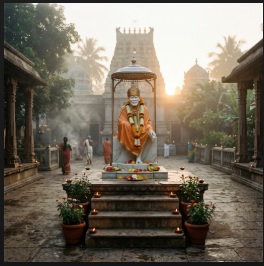
Tag: Patience

Wait enough for seeing the benefits

  • Let three guiding principles illuminate your path

    Let three guiding principles illuminate your path

    Embrace the divine journey illuminated by Sai Baba, where Guru’s Grace blesses you with profound peace and strength. Immerse yourself in the art of Total Surrender, wrapping your heart in unwavering Humility and Faith, and unlock the door to genuine devotion and remarkable inner transformation.

    Let the following guiding principles illuminate your path.

    1. Guru Grace

    “Guru’s grace is our only sadhana.”

    Sai Baba taught that true realization comes through the grace of the Guru, not merely through intellectual study.

    Step 1 — Remember Sai Daily

    Start the day by remembering Sai Baba silently with devotion and gratitude.

    Step 2 — Read Spiritual Teachings

    Read Sai Satcharitra or Sai teachings regularly with concentration and feeling.

    Step 3 — Pray for Inner Guidance

    Ask Sai Baba to guide your thoughts, decisions, and life direction.

    Step 4 — Experience Inner Peace

    With continued devotion, peace and wisdom begin to arise naturally through grace.

    2. Total Surrender

    Tan, Man, Dhan — Body, Mind, and Possessions surrendered to the Guru.

    Sai Baba emphasized complete surrender with love, trust, and humility viz.,

    Step 1 — Surrender the Body (Tan)

    Use your actions to serve family, society, and people in need.

    Step 2 — Surrender the Mind (Man)

    Reduce anger, fear, ego, and negativity through prayer and self-control.

    Step 3 — Surrender Possessions (Dhan)

    Use wealth and resources responsibly for charity and helping others.

    Step 4 — Trust Sai Completely

    Accept life events with faith that Sai Baba is guiding everything for good.

    3. Humility & Faith

    “Shraddha and Saburi” — Faith and Patience

    Sai Baba taught that humility, patience, and faith are essential for spiritual growth.

    Step 1 — Become Humble

    Avoid pride and learn to listen, respect, and speak gently with others.

    Step 2 — Develop Patience

    Remain calm during delays and difficulties, trusting Sai Baba’s timing.

    Step 3 — Keep Strong Faith

    Continue devotion and goodness even when immediate results are not visible.

    Step 4 — Receive Sai’s Blessings

    Faith and humility gradually open the heart to peace, strength, and realization.

    Om Sai Ram 🙏
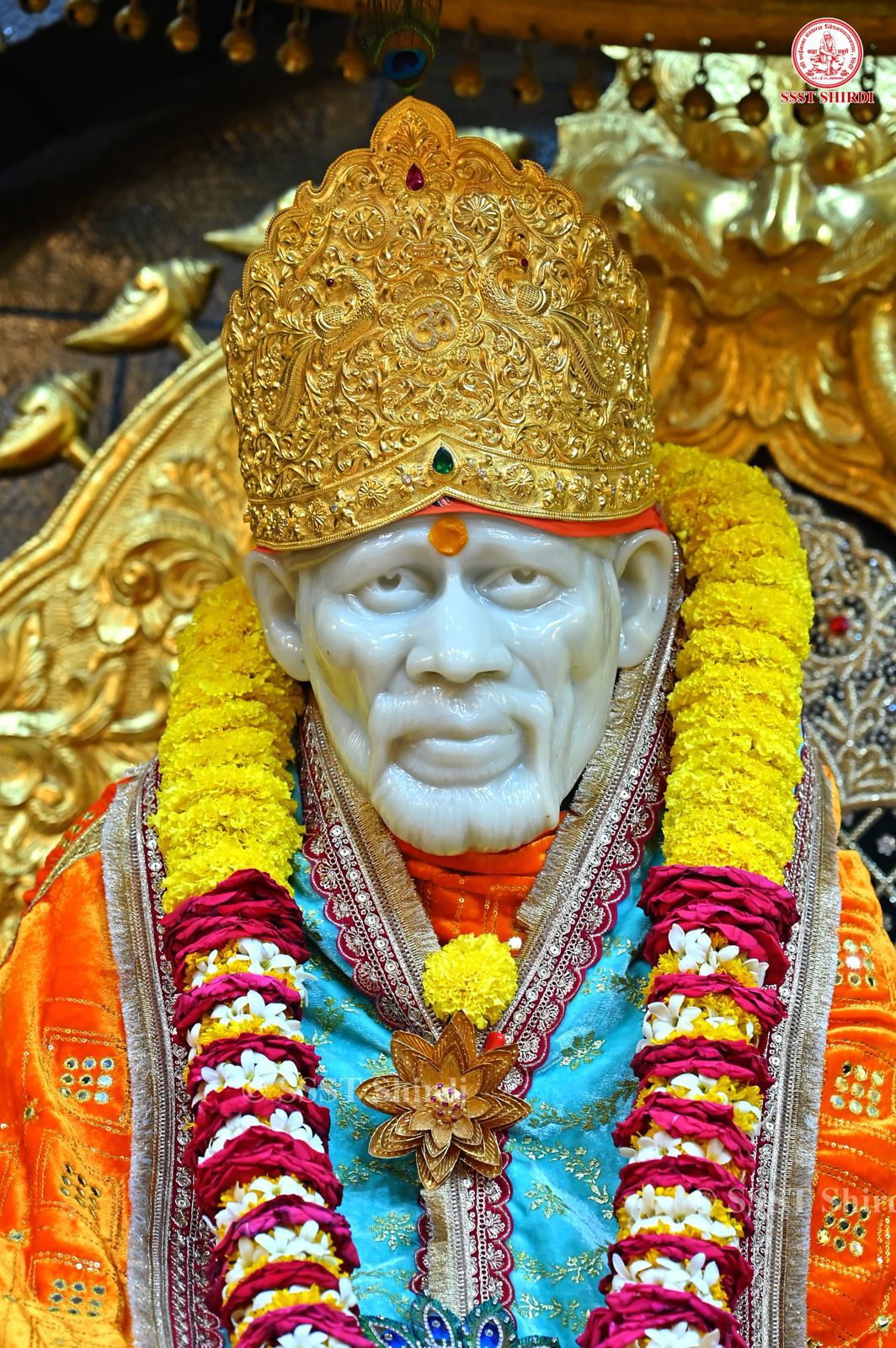
  • Why Shirdi Sai Baba is a Universal Spiritual Guide

    Why Shirdi Sai Baba is a Universal Spiritual Guide

    A captivating exploration of the profound themes and vital truths surrounding Shirdi Sai Baba reveals a figure of immense spiritual significance.

    I. The Nature and Identity of Sai Baba

    Sai Baba is a divine, omniscient, and omnipresent, being whose true nature transcends conventional human and religious classifications.

    • Ambiguity of Origin and Faith:
      • Baba’s identity as Hindu or Muslim is deliberately obscured, highlighting his universality.
      • He celebrated both Hindu festivals (Rama-Navami, Gokul Ashtami) and allowed Muslim practices (Sandal procession, Namaj in Masjid).
      • His physical attributes (pierced ears like a Hindu, advocacy of circumcision, but not circumcised himself) further blurred the lines.
      • No one definitely knew whether He was a Hindu or a Mahomedan.
    • Divine Incarnation and Sadguru:
      • Baba is depicted as a “Wonderful Incarnation,” a “precious Jewel,” and a “precious Diamond.”
      • He is the “crest-jewel of the Saints, who is the home of all auspicious things, who is our Atmaram (Dear Self), and who is the able refuge of the devotees.”
      • He is explicitly referred to as a “Sadguru,” a true spiritual master.
      • “Lord (God) dwells in the Saints.
        • In fact they are not different from Him.
        • Our Sai is One of these,
          • Who incarnated for the welfare of the devotees,
          • Supreme in knowledge and surrounded with divine lustre.”
    • Omniscience and Omnipresence: Baba has absolute knowledge of the past, present, and future.
      • He knew Mr.Damu Anna’s secret thoughts about cotton speculation and his desire to offer Baba a share of profits.
      • He knew Mr. Cholkar’s secret vow regarding sugar and his decision to forego sugar. Baba remarked, “Though, I am here bodily, still I know what you do; beyond the saven seas. Go wherever you will, over the wide world, I am with you. My abode is in your heart and I am within you.”
      • He knew Mr.Hari Kanoba’s name, parentage, and other details about him, even though it was Hari’s first visit to Shirdi.
      • He read Somadeva Swami’s critical thoughts about the flags at the Mosque, directly addressing them.
      • He knew about one pleader’s slander behind His back at Bar Council, demonstrating “His omniscience and His using it for correcting people and setting them on the right path.”
      • He correctly predicted and averted the death of Ramachandra Patil and foresaw Tatya Patil’s passing.
    • He is described as “omnipresent, occupying land, air, country, world, light and heaven, and that He was not limited.”
    • Detachment and Humility: Despite his divine powers, Baba lived a life of extreme simplicity and humility. He lived on alms, possessing nothing, and residing in a deserted Masjid. He begged for food daily, mixing all offerings together, and “His tongue knew no taste.” Dogs, cats, and crows freely ate from his earthen pot, and “Baba never drove them away.”

    II. The Role and Importance of the Sadguru

    The Sadguru (Guru, who realized Self) as the sole means to spiritual liberation and worldly well-being.

    • Bridge to Salvation:
      • The Sadguru is essential for crossing the “worldly ocean.”
      • “Where Real or Sadguru is the helmsman, he is sure to carry us safely and easily beyond the worldly ocean.”
      • The Vedas alone cannot achieve this; “It is only the Sad-guru, who can do so and make you, see the Lord in all creatures.”
    • Destroys Egoism and Sins:
      • The touch of the Guru’s hand is described as having “wonderful… power.”
      • It can destroy the “subtle-body (consisting of thoughts and desires)” and cleanse “sins of many past births.”
      • M. Hemadpant said, when starting writing Shri Sai SatCharitra, “Sai Baba took away my egoism and wrote Himself His stories.”
    • Catalyst for Transformation:
      • Baba’s darshan (sight) leads to profound inner change:
        • “by His darshana our thoughts are changed,
        • the force of previous actions is abated and
        • gradually non-attachment of dispassion towards worldly objects grows up.”
      • He transforms his devotees into “Himself (His nature).”
    • Teacher and Guide:
      • The Sadguru Sai teaches based on the disciple’s qualifications, without unsettling their minds.
      • He dispels ignorance (“Destroying ignorance is Jnana”) and
      • He helps the disciple realize their true Self (“You are God, you are mighty and opulent.”).
    • Unconditional Love and Service:
      • A true Sadguru expects no service or profit,
      • but instead wishes to serve his disciples, treating them as equals or even as Brahma.
      • “Baba had great love for the disciples.”
        • He “loved all beings equally.
        • He was unattached. Foes and friends, kings and paupers, were the same to Him.”

    III. Key Teachings and Practices Advocated by Sai Baba

    Baba’s teachings, though sometimes indirect, emphasized faith, surrender, moral conduct, and devotion.

    • Faith (Nishtha) and Patience (Saburi): These were presented as two coins of devotion by Baba to His Guru.
      • Baba said: “This is one pice -Faith. Patience or perseverance is the other pice. I waited patiently and very long on My Guru and served him. This Saburi will ferry you across the sea of this mundane existence.” (pice=1/100 INR)
    • Complete Surrender: “If any one prostrates before Sai and surrenders heart and soul to Him,
      • then unsolicited, all the chief objects of life viz. Dharma (righteousness), Artha (wealth), Kama (Desire) and Moksha (Deliverance), are easily and unsolicitedly attained.”
      • “The best way, therefore, to get free from the shackles of Maya is our complete and whole-hearted surrender to Baba.”
    • Charity and Non-Attachment to Wealth: Baba frequently extracted “Dakshina” (offerings),
      • not for personal gain, but “to teach the devotees the lesson of charity and to remove their attachment to money and thus to purify their minds.”
      • He asserted that “He had to give back hundred times more of what He received.”
      • He discouraged debt for spiritual purposes: “Baba never liked people to run into debt for taking His darshan, or celebrating any holiday or making any pilgrimage.”
      • He considered “money as a danger or bar to spiritual progress.”
    • Ethical Conduct and Self-Correction:
      • He advised against discourteously turning away those who come to you, emphasizing:
      • “Shri Hari (God) will be certainly pleased, if you give
        • water to the thirsty,
        • bread to the hungry,
        • clothes to the naked, and
        • your verandah of your Home to strangers for sitting and resting.”
    • Baba condemned slander:
      • “Let anybody speak hundreds of things against you,
      • do not resent by giving any bitter reply.
      • If you always tolerate such things, you will certainly be happy.”
      • He used the example of a pig eating filth to correct a slanderer, stating, “Your conduct is similar. You go on reviling your own brethren to your heart’s content.”
    • Baba taught the importance of offering everything to the Guru before enjoyment:
      • before the senses, mind and intellect enjoy their objects, Sai should first be remembered, and if this be done, it is in a way an offering to Him...
      • all the Vrittis (thoughts) regarding Desire, Anger, Avarice etc. should first be offered and directed to the Guru.”
    • He guided devotees to remain calm and composed, engage in good actions, and perform duties without attachment.
    • Remembrance of God/Guru (Dhyana/Bhajan): Baba advised various forms of devotion, including
      • “remembering My name,”
      • “hearing His Leelas,”
      • “worship of His Feet,” and
      • studying sacred scriptures like Shri Sai SatCharitra, Bhagwat, Jnaneshwari, and Vishnu-Sahasra-Nam.
      • He stated, “If you always say ‘Sai, Sai’ I shall take you over the seven seas.”

    IV. The Human and the Divine

    • Interaction with Devotees:
      • Baba allowed devotees to serve him in their own way,
      • demonstrating his “dependency on Bhaktas” (in the sense that he allowed their devotion to manifest).
      • He engaged in normal conversation, jokes, and sometimes strong reprimands, always with a deeper purpose.
    • The Guru-Disciple Relationship: The relationship is central. Disciples are encouraged to fully surrender and trust the Guru. The Guru sees beyond superficiality and acts for the disciple’s ultimate good.
    • Transcending Form:
      • While he had a physical form, Baba’s true nature was “unattached and indifferent” and “the state of Brahman.”
      • He demonstrated “Khandayoga, i.e., separating His limbs and joining them again,”
      • His visible form was merely a “mould” for the “liquid essence of Pure Self.”

    V. Miraculous Powers (Leelas) and Their Purpose

    Baba’s “Leelas” (divine plays or miracles) are frequently cited, serving not as ends in themselves, but as tools to deepen devotees’ faith, teach spiritual lessons, and alleviate suffering.

    • Manifestation of Divine Power:Grinding Wheat: Initially misunderstood as mundane, Baba’s grinding of wheat was a symbolic act to “destroy the cholera epidemic in Shirdi” with the flour.
    • Turning Water into Oil: This demonstrated his control over natural elements(fire) and taught the Banias (Oil Traders) a lesson in /
    • ‘truthfulness.
    • Curing Diseases: He cured various ailments, including eye problems with Beeba (marking nuts-Carpus Ana Cardium) and diarrhea with groundnuts, emphasizing that “The true medicine… was Baba’s word.”
    • Saving from Calamities: He averted the snake bite for Shama and predicted/averted the death of Ramachandra Patil. He also saved Mr. Mirikar from a potential snake bite.
    • Fulfilling Desires (within divine plan):
      • The “Amra-Leela” story illustrates his power. Four mangoes, given by Sai resulted in four sons and four daughters for Damu Anna. This happened despite astrological predictions.
      • He facilitated the return of a stolen jewel-box and a stolen sum of money.
    • Disguised Blessings and Tests:Baba’s “rage” and “abuses” were often a “blessing in disguise,” as seen with Somadeva Swami, or a direct command to the poison in Shama’s case.
    • Drawing Devotees and Confirming Faith:
      • The numerous anecdotes of individuals being drawn to Shirdi, despite their initial reluctance (Hemadpant’s own journey, Kakaji Vaidya being directed by Goddess Sapta-Shringi, the “idolater” friend of Kaka Mahajani) highlight Baba’s magnetic spiritual pull.
      • His precise knowledge of hidden thoughts or distant events served to “create faith and devotion” in his devotees.
    • Guaranteeing the Welfare of His devotees:
      • “There will never be any dearth or scarcity, regarding Food and clothes in My devotee’s home.”
    • In a nutshell
      • Baba’s teachings
        • emphasize love, compassion, and faith,
        • uniting all religions and
        • inspiring devotion beyond boundaries.
      • His miraculous acts instill hope, and
      • His wisdom fosters inner peace.
  • Handle Anger

    Handle Anger

    When you find anger rising within you,

    • you may withdraw from the place to provide time for cooling your emotions. Or
    • you may drink a glass of cold water and sit quietly in a place. Or,
    • take a brisk walk for a mile to get over your anger. Or,
    • stand before a mirror and look at your face.

    By any one of these methods, your anger will gradually come down.

    • Do not, however,
      • stay near the person who has provoked your anger,
      • because there is no limit to what anger may lead you to.
    • Owing to anger and agitation,
      • the blood gets heated up.
      • It takes three months for the blood to cool down. Within that period,
      • the nerves become weaker and even the
      • blood cells get destroyed.
        • Weakness is aggravated and the
        • memory power is reduced.
        • Old age sets in prematurely.
    • All the aberrations that we witness today among men arise from anger.
    • -Puttaparti Satya Sai Baba in the Divine Discourse, Apr 22, 1985.
  • Classification of disciples

    Classification of disciples

    • There are of three kinds of disciples of a Guru:
      • (1) First or Best
      • (2) Second or Average and
      • (3) Third or Ordinary.
    • The best kind of disciples are those who
      • guess what their Gurus want and
      • immediately carry it out and
      • serve them
      • without waiting for an order from them.
    • The average disciples are those who
      • carry out the orders of their Masters to a letter,
      • without any delay, and
    • the third kind of disciples are those, who
      • go on postponing the carrying out of their orders and
      • making mistakes at every step.
    • The disciples should have
      • firm faith,
      • backed up by intelligence
      • and if they add patience to these,
        • their spiritual goal will not be distant.
    • Control of
      • breath (ingoing and outgoing), or
      • Hath-Yoga (Balancing Sun and Moon force of Human Body) or
      • other difficult practices
        • are not at all necessary.
    • When
      • the disciples get the above mentioned qualities,
      • they become ready for further instructions and
      • Masters then appear and
      • lead them on, in their spiritual path to perfection.
  • Sense of differentiation is the barrier to Happy or Union

    Sense of differentiation is the barrier to Happy or Union

    “If anybody wants any money from you, and you are not inclined to give, do not give, but do not bark at him, like a dog.

    Let anybody speak hundreds of things against you, do not resent by giving any bitter reply. If you always tolerate such things, you will certainly be happy.

    Let the world go topsy-turvy, you remain where you are. Standing or staying in your own place, look on calmly at the show of all things passing before you.

    Demolish the wall of difference that separates you from Me; and then the road for our meeting will be clear and open.

    The sense of differentiation, as I and thou, is the barrier that keeps away the disciple from his Master, and unless that is destroyed the state of union or atonement is not possible, “Allah Malik”

    Baba in SSSC-Ch 18 & 19

  • Quotation 323

    Quotation 323

    LoSB-Chapter 3 of Part II, to Das Ganu Maharaj who had said that “that man is my enemy”, when not getting sira/drink

  • Earlier Years at Shirdi V-Mad Fakir to Hero

    Suddenly one day an incident occurred which brought a thorough change in the situation, from obscurity to famous.

    Sai Baba was very fond of lights. He used to beg oil from shopkeepers-Banias, and keep lamps burning the whole night in the Masjid and temple. This went on for some time.

    The Banias, who supplied oil gratis, once met together and decided not to give Him oil. When, as usual, Baba went to ask for oil, they all gave Him a distinct No.

    Unperturbed, Baba returned to the Masjid and kept the dry wicks in the lamps. The banias were watching Him with curiosity.

    Baba took the Tumrel (tin pot) which contained very little (a few drops) of oil, put water into it and drank it; and forced it fall in the container. After consecrating the tin-pot in this way, He again took water in the tin-pot and filled all the lamps with it and lighted them.

    To the surprise and dismay of the watching Banias, the lamps began to burn and kept burning the whole night. The Banias repented and apologized.

    Baba forgave them, after asked them i) You really had Oil?, ii) if they had not come to the Mosque to enjoy the pain which they expected him? ; and then iii) asked them to be more truthful in future & never again to take pleasure in other’s distress!.

    The effect of this incident was marvelous. The contemptible pagal-Mad fakir, as they called him, was turned overnight into the Hero or the weird magician or the holy Sadhu of the place.

  • Bayajabai’s Brilliant Service

    Tatya Kote’s mother, Bayajabai, used to go to the woods every noon with a basket on her head containing bread and vegetables. She roamed in the jungles koos (about 3 miles) after koss, trampling over bushes and shrubs in search of the mad Fakir, and after hunting Him out, fell at His feet.

    The Fakir sat calm and motionless in meditation, while she placed a leaf before Him, spread the eatables, bread, vegetables etc. thereon and fed Him forcibly. Wonderful was her faith and service. Every day she roamed at noon in the jungles and forced Baba to the partake of lunch.

    Her service, Upasana or Penance, by whatever name we call it, was never forgotten by Baba till his Maha Samadhi.

    Remembering fully what service she rendered, Baba benefited her son magnificently. Both the son and the mother had great faith in the Fakir, Who was their God.

    Baba often said to them that “Fakir (Mendicacy) was the real Lordship as it was everlasting, and the so called Lordship (riches) was transient”.

    After some years, Baba left off going into the woods, began to live in the village and take His food in the Masjid. From that time Bayajabai’s troubles of roaming in the jungles ended.

  • My method is quite unique

    My method is quite unique

    “My method is quite unique. Remember well, this one story (About Mrs. Radhabai Deskmukh), and it will be very useful.

    To get the knowledge (realization) of the Self, Dhyana (meditation) is necessary. If you practice it continuously, the Vrittis (subtle thoughts) will be pacified.

    Being quite desireless, you should meditate on the Lord, Who is in all the creatures; When the mind is concentrated, the goal will be achieved.

    Meditate always on My formless nature, which is knowledge incarnate, consciousness and bliss.

    If you cannot do this, meditate on My Form from top to toe, as you see here night and day.

    As you go on doing this, your Vrittis will be single-pointed and the distinction between the Dhyata (meditator), Dhyana (act of meditation), Dhyeya (this meditated upon) will be lost and the meditator will be one with the Consciousness and be merged in the Brahman.

  • What to do, If any man or creature come to you?

    “Unless there is some relationship or connection, nobody goes anywhere. If any men or creatures come to you, do not discourteously drive them away, but receive them well and treat them, with due respect.

    Shri Hari (God) will be certainly pleased, if you give water to the thirsty, bread to the hungry, clothes to the naked, and your verandah to strangers for sitting and resting.

    If anybody wants any money from you, and you are not inclined to give, do not give, but do not bark at him, like a dog.

    Let anybody speak hundreds of things against you, do not resent by giving any bitter reply. If you always tolerate such things, you will certainly be happy.

    Let the world go topsy-turvy, you remain where you are. Standing or staying in your own place, look on calmly at the show of all things passing before you.

    Demolish the wall of difference that separates you from Me; and then the road for our meeting will be clear and open. The sense of differentiation, as I and thou, is the barrier that keeps away the disciple from his Master, and unless that is destroyed the state of union or atonement is not possible, “Allah Malik” i.e.

    God is the sole Proprietor, nobody else is our Protector. His method of work is extra-ordinary, invaluable, and inscrutable. His will will be done and He will show us the way, and satisfy our heart’s desires.

    It is on account of Rinaubandh (former relationship) that we have come together, let us love and serve each other and be happy.