Tag: Chant

recite mantras Songs

  • Today, Special Day

    Today, Special Day

    Guru Pourima July 10, 25.

    Thanks Jai_MahaPurana

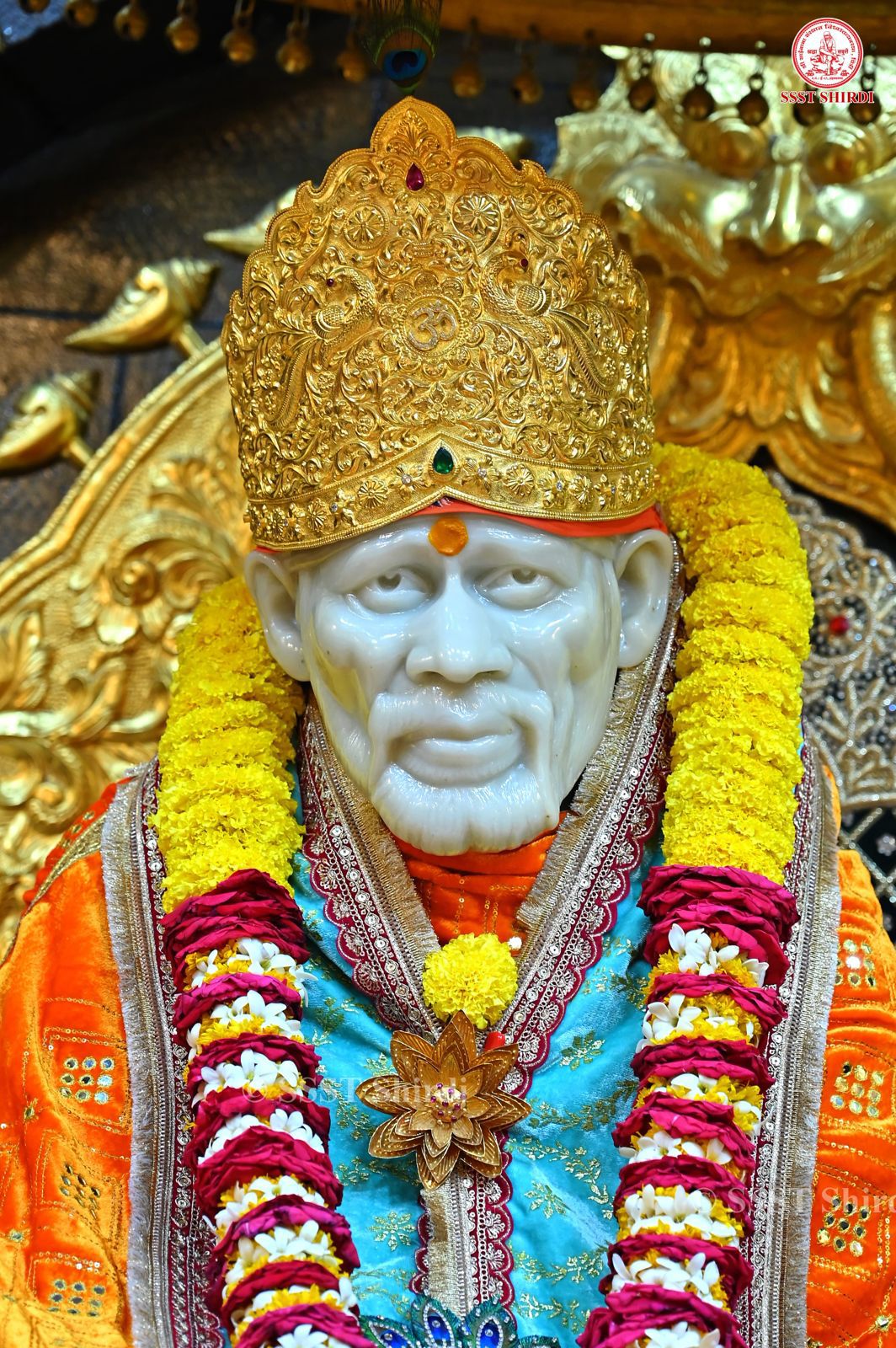
  • Why Shirdi Sai Baba is a Universal Spiritual Guide

    Why Shirdi Sai Baba is a Universal Spiritual Guide

    A captivating exploration of the profound themes and vital truths surrounding Shirdi Sai Baba reveals a figure of immense spiritual significance.

    I. The Nature and Identity of Sai Baba

    Sai Baba is a divine, omniscient, and omnipresent, being whose true nature transcends conventional human and religious classifications.

    • Ambiguity of Origin and Faith:
      • Baba’s identity as Hindu or Muslim is deliberately obscured, highlighting his universality.
      • He celebrated both Hindu festivals (Rama-Navami, Gokul Ashtami) and allowed Muslim practices (Sandal procession, Namaj in Masjid).
      • His physical attributes (pierced ears like a Hindu, advocacy of circumcision, but not circumcised himself) further blurred the lines.
      • No one definitely knew whether He was a Hindu or a Mahomedan.
    • Divine Incarnation and Sadguru:
      • Baba is depicted as a “Wonderful Incarnation,” a “precious Jewel,” and a “precious Diamond.”
      • He is the “crest-jewel of the Saints, who is the home of all auspicious things, who is our Atmaram (Dear Self), and who is the able refuge of the devotees.”
      • He is explicitly referred to as a “Sadguru,” a true spiritual master.
      • “Lord (God) dwells in the Saints.
        • In fact they are not different from Him.
        • Our Sai is One of these,
          • Who incarnated for the welfare of the devotees,
          • Supreme in knowledge and surrounded with divine lustre.”
    • Omniscience and Omnipresence: Baba has absolute knowledge of the past, present, and future.
      • He knew Mr.Damu Anna’s secret thoughts about cotton speculation and his desire to offer Baba a share of profits.
      • He knew Mr. Cholkar’s secret vow regarding sugar and his decision to forego sugar. Baba remarked, “Though, I am here bodily, still I know what you do; beyond the saven seas. Go wherever you will, over the wide world, I am with you. My abode is in your heart and I am within you.”
      • He knew Mr.Hari Kanoba’s name, parentage, and other details about him, even though it was Hari’s first visit to Shirdi.
      • He read Somadeva Swami’s critical thoughts about the flags at the Mosque, directly addressing them.
      • He knew about one pleader’s slander behind His back at Bar Council, demonstrating “His omniscience and His using it for correcting people and setting them on the right path.”
      • He correctly predicted and averted the death of Ramachandra Patil and foresaw Tatya Patil’s passing.
    • He is described as “omnipresent, occupying land, air, country, world, light and heaven, and that He was not limited.”
    • Detachment and Humility: Despite his divine powers, Baba lived a life of extreme simplicity and humility. He lived on alms, possessing nothing, and residing in a deserted Masjid. He begged for food daily, mixing all offerings together, and “His tongue knew no taste.” Dogs, cats, and crows freely ate from his earthen pot, and “Baba never drove them away.”

    II. The Role and Importance of the Sadguru

    The Sadguru (Guru, who realized Self) as the sole means to spiritual liberation and worldly well-being.

    • Bridge to Salvation:
      • The Sadguru is essential for crossing the “worldly ocean.”
      • “Where Real or Sadguru is the helmsman, he is sure to carry us safely and easily beyond the worldly ocean.”
      • The Vedas alone cannot achieve this; “It is only the Sad-guru, who can do so and make you, see the Lord in all creatures.”
    • Destroys Egoism and Sins:
      • The touch of the Guru’s hand is described as having “wonderful… power.”
      • It can destroy the “subtle-body (consisting of thoughts and desires)” and cleanse “sins of many past births.”
      • M. Hemadpant said, when starting writing Shri Sai SatCharitra, “Sai Baba took away my egoism and wrote Himself His stories.”
    • Catalyst for Transformation:
      • Baba’s darshan (sight) leads to profound inner change:
        • “by His darshana our thoughts are changed,
        • the force of previous actions is abated and
        • gradually non-attachment of dispassion towards worldly objects grows up.”
      • He transforms his devotees into “Himself (His nature).”
    • Teacher and Guide:
      • The Sadguru Sai teaches based on the disciple’s qualifications, without unsettling their minds.
      • He dispels ignorance (“Destroying ignorance is Jnana”) and
      • He helps the disciple realize their true Self (“You are God, you are mighty and opulent.”).
    • Unconditional Love and Service:
      • A true Sadguru expects no service or profit,
      • but instead wishes to serve his disciples, treating them as equals or even as Brahma.
      • “Baba had great love for the disciples.”
        • He “loved all beings equally.
        • He was unattached. Foes and friends, kings and paupers, were the same to Him.”

    III. Key Teachings and Practices Advocated by Sai Baba

    Baba’s teachings, though sometimes indirect, emphasized faith, surrender, moral conduct, and devotion.

    • Faith (Nishtha) and Patience (Saburi): These were presented as two coins of devotion by Baba to His Guru.
      • Baba said: “This is one pice -Faith. Patience or perseverance is the other pice. I waited patiently and very long on My Guru and served him. This Saburi will ferry you across the sea of this mundane existence.” (pice=1/100 INR)
    • Complete Surrender: “If any one prostrates before Sai and surrenders heart and soul to Him,
      • then unsolicited, all the chief objects of life viz. Dharma (righteousness), Artha (wealth), Kama (Desire) and Moksha (Deliverance), are easily and unsolicitedly attained.”
      • “The best way, therefore, to get free from the shackles of Maya is our complete and whole-hearted surrender to Baba.”
    • Charity and Non-Attachment to Wealth: Baba frequently extracted “Dakshina” (offerings),
      • not for personal gain, but “to teach the devotees the lesson of charity and to remove their attachment to money and thus to purify their minds.”
      • He asserted that “He had to give back hundred times more of what He received.”
      • He discouraged debt for spiritual purposes: “Baba never liked people to run into debt for taking His darshan, or celebrating any holiday or making any pilgrimage.”
      • He considered “money as a danger or bar to spiritual progress.”
    • Ethical Conduct and Self-Correction:
      • He advised against discourteously turning away those who come to you, emphasizing:
      • “Shri Hari (God) will be certainly pleased, if you give
        • water to the thirsty,
        • bread to the hungry,
        • clothes to the naked, and
        • your verandah of your Home to strangers for sitting and resting.”
    • Baba condemned slander:
      • “Let anybody speak hundreds of things against you,
      • do not resent by giving any bitter reply.
      • If you always tolerate such things, you will certainly be happy.”
      • He used the example of a pig eating filth to correct a slanderer, stating, “Your conduct is similar. You go on reviling your own brethren to your heart’s content.”
    • Baba taught the importance of offering everything to the Guru before enjoyment:
      • “before the senses, mind and intellect enjoy their objects, Sai should first be remembered, and if this be done, it is in a way an offering to Him...
      • all the Vrittis (thoughts) regarding Desire, Anger, Avarice etc. should first be offered and directed to the Guru.”
    • He guided devotees to remain calm and composed, engage in good actions, and perform duties without attachment.
    • Remembrance of God/Guru (Dhyana/Bhajan): Baba advised various forms of devotion, including
      • “remembering My name,”
      • “hearing His Leelas,”
      • “worship of His Feet,” and
      • studying sacred scriptures like Shri Sai SatCharitra, Bhagwat, Jnaneshwari, and Vishnu-Sahasra-Nam.
      • He stated, “If you always say ‘Sai, Sai’ I shall take you over the seven seas.”

    IV. The Human and the Divine

    • Interaction with Devotees:
      • Baba allowed devotees to serve him in their own way,
      • demonstrating his “dependency on Bhaktas” (in the sense that he allowed their devotion to manifest).
      • He engaged in normal conversation, jokes, and sometimes strong reprimands, always with a deeper purpose.
    • The Guru-Disciple Relationship: The relationship is central. Disciples are encouraged to fully surrender and trust the Guru. The Guru sees beyond superficiality and acts for the disciple’s ultimate good.
    • Transcending Form:
      • While he had a physical form, Baba’s true nature was “unattached and indifferent” and “the state of Brahman.”
      • He demonstrated “Khandayoga, i.e., separating His limbs and joining them again,”
      • His visible form was merely a “mould” for the “liquid essence of Pure Self.”

    V. Miraculous Powers (Leelas) and Their Purpose

    Baba’s “Leelas” (divine plays or miracles) are frequently cited, serving not as ends in themselves, but as tools to deepen devotees’ faith, teach spiritual lessons, and alleviate suffering.

    • Manifestation of Divine Power:Grinding Wheat: Initially misunderstood as mundane, Baba’s grinding of wheat was a symbolic act to “destroy the cholera epidemic in Shirdi” with the flour.
    • Turning Water into Oil: This demonstrated his control over natural elements(fire) and taught the Banias (Oil Traders) a lesson in /
    • ‘truthfulness.
    • Curing Diseases: He cured various ailments, including eye problems with Beeba (marking nuts-Carpus Ana Cardium) and diarrhea with groundnuts, emphasizing that “The true medicine… was Baba’s word.”
    • Saving from Calamities: He averted the snake bite for Shama and predicted/averted the death of Ramachandra Patil. He also saved Mr. Mirikar from a potential snake bite.
    • Fulfilling Desires (within divine plan):
      • The “Amra-Leela” story illustrates his power. Four mangoes, given by Sai resulted in four sons and four daughters for Damu Anna. This happened despite astrological predictions.
      • He facilitated the return of a stolen jewel-box and a stolen sum of money.
    • Disguised Blessings and Tests:Baba’s “rage” and “abuses” were often a “blessing in disguise,” as seen with Somadeva Swami, or a direct command to the poison in Shama’s case.
    • Drawing Devotees and Confirming Faith:
      • The numerous anecdotes of individuals being drawn to Shirdi, despite their initial reluctance (Hemadpant’s own journey, Kakaji Vaidya being directed by Goddess Sapta-Shringi, the “idolater” friend of Kaka Mahajani) highlight Baba’s magnetic spiritual pull.
      • His precise knowledge of hidden thoughts or distant events served to “create faith and devotion” in his devotees.
    • Guaranteeing the Welfare of His devotees:
      • “There will never be any dearth or scarcity, regarding Food and clothes in My devotee’s home.”
    • In a nutshell
      • Baba’s teachings
        • emphasize love, compassion, and faith,
        • uniting all religions and
        • inspiring devotion beyond boundaries.
      • His miraculous acts instill hope, and
      • His wisdom fosters inner peace.
  • Selflessness

    Selflessness

    Baba’s Selflessness:

    • Life of Mendicancy: Despite His divine status, Baba lived a life of mendicancy. He begged for food from five houses daily and did not care for the taste of the mixed food. He also did His own grinding for cooking.
    • Generous Distribution of Wealth: “The money He used to collect as Dakshina was freely distributed, Rs.20 to some, Rs.15 or 50, to others everyday.”. He “would distribute the whole amount the same day, and the next morning He would become a poor Fakir as usual”. He only used a very small portion for Himself (chilam and fuel).
    • Taking on Devotees’ Suffering: Baba literally absorbed the ailments and sufferings of His devotees onto Himself.
      • He displayed four bubos on His own body, stating to Mrs. Khaparde, “See, how I have to suffer for My devotees; their difficulties are Mine.“.
      • Similarly, He burnt His arm to save a blacksmith’s child from a furnace, proclaiming, “I do not mind My arm being burnt, but I am glad that the life of the child is saved”.
      • He “always worked for the good and welfare of others, Himself suffering unbearable and terrible pain many a time in the process”.
    • He readily allowed a peculiar devotee named Nanavalli to take His seat, showing not “the slightest displeasure”. He was described as “meek, humble and egoless”.
    • Disregard for Worldly Possessions and Fame:
      • He had “no love for perishable things” and
      • “never cared for wealth and fame”.
      • His entire “property” consisted of a koupin, a piece of cloth, a Kafni, and a tinpot, and He disliked devotees bringing costly articles.
      • He was “indifferent” to pleasures and misfortunes, treating kings and paupers alike, and did not care for honor or dishonor.
    • Focus on Spiritual Welfare: Baba’s actions and teachings were consistently aimed at the spiritual welfare and liberation of His devotees.
      • He stated, “The Lord (God) is the Protector of all.“.
      • He emphasized simple devotion and faith over complex rituals. He asked devotees to remember “Sai, Sai” to remove shackles and attain freedom.
      • He guided devotees to self-realization by diverse methods suited to individual needs.
    • Disapproval of Fasting:
      • Baba neither fasted nor encouraged it in others, believing that “God is not attained on an empty stomach”. He would gently insist that devotees eat, as seen
      • when He made Mrs. Gokhale prepare and eat Puran Polis despite her vow to fast.
      • This illustrates His care for devotees’ physical well-being as a foundation for spiritual pursuit.
    • Teaching Renunciation and Purification:
      • Baba’s act of asking for Dakshina was not out of desire for money,
      • but to teach devotees “the lessons of Renunciation and Purification” and
      • to remove their “attachment to money”.
      • He clarified that whatever was given to Him, He had to return a hundredfold, showing it was a means for the devotee’s benefit rather than His own
    • Profound Humility: Baba lived a life of immense humility. He referred to Himself as “Slave of slaves,” “your debtor,”; considering Himself blessed by His devotees’ presence.

    Baba exemplified selflessness through his mendicant lifestyle, generously distributing wealth collected as Dakshina. He absorbed his devotees’ suffering, prioritizing their welfare over his own desires. Indifferent to worldly possessions, Baba focused on spiritual liberation, advocating simple faith and rejecting fasting. His teachings emphasized renunciation and humility, reflecting profound devotion to others.
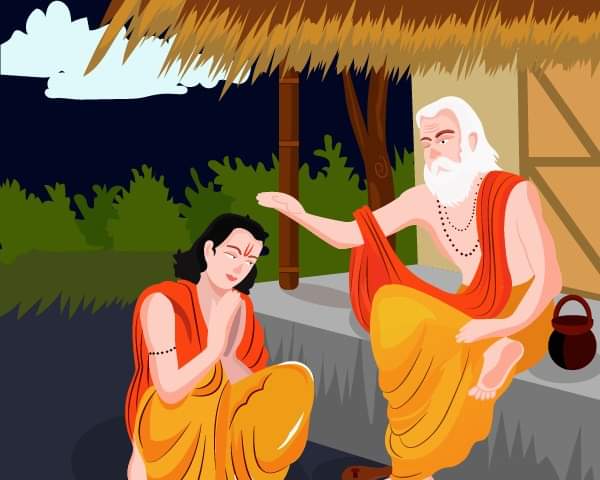
  • Complete surrender to the Guru involves

    Complete surrender to the Guru involves

    Complete surrender to the Guru encompasses several dimensions, as elucidated in the Shri Sai Sat Charitra:
    Devotion and Remembrance: This entails a total surrender of oneself while consistently recalling the Guru’s presence, with the necessity of continually chanting the Guru’s name.
    Seeing the Guru in all beings: Engaging in meditation on the Guru allows one to perceive Him within every being, thereby bestowing eternal bliss. A true devotee regards every Guru as Krishna.
    Lack of Egoism: This principle mandates the relinquishment of pride and ego, thereby surrendering to the Guru who resides within one’s heart. The removal of egoism and the complete trust in the Lord liberates one from worldly constraints.
    Service: True surrender requires Sarvaswa Sharangati (total surrender) to the Sad-guru, where one must recognize that they are not the sovereign of their own body; rather, the body belongs to the Guru and exists solely to serve Him.
    Faith and compliance: A disciple’s duty and dharma necessitate implicit and prompt adherence to the Guru’s directives.
    Channeling Senses to the divine: Prior to indulging the senses, mind, and intellect in their respective pursuits, it is incumbent to remember the Guru; such remembrance serves as an offering to Him.
    Experiencing Oneness: The individual who approaches the Guru achieves oneness with Him, akin to a river merging with the sea.
    Desirelessness: The Guru liberates His devotees from desires, rendering them free.
    Love: The Guru desires nothing but love for all sentient beings. Genuine love requires earnest affection; thus, where there is true yearning and feeling, God reveals Himself.
    Mindfulness: Regularly chanting the Guru’s name and engaging in meditation fosters the ability to perceive Him in all beings, which in turn grants eternal bliss. A definitive indication of this practice is the attainment of a calm and peaceful mind.


  • Where certain actions or entities are considered better than others

    Where certain actions or entities are considered better than others

    1. A human body is better than other bodies–
      • Despite its filth, mucus, and susceptibility to decay, disease, and death, the human body’s special value lies in its capacity to acquire knowledge and attain God-vision, which is impossible in any other birth.
    2. Love is better than intelligence-
      • The pure love of Shirdi women, despite their ignorance, inspired them to compose poems, implying that love is more inspiring than intelligence.
    3. Giving food is better than other charities-
      • While other charities like giving away wealth, property, and clothes require some discrimination, offering food requires no such consideration.
      • Also, the merit of feeding lame, crippled, blind, and diseased paupers is much greater than that of feeding able-bodied persons and relations.
    4. Butter-milk (Leelas) is better than Milk (Darshan)-
      • If one desires to see Sai Baba’s but they did not get any opportunity of taking His darshan, their quest for milk (darshan) will be, to a great extent, satisfied by the butter-milk (Leelas).
    5. Remembering and chanting Hari’s and Guru’s name confers salvation is better than getting the powerful Bhakti of the Nathas-
      • one Madhavarao did not like Kakasaheb’s pessimistic attitude of how to get the powerful Bhakti of the Nathas, as he said, ‘has not Baba told us authoritatively that remembering and chanting Hari’s and Guru’s name confers salvation? Then where is the cause for fear and anxiety?’
    6. The observance of the vow of silence is the best way of praising the Sad-guru-
      • In reality, the observance of the vow of silence is the best way of praising the Sad-guru.
    7. Having recourse to Sai Baba’s Feet and surrendering to Him is the best luck-
      • The best luck is to get an opportunity to have recourse to Sai Baba’s Feet and surrender to Him, than any other
  • Qualities That Define a True Sadguru

    Qualities That Define a True Sadguru

    who is Guru:

    • He who teaches us Veda and Vedanta or the six Shastras (systems),
    • He, who controls the breath, or
    • brands his body with Mudras (metallic marks of Vishnu’s weapons) or
    • gives pleasing discourses regarding Brahma.
    • he who gives mantras (sacred syllables) to the disciples and
    • orders them to chant the same a certain number of times,
    • but does not assure them any result in a definite time.
    • He who by his spacious wordy knowledge, explains beautifully the Ultimate Principle,
    • but has himself got no experience or self-realization is not a Sad-guru.
    • How can he, who is himself devoid of self-realization, give it to the disciples?

    Who is SadGuru:

    • But He, who by his discourse creates in us,
    • a distaste for the enjoyments of this world and
    • the next, and gives us a taste of self-realization.
    • who is well-versed in both the theoretical and practical knowledge (self-realization) deserves to be called a Sad-guru.

    • He is never restless nor ruffled.
    • He has no pride of his learning.
    • The poor and the rich, the small and the great are the same to him.

    • A Sad-guru does not, even in his dream, expect any service or profit from his disciples.
    • On the contrary, he wishes to serve them.
    • He does not think that he is great and the disciple small.
    • Not only he loves him, as his son but regards him, as equal to himself or as Brahma.
    • The main characteristic of a Sad-guru is that he is the abode of peace.
  • Complete surrender to Guru=Our mind gets calm and peaceful

    Complete surrender to Guru=Our mind gets calm and peaceful

    • Baba, although we cannot see Your form now,
    • those who believe in You, still have real experiences with You.
    • Through an unseen thread, You bring devotees from near and far.
    • You welcome them to Your Feet and embrace them like a loving mother.

    The devotees may not know, where You are. You cleverly guide them. You help them realize that, You are there to support them.

    • The intelligent, wise and learned folk fall into the pit of the samsar (worldly) due to their egoism.
    • However, You save the poor, simple, and devout persons by Your power.
    • The best way for us is to offer our
      • body,
      • speech, and
      • mind to You and
      • consistently chant Your name to remove our sins.
    • You grant the
      • wishes of those, who seek and
      • provide ultimate bliss to those, who desire nothing.

    Chanting your sweet name is the simplest practice for devotees. Through this practice, our sins and negative qualities will fade away, while goodness and righteousness will grow stronger. This will also lead to better judgment, detachment, and understanding.

    • Then we shall abide in our Self and our Guru (Sai,who are one and the same).
    • This is what is called complete surrender to the Guru.
    • The only sure sign of this is that, our mind gets calm and peaceful

    SSSC -Ch 46

  • Mastering Dispassion: A Guide to Spiritual Liberation with Baba

    Mastering Dispassion: A Guide to Spiritual Liberation with Baba

    Baba’s physical or finite form has undoubtedly vanished from our sight; however, the infinite or spiritual essence (Spirit of Baba) endures eternally.

    Baba’s plays continue:

    • The divine Leelas (play) that transpired during His earthly existence have been extensively discussed till now.
    • Since His departure, new Leelas (play) have emerged and continue to unfold even now.
    • This clearly illustrates that Baba remains ever-living and extends His assistance to His devotees as before.

    About Those contacted physically Baba:

    • Those who were blessed to have contact with Baba during His lifetime were indeed fortunate;
    • nevertheless, if any of them failed to cultivate dispassion for worldly possessions and pleasures, or did not turn their minds toward the Lord,
    • it is purely a matter of their misfortune.

    Now what is necessary:

    • What was necessary then, as it is Now, is a wholehearted devotion to Baba.
      • All our
        • senses,
        • organs-faculties, and
        • minds should collaborate in worshiping and serving Baba:
      • to engage only certain faculties in worship, while neglecting others is of no use.
      • Should one partake in worship or meditation, it ought to be undertaken with one’s full mind and soul.

    Can anyone assist us in achieving?

    • The love that a devoted wife holds for her husband is frequently, likened to the devotion a disciple offers to his master (Guru).
    • Yet, the latter is unparalleled and far surpasses the former.
    • No individual, be it a father, mother, brother, or any other relative, can assist us in achieving the ultimate purpose of life (self-realization).
    • We must delineate and navigate the path of self-realization independently.
    • We are tasked with
      • discerning the Unreal from the Real,
      • renouncing the desires and pleasures of this world and
      • the next, mastering our senses and minds, and
      • aspiring solely for liberation.
    • Rather than depending on others, we ought to place total faith in ourselves.

    Practice What? and How?

    • As we begin to practice discernment,
    • we come to realize the transitory and illusory nature of the world, and
    • our passions for worldly matters gradually diminish,
    • ultimately leading to dispassion or non-attachment.
    • We then acknowledge that the Brahma,
      • which is none other than our Guru, is the sole reality;
      • as it transcends and pervades the apparent universe,
      • we begin to worship it in all beings.
    • By wholeheartedly worshiping the Brahma or Guru, we become one with Him and attain self-realization.
    • In summary:
      • consistently chanting the name of the Guru and
      • meditating on Him, enables us to
      • perceive Him in all beings.
      • It bestows upon us eternal bliss.
  • Quotations 141

    Quotations 141

    “Oh Shama,  this book is very valuable and efficacious, so I present it to you, you read it.

    • Once I suffered intensely and My heart began to palpitate and My life was in danger.
    • At that critical time, I hugged this book to My heart and
    • then, Shama, what a relief it gave me!
    • I thought that Allah (God) Himself came down and saved Me.
    • So I give this to you, read it slowly, little by little.
    • Read daily one name at least, and it will do you good.”

    Baba to Shama in SSSC Ch-27 about the Book “Vishnu-Sahasra-Nam”

  • Man should seek God alone

    Man should seek God alone

    Once God’s grace is secured, all else will be got with ease. For this, man must get rid of attachment, fear and hatred.

    He must perform all actions as an offering to God, who is omnipresent.

    The vigil and fasting observed on Shivaratri night have become a farce. True vigil and fasting consist of concentrating one’s thoughts on God during the whole night.

    God’s grace is a direct sequel to one’s actions. Each one must examine and see in what spirit one is performing one’s worship. The Divine can be realised only through Shraddha and Vishvasa (steadfastness and faith).

    The Divine is within everyone. Once man recognises this fact, he will give no room for bad qualities. Embodiments of Divine Love! Dedicate yourselves to the performance of your duties.

    Do not waste your time or that of others in idle talk. Starting with the duties of the individual, man should aim at achieving oneness with the Divine as the ultimate goal.

    Shivaratri is an auspicious occasion for concentrating the mind on God. Devote at least this one night entirely to the contemplation of God, to the exclusion of all other thoughts and worries.

    – Divine Discourse, by Puttaparti Satya Sai Baba, Feb 19, 1993