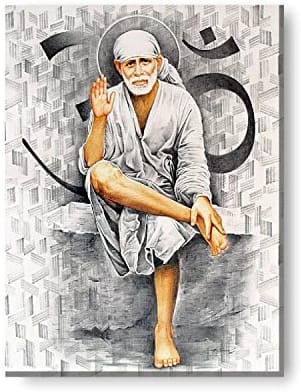
Category: Mission

Shirdi Sai Baba’s Mission

  • Baba is Omniscient, already in the ready to go Pandharpur

    Mr. Nanasaheb Chandorkar, who was a great devotee of Baba, was Mamlatdar at Nandurbar in Khandesh. He got an order of transfer to Pandharpur. His devotion to Sai Baba bore fruit, as he got an order to go and stay at Pandharpur which is regarded as the โ€˜BHUVAIKUNTHAโ€™ – Heaven on earth.

    Nanasaheb had to take immediate charge, so he left, immediately, for the place, without even writing or informing anybody at Shirdi. He wanted to give a surprise visit to Shirdi – his Pandharpur, see and salute his Vithoba (Baba), and then proceed.

    Nobody dreamt of Nanasahebโ€™s departure for Shirdi, but Sai Baba knew all about this, as His eyes were everywhere (omniscient). As soon as Nanasaheb approached Neemgaon, a few miles from Shirdi, there was stir in the Masjid at Shirdi.

    Baba was sitting and talking with Mhalsapati, Appa Shinde and Kashiram, when He at once said, “Let us all four do some Bhajan, the doors of Pandhari are open, let us merrily sing.” Then they began to sing in chorus, the burden of the song being “I have to go to Pandharpur and I have to stay on there, for it is the house of my Lord.”

    Baba sang and the devotees followed Him. In a short time Nanasaheb came there with his family, prostrated before Baba and requested Him to accompany them to Pandharpur and stay with them there. This solicitation was not necessary, as the devotees told Nanasaheb that Baba was already in the mood of going to Pandharpur and staying there.

    Hearing this Nanasaheb was moved and fell at Babaโ€™s Feet. Then getting Babaโ€™s permission, Udi (sacred ashes) and Blessings, Nanasaheb left for Pandharpur.

    SSSC Ch-7

  • Babaโ€™s Yoga Practices

    Babaโ€™s Yoga Practices

    Sai Baba knew all the processes and practices of Yoga. Some of them will be described here:

    • 1) DHAUTI or CLEANING PROCESS: Baba went to the well near a Banyan tree. It was at a considerable distance from the Masjid. Every third day, he washed his mouth and had a bath.
    • On one occasion, He vomited out his intestines. He cleaned them inside and outside. Then, he placed them on a Jamb tree for drying. There are persons in Shirdi, who have actually seen this, and who have testified to this fact.
    • Ordinary Dhauti is done by a moistened piece of linen, 3 inches broad 22 1/2ft. long. This piece is swallowed. It remains in the stomach for about half an hour to react there. Then, it is taken out. But Babaโ€™s Dhauti was quite unique and extraordinary.
    • 2.) KHANDA YOGA: In this practice, Baba extracted the various limbs from His body. He left them separately at different places in the Masjid.
    • Once, a gentleman went to the Masjid, and saw the limbs of Baba lying separately at separate places. He was much terrified; and he first thought of running to the village officers, and informing them of Baba being hacked to pieces and murdered. He thought that he would be held responsible, as he was the first informant and knew something of the affair. So he kept silent. But the next day when he went to the masjid, he was surprised. Baba was hale, healthy, and sound, as before. He thought, that what he had seen the previous day, was only a dream.
    • 3) Baba was an adept of all the margas. (Path) . His chief marga was Bhakti marga. The special form of it is described as Guru Marga in the ‘Guru Gita’.
    • Jnana and siddhis, including yoga siddhis, came in the wake of his Guru bhakti.

    Baba had no particular marga, as the yoga marga etc. But if any person came to grief in his yoga marga, he could give relief. One yoga sadhaka had bleeding piles and came to Baba and got relief at Babaโ€™s hands.

    • 4) Baba said, ‘Life is lived in vain if no yoga, yaga, tapas, or jnana be achieved’. He asked a devotee, ‘Will you sit idle merely eating your food? Have Saburi, that is patience and courage’.
    • Baba set the example himself of tapas. He kept awake the whole night, lying on a small narrow plank making Namasmaran, keeping his eyes open, and holding his mind in trance.
    • 5) What took place was the Baba’s conversion of water into oil. Somehow oil came into the lamp in a sufficient quantity, from Water to burn all night. Now this is not explicable to ordinary men with their notions of chemistry and physics.
    • Water is not converted into oil in a straightforward manner. Castor and other plants absorb water and combine it with their ingredients. They then produce oil in the seeds of their fruits. Without any such process, Baba was able to fill his lamps with oil.
    • 6) We take Baba’s first achievement at Selu of reviving the dead man with no other remedy or mantras than the throwing of his Guru’s pada duti on the corpse with a prayer for revival: or His taking water at his Shirdi Masjid and filling his lamps with that water for feeding the wicks with a prayer, we find his concentration on his Guru God is the only means.
    • 7) Baba was always thinking of God. Serving God is serving man and serving creation. He had evidently no need to determine the time of his death by noting the Arishta or omens or ripeness of his karma, according to Patanjali Yoga Sutra No. 23 for all knowledge to him was an open book.
    • His undertaking on behalf of his devotees to give them happy and blessed deaths, e.g., his promise to H. S. Dixit to carry him in a vimana, were fulfilled by him with remarkable accuracy of Dixit’s death, through his divine power.
    • 8) G.S. Khaparde was a highly cultured Sanskrit scholar and had evidently read yoga shastra. He has referred to certain instances and experiences of his in his diary in the year 1911-12, while he stayed at Shirdi.
    • In his Diary, he repeatedly mentions that Baba cast Yogic glances at certain persons. These individuals were immediately filled with a wave of bliss. This wave overpowered all their other mental activities. It kept them immersed in bliss for hours without break. Khaparde experienced such bliss after a yogic glance from Baba. This state lasted for three or four hours. He has noted this in his diary.
    • 9) Baba’s yoga sampoorna state enabled him to keep several people in such happy state, as they themselves have recorded in their experiences.
    • Mrs. Tarabai Sadasiva Tarkhad says that though she had physical pains in her body and mental worries, life was quite miserable. Yet when she went and sat before Baba, that very moment she felt steeped in Lethe. All her anxieties, pains, and cares, both physical and mental, vanished. Till her departure from Dwarakamayee, she was enjoying a happy state.

    What is this siddhi called? Patanjali’s Yoga Sutras and Srimad Bhagavata, llth Skanda, 15th Chapter, amongst other books, give a list of siddhis attained by yoga processes. What Baba did would be called ‘Yatha Sankalpa Samsiddhih’ and ‘Apratihata Ajna.’ This means producing whatever one wants by mere will power or supreme command.

    Srimad Bhagavata says ‘When one gets laya in God, all powers, all knowledge, all wisdom, all perfection, that are termed divine, shine forth from such a person’. Baba was perfect in his concentration on God. Therefore in the above quoted instances as in the other innumerable instances to be found in the Gospel of Sai Baba (i.e. BCS) or other books on Baba, the powers exercised by Baba were the result of his laya in God, that is, they were really divine powers

    SSSC Ch-7

  • Time and Mission of Saints

    Lord Krishna says in Bhagvadgita (Chapter IV, 7-8) that “Whenever there is a decay of Dharma (righteousness) and an ascendancy of unrighteousness, I manifest Myself; and for the protection of the virtuous, the destruction of the vicious and for the establishment of righteousness, I manifest Myself in age after age“.

    This is the mission of Lord, and the Sages and Saints, Who are His representatives and who appear here at proper times, help in their own way to fulfil that mission.

    • For instance, when the twice born, i.e. the Brahmins, the Kshatriyas and the Vaishyas neglect their duties and
    • when the Shudras try to usurp the rights of the higher classes,
    • when spiritual preceptors are not respected but humiliated,
    • when nobody cares for religious instructions,
    • when every body thinks himself very learned,
    • when people begin to partake of forbidden foods and intoxicating drinks,
    • when under the cloak of religion, people indulge in malpractices,
    • when people belonging to different sects fight amongst themselves,
    • when Brahmins fail to do Sandhya adoration, and
    • the orthodox their religious practices,
    • when Yogis neglect their meditation,
    • when people begin to think that wealth, progeny, wife are their sole concern, and thus turn away from the true path of salvation,

    • then do Saints appear and try to set matters right by their words and action.
    • They serve us as beacon-lights, and show us the right path, and the right way for us to follow.
    • In this way, many saints, viz. Nivritti, Jnanadev, Muktabai, Namdev, Gora, Gonayi, Ekanath, Tukaram, Narahari, Narsi Bhai, Sajan Kasai, Sawata, Ramdas, and various others did appear at various times to show the right path to the people, and
    • so presently came Shri Sai Baba of Shirdi.

    SSSC Ch-4

  • Hemadpant, The Author of “Shri Sai Satcharita”

    Hemadpant, The Author of “Shri Sai Satcharita”

    Govind Raghunath Dabolkar, called Anna Saheb Dabolkar, was Mamlatdar and first class resident Magistrate.

    His work ‘Sai Satcharitra’ in Marathi Ovi verse extends to a thousand pages. Maharashtra Sai bhaktas treat it as Sai Ramayana or modern Guru Charitra. They give it the respect due to ancient puranas. Even others respect it when they gain access through N.V. Gunjaji’s English adaptation or translations in Telugu, etc.

    This work is highly meritorious and has been the instrument for many people becoming Sai bhaktas. The verses are highly sonorous. The stories about Sai Baba collected from various individuals are based on actual experiences. These stories have great charm and are always fresh.

    On his first visit to Shirdi and Sai Baba in 1910, went to the mosque. He and his friend Bala Saheb Bhate prostrated before Baba. Baba pointed to Dabolkar and said, ‘What talk was going on there at the wada? And what did this Hemad Pant say (pointing his chin to Dabolkar)?’. Dabolkar’s name was not Hemad Pant at all.

    Hemadpant-“I began to think why Sai Baba should call me by the name Hemadpant. This word is a corrupt form of Hemadripant.

    This Hemadripant was a wellknown Minister of the kings Mahadev and Ramadev of Devgiri of the Yadav dynasty. He was very learned and good-natured. He authored good works, such as Chaturvarga Chintamani (dealing with spiritual subjects) and Rajprashasti. He invented and started new methods of accounts  and was the originator of the Ovi (Marathi Shorthand) script.

    But I was quite the opposite, an ignoramus, and have dull, mediocre intellect. I could not understand why the name or title was conferred upon me. However, after thinking seriously about it, I thought that the title was a dart to destroy my ego. This way, I should always remain meek and humble. It was also a compliment paid to me for the cleverness in the discussion#. (# before he started from Wada/Lodge to Sai Temple, he had some hot discussion with Bala Saheb Bhate about”Guru’s essential ” for 30 minutes)”.

    Looking to the future history, we think that Babaโ€™s word (calling Mr. Dabholkar by the name Hemadpant) was significant and prophetic, as we find that he looked after the management of Sai Sansthan very intelligently, kept nicely all the accounts and helped greatly in the publications of ‘Sai Lila Masik (Magazine)’ also as the author of such a good work “Shri Sai Satcharita (SSSC)”, which deals with such important and spiritual subjects as Jnana, Bhakti and dispassion, self-surrender and self-realization.

  • Earlier Publications on Sai Baba

    Earlier Publications on Sai Baba

    The premier poet-saint of Maharashtra (India), Shri Jnaneshwar Maharaj, has stated that the Lord loves those who write the lives of saints;

    and the saints also have a peculiar method of their own of getting the service, which the devotees long for, successfully accomplished.

    The saints inspire the work; the devotee becomes only an indirect cause or instrument to achieve the end.

    For instance, in 1700 Shaka* year (AD year=78 + Shaka year) the poet Mahipati aspired to write the lives of saints. Saints inspired him, and got the work done;

    So also in 1800 Shaka year, Das Ganuโ€™s service was accepted.

    • The former wrote 4 works-Bhakta Vijaya, Santa Vijaya, Bhakta Leelamrit and Santa Kathamrit, while the latter wrote two – “Bhakta Leelamrit and Santa Kathamrit“, in which the lives of modern Saints were described. In chapters 31,32,33 of Bhakta Leelamrit and in chapter 57 of Santa Kathamrit, the sweet life and teachings of Sai Baba are very well depicted. These have been separately published in Sai Leela Magazine, Nos. 11 and 12, Vol. 17; the readers are advised to read these chapters.
    • So also Sai Babaโ€™s wonderful Leelas are described in a small decent book named Shri Sainath Bhajana Mala by Mrs. Savitribai Raghunath Tendulkar of Bandra.
    • Das-Ganu Maharaj also has composed various sweet poems on Sai Baba.
    • A devotee named Amidas Bhavani Mehta has also published some stories of Sri Baba in Gujarathi;
    • some Nos. of Sainath Prabha, a magazine published by Dakshina Bhiksha Sanstha of Shirdi, are also published
    • Sai Samasthan itself published Rao Bahadur M.W.
      Pradhan’s book ‘A glimpse of Indian spirituality‘ but it ran uptoย  about 25 to 30 pages and set out just a handful of facts about Baba.
  • BY BABA’S MERE DARSHAN

    Bow to the Kind Sai, Who is the Abode of Mercy and Who is affectionate towards His devotees. By His mere darshan, He does away with their fear of this ‘bhava’ (samsar) and destroys their calamities.

    • He was first Nirgun (formless),
    • but on account of the devotion of His Bhaktas, He was obliged to take a form.
    • To give liberation ie. self-realisation to the Bhaktas is the mission of the saints, and
    • for Sai – the Chief of them, that mission is inevitable.

    Those who take refuge in His Feet have all their sins destroyed and their progress is certain.

    Remembering His Feet, Brahmins from holy places come to Him and read scriptures and chant the Gayatri mantra in His presence.

    We, who are weak and without any merits, do not know what Bhakti is, but we know this much, that though all others may leave us, Sai won’t forsake us. Those whom He favours get enormous strength, discrimination between the Unreal and the Real and knowledge.

    Sai knows fully the desire of His devotees and fulfills the same. Hence they get what they want and are grateful. So we invoke Him and prostrate ourselves before Him.

    Forgetting all our faults let Him free us from all anxieties. He who being overcome with calamities remembers and prays Sai thus, will get his mind calmed and pacified through His grace.

    SSSC-Ch 30

  • Sending Love is the Basis of all Services

    Sri Sathya Sai Baba’s most well-known teachings are:

    – Serve the needy.

    – Quiet the mind.

    – Expand the heart.

    Our group does a service project that integrates all these injunctions; we pray for missing children. This service came to us in a unique way, through a series of seemingly unconnected circumstances.

    First, while I was answering calls for assistance referred to me by a local help organization, I met a couple, both physically disabled, who particularly longed to do something to help return lost or abducted children to their rightful homes. Then while I was watching the television show There Is a Way, I found myself listening to a guest speaker who was not only an author and lecturer but someone who rejoices in her awareness of Sai Baba’s presence on the planet. Because of my experience with the couple, I was quite receptive to her message.

    During the show, she described how one day a friend had called her and asked for help in a frightening situation. The friend’s ten-year-old daughter had disappeared, and no one had a clue as to what might have happened. Although she was not a psychic, the speaker had decided to spend time in silence, listening for guidance on how she might be of service. After five days and five nights, she had still received nothing and was about to give up when she decided to continue a little longer. Within a few hours, she heard quite clearly the names of three men, the make of a car, and an instruction to call the child’s parents.

    As instructed, she asked the parents to think the most loving thoughts possible about those three men – to put them in the light of God. Both mother and father began immediately to do as asked [although that must have been the most difficult task these two people had ever undertaken]. The parents thought about the men the three names represented, declared them to be children of God, and recognized that in their true spiritual identity they were lovable and loving. After forgiving them for their mistaken behavior, the parents sent many loving thoughts their way.

    A Course in Miracles tells us that every attack is a plea for love. Those men were begging for love in the only way they knew how. In sending love, the parents gave them what they had so desperately needed. The results were truly miraculous.

    Before the police were able to find the men, the little girl walked into a police station and told the officers there her story.

    She said that she had been abducted by force, locked in a dark room, mistreated, and threatened. Suddenly, she said, the men unlocked the room, asked her forgiveness for the way they had treated her, and took her to the car. They drove to a corner just one block from a police station and told her to get out of the car. The police, they said, would return her to her parents. She just had to walk to the station and go inside. This she did, and the outcome not only corrected the immediate situation affecting one family but established a clear procedure useful for every discordant situation.

    After hearing this story, our group made a commitment to send loving thoughts regularly toward all the missing, hungry, and abused children in the world. We each participate in this “Bring Home the Children” project according to our own schedule and in our own way. However, many of us find it helpful to start by directing love toward a specific child. Hardly a day passes that we do not see a picture of a missing child, if not in our own mail, then in some public place. After we have surrounded the child with love and God’s light, we expand our hearts to include the child’s parents, friends, and relatives. We also include the abductors, if any are involved, recognizing that they are expressions of divine love, no matter how mistaken their behavior may be. Then we gradually broaden our love until it includes all children and all humanity in one embrace.

    Anyone can do this spiritual exercise. It takes only a few moments and requires no financial resources. Since physical strength is not necessary, this service is not exclusive to the young or the healthy.

    All we have to do is LOVE. Sathya Sai Baba tells us, Love is the solvent for the hardest of hearts. He also says, See God in everyone, even in people you regard as enemies. Seen through the eyes of love, all beings are beautiful, all deeds are dedicated, all thoughts are beneficial, and the world is one vast family. Love is the best foundation for service. Think love. Send love. Be love. Love is the highest power. Love is God.

    โ€” Joy Thomas of Sri Sathya Seva Organisation

  • Institution of Saints -Gurus

    There have been institutions of Saints in this world, from time immemorial.

    Various Saints appear (incarnate) themselves in various places to carry out the missions allotted to them, but though they work in different places, they are, as it were, one.

    They work in unison under the common authority of the Almighty Lord and know full well what each of them is doing in his place, and supplement his work where necessary.

    SSSC Ch-21

  • “My Darbar” -Baba

    Baba had declared openly that โ€“ โ€œTo-day many of my Darbar people are coming.โ€ The Dhurandhar brothers were astonished to hear this remark of Baba from others, as they had not given any previous intimation of their trip.

    All the other people prostrated themselves before Baba, and sat talking to Him. Baba said to them- โ€œThese are my Darbar[king’s court] people to whom I referred beforeโ€ and said to the Dhurandhar brothers- โ€œWe are acquainted with each other for the last sixty generations.โ€

    All the brothers were meek and modest, they stood with joined hands, staring at Babaโ€™s Feet. All the Sattwic emotions such as tears, horripilation, choking, etc., moved them and they were all happy.

    SSC Ch50

  • H S Dixit alias Kaka

    H S Dixit alias Kaka

    H. S. Dixit was born in 1864 of parents enjoying a high position and affluence at Khandwa.

    His scholastic career was bright as he secured a first class in Matric and good marks in F.A., B.A, and LL.B. He very soon settled himself as a leading solicitor at Bombay, and his name frequently appeared in the Law Reports and in the press as distinguishing himself as an able advocate in sensational cases, e.g. Lok B.C. Tilak and Times of India, etc. He attained great fame and wide popularity and commanded high esteem both with the people and the Government.

    Baba’s kindness towards Dixit was manifested from the very beginning, and Baba expressed this to others also. He told Anna Saheb Dabolkar ‘Kaka Saheb is a good man. Be guided by what he says’. He told R.B. Purandhare to be with  Kaka Saheb and assist him. The greatest interest in a saint for any serious minded person is, and ought to be, spiritual interest.

    Though originally Dixit’s  idea was to go to Baba for the cure of his lameness, he soon gave up that idea  and said ‘Lameness of the body does not matter muchโ€™ , and wanted Sai to cure  the lameness of his soul.

    Sai made distinct promises to Dixit, whom he always called ‘Kaka’, meaning uncle. As many persons called him ‘Kaka’, Sai Baba also called him ‘Kaka’. One of the early notable statements of Baba was “I will take my  ‘Kaka’ in a vimana” (B.C.S.,100) meaning thereby that he would give Kaka a  happy end.

    Accordingly, On 5-7-1926. i.e. on Ekadasi, Dixit was starting from Ville Parle to go to Dr. Deshmukh’s Dispensary at Bombay to see his ailing son Ramakrishna.

    Anna  Sabeb Dabolkar had spent with him some time in excellent bhajan and pothi and  was starting to go to his own station. When these (with Tendulkar) came up after  the scheduled time to the platform, they found the train also was late and came just in time for them to catch it.

    Both of them and Anna Saheb Dabolkar got in, and the words which came from Kaka Saheb were, ‘Anna Saheb, Just see! How merciful Baba is! He has given us this train this minute. He has not made us wait even a minute.’ He then looked into his pocket time table and said, “Baba has made the train come late and enabled us to catch it. Or else we would have to  be stranded at Colaba and be frustrated. So, this is Sai’s grace“.

    Thus, sitting facing Anna Saheb, Kaka Saheb remembered Baba’s loving grace and appeared  to fall asleep. Dabolkar first thought be was sleeping. When he went near him to  hold his head and asked him, ‘Are you sleeping?’ there was no reply. Then Dabolkar feared that Kaka Saheb had fainted. Making Kaka lie down, Dabolkar  noted the apparently hopeless condition of Kaka Saheb.

    The train was speeding  from station to station. Anna Saheb told his friend Tendulkar in the carriage that  he should tell the Guard so that they may carry down Kaka’s body from the carriage. But as there was a big crowd and heavy rain, he could not do this at Bandra, and so only at Mahim he got down and told the Guard.

    The Guard arranged to phone to Parel for a stretcher and doctor, and at Parel, the body was taken out. The doctor examined the body and said that life was extinct. On account of the suddenness of death,there would have been difficulties of Inquest. But luckily they got the doctor’s certificate, and the body was committed  to the care of Anna Saheb.

    The main point for us to see is how Baba carried out  his undertaking to carry Kaka in a vimana.

    Some readers may think that H. S, Dixit had the advantage of constantly meeting and hearing Sai Baba and getting strengthened thereby which they, the readers, do not have. But, if one is earnest in his desire to concentrate on Sai, one can hear and move with Sai now, not through any extraordinary chamatkars (though these do take place even now), but through very ordinary means available to all, such as getting the vast literature on Sai Baba in various languages, and having sravana, manana, nidhidyasana, etc. of the same. One can get the same pooja, bhajan, harikatha, meditation or concentration on Sai as H. S. Dixit had.
    No doubt, Kaka Dixit had the opportunity and power to serve Sai Baba and his Sansthan for 14 years at great self-sacrifice, but similar service is open now to many of us, each according to his own opportunities and abilities. Sai Seva and Sai dhyana, the two main factors that built him up under Sai are still available to all of us. Dixit had the sadhana prescribed by Baba of nine months of solitude and seclusion (Vanaprastha Asrama) to concentrate effectively and exclusively on Baba, Who prevents any of us from trying to get similar seclusion andconcentration? Some may think that Sai Baba when he was in the flesh,undertaking all responsibilities, could afford Dixit better protection in all affairs than Sai could afford to give us now; but this view is wrong. Dixit from 1918 to 1926, when Baba was not in the flesh, was enjoying Baba’s protection, see, for example, the provision of Rs. 30,000/- to meet his debts. It is only the fainthearted and ill-informed people that will doubt whether Baba will afford them protection now, and that from hour to hour. But if the readers were to take pains and read and zealously absorb the experiences of devotees after 1918, they will feel assured that Baba’s protection is as sure today as it was before 1918. To doubt it will only mean lack of faith in Baba and in his utterances, (see B.C.& S.51} where Baba says ‘Even after Mahasamadhi, the moment you think of me, I will be with you at any place’, and also lack of belief in such great personalities, like D.D.Rasane, S.B.Dhumal, M.B.Rege, and so many others. There are many amongst us now who experience the benefits of the kind and constant attention of this guardian angel Sai in daily affairs, assuring us that we are His men (Saduchya Ankita), and that he bears our burdens as promised, of Yoga kshemam Vahaamyaham. It is only a question of faith. If faith is strong, the response is quick, and the feeling of enjoying His superhuman protection gets established and makes the mind peaceful and happy.