Category: Prayer

  • Praying the God- The Order under Hindu System

    Praying the God- The Order under Hindu System

    1–2 minutes

    According to the ancient and revered custom of Hindus, Pray deities in this order

    • First, make obeisance to the God Ganesha to remove all obstacles and make the work a success
    • Then, the Goddess Saraswati to inspire to write out or Do our work
    • Then, the Gods ; Brahma, Vishnu and Siva – the Creating, Preserving and Destroying Deities respectively.
    • Then, ones tutelary Deity- Family God
    • Then, the Rishis , into whose gotra (clan) one was born & then other Rishis
    • Then, one`s grandfather, father, mother
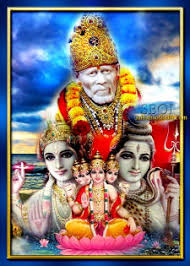
    • Finally, Our Guru Sai Baba,

    -Various Modes of devotion, prescribed by according to Parashara, Vyasa and Shandilya etc

    SSSC -Ch 1

  • Four Sadhana for Four Ages

    Baba’s Stories as Beacon- Light:

    • Light houses are constructed at various places in the sea, to enable the boatmen to avoid rocks and dangers, and make them sail safely. Sai Baba’s stories serve a similar purpose in the ocean of worldly existence.
    • They surpass nectar in sweetness, and make our worldly path smooth and easy to traverse. Blessed are the stories of the saints.
    • When they enter our hearts through the ears, the body-consciousness or egoism vanishes. The sense of duality disappears. When they are stored in the heart, doubts fly out to all sides. Pride of the body will fall. Wisdom will be stored in abundance.
    • The description of Baba’s pure fame and hearing it with love will destroy the sins of the devotee. Therefore, this is the simple Sadhana for attaining salvation.
    • The Sadhana for
      • Krita Age was Shamadama (tranquility of mind and body); for
      • Treta Age, sacrifice; for
      • Dwapara, worship, ;and for
      • Kali (present) Age, it is singing of the name and glory of the Lord. This last Sadhana is open to all the people of the four varnas.
    • The other Sadhanas, viz. Yoga/Yagya (sacrifice), Dhyana (meditation) and Dharana (concentration) are very difficult to practice, but singing and hearing the stories and the glory of the Lord (Sai Baba) is very easy.
    • We have only to turn our attention towards them. The listening and singing of the (Baba’s) stories will remove the attachment to the senses and their objects, and will make the devotees dispassionate, and will ultimately lead them to self-realization.
    • With this end in view, Sai Baba made me or helped me[ie Hemapant] to write His stories. The devotees may now easily read and hear these stories of Sai Baba. While doing so, they can meditate on Him and His form. Thus, they attain devotion to Guru and God (Sai Baba). They also gain detachment and self-realization.
    If any one prostrates before Sai and surrenders heart and soul to Him, then unsolicited, all the chief (Four) objects of life viz. Dharma (righteousness), Artha (wealth), Kama (Desire) and Moksha (Deliverance), are easily and unsolicitedly attained.  SSSC Ch-6
  • TIPS relate to Shirdi and Mandir Visits

    TIPS relate to Shirdi and Mandir Visits

    Day and Time:

    Mondays, Tuesdays and Wednesdays are least crowded, normally.

    Fridays from 12 Noon-8 p.m. & Daily from 3 to 4 p.m. are also less crowded.

    The best day to visit is on Thursday; many people visit the temple and fast for nine consecutive Thursdays (referred to as the Sai Vrat Pooja). You do visit on Thursdays, but be prepared for the crowd.

    Other busy times are on weekends and celebration like Holi, Guru Purnima, Dussehra, Ram Navami festivals. The temple is kept open overnight during these festivals.

    Months

    Best period to visit Shirdi is October to March.

    But crowd is more, during the festive months ie September to December; and maximum during Dussehra and Diwali

    Others

    • There’s a procession of Sai Baba’s chariot around 9.15 p.m on Thursdays.
    • The main temple (Samadhi Mandir) is open from 5am to 10.30pm,
    • where as Dwarkamayi Masjid, Chavadi, Gurusthan are closed around 8.30pm.
    • But first ‘darshan’ of the day starts, after the morning program of worship (Morning aarti and others ), at around 7am.
    • There is no restriction on darshan during the day in Dwarkamayi Masjid, Chavadi, Gurusthan, and Nanda deep.
    • However, there are a few minutes of restriction during Dhuni Pooja or while offering food to Shri Sai.

    PLACE:

    • Free Bus is also available from Sai Nivas and Mandir to here.
    • Mobile phones, cameras and other electronic devices aren’t permitted inside the temple area.
    • Have “Mukh darshan” of  Baba Face, adjoins Dwarkamayi . DO mediation here, while leaving Shirdi pilgrimage, by sitting few minutes. (Quick one, as small queue, but some distance darshan)
    • The Museum displays articles used by Sai Baba. Do not forget to visit it, near Gurusthan.
    • FREE food provided at Prasadalaya. Devotees and visitors can take unlimited food (rice, vegetables, dal with Sweet). The capacity of Prasadalaya is huge and 1000s of people come every day. It is open from 10 a.m. to 10 p.m.
    Free Food Token Counter
    • In Chavadi, ladies are not allowed to enter the section where Baba used to sleep.

    Accommodation:

    Accommodation Booking Counter
    • Avoid the touts for getting any accommodation.
    • It is advisable to approach any hotel/lodge directly, ONLY if not available accommodation i)through https://online.sai.org.in/ OR ii)directly at Mandir Accommodation Offices.
    • There is a wide choice of hotels/lodges in Shirdi, suiting the budget of all.

    Don’t go to any shop for keeping Mobile, Free Slippers and Luggage, BUT USE Trust’s counters, very near to Gate No. 2 to keep all these.

    Be cautious about the prices while taking the garland, coconut etc particularly as a package from the nearby shops and avoid being overcharged by them.

    Prasadam and Books:

    • BUY Prasadam at SAI SANSTHAN EMPLOYEES CREDIT CO-OPERATIVE SOCIETY LTD, SHIRDI” stall, near Sai Commercial Complex and

    Donation:

    Each gift item must be registered in the Donation Office of the temple. Devotees can donate at SRI SAIBABA SANSTHAN TRUST Office

    • cash either in the Donation Office, with due receipt or
    • put into directly any of the donation boxes, placed at all important places of temple complex or
    • Crossed and A/C payee Cheques, Demand Drafts, Indian Postal Orders, Foreign Postal Order, Travelers  Cheques or Money Orders are accepted. Transactions are handled only at the Official address of Sansthan.
    • Andhra bank is authorized to collect the donations for Nitya Prasadalaya Annadan (Free Food Scheme) through their network of branches. But then, official receipt is issued by Sansthan itself.

    Prior registration is mandatory before you make any offering at the temple.

    Communication:

    Devotees are requested to call, ONLY 02423-258500 for any information regarding Saibaba Sansthan. 2] For all Online Services please do contact on 02423-258956/63 & WhatsApp-07720077203

  • God Formless: then why Manifested


    There are two aspects of God or Brahman : (1) the Unmanifested (Nirgun) and (2) the Manifested (Sagun).

    The Nirgun is formless, while the Sagun is with form, though both denote the same Brahman. Some prefer to worship the former, some the latter.

    As stated in the Gita (chapter XII) the worship of the latter is easy and preferable. As man has got a form (body, senses, etc.), it is natural and easy for him to worship the God with form.

    Our love and devotion do not develop unless we worship Sagun Brahman for a certain period of time, and as we advance; it leads us to the worship (meditation) of Nirgun Brahman.

    So let us start with Sagun worship. Image, altar, fire, light, sun, water, Brahman are the seven objects of worship, but Sadguru is better than all these.

    Let us, on this occasion, bring to our mind the form of Sai, Who was non-attachment Incarnate, and Who was a resting-place for His whole-hearted devotees.

    SSSC ch 11

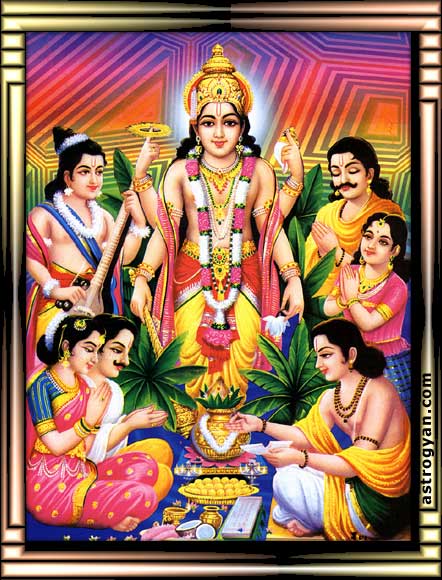
  • Sathya Narayana Poojah

    Sathya Narayana Poojah

    People in the Maharashtra, India always celebrate God Satya-Narayana Puja in their homes every fortnight or month.

    When they are suffering from any problem, they say, ‘I do Satya Narayana Pooja.’ After getting rid of the problem, they performed the Satya Narayana Puja.

    In all Sai Baba Temples, Sai Satya-vrata Puja is performed instead of Satya Narayana Pooja. People choose to recite the Sai story. It was told in three figurative verses. These were from the book “Bhakta Liyamaruth” composed by Daskanu Maharaj.

    Satya Narayana Puja will be held daily at 7 am and 9 am in Shirdi. At the end of the prayer, the priest reads the three stories in Marathi. He reads them on behalf of all the devotees present. Then the offering will be given.

    If  you have time, please attend the Sai Satya Narayana puja, at Shirdi Mandir(RS.100 per couples), and also do monthly Pooja at your home in front of Satya Narayana picture and get Health, Wealth and Happiness

  • “Shri Sai Sat Charitra” -SSSC

    “Shri Sai Sat Charitra” -SSSC

    Baba’s Stories are “Beacon Light (Light House)”

    The life of Sai Baba is as wide and deep as the infinite ocean. All can dive deep into the same and take out precious gems (of knowledge and Bhakti). They can distribute them to the aspiring public.

    The stories, parables, and teachings of Sai Baba are very wonderful.

    They will give peace and happiness to the people. These people are afflicted with sorrows and heavily loaded with miseries of this worldly existence. They will also bestow knowledge and wisdom, both in the worldly and in spiritual domains.

    If these teachings of Sai Baba are listened to and meditated upon, the devotees will get what they long for. These teachings are as interesting and instructive as the Vedic lore. The devotees will attain union with Brahman, mastery in eight-fold Yoga, Bliss of meditation etc…

    This collection would be most delightful to those simple souls, whose eyes were not blessed with Sai Baba’s darshana.

    So, I set about collecting Sai Baba’s teachings and expressions – the outcome of His boundless self-realization.


    Blessed are the stories of the saints. When they enter our hearts through the ears, the body – consciousness or egoism and the sense of duality vanish. When they are stored in the heart, doubts will evade. Pride of the body will fall, and wisdom will be stored in abundance.

    The description of Baba’s pure fame and the hearing of the same with love, will destroy the sins of the devotee. Therefore, this is the simple Sadhana for attaining salvation.

    The Sadhana of ‘singing of the name and glory of God’ is open to all the people of the four varnas (classification of society, based on their doing Profession. ie. 1. Priests & Teachers 2. Warriors & Rulers 3. Traders & Agriculturists and 4. Service providers & Laborers= Brahmins, Kshatriyas, Vaishyas and Shudras ).

    The other Sadhanas, viz. Yoga, Yagya (sacrifice), Dhyana (meditation) and Dharana (concentration) are very difficult to practice. However, singing and hearing the stories and the glory of the Lord (Sai Baba) is very easy. We have only to turn our attention towards them.


    “The listening and singing of the stories will remove the attachment to the senses and their objects. This practice will make the devotees dispassionate. It will ultimately lead them to self-realization.

    With this end in view, Sai Baba made me or helped me to write His stories, Sat-Charita. The devotees may now easily read and hear these stories of Sai Baba. While doing so, they can meditate on Him and His form. This leads them to attain devotion to Guru and God (Sai Baba), get dispassion and self-realization.

    Sai Baba’s grace accomplished everything in the preparation and writing of this work, Sat-Charita. He made use of me as a mere instrument”-Hemadpant.

    SSSC Ch3 and 10

    Thanks Shirdi Saibaba Sansthan for the Book PDF Link

    Look at these:

    FROM DARK TO BRIGHT WITH SMALL LIGHT

    Sai Baba’s Teachings to Overcome Anxiety, Worry and Overthinking

    In the Sree Sai Samartha Satcharita, several incidents in Shirdi Sai Baba’s life and teachings directly address anxiety, generalized worry, overthinking, and feeling mentally overwhelmed. Below is a list of these incidents and Baba’s specific guidance: 1. Dharamsi Jethabhai Thakkar: Overthinking and Imaginary Burdens 2. Gopal Narayan Ambdekar: Mental Overwhelm and Despair 3. Anantrao Patankar:…

    MORE
    Thanks SSST, Shirdi

    Self-Affirmation from Chapter XVI & XVII of SSSC for Sai Baba devotees

    1. 🔥The Fire of Freedom I seek freedom. I long for freedom. With unwavering resolve, I walk toward freedom. 2. 🍂Sacred Detachment I release the world. I release its rewards. In detachment, I enter the realm of the Spirit. 3. 🧑‍🦯Journey Within I turn inward. I trust my inner Self. In the quiet depths, I…

    MORE

    Something went wrong. Please refresh the page and/or try again.