Category: Baba and Creatures

See God in ALL

  • Inner Worship

    Inner Worship

    PRAY WHAT?

    All the things that we see in the universe are nothing but a play of Maya (cosmic illusion)- the creative power of the Lord. These things do not really exist. What really exists is the Real Absolute. Just as we mistake a rope of a garland or a stick for a serpent on account of darkness, we always see the phenomena, i.e. things as they outwardly appear, and not the Noumenon (Thing-in-itself ) which underlies all the visible things. Only the Sad-guru opens the eyes of our understanding. He enables us to see things in their true light and not as they appear. Let us, therefore, worship the Sad-guru and pray to him to give us the true vision, which is nothing but God-vision.

    Novel Form of Worship

    Hemadpant has given us a novel form of worship.

    • Let us, he says, use hot water in the form of tears of joy to wash the Sad-guru’s feet.
    • Let us besmear, His body with sandalwood-paste of pure love.
    • Let us cover His body with the cloth of true faith.
    • Let us offer eight lotuses as our eight Sattwik emotions.
    • Let us present fruit as our concentrated mind.
    • Let us apply to His head bukka (black-powder) in the form of devotion. Let us tie the waistband of Bhakti and place our head on his toes.

    After decorating the Sad-guru with all jewelry in this way,

    • let us offer everything to Him.
    • We wave the chamar of devotion to ward off heat.
    • After such blissful worship, let us pray thus:- “Introvert our mind.
    • Turn it inward.
    • Give us discrimination between the Unreal and the Real.
    • Grant us non-attachment for all worldly things.
    • Thus enable us to get Self-realisation.
    • We surrender ourselves, body and soul (body-consciousness and ego).
    • Make our eyes Yours, so that we should never feel pleasure and pain.
    • Control our body and mind as You will and wish.
    • Let our mind get rest in Your Feet”.

    SSSC Ch-26
  • WORSHIP V-Baba worship, Stages

    Baba worship had and has all stages in it, and all sorts of worshippers.

    Baba who first objected to his worship, did by his own Antarjnana or prophetic vision foreseeing what was to follow, namely, not only individual benefits to millions, but also national benefit and ultimately benefit to the cause of religion itself for the sake of humanity.

    That is why HE gradually promoted and then developed HIS worship:-

    • Individual worship of Baba attracted larger and larger numbers from the immediate neighbourhood and
    • from distant places and this developed into congregational worship;
    • and that again from simple congregational worship to the highly complicated forms, which are seen in famous places of worship like Pandharpur.
    • Worship like Pandarpur and Tirupati were developed for Baba worship at Shirdi, including ritual, hymnology, music, processions, cars, palanquin horse and pujaris.
  • WORSHIP IV- IN SAI BABA CASE

    In the case of Sai Baba, his perfect purity, asceticism, general  benevolence, harmlessness, non-attachment, and other virtues evoked the respect of the saints like Devadas, Janakidas, Gangagir, Anandanath and Bidkar, that met him; and also of serious and noble minded men like Mahlsapathy and his friends Appa Bhil and Tukaram Darji.

    Baba’s nature is well described as unattached and happily roaming about fearlessly and as a help to those in suffering and misery. So Mahlsapathy and his friends regarded Baba as a saint, an Acharya or Guru Deva, long before he exhibited any siddhi power.

    However, so far as the general mass was concerned, it was the fact that he turned water into oil that provoked worship. And the worship took the usual form of offering flowers, fruits and scents.

    Baba protested and tried to dissuade these worshippers. He asked them to go to their customary objects of worship such as the images they had in their temples and homes. But they would not listen. They felt that he was a saint, a samartha saint. The learned could quote Tukaram’s ‘Sant toch dev. Dev loch sant’ that is, ‘Saints are God. God is saints’.

    The Villages told him “You are a Bolte Chalte Dev”, that is, a talking and walking God. The persistence of the mass idea that his siddhis were evidence of divine power, and therefore marked him out as a Guru Deva for worship, could not be combated or resisted.

     So, alike in the case of the highly learned pandit, Sri Upasani Baba, as in the case of the uneducated rustics, the ladies of Shirdi, the chamatkars or lilas (play) are the first prompters to worship Sai as a manifestation of divinity. That   is   how worship begins and grows.

  • Worship I -Why does man worship a higher power?

    The obvious answer is, it is the feeling that a higher Power can give and will be induced to give man what he needs and save him from trouble. This is true whether the Power is an invisible God or a visible man or image.

    There must be in the first place power and willingness to use the power in the object worshipped, and as a counterpart, there must be a need, a fear, or other stimulus operating upon the worshipper to make him believe in the power and willingness of that power to render help.

  • SUBMITS TO WORSHIP OUT OF LOVE TO DEVOTEES

    SUBMITS TO WORSHIP OUT OF LOVE TO DEVOTEES

    Baba’s submits himself to worship by devotees

    Para Number in the Book “BC&S” and about Baba’s Submission himself for Worship by Devotees.

    551. Baba from the beginning disliked or avoided the worship of his body by devotees. But Mahlsapathy’s ardent devotion began the worship and could not be resisted. Bapu, a four year old son of N.G. Chandorkar extended it, and all (then) began to claim the same privilege as the child.

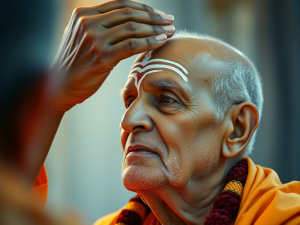
    Still Baba did not wish to have sandal applied to his forehead e.g., in three horizontal lines. But Dr.Pandit came and put these lines of sandal on Baba’s forehead. Baba suffered it quietly.

    Dada Kelkar : Baba, How is it that though you objected to this form of sandal paste, you allow it now?

    B.: “Pandit believes in his mind that I am the same as his Brahmin guru Dhopeswar Kaka Maharaj, and applied sandal to me as he was doing to that guru. Hence I could not object.”

    Abdul Rangari, a moslem, came later and asked Baba.

    A.R.: Baba, how is it that sandal is being pasted on you? This is not our custom.

    B.: “Jaisa Desh, Vaisa Vesh (i.e., we must conform to our surroundings). The Hindus worship me as their God. Why should I displease them? I allow them to do so. I myself, am a devotee of God.”

    Baba orders Guru Purnima Celebration

    552. Baba’s (group) Arati and pooja on ordinary days was started in 1909; but for some time, there was no celebration of Guru Purnima by special worship of Baba on that day.

    Baba himself sent for Dada Kelkar on Guru Purnima day and said “Do you not know that this is Guru Poornima; Bring your worship materials and do your Guru Pooja”. The Guru Pooja was done on that day and this practice of celebrating Guru Poornima by all the devotees worshipping Baba, then begun, has continued up-to-date.

    But Baba objected to stealthy midnight worship of himself on Sivaratri, by H.V.Sathe.

  • Worship Baba as God in all

    Baba’s sayings about worshipping HIM

    Para Number in the Book & About seeing Baba

    199. Baba: Nana, I would like Pooran Poli. Prepare it for Naivedya and bring it. 

    NGC: It is late. There is no cook.

    Baba: Never mind.

    Then NGC got eight Pooran Polies and side dishes and placed them before Baba.

    NGC: Baba. Taste.

    Baba waited a while. Then ants and flies settled on the poli.

    Baba: Good. Take away the plates.

    NGC: How is it you ask me to take the plates, without touching them? If you were not to eat anything, why ask me to prepare this? Unless you take something, I will not take away the plates nor eat food.

    Baba: I have eaten the poli, take the plates away and have your meal.

    Nana: You took the poli! When? What was brought on the plates remains just as it was. Unless you eat, I will not remove these.

    NGC left the Dwaraka Mayi and lay down at the chavadi with hunger.

    (Baba unable to endure the sympathetic suffering he underwent, sent for Nana.)

    Baba: “Nana, at some time, I took your poli. Do not be obstinate. Take the plates away and eat”

    NGC again went back in a huff to the chavadi. Baba again sent for him.

    Baba: “What, Nana, you have been with me 18 years. Is this all that you have learnt? Is this your appraisal of me? Does Baba mean to you, only this visible body of 3 ½ cubits height? Is that all? 

    Hallo! I eat in the form of the ant. I eat in the fly that eats. I take what form I choose and eat in the form. I have taken your poli long ago. Do not continue inexcusably obstinate. “

    Nana: Though you said, I understand (realise) nothing. What am I to do? If you make me understand it, I will then take the plates away and eat my food.

    Then Baba made a gesture revealing his knowledge of some secrets hid by nana deep in his heart and unknown to anyone else. Nana was thereby convinced that Baba was his innermost soul (Antaryami) and therefore Sarvantaryami of all, including ants and flies, etc.,

    NGC: I will take away the plates.

    Baba: “Nana, as you see this sign that I make, you will see that I can take food (in those forms).”

  • “Give your guest, cups of tea, fully saturated with Sugar.”

    “Give your guest, cups of tea, fully saturated with Sugar.”

    Dasganu was once performing his Kirtan and singing the glory of Sai Baba, in the Koupineshwar temple in Thana.

    One Mr. Cholkar, a poor man serving as a candidate in the Civil Courts in Thana, was amongst the audience. He heard Dasganu’s Kirtan most attentively and was much moved.

    He there and then mentally bowed and vowed to Baba saying – “Baba, I am a poor man, unable to support my family. If by your grace, I pass the departmental examination and get a permanent post, I shall go to Shirdi. I will fall at Your Feet. I will also distribute sugar-candy in Your name.” As good luck would have it, Mr.Cholkar did pass the examination. He got the permanent post. Now it remained for him to fulfil his vow. The sooner, the better.

    Mr. Cholkar was a poor man with a large family to support; and he could not afford to pay for the expenses of a Shirdi trip. As is well said, one can easily cross over Nahne ghat in Thana District. It is easy even to cross the Sahyadri Range. However, it is very difficult for a poor man to cross Umbareghat, i.e., the threshold of his house.

    As Mr. Cholkar was anxious to fulfill his vow as early as possible, he resolved to economize, cut down his expenses, and save money. He determined not to use sugar in his diet; and began to take his tea without it.

    He saved some money in this way. Then, he came to Shirdi and took Baba’s darshan. He fell at His Feet and offered a coconut. He distributed it with a clean conscience along with sugar-candy as per his vow. He told Baba that he was much pleased with His darshan and that his desires were fulfilled that day.

    Mr. Cholkar was in the Masjid with his host Bapusaheb Jog. When the host and the guest both got up and were about to leave the Masjid, Baba spoke to Jog as follows:- “Give him (your guest) cups of tea, fully saturated with Sugar.”

    Hearing these significant words, Mr. Cholkar was much moved, he was wonderstruck, his eyes were bedewed with tears, and he fell at Baba’s Feet again. Mr. Jog was also curious about this direction, regarding the tea-cups to be given to his guest.

    Baba wanted by His words to create faith and devotion in Cholkar’s mind. He hinted as it were, that He got the sugar-candy as per his vow and that He knew full well his secret determination not to use sugar in his diet.

    Baba meant to say, “If you spread your palms with devotion before Me, I am immediately with you, day and night. Though, I am here bodily, still I know what you do; beyond the saven seas. Go wherever you will, over the wide world, I am with you. My abode is in your heart and I am within you. Always worship Me, Who is seated in your heart, as well as, in the hearts of all beings, Blessed and fortunate, indeed, is he who knows Me thus.”

    SSSC Ch-15

  • Earlier Publications on Sai Baba

    Earlier Publications on Sai Baba

    The premier poet-saint of Maharashtra (India), Shri Jnaneshwar Maharaj, has stated that the Lord loves those who write the lives of saints;

    and the saints also have a peculiar method of their own of getting the service, which the devotees long for, successfully accomplished.

    The saints inspire the work; the devotee becomes only an indirect cause or instrument to achieve the end.

    For instance, in 1700 Shaka* year (AD year=78 + Shaka year) the poet Mahipati aspired to write the lives of saints. Saints inspired him, and got the work done;

    So also in 1800 Shaka year, Das Ganu’s service was accepted.

    • The former wrote 4 works-Bhakta Vijaya, Santa Vijaya, Bhakta Leelamrit and Santa Kathamrit, while the latter wrote two – “Bhakta Leelamrit and Santa Kathamrit“, in which the lives of modern Saints were described. In chapters 31,32,33 of Bhakta Leelamrit and in chapter 57 of Santa Kathamrit, the sweet life and teachings of Sai Baba are very well depicted. These have been separately published in Sai Leela Magazine, Nos. 11 and 12, Vol. 17; the readers are advised to read these chapters.
    • So also Sai Baba’s wonderful Leelas are described in a small decent book named Shri Sainath Bhajana Mala by Mrs. Savitribai Raghunath Tendulkar of Bandra.
    • Das-Ganu Maharaj also has composed various sweet poems on Sai Baba.
    • A devotee named Amidas Bhavani Mehta has also published some stories of Sri Baba in Gujarathi;
    • some Nos. of Sainath Prabha, a magazine published by Dakshina Bhiksha Sanstha of Shirdi, are also published
    • Sai Samasthan itself published Rao Bahadur M.W.
      Pradhan’s book ‘A glimpse of Indian spirituality‘ but it ran upto  about 25 to 30 pages and set out just a handful of facts about Baba.
  • My method is quite unique

    My method is quite unique

    “My method is quite unique. Remember well, this one story (About Mrs. Radhabai Deskmukh), and it will be very useful.

    To get the knowledge (realization) of the Self, Dhyana (meditation) is necessary. If you practice it continuously, the Vrittis (subtle thoughts) will be pacified.

    Being quite desireless, you should meditate on the Lord, Who is in all the creatures; When the mind is concentrated, the goal will be achieved.

    Meditate always on My formless nature, which is knowledge incarnate, consciousness and bliss.

    If you cannot do this, meditate on My Form from top to toe, as you see here night and day.

    As you go on doing this, your Vrittis will be single-pointed and the distinction between the Dhyata (meditator), Dhyana (act of meditation), Dhyeya (this meditated upon) will be lost and the meditator will be one with the Consciousness and be merged in the Brahman.

  • TIPS relate to Shirdi and Mandir Visits

    TIPS relate to Shirdi and Mandir Visits

    Day and Time:

    Mondays, Tuesdays and Wednesdays are least crowded, normally.

    Fridays from 12 Noon-8 p.m. & Daily from 3 to 4 p.m. are also less crowded.

    The best day to visit is on Thursday; many people visit the temple and fast for nine consecutive Thursdays (referred to as the Sai Vrat Pooja). You do visit on Thursdays, but be prepared for the crowd.

    Other busy times are on weekends and celebration like Holi, Guru Purnima, Dussehra, Ram Navami festivals. The temple is kept open overnight during these festivals.

    Months

    Best period to visit Shirdi is October to March.

    But crowd is more, during the festive months ie September to December; and maximum during Dussehra and Diwali

    Others

    • There’s a procession of Sai Baba’s chariot around 9.15 p.m on Thursdays.
    • The main temple (Samadhi Mandir) is open from 5am to 10.30pm,
    • where as Dwarkamayi Masjid, Chavadi, Gurusthan are closed around 8.30pm.
    • But first ‘darshan’ of the day starts, after the morning program of worship (Morning aarti and others ), at around 7am.
    • There is no restriction on darshan during the day in Dwarkamayi Masjid, Chavadi, Gurusthan, and Nanda deep.
    • However, there are a few minutes of restriction during Dhuni Pooja or while offering food to Shri Sai.

    PLACE:

    • Free Bus is also available from Sai Nivas and Mandir to here.
    • Mobile phones, cameras and other electronic devices aren’t permitted inside the temple area.
    • Have “Mukh darshan” of  Baba Face, adjoins Dwarkamayi . DO mediation here, while leaving Shirdi pilgrimage, by sitting few minutes. (Quick one, as small queue, but some distance darshan)
    • The Museum displays articles used by Sai Baba. Do not forget to visit it, near Gurusthan.
    • FREE food provided at Prasadalaya. Devotees and visitors can take unlimited food (rice, vegetables, dal with Sweet). The capacity of Prasadalaya is huge and 1000s of people come every day. It is open from 10 a.m. to 10 p.m.
    Free Food Token Counter
    • In Chavadi, ladies are not allowed to enter the section where Baba used to sleep.

    Accommodation:

    Accommodation Booking Counter
    • Avoid the touts for getting any accommodation.
    • It is advisable to approach any hotel/lodge directly, ONLY if not available accommodation i)through https://online.sai.org.in/ OR ii)directly at Mandir Accommodation Offices.
    • There is a wide choice of hotels/lodges in Shirdi, suiting the budget of all.

    Don’t go to any shop for keeping Mobile, Free Slippers and Luggage, BUT USE Trust’s counters, very near to Gate No. 2 to keep all these.

    Be cautious about the prices while taking the garland, coconut etc particularly as a package from the nearby shops and avoid being overcharged by them.

    Prasadam and Books:

    • BUY Prasadam at SAI SANSTHAN EMPLOYEES CREDIT CO-OPERATIVE SOCIETY LTD, SHIRDI” stall, near Sai Commercial Complex and

    Donation:

    Each gift item must be registered in the Donation Office of the temple. Devotees can donate at SRI SAIBABA SANSTHAN TRUST Office

    • cash either in the Donation Office, with due receipt or
    • put into directly any of the donation boxes, placed at all important places of temple complex or
    • Crossed and A/C payee Cheques, Demand Drafts, Indian Postal Orders, Foreign Postal Order, Travelers  Cheques or Money Orders are accepted. Transactions are handled only at the Official address of Sansthan.
    • Andhra bank is authorized to collect the donations for Nitya Prasadalaya Annadan (Free Food Scheme) through their network of branches. But then, official receipt is issued by Sansthan itself.

    Prior registration is mandatory before you make any offering at the temple.

    Communication:

    Devotees are requested to call, ONLY 02423-258500 for any information regarding Saibaba Sansthan. 2] For all Online Services please do contact on 02423-258956/63 & WhatsApp-07720077203